
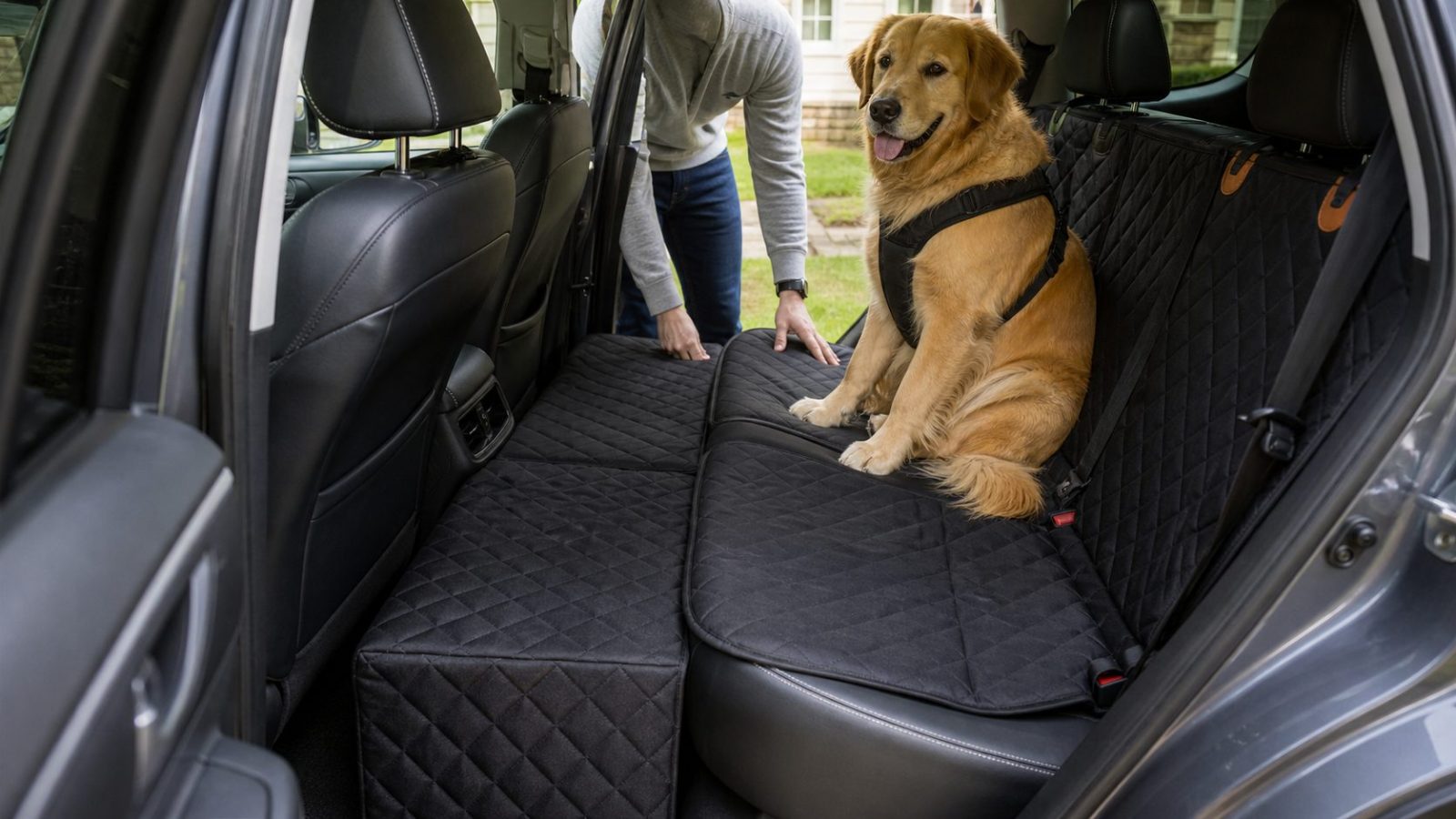
A dog back seat extender can make the rear seat feel less like a narrow bench and more like a usable travel space. It fills the footwell gap, gives larger dogs more room to lie down, and can keep blankets, seat covers, and travel gear from sliding into the floor.
It is not a safety restraint. The extender supports the space under your dog; it does not hold your dog in place during a hard stop. You still need a proper riding setup, such as a well-fitted harness and tether, a secured carrier, or another restraint plan that fits your dog and vehicle.
This guide is for dog owners who use the back seat for road trips and want to know whether a back seat extender is worth adding before buying another cover, hammock, or travel bed.
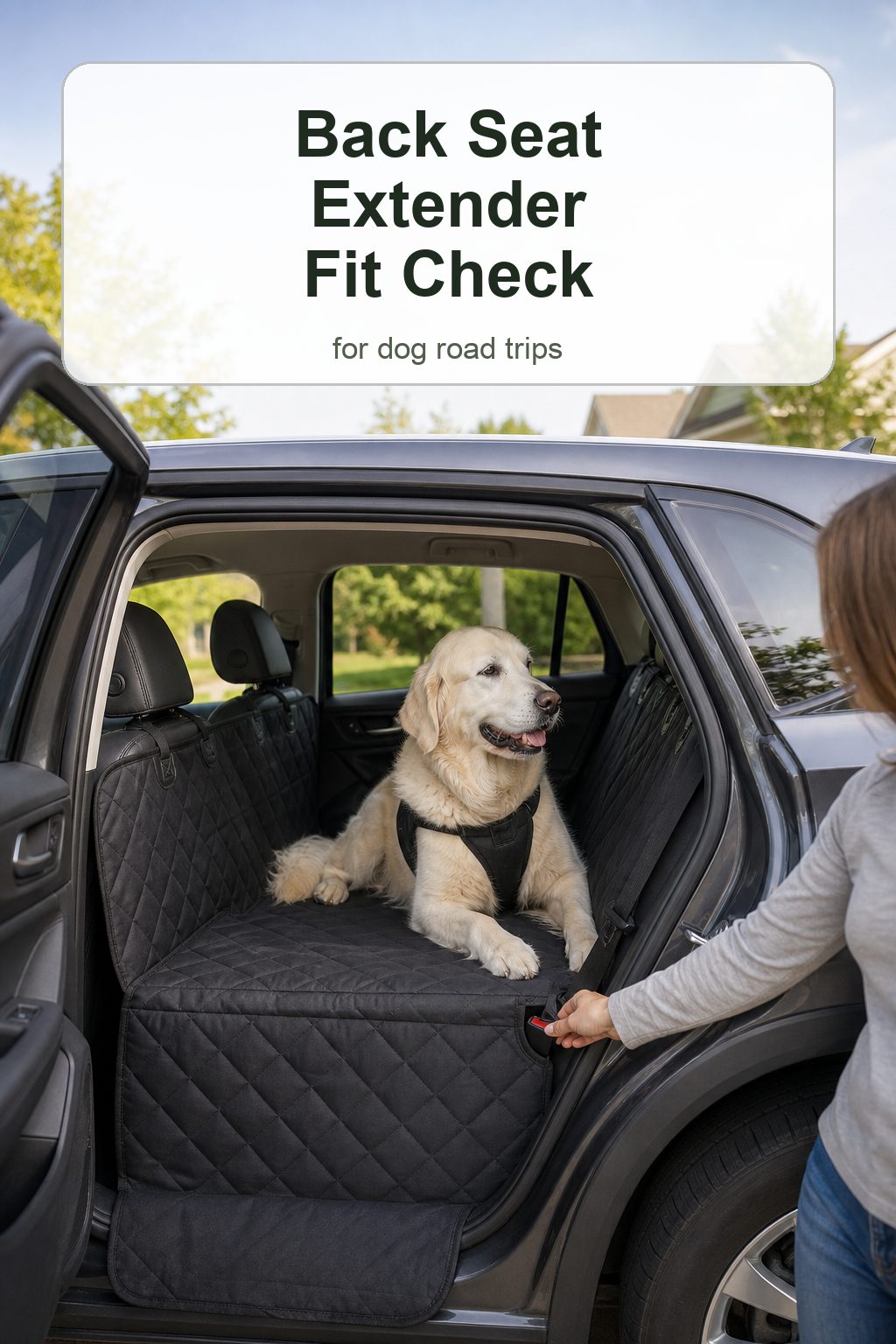
Compare dog back seat extenders on Amazon
Quick Answer
For most road trips, the best dog back seat extender is a sturdy platform-style cover that fits your rear seat width, supports the footwell without sagging, leaves seat belt buckles reachable, and gives your dog enough room to sit, turn, and lie down without sliding.
If your dog is large, older, anxious, or always trying to settle across the whole back seat, an extender can make the ride calmer and cleaner. If your dog rides in a crate or small carrier, you may not need one unless the carrier sits partly over the footwell.
The most important checks are support, fit, buckle access, and whether the extender works with your actual restraint setup. A soft cover that looks full-size online can still sag into the footwell once a real dog puts weight on it.
What a Back Seat Extender Actually Does
A dog back seat extender fills the gap between the rear bench and the front seats. Some designs are built into a hammock-style seat cover. Others use rigid or semi-rigid panels that unfold over the footwell.
The goal is simple: give your dog a flatter surface and reduce the open drop into the floor area. That can help dogs who stretch out, shift during turns, or dislike the feeling of the seat ending under their paws.
It can also help keep loose gear out of the footwell. Towels, leashes, collapsible bowls, and small travel bags are less likely to fall down and get stepped on.
An extender does not replace a harness, carrier, crate, or other restraint. It also does not make the back seat crash-safe by itself. Think of it as a comfort and layout tool, not the whole travel plan.
Who Benefits Most
Large dogs are the most obvious fit. A Labrador-size dog, tall mixed breed, or long-bodied dog may not have enough room to lie naturally on a narrow bench seat. Filling the footwell can make the back seat feel less cramped.
Older dogs may also benefit because they often need a more predictable surface. If a paw slips into the footwell, a senior dog may hesitate to get back in the car next time. A stable platform can reduce that gap.
Anxious dogs are a mixed case. More space may help some dogs settle, but an extender will not fix car stress by itself. If your dog paces, pants, barks at windows, or tries to climb forward, start with the restraint setup and travel routine first.
Small dogs may not need a full extender unless they ride on the seat instead of in a carrier. For very small dogs, a secured carrier or properly used booster-style setup may be a better fit than giving them a larger open surface.
Measure the Back Seat Before Buying
Do not rely only on product photos. Rear seats vary by SUV, sedan, truck, and crossover.
Measure the width of your back seat from door side to door side. Then measure the depth from the seat back to the front-seat backs in your normal driving position. If the front seats move often because two drivers share the car, measure the tightest layout.
Also look at the center hump, seat contours, headrest posts, and seat belt buckle locations. A back seat extender may fit the width but still cover the buckle receivers or sit awkwardly over a raised floor area.
If you use a child seat on one side or need part of the back seat for a passenger, be careful with full-width extenders. A split design or narrower setup may make more sense than covering the whole rear row.
Support Panels Matter
The support system is the difference between a useful extender and a sagging blanket over the footwell.
Some extenders use hard panels. Some use foam boards. Some rely on straps, front-seat anchors, or a hammock shape. The stronger the support, the more important it is to check how the weight is distributed.
A good extender should stay flat when your dog steps onto the edge. It should not fold sharply into the footwell, tilt toward the door, or create a soft dip where your dog’s front paws land.
Check the weight guidance from the manufacturer, but also use common sense. A restless 75-pound dog shifting during a turn puts different stress on the platform than a calm 35-pound dog lying still.
Seat Belt Buckle Access
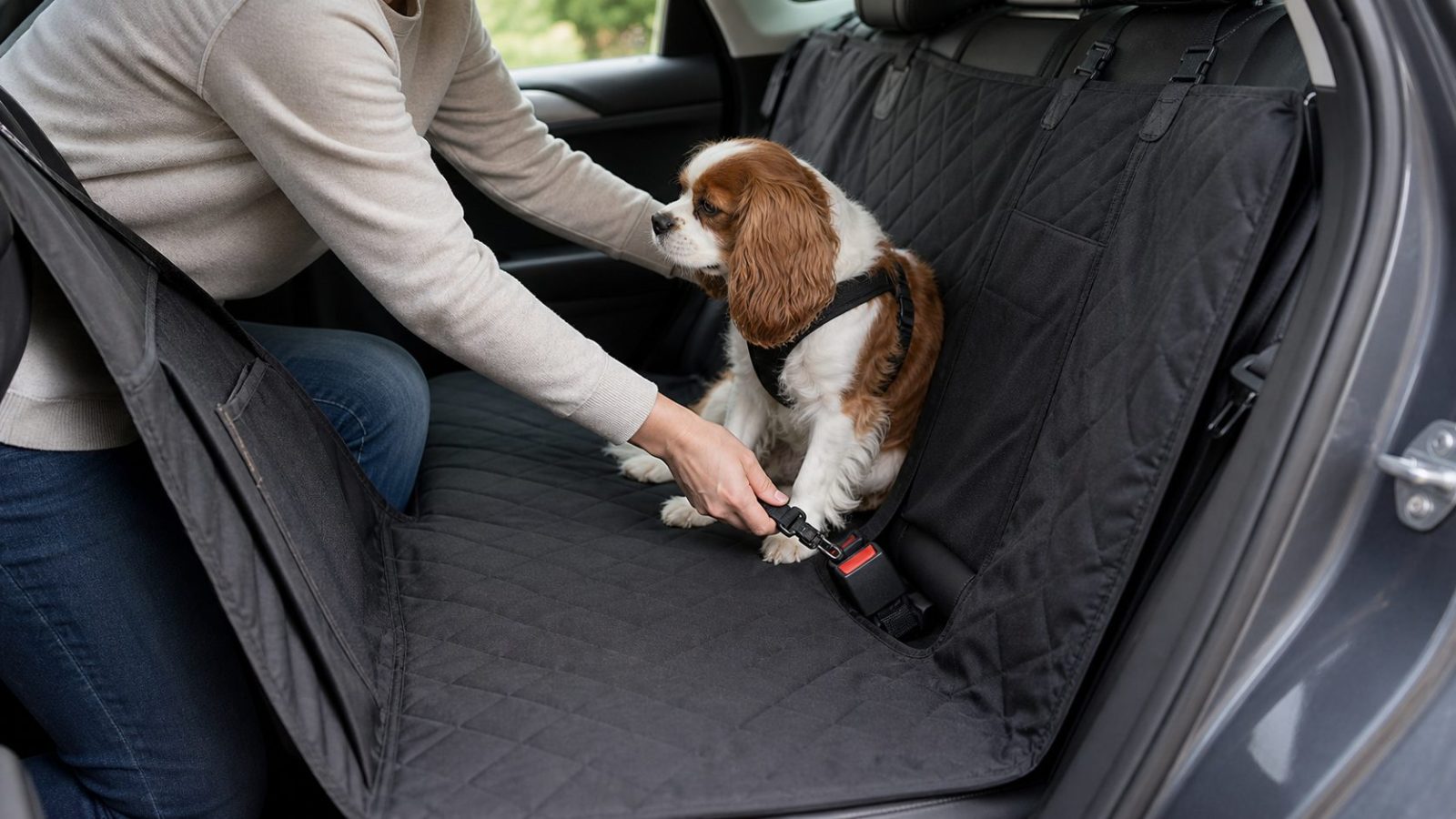
This is one of the easiest details to miss. A back seat extender can make the seat look tidy while hiding the buckle receivers you need for a harness tether or human passenger.
If you use a dog seat belt tether, check the path from the harness to the buckle. The strap should not dig under the extender, twist through a tiny opening, or pull from an awkward angle. You should be able to release the tether quickly at a rest stop without lifting the whole cover.
If the extender has buckle openings, test them with the actual buckle receiver in your car. Some openings look generous in photos but do not line up with recessed buckles, short receivers, or seat covers underneath.
Do not cut new holes in a cover unless you are sure it will not weaken the structure or leave rough edges. A clean buckle opening is better than a forced workaround.
Hammock vs Platform Extender
Hammock-style covers attach to the front and rear headrests and create a soft sling between the seats. They are common, easy to install, and useful for keeping dogs from stepping directly into the footwell.
The drawback is support. A hammock can reduce the gap, but it may still sag if your dog puts weight in the middle. For light dogs or short drives, that may be fine. For larger dogs, a true platform-style extender is usually more stable.
Platform extenders use panels to create a firmer surface over the footwell. They can feel more secure for dogs who lie down, but they may be bulkier to install and store.
If you already own a good hammock seat cover, check whether a separate platform insert would solve the problem before replacing the whole setup. If your current cover blocks buckles or slides around, a more integrated extender may be easier to live with.
Door, Floor, and Front-Seat Fit
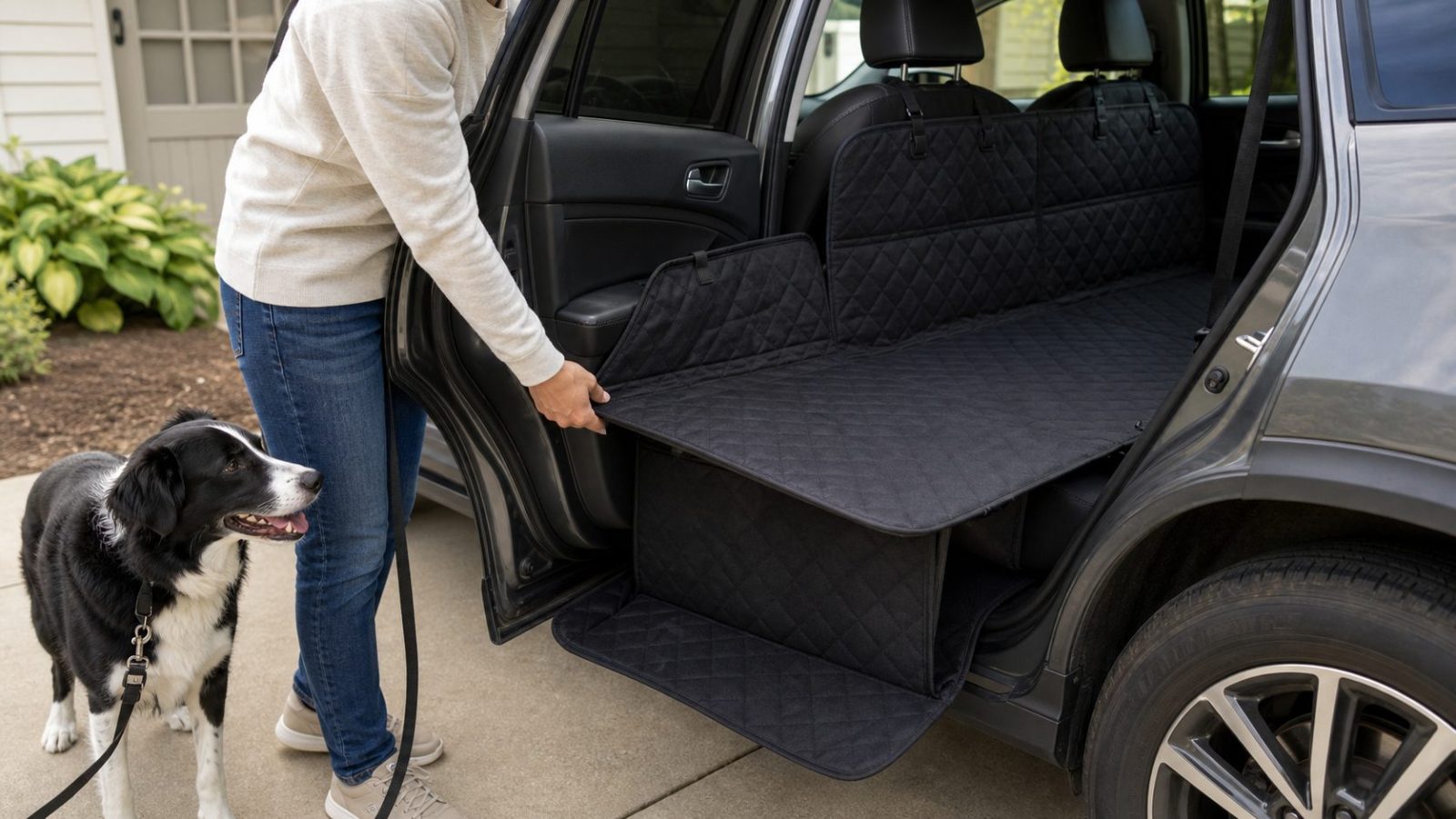
A back seat extender should not interfere with normal car use. After installing it, open and close both rear doors, slide the front seats into their usual positions, and check that nothing is pinched.
Look at the lower door area too. Some extenders have side flaps that protect the seat edge, but they can bunch near the door if the fit is too wide. Bunched fabric can collect dirt or make the door harder to close cleanly.
The front-seat side matters as well. If the extender presses hard against the front seats, it may shift when the driver adjusts their seat. It may also make it harder for a front passenger to recline or move comfortably.
For shared family cars, choose a setup that removes quickly. If installation takes too long, the extender may end up folded in the trunk instead of used on the trip.
Cleaning and Storage
Back seat extenders collect the same mess as seat covers: hair, sand, drool, paw dirt, snack crumbs, and damp towel marks.
Look for a surface that can be vacuumed and wiped down. Deep quilting may look comfortable, but it can hold hair in the seams. Smooth waterproof sections wipe faster, though they may show paw prints more clearly.
If the extender uses rigid panels, check whether they can be removed before washing. Some covers are wipe-only because the support boards should not go through a washer.
Storage matters if you remove the extender between trips. A full platform cover may fold thicker than a basic hammock. Make sure it fits where you actually keep dog travel gear, whether that is the cargo area, garage shelf, or a large gear tote.
Common Mistakes
One mistake is buying the biggest extender without checking buckle access. More coverage is not helpful if you cannot connect a harness tether or reach the seat belt receiver.
Another mistake is using the extender as the only travel setup. A flatter back seat may be more comfortable, but your dog still needs movement control.
A third mistake is ignoring the front seats. If the extender depends on the front-seat position, it may fit one driver and fail for another.
Finally, do not assume a soft hammock gives the same support as a platform. If your main goal is to stop a large dog from sliding into the footwell, support panels matter.
Quick Buying Checklist
Before buying a dog back seat extender, check:
- rear seat width
- distance from rear bench to front seats
- support panel type
- weight guidance and real-world dog size
- buckle receiver access
- harness tether routing
- whether it works with your current seat cover
- door clearance on both sides
- front-seat movement
- cleaning instructions
- how thick it folds for storage
- whether passengers or child seats share the back row
Related PawTripKit Guides
Back seat extenders fit naturally with these car travel guides:
- How to Set Up the Back Seat for a Dog Road Trip
- Dog Seat Belt Tethers for Car Travel
- Dog Back Seat Barriers for Road Trips
- Best Dog Car Seat Covers With Seat Belt Access
- How to Keep Your Dog Safe in the Car
Final Thoughts
A dog back seat extender is worth considering if your dog needs more room than a narrow bench seat gives them. It can make the back seat flatter, reduce the footwell gap, and keep travel gear from disappearing onto the floor.
Choose it the same way you would choose other car travel gear: by fit, support, access, and how your dog actually rides. The best extender for your car is the one that stays stable, leaves buckle points usable, cleans up without drama, and works with a proper restraint setup.
FAQ
Are dog back seat extenders safe?
They can make the back seat layout more stable and comfortable, but they are not safety restraints. Use them with an appropriate harness, carrier, crate, or other travel setup that controls your dog’s movement.
Do back seat extenders work for large dogs?
They can be useful for large dogs if the support panels are sturdy and the size fits your vehicle. Check the weight guidance, but also look at whether the platform stays flat when your dog steps near the edge.
Can I use a dog seat belt tether with a back seat extender?
Yes, if the extender leaves the buckle receiver reachable and the tether can route cleanly from your dog’s harness. Test this before driving.
Is a hammock the same as a back seat extender?
Not always. A hammock blocks the footwell gap with fabric, while a platform extender usually adds firmer support panels. Large dogs often need more support than a basic hammock provides.
Will a back seat extender fit every car?
No. Measure your back seat width, front-seat distance, buckle positions, and door clearance before buying. Universal products can still fit poorly in some vehicles.