
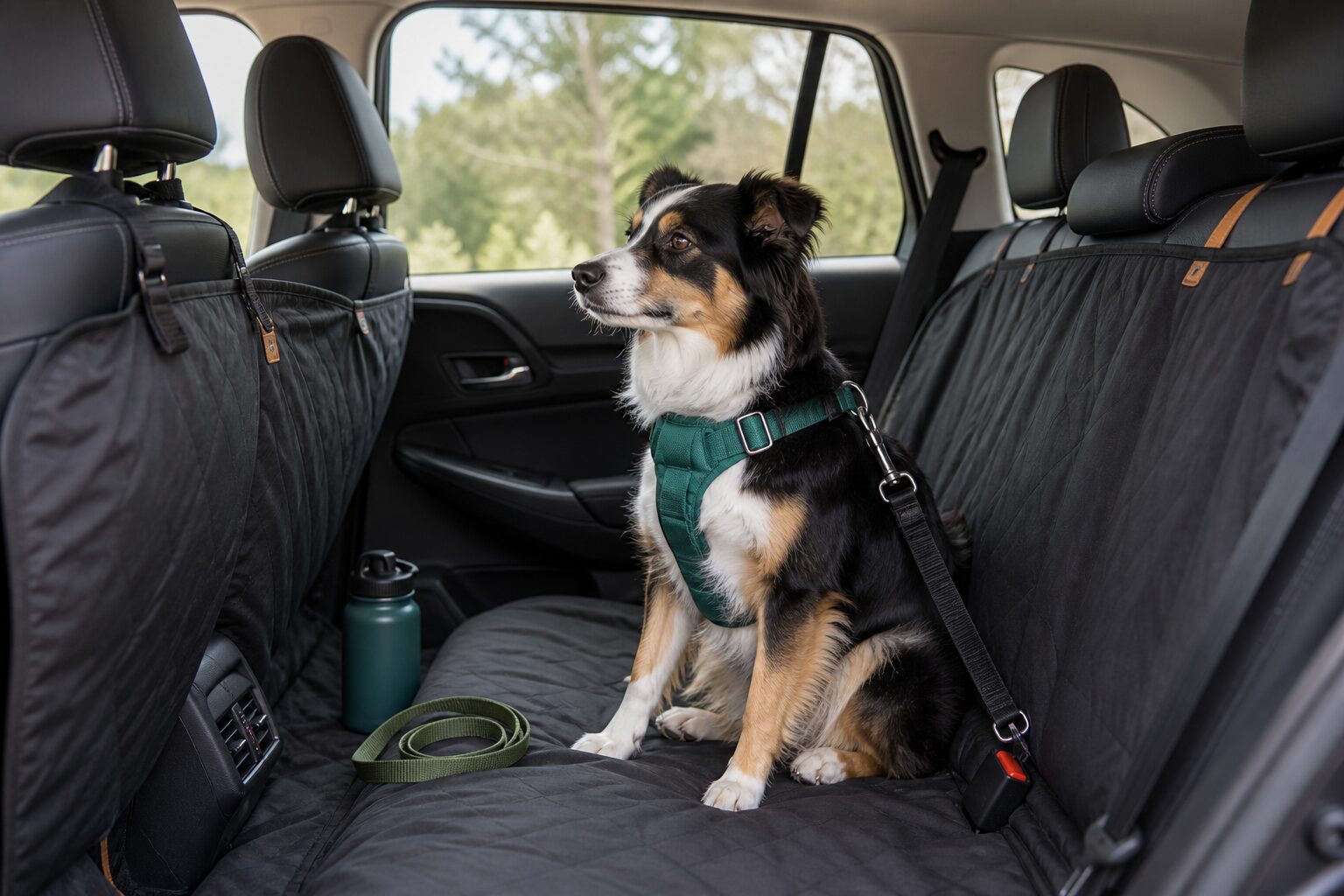
The safest way to travel with a dog in the car is to keep your dog restrained, comfortable, and away from the driver’s space. A loose dog can be injured during a sudden stop, distract the driver, or escape when a door opens.
You do not need a complicated setup for every short drive, but you do need a consistent one. A dog car harness, secured carrier, travel crate, or properly arranged back seat system can make car rides safer and calmer.
The Short Answer
To keep your dog safer in the car:
- Use a dog harness, seat belt, carrier, or crate
- Keep your dog in the back seat or secured cargo area
- Do not let your dog sit on the driver’s lap
- Do not let your dog hang far out of the window
- Use rear car window shades only if they do not block visibility, airflow, or restraint setup
- Bring water and plan breaks on longer drives
- Never leave your dog in a parked car in warm weather
- Check sizing and manufacturer instructions for any travel gear
Safety starts with restraint, but comfort and planning matter too.
Why Dogs Should Not Ride Loose
A loose dog may seem happy in the car, but it is not a safe travel plan. During hard braking or a crash, an unrestrained dog can be thrown forward or into the side of the vehicle.
A loose dog can also climb into the driver’s lap, step on controls, block visibility, jump out when a door opens, or get tangled in bags, leashes, or seat belts.
Even a calm dog can panic after a loud noise, traffic stop, or accident. A secure setup helps prevent one problem from turning into several.
If your dog has a habit of slipping out at rest stops, hotels, or campground parking areas, a GPS dog collar or tracker can be a useful backup. It does not replace restraint in the car, but it can help after an escape.
Choose a Safer Car Setup
There is no single best setup for every dog. Your choice depends on your dog’s size, your car, your trip length, and how your dog behaves during travel.
Dog Harness and Seat Belt
A dog car harness with a seat belt attachment is a common option for medium and large dogs. It lets your dog sit or lie down in the back seat while limiting movement.
Look for a harness that fits your dog’s chest and shoulders, strong attachment points, adjustable straps, clear car-use instructions, and enough room for comfort without too much movement.
Avoid attaching a seat belt tether to a regular collar. In a sudden stop, pressure on the neck can be dangerous.
Travel Crate or Carrier
A crate or carrier can be a good option for small dogs, anxious dogs, or dogs who settle better in a defined space.
Before using one in the car, check whether it fits securely in your vehicle, how it should be positioned, whether it can be attached or stabilized, whether your dog can stand, turn, and lie down comfortably, and whether it has enough ventilation.
For airline-style carriers, remember that car use and flight use are not always the same. Read the product details before assuming one carrier works for every kind of travel.
Back Seat Hammock or Seat Cover
A back seat hammock or seat cover is useful for protecting the car and giving your dog a cleaner travel area. It can help keep your dog from sliding into the footwell, but it should not replace a restraint.
If your dog struggles to jump into an SUV or cargo area, a ramp may be part of the setup too. See our guide to dog ramps for cars and SUVs.
Think of a hammock as comfort and containment support, not complete crash protection.
Avoid Common Car Safety Mistakes
Some car habits feel normal but can create risk. Avoid these common mistakes:
- Letting your dog ride on your lap
- Letting your dog sit in the front seat near an airbag
- Using a collar as the only restraint
- Opening the car door before attaching the leash
- Leaving a leash loose where it can tangle
- Letting your dog lean far out of the window
- Leaving your dog in a parked car
If your dog loves fresh air, crack the window enough for airflow but not enough for your dog to put most of their head or body outside.
Keep Your Dog Comfortable
A safer car setup should also be comfortable enough for your dog to stay settled.
Pack water, a travel bowl or water bottle, a familiar blanket, a small bed or mat, waste bags, cleaning wipes, and a towel.
If your dog gets nervous in the car, start with short drives before a long road trip. Reward calm behavior, keep the first few trips low-pressure, and avoid making every car ride end at the vet.
Plan Breaks and Watch the Weather
On longer drives, plan regular stops for water, bathroom breaks, and stretching. Many dogs do well with a stop every two to three hours, but your dog may need a different schedule.
Weather matters. Cars can heat quickly, even when the day does not feel extremely hot. Never leave your dog alone in a parked car in warm weather. In cold weather, bring a blanket and watch small, short-haired, or senior dogs more closely.
Final Thoughts
Car safety for dogs is mostly about reducing preventable risk. Keep your dog restrained, place them away from airbags, plan your stops, and use gear that fits your dog and your vehicle.
A good setup does not have to be fancy. It just needs to be secure, practical, and comfortable enough that your dog can ride calmly.
FAQ
What is the safest place for a dog in the car?
For many dogs, the back seat or a secured cargo area is safer than the front seat. Avoid placing dogs near active airbags.
Can I use a regular harness as a car harness?
Not all regular walking harnesses are designed for car restraint. Check the product instructions and look for gear made specifically for car travel.
Is a dog car hammock enough for safety?
A hammock helps protect the seat and may reduce sliding, but it should be paired with a restraint, harness, carrier, or crate.
Should dogs wear seat belts in the car?
Dogs should be restrained in some way. A seat belt attachment with a properly fitted harness is one option, but a carrier or crate may be better for some dogs.
Related guide: If you are choosing seat protection for longer drives, see our guide to the best dog car seat covers for road trips.