
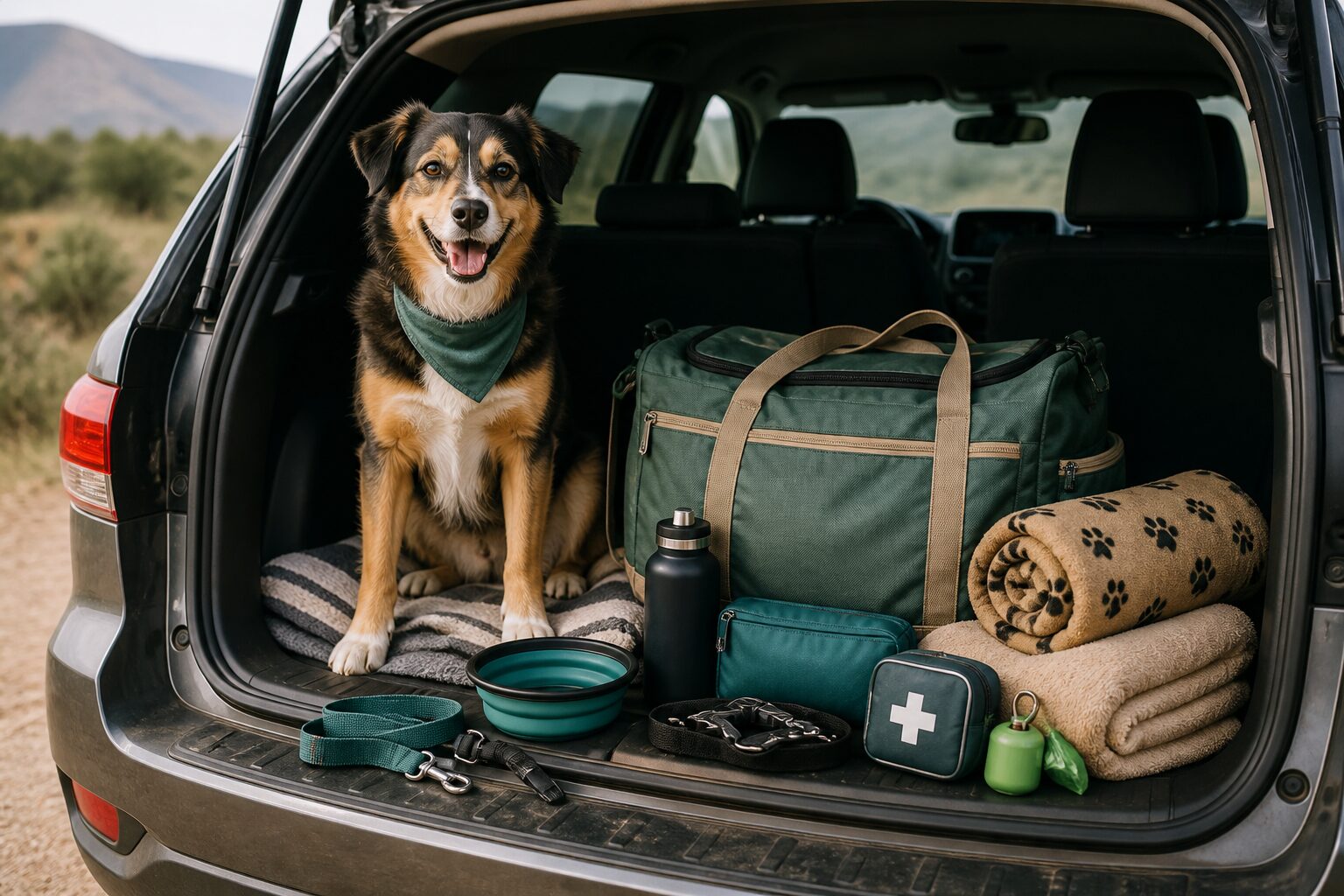
Planning a road trip with your dog is easier when you treat it like packing for a small traveler, not just bringing a pet along. Your dog needs water, food, safety gear, familiar comfort items, and a simple plan for breaks along the way.
This beginner dog road trip checklist covers the essentials for a day drive, weekend trip, or longer car ride. You can adjust it based on your dog’s size, age, health, and travel experience.
Quick Dog Road Trip Checklist
Here is the short version before we get into the details:
- Collar with ID tag
- GPS collar or tracker for higher-risk road trips, camping, or dogs who may slip away in unfamiliar places
- Leash and backup leash
- Harness or car-safe restraint
- Dog first aid kit with records, tick tool, gauze, and basic paw supplies
- Dog crate, carrier, or seat belt system
- Food and treats
- Fresh water
- Rear car window shades for reducing direct sun on summer drives
- Travel water bottle or bowl
- Collapsible food bowl
- Waste bags
- Dog bed, blanket, or mat
- Favorite toy or chew
- Towels or wipes
- Seat cover or car hammock
- First aid kit
- Medications, if needed
- Vaccination records or digital copies
- Poop bags and cleaning spray
- Extra towel for mud, rain, or spills
You do not need to buy every travel product before your first trip. Start with safety, hydration, bathroom breaks, and comfort.
For summer trips, comfort may also mean planning shade and a cooler resting surface. A dog cooling mat can help during supervised shaded breaks, but it does not make a hot car safe.
Before You Leave Home
Check Your Dog’s ID and Records
Before a road trip, make sure your dog’s collar tag has your current phone number. If your dog is microchipped, confirm that the registration information is up to date.
For longer trips, hotel stays, boarding, daycare, or camping reservations, keep a copy of vaccination records on your phone. Some places may ask for proof of rabies vaccination or basic health information.
Plan Stops Before the Drive
Most dogs should not stay in the car for hours without a break. A simple rule is to plan a stop every two to three hours, then adjust for your dog.
Puppies, senior dogs, anxious dogs, and dogs with medical needs may need more frequent stops. Look for safe places where you can leash your dog before opening the car door. Busy gas stations and highway shoulders are not ideal potty spots.
Pack Food, Water, and Medications
Pack your dog’s regular food instead of switching brands during the trip. Sudden food changes can upset your dog’s stomach, which is the last thing you want in a car.
Bring more water than you think you need, especially in warm weather. A dog travel water bottle or collapsible bowl makes stops easier because you can offer water quickly without unpacking half the car.
If your dog takes medication, pack it in a labeled container and bring extra doses in case your trip runs long.
Car Safety Gear
Restraint or Travel Crate
Your dog should not ride loose in the car. A sudden stop can injure your dog and distract the driver.
Depending on your car and your dog’s size, consider one of these setups:
- A dog seat belt attached to a well-fitted harness
- A travel crate secured in the vehicle
- A carrier for small dogs
- A back seat hammock with a separate restraint
Always check the manufacturer’s instructions. A product that looks secure may not be designed for crash protection, so read the details before relying on it.
Seat Cover or Hammock
A back seat cover or dog car hammock helps protect your seats from fur, mud, drool, and scratches. It also gives your dog a more defined space in the car.
For SUVs, a cargo liner may be useful if your dog rides in the back cargo area. Make sure the space is ventilated, secure, and comfortable.
For older dogs or larger dogs using the rear cargo area, also consider whether a dog ramp for cars and SUVs would make loading and unloading easier.
Comfort Items
Dogs travel better when the car feels familiar. Bring one or two items your dog already knows:
- A blanket that smells like home
- A small travel bed
- A favorite toy
- A chew for rest stops or hotel downtime
Avoid giving hard chews while the car is moving, especially if your dog tends to gulp.
Cleaning and Emergency Supplies
Even calm dogs can get muddy, carsick, or nervous on a trip. Keep a small cleaning kit within reach:
- Waste bags
- Paper towels
- Pet-safe wipes
- Old towel
- Small trash bag
- Enzymatic cleaner for accidents
A basic dog first aid kit is also worth packing. It should include gauze, bandage material, tweezers, antiseptic wipes, and any items your veterinarian recommends for your dog.
This is not a substitute for veterinary care. If your dog is injured, overheated, or acting seriously ill, contact a veterinarian or emergency clinic.
What Not to Forget at Hotels or Campgrounds
If you are staying overnight, pack for the destination too, not just the drive.
- Food storage bag or container
- Dog towel
- Portable bed or blanket
- Extra leash
- Proof of vaccines if required
- A quiet chew or toy for downtime
Never assume a hotel, rental, campground, or park allows dogs everywhere. Check pet rules before you arrive.
Final Tips for a Smoother Road Trip
Do a short practice drive before a long trip if your dog is new to car travel. Watch for signs of stress, drooling, pacing, whining, or carsickness.
Feed your dog lightly before the drive if your dog gets motion sick, and ask your veterinarian about travel sickness or anxiety if it happens often.
The best dog road trip setup is simple: keep your dog secure, offer water often, stop before your dog gets restless, and pack enough familiar gear to make the trip feel manageable.
FAQ
How often should I stop on a road trip with my dog?
Many dogs do well with a break every two to three hours, but puppies, senior dogs, anxious dogs, and dogs with health needs may need more frequent stops.
Should my dog ride in the front seat?
The back seat or secured cargo area is usually safer. Airbags can be dangerous for dogs in the front seat, especially small dogs.
What should I pack for my dog’s first road trip?
Start with ID, leash, food, water, bowls, waste bags, a restraint or crate, a blanket, cleaning supplies, and any medications your dog needs.
Do I need a dog car seat?
Small dogs may benefit from a car seat or booster-style travel seat, but it should still be used with an appropriate harness or restraint. Always check product safety details.
Related guide: If you are choosing seat protection for longer drives, see our guide to the best dog car seat covers for road trips.
Related guide: If you are ready to compare options, see our guide to the best dog travel water bottles for road trips and hiking.
For summer routes, wooded rest stops, and campground stops, add a tick remover and dog-safe repellent plan. Our dog bug spray travel guide explains what belongs in that part of the kit.