
Dog Seat Belt Tethers for Car Travel: What to Check Before Buying
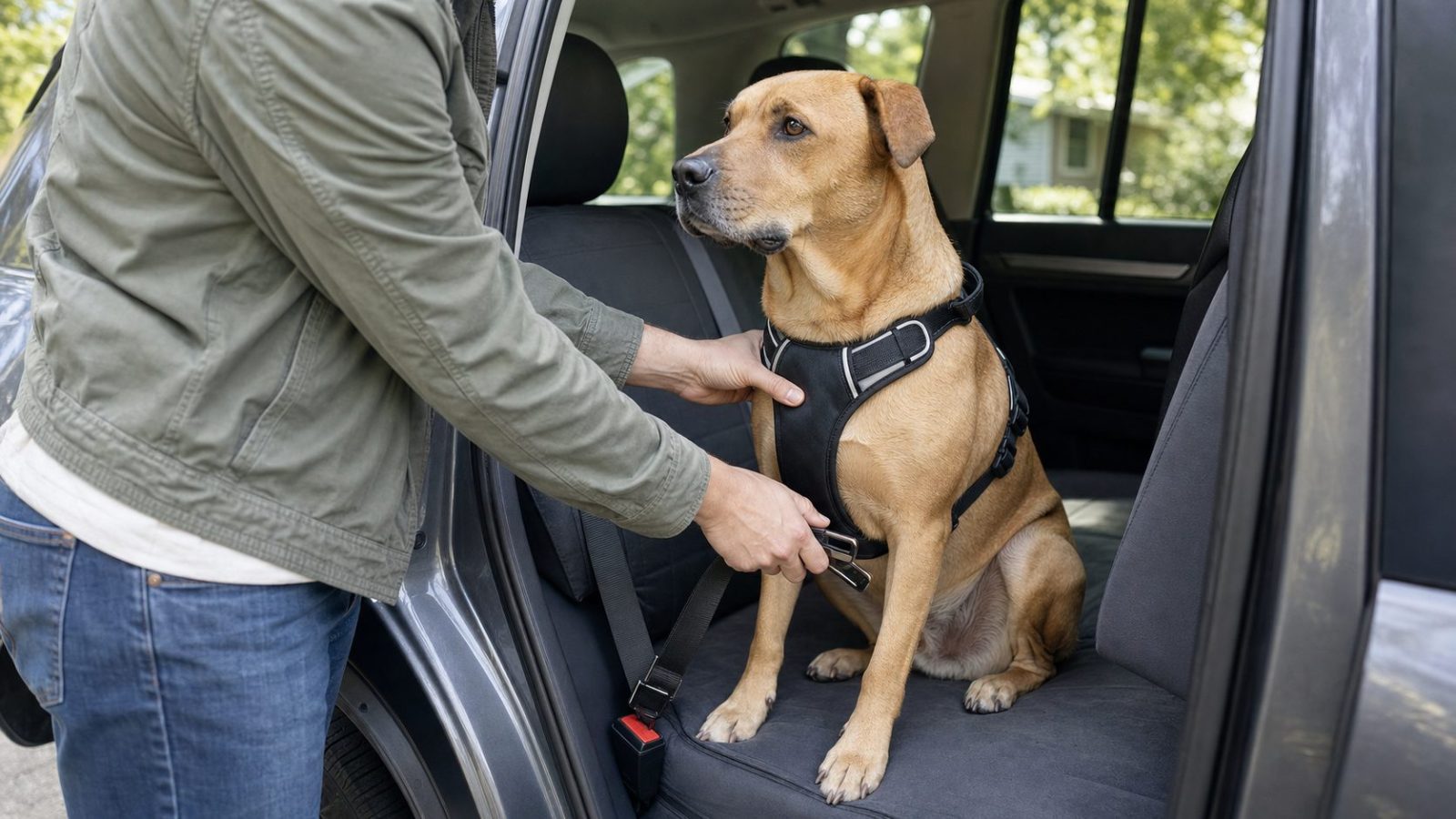
A dog seat belt tether can help keep a dog from roaming across the back seat, climbing into the front, or stepping into the driver’s space. That makes it useful for short drives and road trips, especially when it is paired with a well-fitted car harness.
The tether itself is not the whole safety setup. The part that touches your dog should be a harness, not a collar. The tether should be short enough to limit movement without pulling your dog into an awkward position. If a product claims crash protection, look for clear independent testing information rather than relying on vague words like “heavy duty.”
This guide is for owners who are trying to choose a simple, practical tether setup without assuming every product with a seat belt clip offers the same protection.
Compare dog seat belt tethers on Amazon
Quick Answer
For most back-seat car travel, the best dog seat belt tether is an adjustable strap that connects to a fitted harness, works with your vehicle’s buckle or anchor point, and keeps your dog from reaching the front seat. It should control movement without forcing your dog to sit stiffly for the whole drive.
If you want crash protection, look beyond the strap and check whether the complete harness-and-restraint system has clear testing information. A basic tether may help with movement control and driver distraction, but it should not be treated as crash protection unless the product gives specific evidence.
What a Dog Seat Belt Tether Actually Does
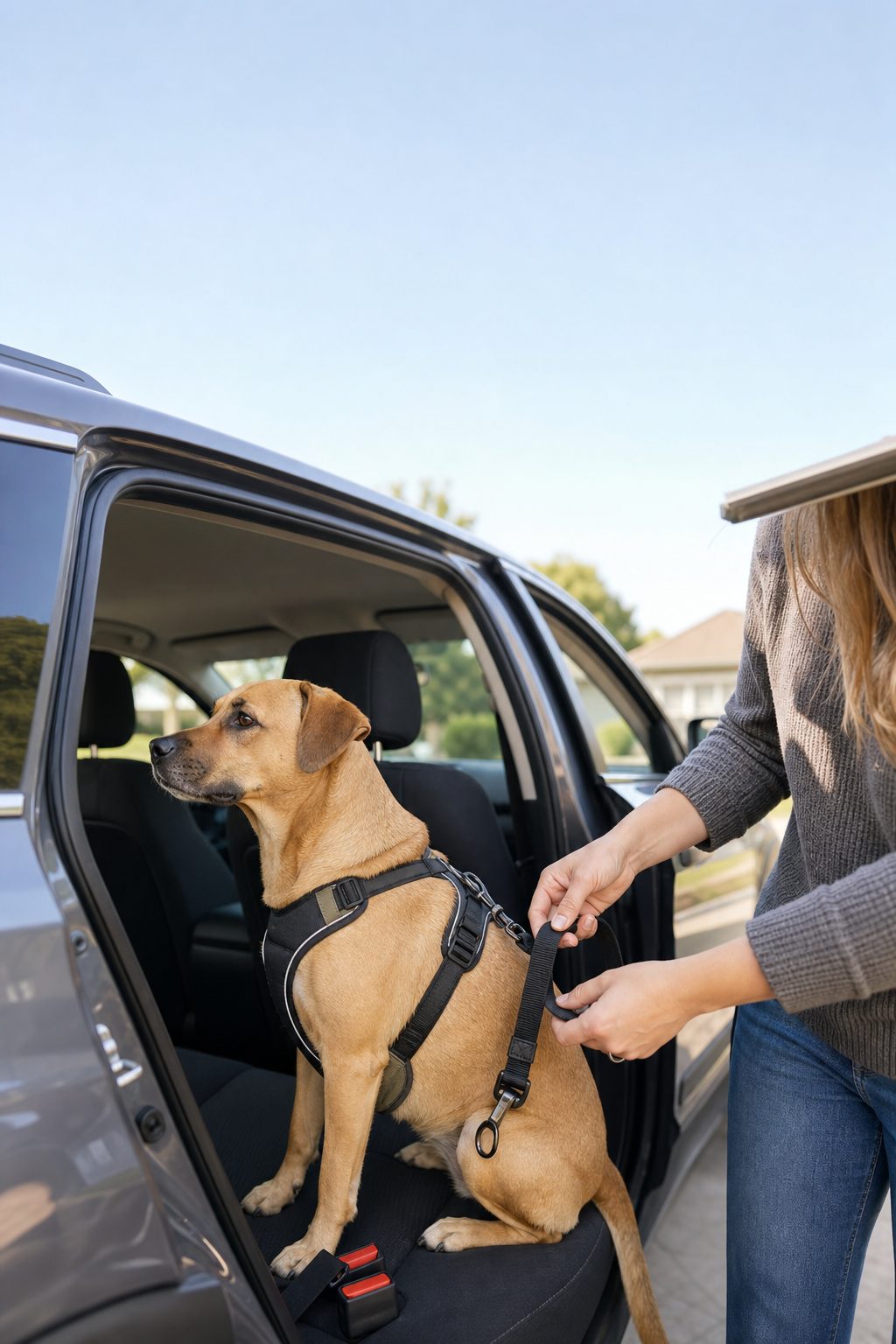
A dog seat belt tether is a short strap or leash that connects your dog’s harness to a vehicle anchor point. Depending on the design, it may click into the seat belt buckle, loop around a seat belt, clip to a child-seat anchor, or attach to a cargo-area tie-down.
Its main job is movement control. It can help keep your dog in the back seat area and reduce sudden wandering during turns, braking, or rest-stop excitement. That matters because a loose dog can distract the driver, step on gear, block mirrors, or make door openings harder to manage.
It does not turn the back seat into a crash-tested crate. Some harness-and-tether systems are designed and tested for crash conditions, but many everyday tethers are not. Treat product claims carefully and check how the company explains testing, sizing, and attachment points.
Use a Harness, Not a Collar
This is the first rule. A car tether should attach to a sturdy, well-fitted harness. Do not clip a seat belt tether to your dog’s collar.
A collar concentrates force around the neck. Even during normal driving, a sudden stop or a dog jumping down from the seat can create a hard pull. A harness spreads pressure over the chest and body, which is a better starting point for car travel.
For the best fit, check the harness before you connect the tether. The chest panel should sit flat, the straps should not rub behind the front legs, and the harness should not slide around when your dog turns or lies down. If the harness can twist sideways before the car moves, the tether will not fix that.
Seat Belt Buckle Tethers: Easy, but Check Compatibility
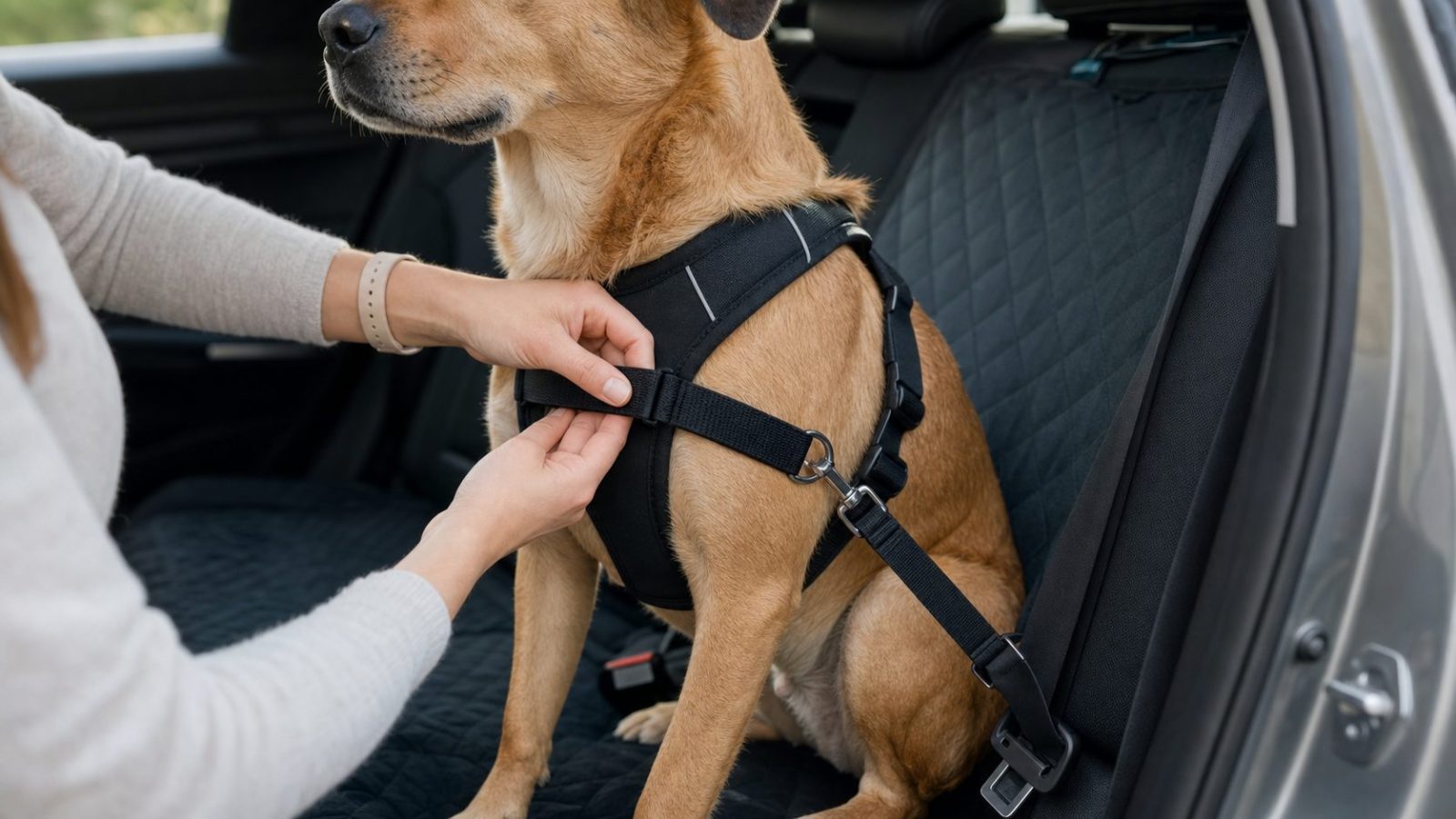
Buckle-in tethers are popular because they are simple. One end clips to the dog’s harness and the other end clicks into the car’s seat belt receiver.
They are convenient for sedans, SUVs, and shared family cars because you can remove them quickly when a passenger needs the seat. They also work well with many bench seat covers, as long as the cover has openings for the buckle receiver.
Before buying, check the product notes for vehicle compatibility. Seat belt buckles are not identical across every car. Some tethers may not click securely into certain receivers, and some rear seats have recessed buckle points that make the strap awkward.
After installation, tug the tether by hand, then let your dog sit, turn, and lie down while you watch the buckle area. If the buckle releases easily, sits at a sharp angle, or disappears under the seat cover, choose a different attachment style.
Loop-Style Tethers: Better for Some Cars
Loop-style tethers wrap around an existing seat belt, headrest post, or another approved anchor point depending on the product design. They can be useful when a buckle-in tether does not fit your vehicle or when you do not want to rely on the seat belt receiver.
The trade-off is setup. A looped tether can be very simple, but it needs to be routed correctly. If it slides up, twists, or creates a long loose section, your dog may get more room than you intended.
Avoid looping a tether around a weak point just because it is nearby. A headrest post, cargo hook, or latch point may look convenient, but the product should clearly say where it is designed to attach. If the instructions are vague, that is a reason to keep looking.
Adjustable Length Matters More Than It Looks
A tether that is too long lets your dog move across the seat, step into the footwell, or reach the front console. A tether that is too short can make it hard for your dog to sit or lie down naturally.
For most back-seat setups, the goal is controlled movement. Your dog should be able to sit, turn around carefully, and settle. They should not be able to climb into the front seat, lean far out of an open window, or get tangled around the seat belt receiver.
Measure the setup in the car, not on the kitchen floor. Put the harness on your dog, connect the tether, and watch how the strap changes when your dog sits, lies down, and faces the door. The right length depends on dog size, seat depth, and where the anchor point sits.
Check the Hardware
Small hardware details matter because they are the parts you handle every time.
Look at the clip that connects to the harness. It should close fully and rotate without sticking. A swivel clip can help reduce twisting if your dog turns around, but it still needs to feel solid in your hand.
Check the stitching and strap width. Thin straps may be easier to pack, but they can twist and feel flimsy on larger dogs. Very bulky straps may be overkill for a small dog and harder to route around a carrier or seat cover.
If a product uses elastic or a bungee section, think about your dog’s behavior. A little give may feel less abrupt during normal movement, but too much stretch can give a strong dog more room to lunge or reach the front seat.
Crash-Tested Claims: Read the Details
Some dog car harnesses and restraint systems are tested more seriously than others. If crash protection is a priority, look for a complete harness-and-restraint system with clear testing information from the brand or an independent safety organization.
Be cautious with loose phrases like “safety tested,” “strong,” or “premium metal clip” when the listing does not explain the test, the dog size used, the attachment method, or the pass/fail standard. Hardware strength alone does not tell you how the whole setup performs with a dog’s body in a vehicle.
For everyday PawTripKit readers, the honest takeaway is simple: a basic tether may help with movement control and driver distraction, but it should not be described as crash protection unless the product gives you specific evidence.
Best Setup for Small Dogs
Small dogs often need more than a short strap. If the dog is riding on the seat, a tether should connect to a harness that fits snugly without pressing into the throat or armpits.
Some small dogs do better in a secured carrier, especially if they are anxious, very light, or likely to slide on the seat. In that case, the carrier setup matters more than a loose tether clipped to the dog.
If you use a booster seat, read the booster’s instructions carefully. Some booster seats are mainly for elevation and comfort, not crash protection. The tether inside the booster should still attach to a harness, and the booster itself needs to be secured according to the manufacturer’s directions.
Best Setup for Medium and Large Dogs
Medium and large dogs need a setup that limits forward movement and side-to-side shifting without pinning them in place. A wide, well-fitted harness is usually more comfortable than a narrow walking harness for longer drives.
For larger dogs who lean against the door or shift during turns, combine the tether with a stable back-seat layout. A seat cover with seat belt access, a non-slip layer, and a clear footwell plan can make the tether easier to use.
Do a driveway check before the first long trip. Let your dog get in, connect the tether, close the door, and watch for five minutes. If the strap wraps around a leg, pulls the harness sideways, or lets your dog reach the front seat, adjust it before you drive.
Seat Cover and Buckle Access
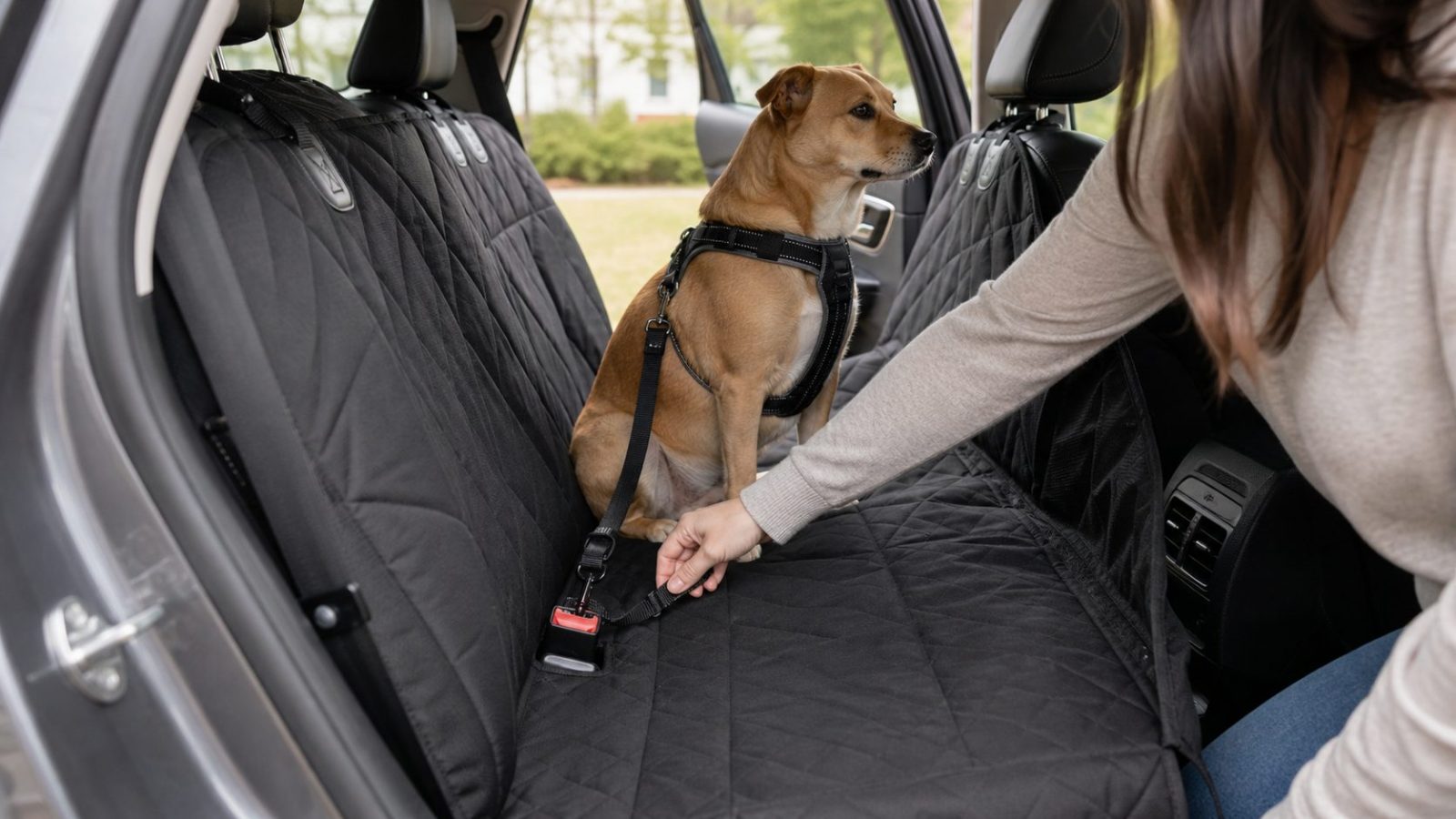
A seat belt tether is annoying if your seat cover hides the buckle receiver. Before buying another tether, check whether your current cover has usable seat belt openings.
If the openings are narrow or covered by hook-and-loop flaps, route the tether while the car is parked and make sure the buckle clicks without forcing it. A tether trapped under a hammock cover can be hard to release quickly at a rest stop.
If you are buying a new cover and a tether together, choose the back-seat setup first. The cover should protect the seat while still leaving access to buckles, latch points, and any restraint gear you use.
Common Mistakes to Avoid
The biggest mistake is clipping the tether to a collar. Even if your dog is calm, a collar is the wrong connection point for car restraint.
Another mistake is leaving the tether too long because the dog seems happier with extra room. Extra room can turn into pacing, tangling, and front-seat climbing.
Do not assume the seat belt buckle style fits every car. Test it in your vehicle before relying on it for a road trip.
Do not use a tether as a substitute for training or a calmer travel routine. If your dog barks, lunges at windows, or panics in the car, the tether may keep them in one area, but it will not address the stress behind the behavior.
Quick Buying Checklist
Before buying a dog seat belt tether, check:
- It attaches to a harness, not a collar.
- The length adjusts for your dog and back seat.
- The clip closes securely and rotates without sticking.
- The buckle or loop style fits your vehicle.
- It works with your seat cover or hammock.
- It does not let your dog reach the front seat.
- It does not twist around your dog’s legs.
- The brand gives clear testing details if it claims crash protection.
- The instructions explain the correct attachment point.
- You can release it quickly at rest stops without digging under the cover.
Related PawTripKit Guides
For a cleaner and safer back-seat setup, read these next:
- How to Keep Your Dog Safe in the Car
- How to Set Up the Back Seat for a Dog Road Trip
- Best Dog Car Seat Covers With Seat Belt Access
- How to Secure a Small Dog Carrier in the Car
- Dog Road Trip Checklist
Final Thoughts
A dog seat belt tether is a small piece of gear, but it can change how manageable the back seat feels. The best setup keeps your dog from roaming, works with your seat cover, and connects to a harness that actually fits.
Be honest about what you are buying. If you need basic movement control, a simple, compatible tether may be enough. If you want crash protection, look for a tested harness-and-restraint system and read the details carefully. Either way, test the setup at home before you count on it for a long drive.
FAQ
Can I attach a dog seat belt tether to a collar?
No. A car tether should attach to a harness. Clipping it to a collar can put force on the dog’s neck during sudden movement or braking.
Are dog seat belt tethers crash tested?
Some full harness-and-restraint systems have clearer testing than basic tethers, but many simple tethers do not provide enough detail to treat them as crash protection. Read the product’s testing information carefully.
How short should a dog seat belt tether be?
It should be short enough to keep your dog in the back-seat area and away from the front seat, but long enough for your dog to sit, turn carefully, and lie down without being pulled sideways.
Can I use a dog seat belt tether with a hammock seat cover?
Yes, if the hammock has usable openings for the seat belt buckle or anchor point. Test the buckle access before driving so the tether is not buried under the cover.
Is a tether better than a crate or carrier?
It depends on the dog, vehicle, and trip. Some dogs do well with a harness and tether in the back seat. Small, anxious, or very active dogs may do better in a secured carrier or crate-style setup.