
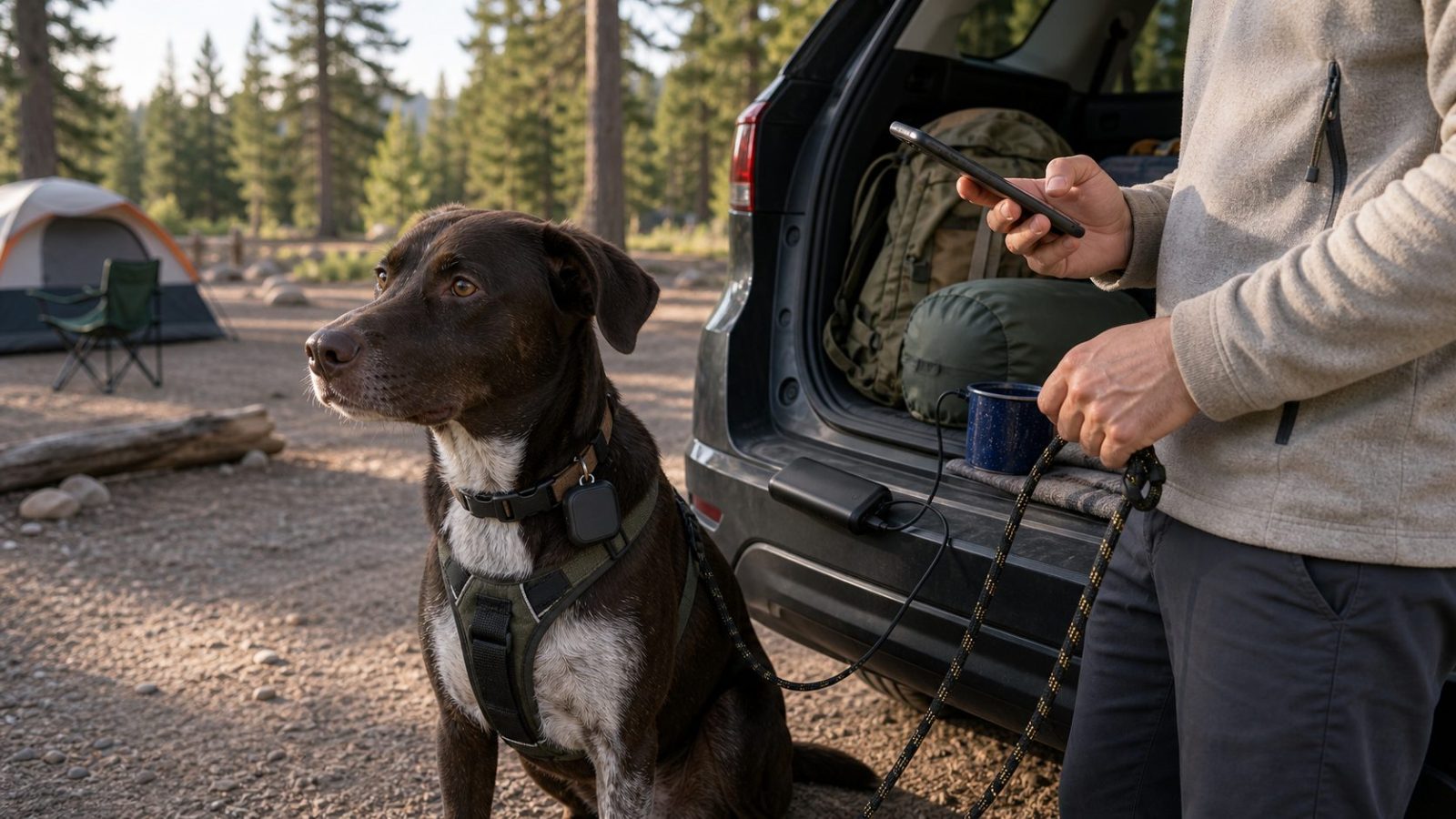
Tractive is one of the dog GPS tracker brands that comes up quickly when you start looking for a way to keep better tabs on your dog during camping trips, road trips, and long weekends away from home. It is not a replacement for a leash, a secure harness, or a closed campground gate. It is a backup tool for the moment when normal routines fail.
That is the right way to judge it. Not “will this make travel risk-free?” It will not. The better question is: if your dog slipped out of the car at a rest stop, wandered from a campsite, or pushed through a cabin door, would a dedicated GPS tracker give you better information than an ID tag and panic alone?
For some dogs and trips, yes. For others, the subscription, charging routine, and coverage limits may be more than you need.
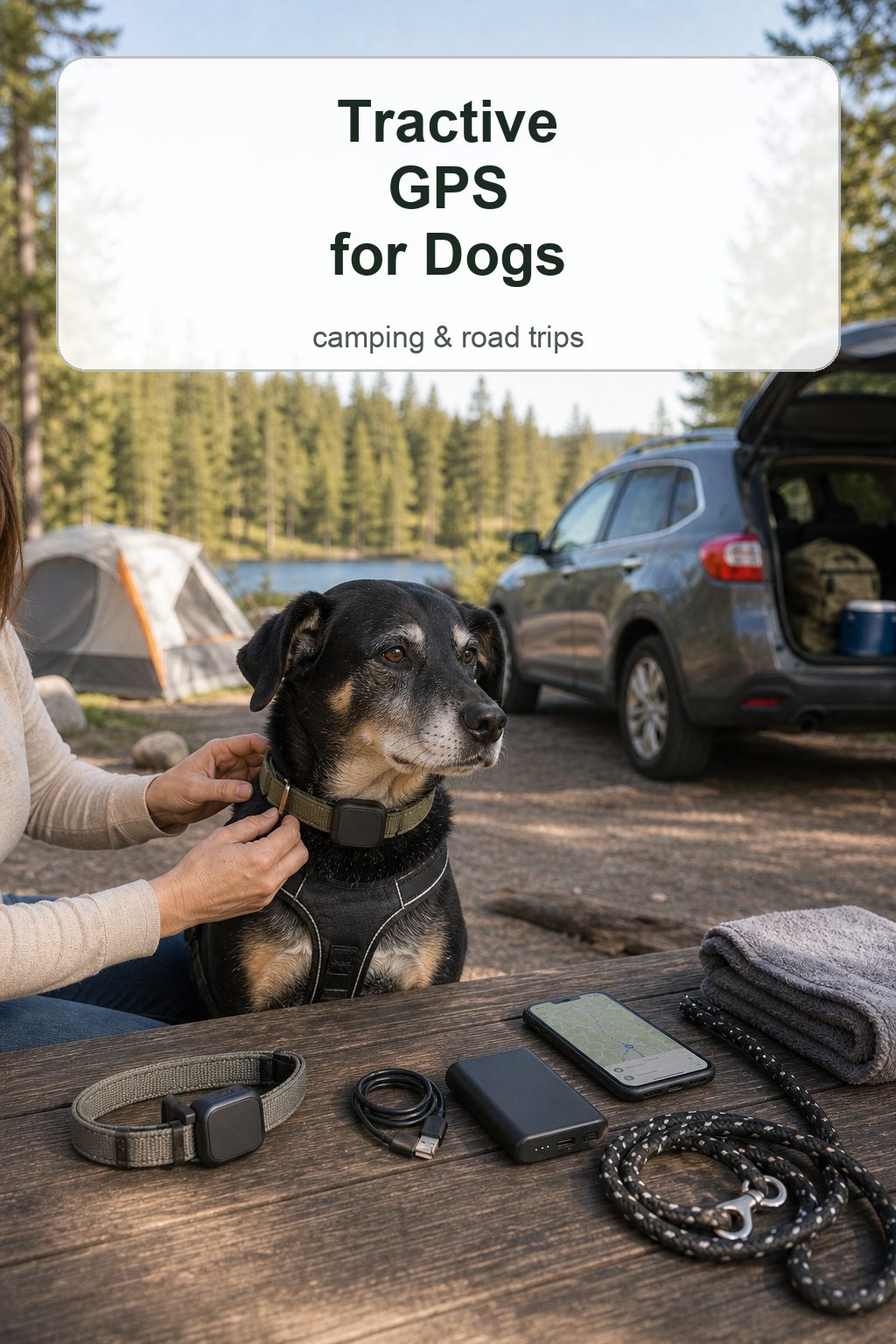
Compare Tractive dog GPS trackers on Amazon
Quick Answer
A Tractive dog GPS tracker is worth considering if your dog travels to campgrounds, cabins, rural rentals, trailheads, dog-friendly hotels, or unfamiliar neighborhoods where getting loose would be hard to manage. It makes the most sense for dogs who are curious, quick through doors, easily spooked, newly adopted, or allowed on long lines in outdoor settings.
It is less compelling if your dog only takes short neighborhood walks, never leaves a fenced yard, or you do not want another subscription and charging habit. Tractive-style tracking works best when you are willing to keep the device charged, check the app before trips, and understand that cellular coverage can still affect updates.
If you are choosing between Tractive DOG 6 and DOG 6 XL, start with dog size and battery needs. Tractive’s own product page currently positions DOG 6 for dogs around 9 lb and up, and DOG 6 XL for larger dogs around 44 lb and up. Check the current product page before buying because specs, plans, and battery claims can change.
What Tractive Is Trying to Solve
Most dog travel problems happen in transition moments. You open the SUV door at a rest stop. Someone unzips a tent. A cabin door does not latch. Your dog sees a squirrel before you have the leash fully clipped. These are not dramatic scenes. They are ordinary mistakes that happen quickly.
A GPS tracker gives you one more way to respond. Instead of only searching on foot and calling your dog’s name, you can open the app and see whether the tracker has a recent location.
That does not mean the app will update perfectly everywhere. Remote roads, weak cell service, battery level, terrain, and the tracker’s mode can all affect performance. But for travel, imperfect information can still be much better than no information.
The important thing is to buy it for the right reason. Tractive is not a training tool. It does not teach recall, stop a dog from chasing wildlife, or make off-leash camping safe. It is a location backup.
DOG 6 vs DOG 6 XL: Start With Dog Size
Tractive’s current lineup separates smaller and larger dogs with DOG 6 and DOG 6 XL. That matters because a tracker is not just a tech gadget; it is something your dog wears.
For small and medium dogs, size and weight are easy to underestimate. A tracker that looks small on a product page can feel bulky on a narrow collar. It may sit awkwardly under the chin, pull the collar sideways, or bang against a harness ring.
For larger dogs, battery life and durability may matter more. A bigger dog may be more likely to cover ground quickly if they get loose, and a camping weekend may include longer outdoor days. That is where a larger unit with longer battery claims can make sense, if it fits comfortably.
The simplest test is physical: would your dog wear this all day without fussing with it? If the answer is no, the app features do not matter much.
Subscription Cost Belongs in the Decision
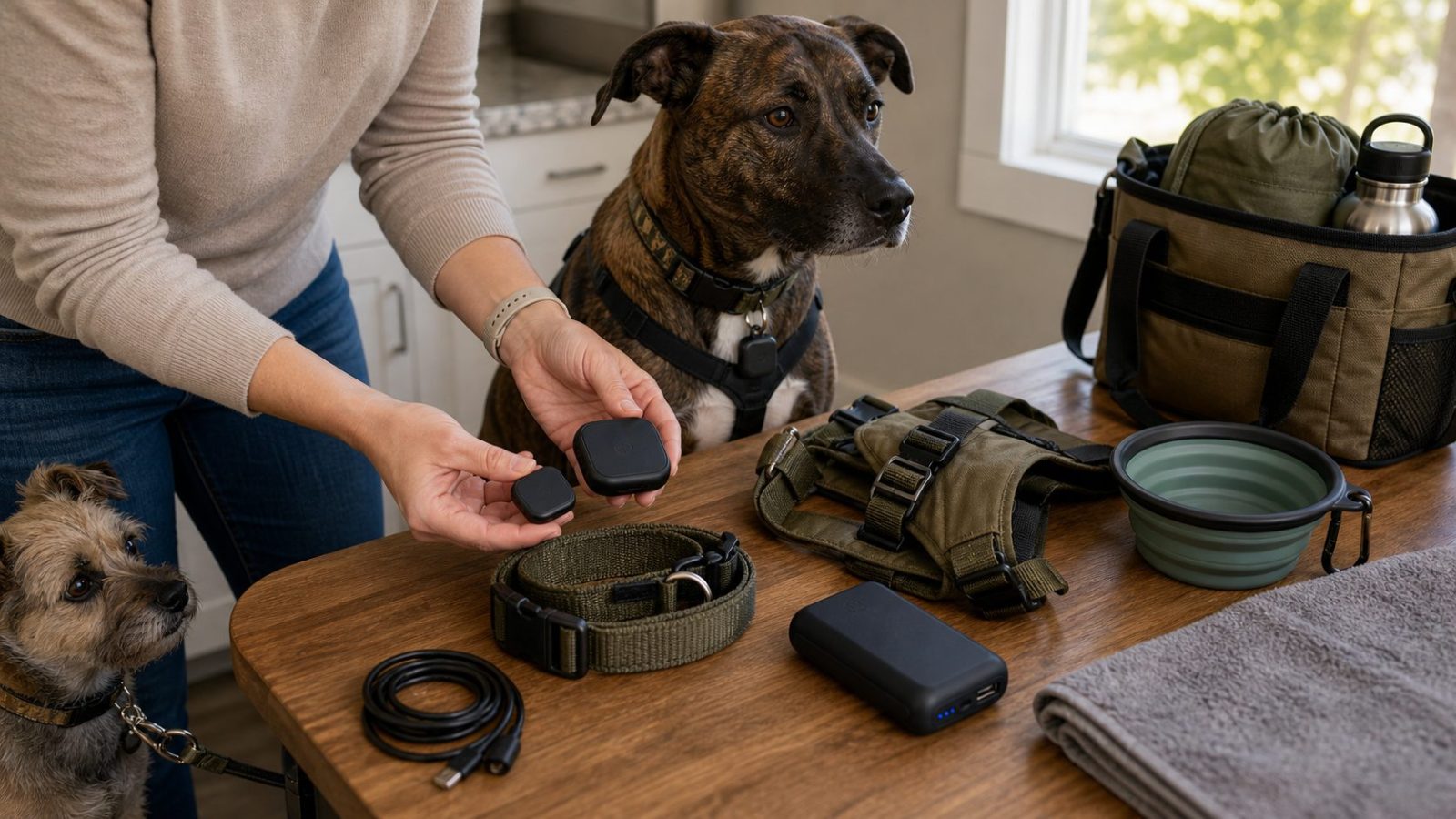
Dedicated GPS dog trackers usually need an active service plan because they send location data through a network. Tractive is no exception. That does not make it bad; it just means the real cost is not only the device.
Before buying, look at the current subscription options and decide whether you would still be happy with the purchase six months from now. If you only camp once a year, the math may feel different than it does for someone who travels every month.
Also think about who needs app access. If two adults share dog duty on trips, check whether the app and plan setup make that practical. One person holding all the location information is not ideal when everyone is searching around a campground.
Do not buy based only on a low device price. The plan is part of the product.
Battery Life: Good Claims Still Need a Routine
Tractive publishes battery expectations for its devices, and the larger model is positioned for longer use. That is useful, but travel is not a lab test. Battery life can change with update settings, live tracking, signal conditions, temperature, and how often you check the app.
For camping, I would treat the tracker like a phone or headlamp: charge before leaving, check every morning, and keep the cable somewhere obvious.
That charging habit is part of the campsite routine. For a more detailed pre-trip and at-camp sequence, use the dog GPS tracker battery checklist before a long weekend away from home.
If you use live tracking at a trailhead or after a scare, expect the battery to drain faster than it would in normal mode. That does not mean something is wrong. It means you should know how your own device behaves before the first real trip.
The best habit is simple. Charge it the night before, confirm the app sees it before you drive away, and bring the charger in the same pouch as your phone cable.
Coverage: The Part Buyers Forget
GPS dog trackers can feel like magic until you drive into a place where your phone barely works. Tractive uses location technology plus network communication, which means real-world updates can still depend on service conditions.
That matters for camping. A tracker may work beautifully at home and update slowly at a forest campground, lake cabin, or rural trailhead. If your trips often involve remote public land, check coverage expectations before you rely on it.
At a normal family campground near town, you may have enough service for practical updates. At a dispersed campsite down a dirt road, expectations should be more cautious.
This is also why a GPS tracker should not be your only safety layer. Keep an ID tag on your dog. Keep the leash clipped before opening car doors. Use a long line if recall is not reliable. A tracker helps after a problem starts; it does not prevent the problem.
What I Would Check Before Buying
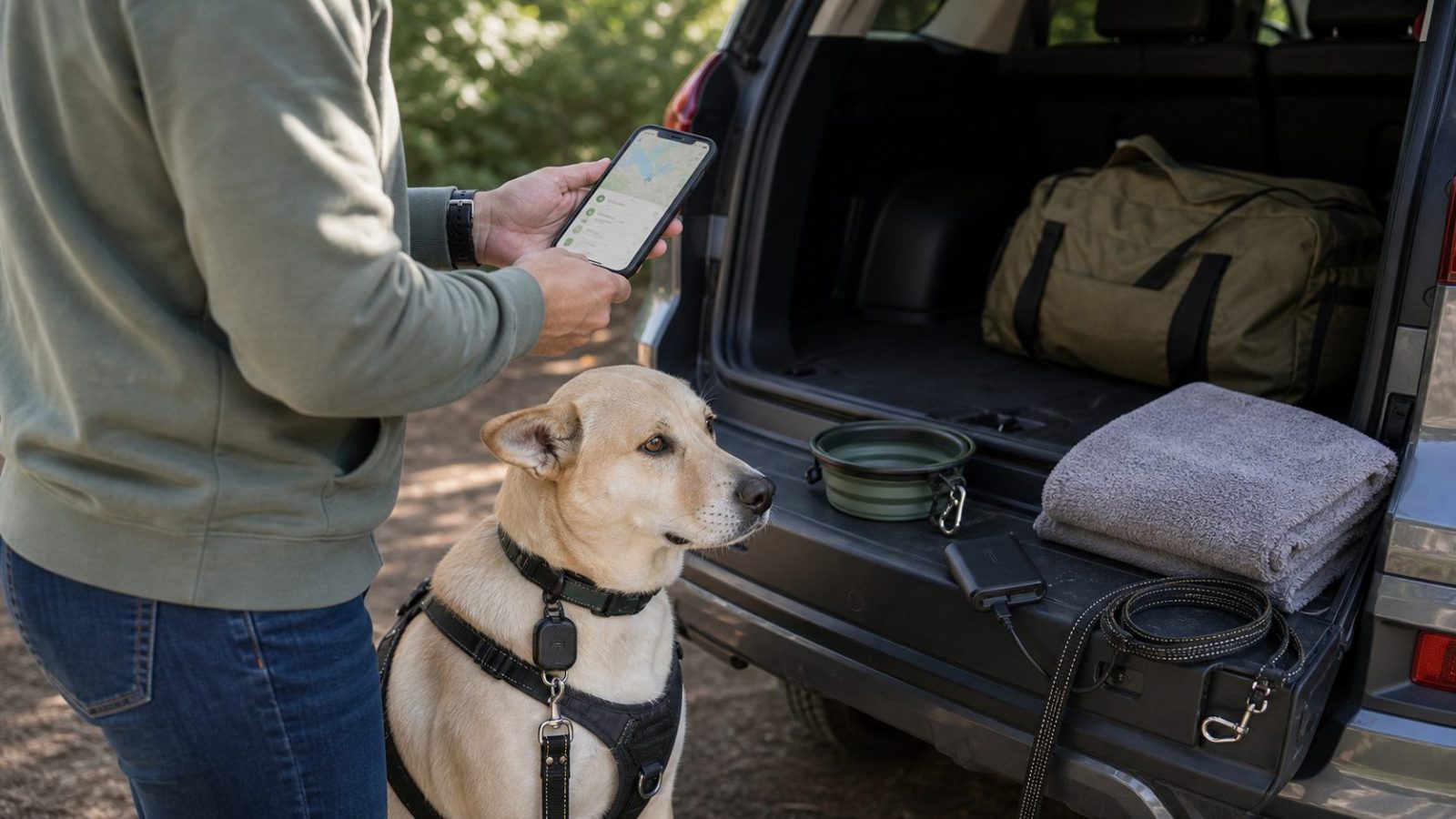
I would start with dog behavior, not product features.
If your dog is calm, always leashed, and mostly travels between home, hotel, and short walks, Tractive may still be useful but not urgent. If your dog is a door-dasher, wildlife chaser, escape artist, or nervous traveler, the case gets stronger.
Then I would check the practical details:
- Does DOG 6 or DOG 6 XL fit your dog’s size?
- Will the tracker sit comfortably on the collar or harness?
- Are you comfortable with the current subscription cost?
- Does coverage look reasonable where you camp or drive?
- Can you charge it reliably on multi-day trips?
- Can another adult access the tracker if needed?
- Does your dog still wear a readable ID tag?
If any one of those is a hard no, pause before buying.
Best Fit Scenarios
Tractive is a better fit for road trip dogs who visit unfamiliar places. A dog who is perfectly predictable at home can act differently at a rental cabin, busy rest area, or campground with other dogs nearby.
It is also a good fit for dogs who spend time on long lines at camp. Even with a long line, clips fail, knots slip, and people make mistakes. A tracker gives you another layer if the dog suddenly has more freedom than intended.
It may be useful for newly adopted dogs, foster dogs, and dogs with uncertain recall. Those dogs can be wonderful travel companions, but they may not yet be predictable around open doors, wildlife, storms, or strangers.
For senior dogs, the case depends on behavior and health. A slow senior who never leaves your side may not need much tracking help. A senior with hearing loss or confusion may benefit from a location backup, especially at cabins and campgrounds.
Not Ideal For Every Dog
Tractive is not automatically the right choice for tiny dogs. If your dog is close to the lower size range, check dimensions carefully and think about comfort. A tracker that annoys the dog may end up in a drawer.
It is also not ideal for owners who hate charging routines. If you already struggle to keep your phone, camera, and headlamp charged, another device may become a weak link unless you build a simple system.
And it may be more than you need if your dog’s travel life is mostly short, controlled, and urban. In that case, a visible ID tag, microchip, leash routine, and maybe a lighter backup tracker may be enough.
The device is only as useful as the routine around it.
Setup Tips Before the First Trip
Do not open the box the night before a camping weekend and hope everything works.
Set up the app at home. Charge the tracker. Attach it to the collar or harness. Walk around the neighborhood and watch how updates behave. Let your dog wear it for a normal afternoon so you can see whether it rubs, twists, or bothers them.
Then do a driveway version of your travel routine. Clip the leash, open the car door, check the app, and make sure the tracker is still attached after your dog gets in and out.
That sounds fussy until you imagine trying to solve the same problems at a trailhead with mosquitoes, tired people, and an excited dog.
Common Mistakes
One mistake is treating a GPS tracker like permission to relax basic handling. Do not do that. Leash routines, harness fit, car-door control, and campsite boundaries still come first.
Another mistake is ignoring subscription and coverage until after buying. Those two details decide whether the tracker fits your actual travel life.
A third mistake is attaching the tracker to gear the dog does not always wear. If your dog’s collar comes off in the tent, but the tracker is on that collar, you have a gap in your system.
Finally, do not forget the visible ID tag. If someone finds your dog, a phone number on a tag may be faster than any app.
Related PawTripKit Guides
For a stronger GPS and camping setup, read these next:
- Dog GPS Tracker Battery Checklist for Camping and Road Trips
- Dog GPS Tracker vs AirTag for Camping and Road Trips
- Best GPS Dog Collars for Road Trips and Camping
- Dog Rest Stop Routine for Road Trips
- Dog First Aid Kit for Road Trips and Camping
Final Thoughts
Tractive is a serious option for dog owners who camp, road trip, or spend time in unfamiliar outdoor places. It is most useful when your dog has a real chance of getting out of sight and you are willing to manage the subscription, charging, coverage, and fit.
I would not buy it as a magic safety device. I would buy it as a backup layer for a dog who already has a leash routine, ID tag, secure travel setup, and an owner who checks gear before leaving.
That is where a GPS tracker makes sense: not as the whole plan, but as one more practical tool in a travel setup that already respects how fast dogs can move when a door, gate, or leash clip goes wrong.
FAQ
Is Tractive good for camping with dogs?
It can be a good fit if you camp in places where network coverage is reasonable and your dog wears the tracker comfortably. It is most useful as a backup if your dog slips away from a campsite, rest stop, cabin, or trailhead.
Does Tractive require a subscription?
Yes, Tractive GPS trackers require an active service plan to send location information through the app. Check the current plan options before buying.
What is the difference between Tractive DOG 6 and DOG 6 XL?
The main buying difference is dog size and battery expectation. Tractive currently positions DOG 6 for smaller dogs around 9 lb and up, and DOG 6 XL for larger dogs around 44 lb and up. Always confirm current specs on the product page.
Will Tractive work without cell service?
GPS helps estimate location, but the tracker still needs a way to communicate updates to your phone. Weak or unavailable network coverage can delay or limit app updates.
Can I use Tractive instead of an ID tag?
No. Keep a readable ID tag on your dog. A tracker helps you search; an ID tag helps someone who finds your dog contact you quickly.