
How to Set Up a Dog Rest Stop Routine on Road Trips
A good dog rest stop routine makes a road trip cleaner, calmer, and easier to repeat. For most dogs, the basic pattern is simple: leash first, potty break second, water third, then a short reset before getting back in the car. The details matter more than people expect. If your dog jumps out too fast, drinks too late, or tracks mud straight back onto the seat, every stop becomes more annoying than it needs to be.
For longer routes, keep a dog first aid kit reachable too. Rest stops are exactly where paw scrapes, ticks, burrs, and missing records become more annoying than they should be.
This guide is based on common dog travel routines and the practical problems owners run into on real driving days. We have not personally tested every travel product mentioned here, so think of this as a road-trip routine guide, not a product lab test.
Short Answer
- Clip the leash on before the car door opens.
- Go straight to the potty area or a safe walking patch first.
- Offer water after the first minute or two, not while your dog is still pulling in every direction.
- Keep one small cleanup setup ready: towel, waste bags, and a place to stash wet gear.
- Before driving again, do one quick reset: paws, bowl, leash, dog position, and car door check.
If you want a cleaner water setup for stops, compare dog travel water bottles on Amazon.
Why a Routine Helps
The hardest part of a dog rest stop is not walking the dog. It is doing the same few things in the right order when you are tired, parked somewhere unfamiliar, and trying not to spill water or lose track of gear. A repeatable routine removes that friction.
Dogs often travel better when each stop feels predictable. The same order also helps the person driving. You are less likely to forget a leash, leave the water bowl out, or open the back door before you are ready. On long driving days, those little mistakes stack up fast.
This matters even more for:
- young dogs that get overstimulated at busy stops
- large dogs that need space to settle before drinking
- anxious dogs that do better with familiar patterns
- muddy or rainy travel days where cleanup needs to happen fast
Start With the Leash Before the Door Opens
The first part of the routine should happen before the dog is fully out of the car. If your dog rides in a harness, carrier, or back-seat setup, get the leash ready while the door is still mostly closed. That gives you a moment to control the exit instead of reacting after the dog lunges toward smells, people, or traffic noise.
For many dogs, especially excited road-trip dogs, the first ten seconds set the tone for the whole stop. A calm exit is not about perfect obedience. It is about keeping the stop from turning into a scramble.
If your car setup still feels messy before you even get to the leash part, our How to Keep Your Dog Safe in the Car guide is the best place to tighten that up.
Potty First, Then Let the Dog Decompress
Once you are out, go straight to the relief area or the safest patch of grass you can find. Most dogs do better if the first job is clear. This is not the moment to unpack half the travel kit or ask for a long obedience session beside a busy lot.
Give your dog a minute to sniff, move, and get their bearings. A short walk often works better than standing still with a bowl in your hand. Some dogs will drink immediately, but many need a little movement first.
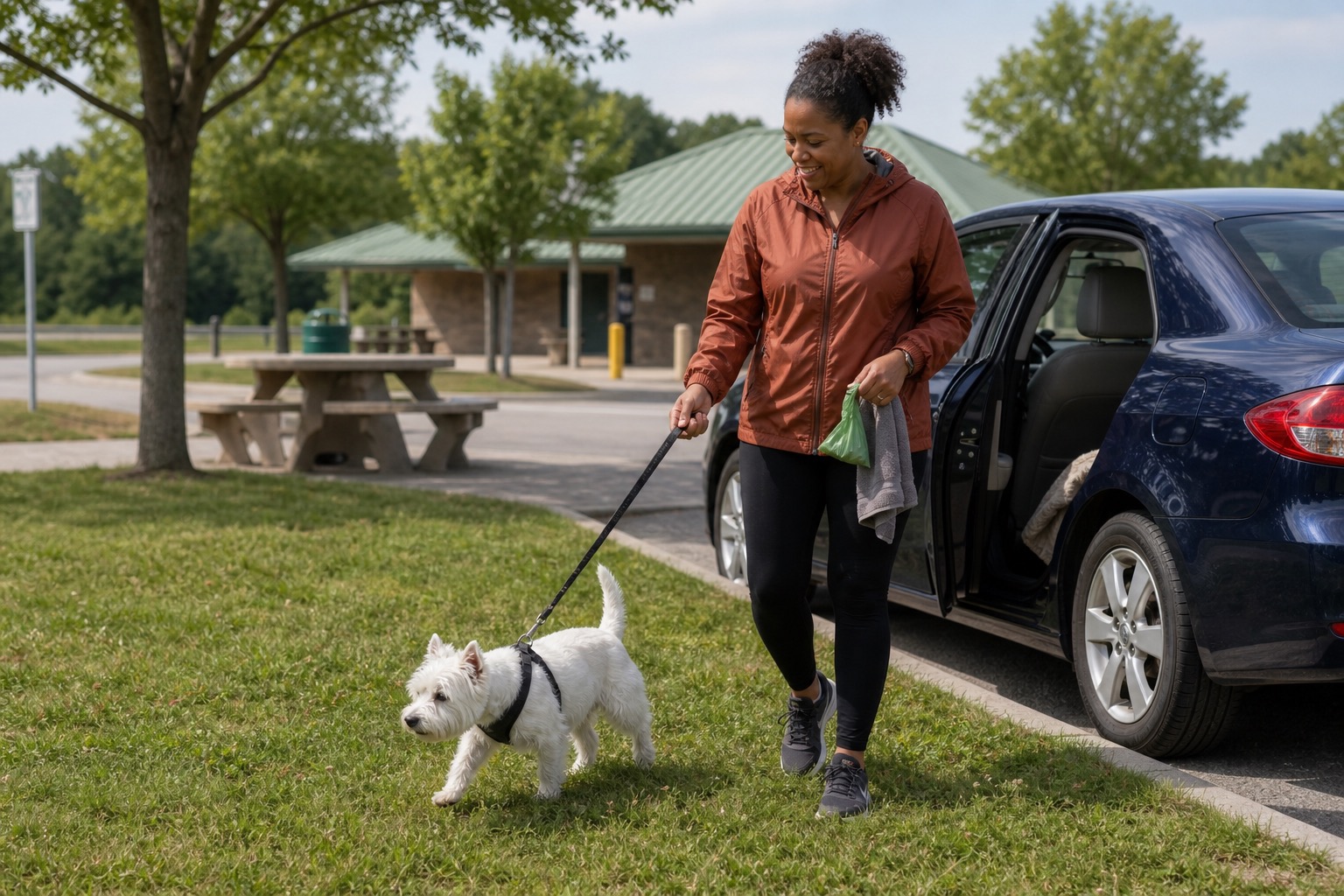
Good first-stop priorities:
- safe footing
- enough leash length to sniff without tangling
- distance from traffic flow and hot pavement
- quick access back to the car if the area feels chaotic
If your dog tends to get overexcited at stops, shorter and more frequent breaks are usually easier than one long chaotic one.
Offer Water After the First Minute, Not the First Second
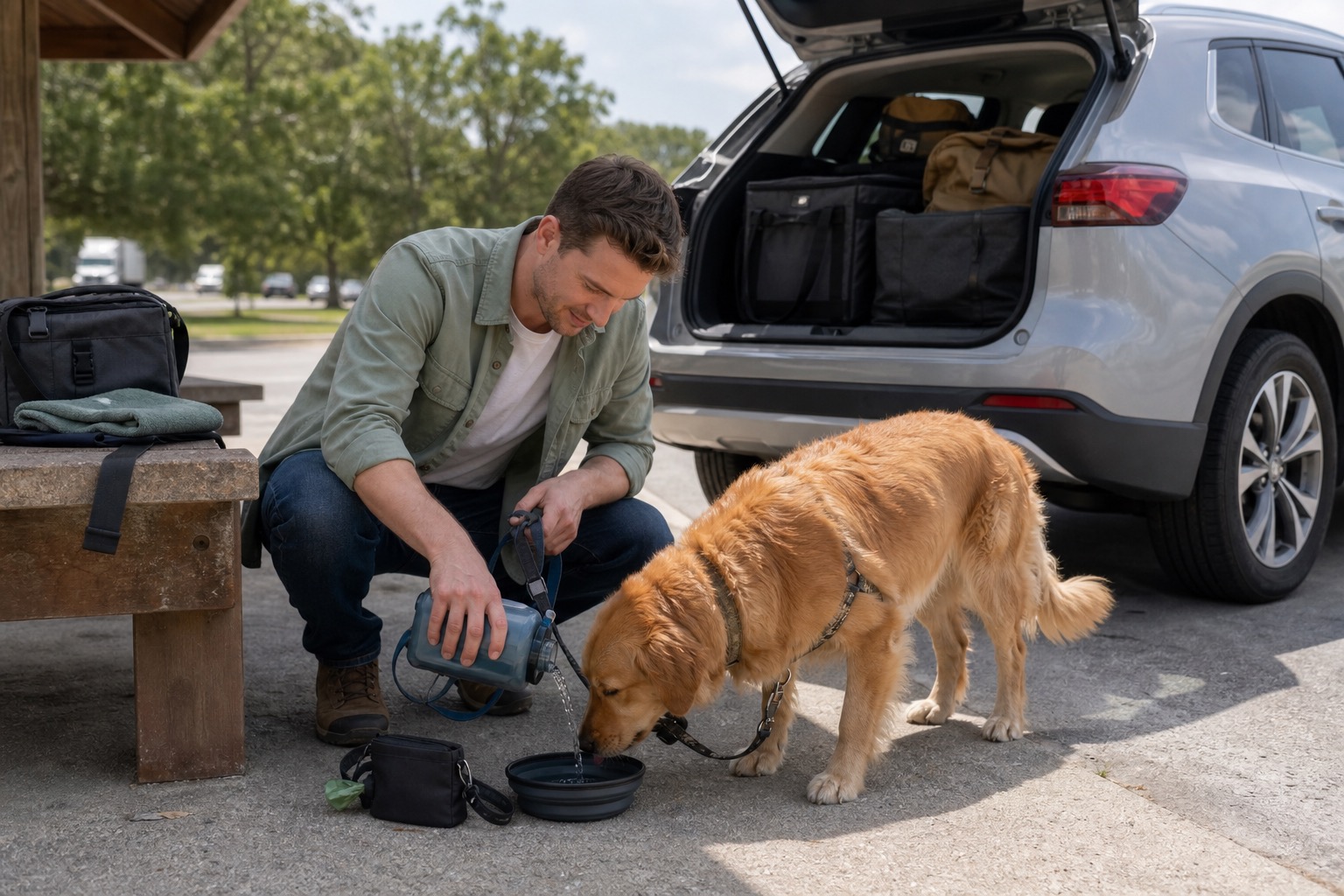
A lot of owners try to offer water too early. If your dog is still pulling, scanning, or circling, the water break may just turn into splashing and wasted time. After the first minute or two, most dogs settle enough to take a real drink.
That is usually the best moment to bring out the bottle or bowl. Keep it simple. Offer water, let your dog drink, and put it away before you move on to anything else. A rest stop does not need to become a full campsite routine.
If your dog drinks better from a normal bowl than from a bottle tray, use the setup your dog already understands. Our Dog Travel Water Bottle vs Collapsible Bowl guide helps with that choice, and Best Dog Travel Water Bottles for Road Trips and Hiking covers the practical bottle options.
Use a Short Settle Break Before Getting Back In
Not every stop needs a long walk, but most dogs benefit from one short calm minute before you load back up. That can be as simple as standing in the shade, letting the dog lie down near a bench, or pausing while you re-pack the bowl and towel.
In hot weather, that shaded reset may also be the right place for a dog cooling mat. Use it as a supervised comfort surface, not as a reason to leave your dog in a warm car.
The point is not to turn every rest stop into a break destination. It is to avoid rushing straight from sniffing and movement back into the seat with no transition at all. Dogs that get carsick, overstimulated, or frantic at re-entry often do better when the stop ends with a brief pause instead of an abrupt shove back into the car.
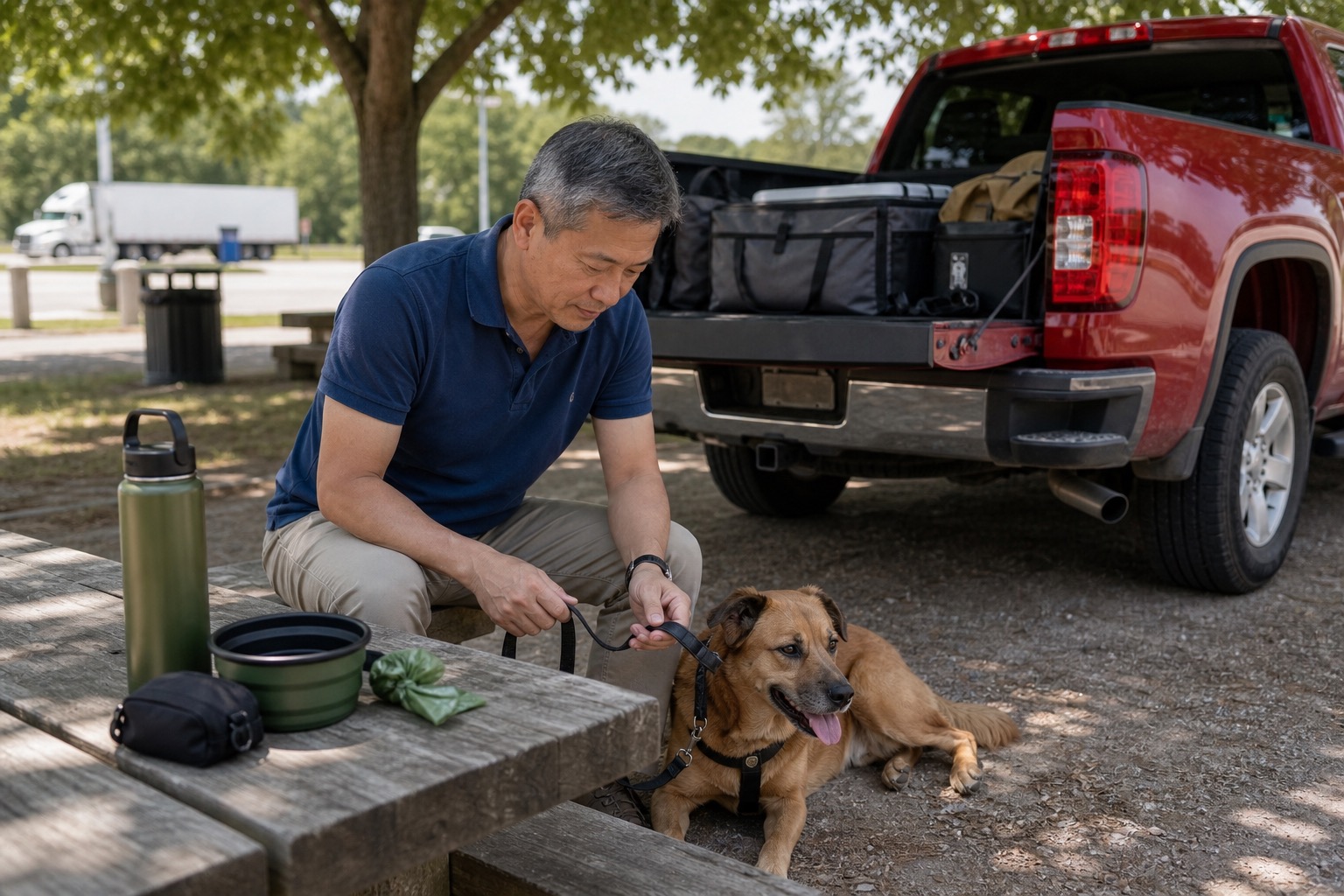
This is also a good time to notice whether the dog still seems hot, tense, or thirsty. If yes, take another minute. If no, move on and keep the rhythm clean.
Keep the Cleanup Kit Small and Easy to Reach
The cleanup part of a rest stop should be boring. That is the goal. One towel, waste bags, and a small pouch for damp or dirty items are enough for most normal driving days. If you need to dig under luggage every time the dog steps in mud, the setup is too complicated.
The useful version is a cleanup kit that lives near the door or in one easy-access tote. It does not need ten products. It just needs to cover wet paws, a damp bowl, and the occasional mess.
Our full Dog Road Trip Cleanup Kit guide goes deeper, but the short version is:
- one absorbent towel
- one waste bag roll
- one wipe or paw-cleaning option if your dog needs it
- one pouch or bag for wet gear
Do the Same Quick Reset Before Driving Again
Before you close the door and pull away, run the same five-second check every time:
- Is the bowl empty and packed?
- Are the paws good enough to go back in?
- Is the leash fully inside or unclipped safely?
- Is the dog back in the right travel position?
- Did anything roll onto the seat or floor that will annoy you later?
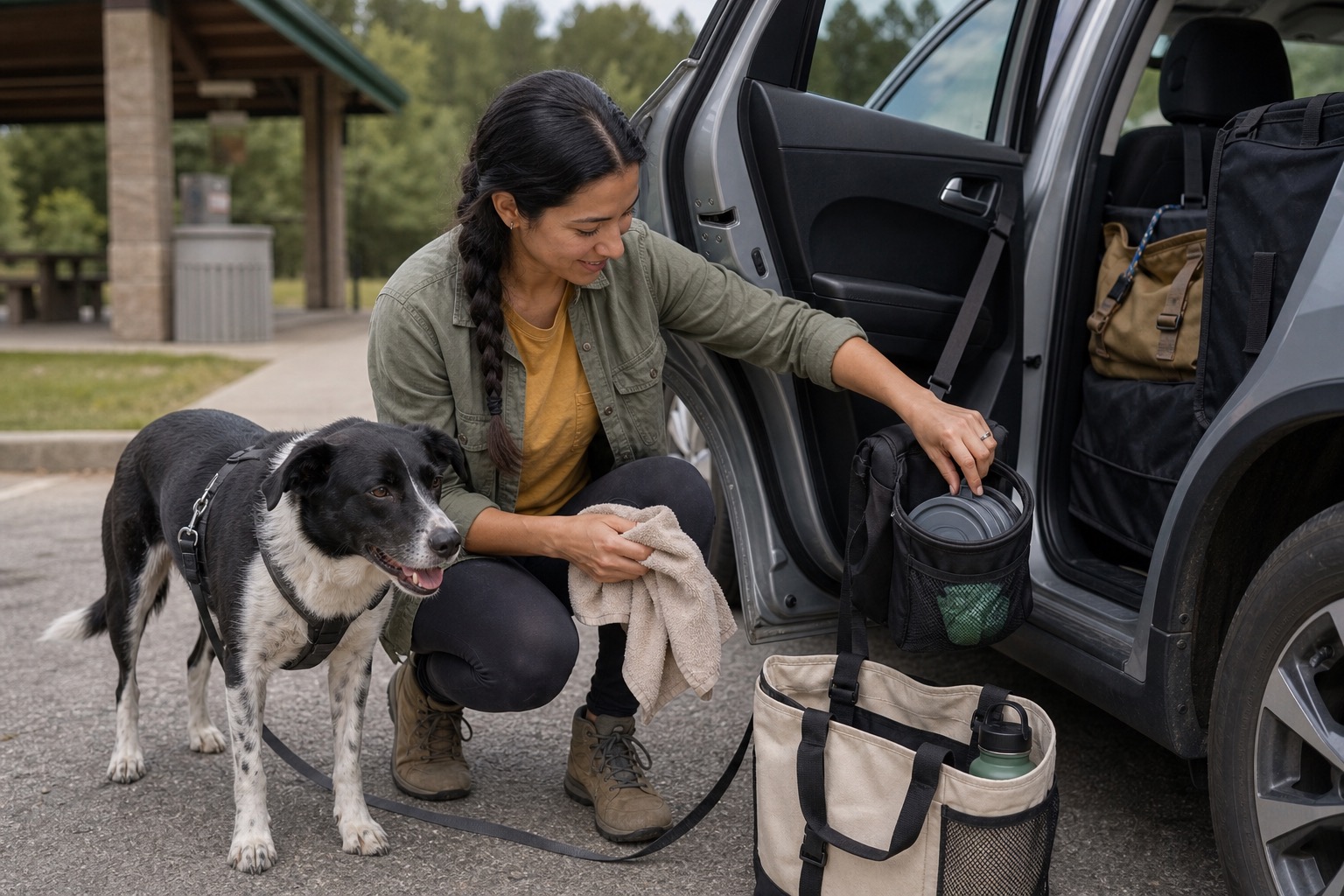
This reset is what keeps a decent stop from becoming a messy next hour. It is especially useful if you are traveling with multiple bags, kids, or more than one dog. A short reset now is easier than a full cleanup at the next gas station.
What Changes for Different Kinds of Trips?
Short driving days
You can keep stops shorter. Potty, drink, quick walk, and back in the car is often enough.
Long summer road trips
Water and shade matter more. Expect some dogs to need longer recovery time before reloading, especially after hot parking lots or warm rest areas.
Hotel travel days
Keep the stop efficient so your dog arrives less wired. If the longer break is happening at check-in, the roadside stop can stay short and clean. Our Dog Hotel Checklist: What to Pack for a Cleaner Stay helps with that handoff.
Camping weekends
You may need a slightly larger stop routine because more gear stays in rotation. Water, bowl, towel, and leash management become more important when the next leg of the trip ends at a campsite instead of a hotel.
Common Mistakes
One mistake is offering everything at once: leash, bowl, treats, sniffing, phone, cleanup gear. That usually makes the stop feel more frantic, not more prepared.
Another mistake is skipping water because the stop is “just quick.” In warm weather or on long days, quick stops still count.
A third mistake is letting the dog back in before you are ready. That is how wet paws hit the seat, the leash gets trapped in the door, or the bowl ends up dumped sideways in the footwell.
The routine works best when it stays in the same order, even if the stop itself is short.
Final Thoughts
A dog rest stop routine does not need to be complicated to work well. For most road trips, the useful pattern is leash, potty, water, brief settle, then reset before driving again. Once that order becomes automatic, stops feel faster and cleaner without feeling rushed.
If you want to tighten the rest of your travel setup around that routine, start with our Dog Road Trip Checklist for Beginners and Dog Travel Essentials Checklist. Those two guides cover the gear that makes the routine easier to repeat.
FAQ
How often should I stop for my dog on a road trip?
It depends on the dog, weather, and trip length, but many dogs do better with regular short breaks rather than waiting too long and making one big chaotic stop.
Should my dog drink water at every rest stop?
Not always a full drink, but it is smart to offer water regularly, especially in warm weather or on longer driving days.
What if my dog gets too excited at rest stops?
Keep the stop simple. Potty first, short walk second, water once the dog settles a little. Shorter, calmer stops often work better than long overstimulating ones.
What is the easiest water setup for rest stops?
For many people, it is a travel bottle for quick breaks and a separate bowl for longer stops or overnight trips.
What should always stay within reach during a stop?
A leash, waste bags, water, and one towel. That covers most normal rest-stop problems without overpacking.
Related PawTripKit Guides
- Dog Road Trip Checklist for Beginners
- Dog Road Trip Cleanup Kit
- Dog Travel Essentials Checklist
- Best Dog Travel Water Bottles for Road Trips and Hiking
- Dog Travel Water Bottle vs Collapsible Bowl
- Dog Hotel Checklist: What to Pack for a Cleaner Stay
At wooded or grassy rest stops, a quick coat check can be as useful as the water break. Our dog bug spray and tick-check guide covers that summer road-trip layer.