
Best Dog Cooling Mats for Car Travel and Camping
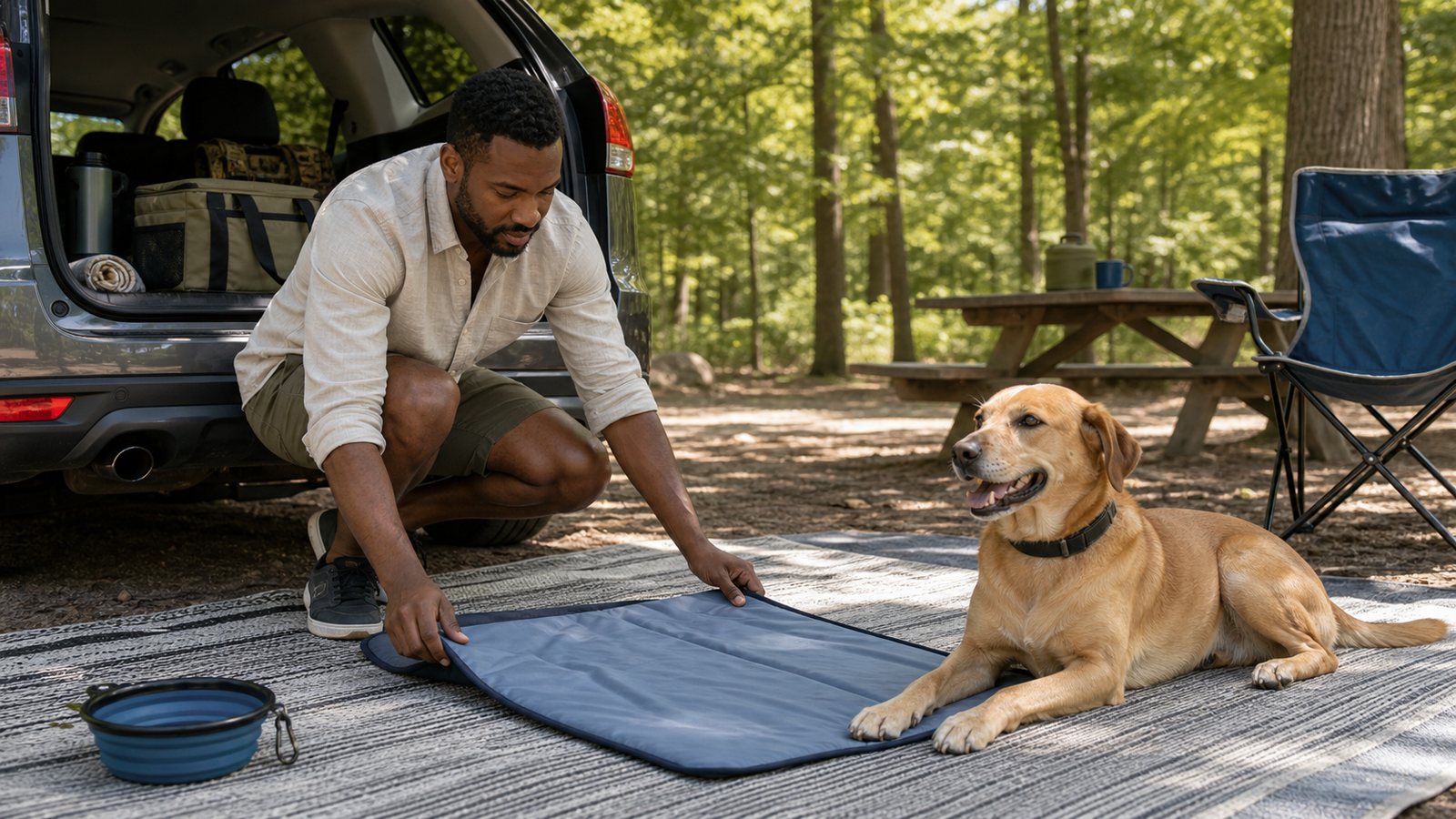
A dog cooling mat can be useful on summer road trips, camping weekends, hotel stays, and shaded rest breaks. It gives your dog a cooler place to lie down than a hot cargo liner, tent floor, picnic blanket, or patio surface.
It should not be treated like heat protection by itself. A cooling mat does not make a parked car safe, does not replace shade and water, and does not fix dangerous heat. Think of it as one comfort layer in a larger hot-weather travel setup.
For dogs who get direct side-window sun during the drive, car window shades for road trips can be another comfort layer. They still do not make a parked car safe.
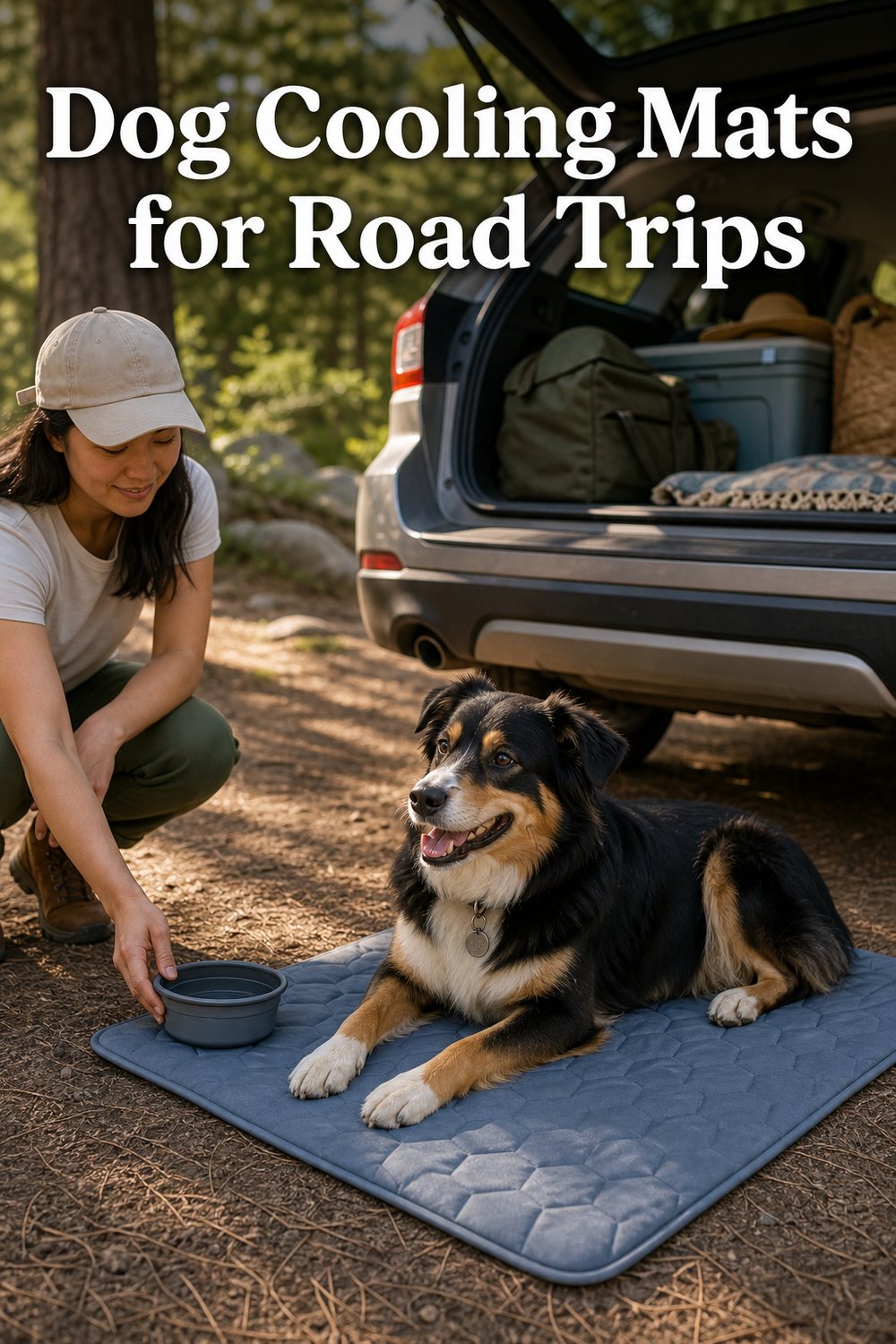
This guide is for dog owners who travel by car, camp in warm weather, stop at parks or rest areas, or want a simple cooling surface for a hotel room or rental cabin. It is based on product types, common travel needs, and practical buying criteria rather than hands-on testing of every mat on the market.
Compare dog cooling mats on Amazon
Quick Answer
For most car travel and camping, the best dog cooling mat is a foldable pressure-activated gel mat or a water-friendly cooling mat that fits your dog’s body, wipes clean easily, and packs without leaking or taking up half the car.
Pressure-activated gel mats are convenient because they do not usually need water, freezing, or electricity. They are better for car stops, hotel rooms, cabins, RVs, and shaded campsite use. Water-filled mats can feel sturdy and cool, but they are heavier, messier to pack, and less forgiving if your dog scratches or chews.
If your dog is a heavy chewer, digs at bedding, or tends to tear soft gear, choose carefully. A cooling mat with a soft surface and gel inside is not the same as an indestructible crate pad.
What a Cooling Mat Can and Cannot Do
A cooling mat gives your dog a cooler resting surface. That can help after a warm walk, during a shaded campsite break, or while your dog settles in a hotel room after a long drive.
It cannot protect a dog from a dangerously hot car. It also cannot make direct sun safe, make high humidity irrelevant, or replace fresh water. If the air is too hot, the dog is panting hard, or the surface around the dog is hot enough to be uncomfortable, the answer is not a better mat. The answer is to move to a cooler place.
This is especially important for flat-faced dogs, senior dogs, overweight dogs, puppies, dark-coated dogs, and dogs with heart or breathing issues. A cooling mat may be a useful comfort tool, but those dogs still need extra caution in summer travel.
Main Types of Dog Cooling Mats
Most travel-friendly dog cooling mats fall into three broad groups.
Pressure-activated gel mats are the easiest to use. Your dog lies on the mat, and the material feels cooler than the surrounding surface. They usually fold or roll, and many can be wiped clean. The trade-off is durability. If your dog chews, punctures, or digs hard, read the product warnings carefully.
Water-filled cooling mats can work well at camp, on a porch, or in an RV, but they are less convenient for fast road-trip stops. They can be heavier, need filling or draining, and may be awkward if you are moving from car to campsite to hotel.
Evaporative or wet cooling pads are designed to be dampened and used with airflow. They can be useful outdoors, but they also bring moisture into the car or hotel room. That is not always what you want if you are already managing muddy paws, seat covers, and dog towels.
Best for Road Trips: Foldable Pressure-Activated Mats
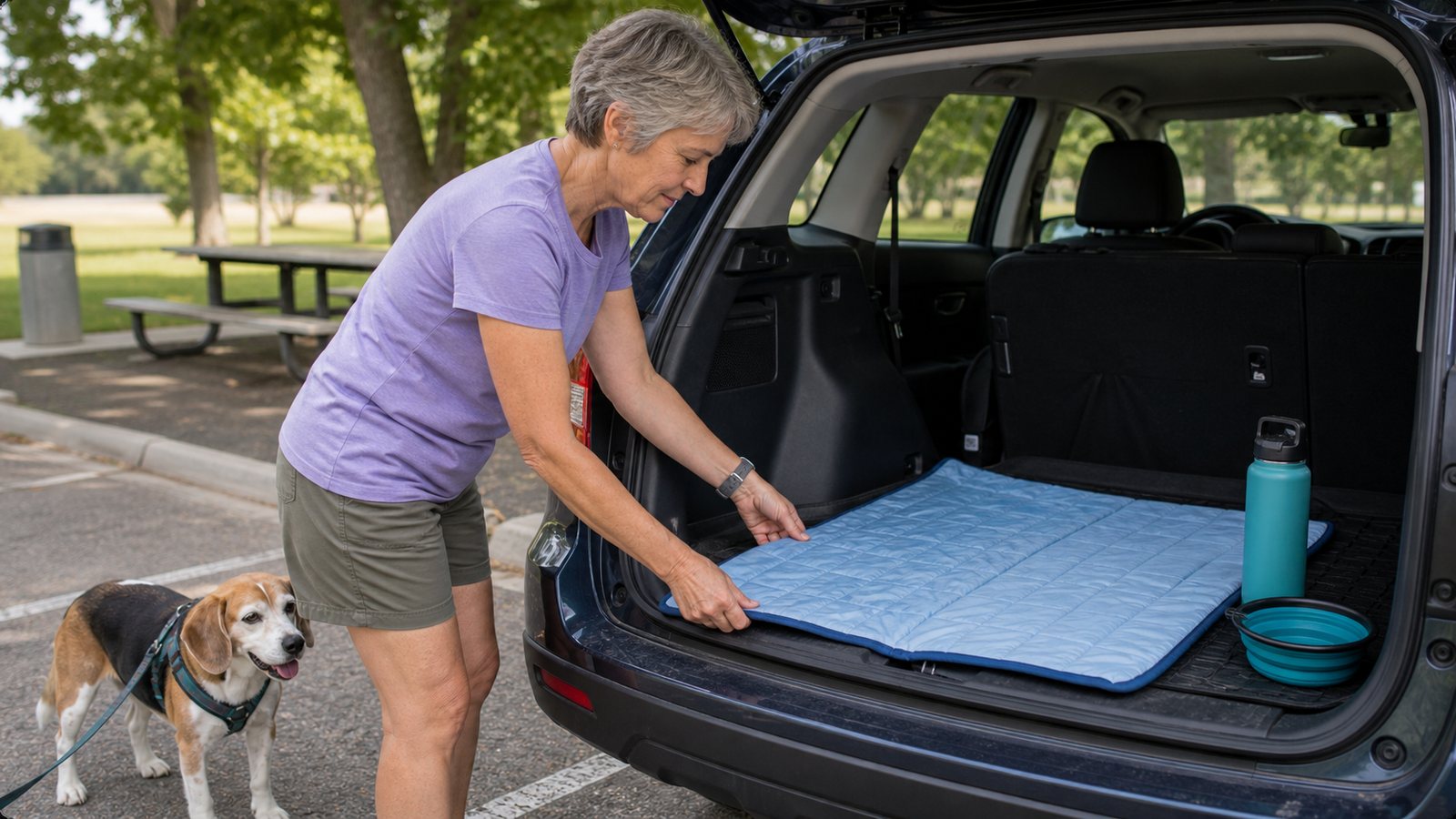
For road trips, convenience matters. You want a mat that can come out quickly at a shaded rest stop, lie flat in the cargo area while the hatch is open, or go into a hotel room without turning into a project.
A foldable pressure-activated mat is usually the easiest direction. Look for a size that lets your dog lie on their side or curl naturally. A mat that only covers the dog’s chest may not be very useful during a long stop.
Also check folded size. Some large mats look easy online but become awkward once you add a carrier, food container, water bottle, cleanup kit, and weekend bags. If you drive a compact SUV or sedan, the packed size may matter as much as the open size.
Best for: road trips, hotel stops, shaded rest breaks, RVs, and dogs who settle calmly on mats.
Not ideal for: strong chewers, dogs who dig at bedding, or owners who want something that can be left outside in rough camp conditions.
Best for Camping: Durable, Easy-Clean Mats
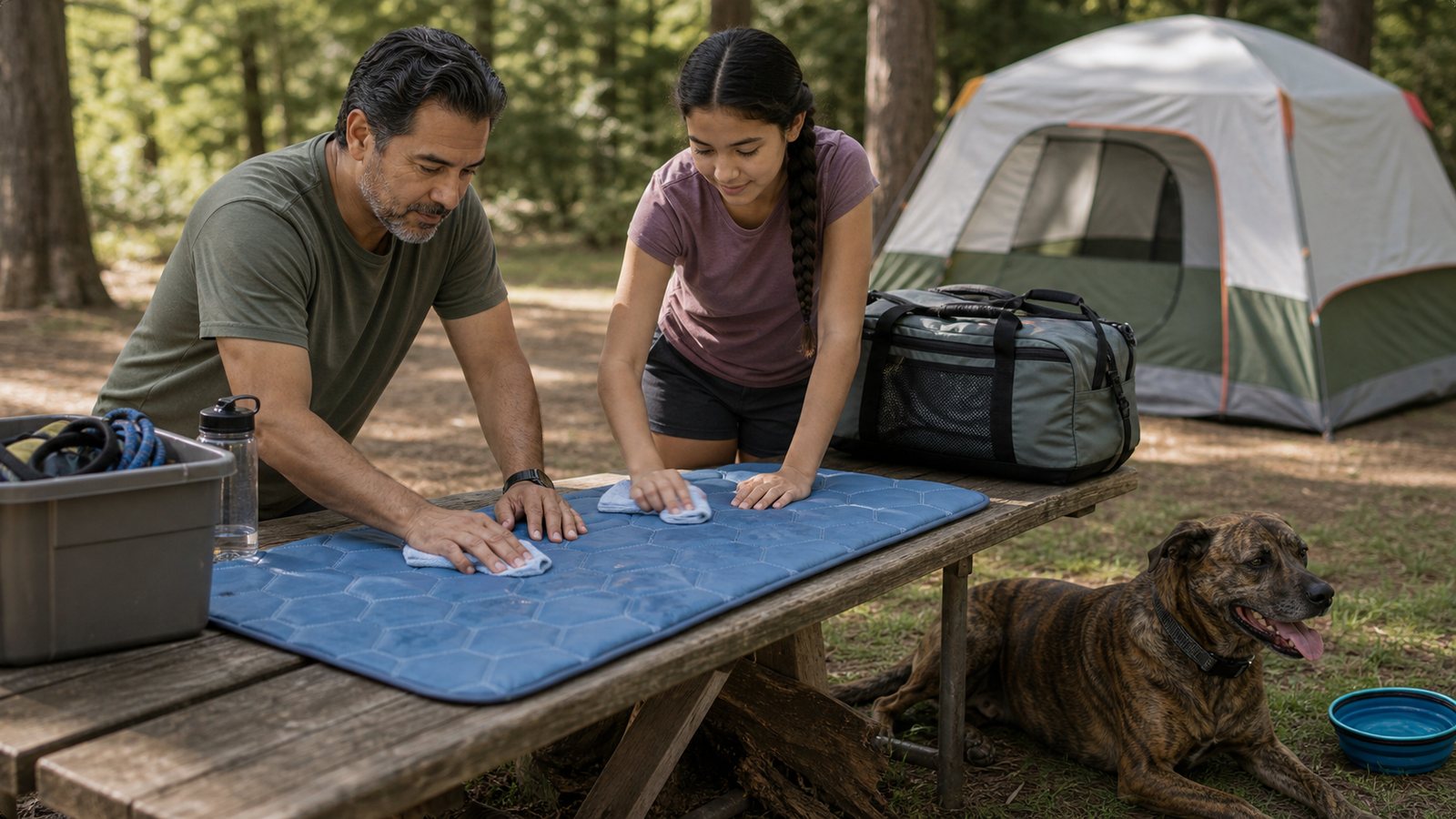
Camping adds dirt, pine needles, wet paws, uneven ground, and dogs who may move between shade, tent, picnic table, and vehicle. A camping mat needs to clean up easily and survive more than a tidy living room floor.
For campsite use, look for a mat with a surface that wipes down without holding grit. Smooth surfaces are easier to clean than fuzzy ones, but they may slide more on tent floors or cargo liners. If your dog dislikes slick surfaces, you may need to place the cooling mat on top of a thin outdoor rug or towel in the shade.
Do not leave a gel mat in direct sun and expect it to stay cool. Keep it in shade, let it reset when needed, and give your dog a choice to move off it. Some dogs prefer a cool mat for ten minutes, then want a regular blanket or bare ground.
For multi-day camping, pack a backup towel. A towel can go under the mat on rough picnic-table benches, over the mat if the surface feels too slick, or in the car if the mat gets dirty before checkout.
Best for Hotels and Cabins: Quiet Mats That Pack Flat
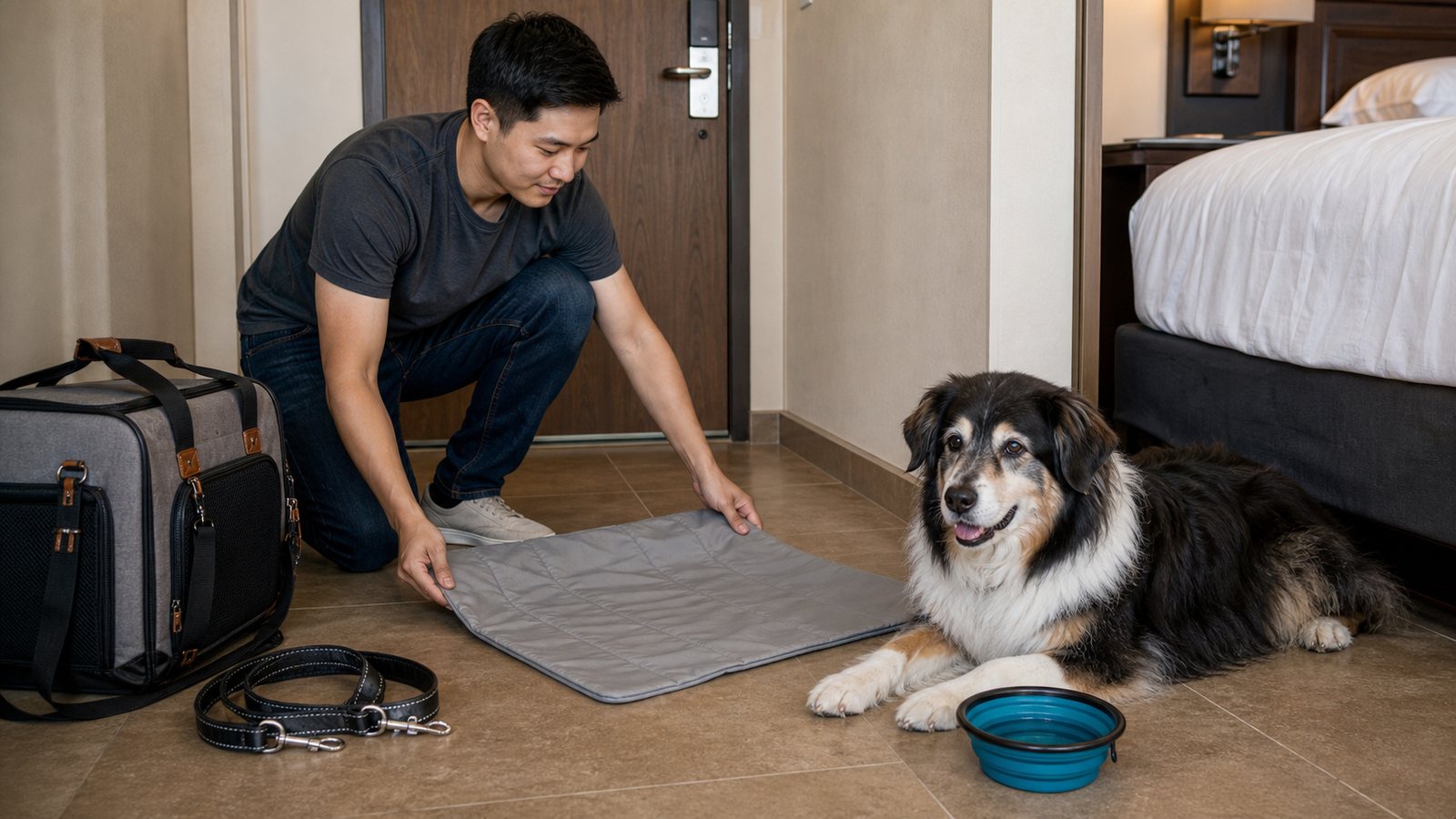
Hotel and cabin use is less about ruggedness and more about cleanliness and calm. After a hot travel day, a cooling mat can give your dog a familiar place to settle without putting damp towels on the floor.
Choose a mat that lies flat quickly and does not make loud crinkly sounds every time the dog shifts. Nervous dogs may avoid a mat that feels strange or noisy. If your dog is picky about surfaces, introduce the mat at home before the trip.
A hotel mat should be easy to wipe before packing. You do not want dust, hair, or drool transferring straight into your dog overnight bag. If the mat goes in the same bag as food, bowls, or paperwork, use a separate sleeve or packing cube.
Size and Fit
Measure your dog in their normal resting position, not just from nose to tail while standing. Some dogs curl tightly. Others sprawl with legs out. A cooling mat should match the way your dog actually rests during travel.
For small dogs, avoid buying a mat so oversized that it takes over the whole back seat or hotel entryway. For large dogs, avoid mats that only cover part of the body. A 70-pound dog may ignore a mat that feels like a small placemat.
Thickness matters too. A thin mat may pack better, but it may not feel comfortable on gravel, packed dirt, or a hard cargo floor. If your dog is senior or bony, you may need to combine cooling with support. In that case, a cooling mat over a flat bed or padded liner may work better than a thin mat alone.
Chewing, Scratching, and Safety
Cooling mats are not a good match for every dog. If your dog chews soft gear, tears crate pads, or scratches bedding before lying down, check the product warnings before buying any gel mat.
The concern is not just money wasted. If a mat contains gel or inner filling, you do not want your dog puncturing it and licking the contents. For chewers, a raised cot in shade, a damp towel under supervision, or a water-friendly outdoor pad may be a safer direction.
Watch the first few uses. See whether your dog lies calmly, paws at the surface, tries to mouth the edge, or avoids it altogether. A cooling mat should make travel easier, not add another thing you have to guard every minute.
Cleaning and Packing
The best travel gear is the gear you can clean when tired. After a camping weekend or hot rest stop, a mat may have fur, sand, leaves, drool, or wet paw marks on it.
Look for a surface that wipes clean with a damp cloth. If the mat has seams, check whether grit collects there. If it folds, check whether dirt gets trapped in the folds. If it comes with a cover, see whether the cover can be removed and dried before packing.
Let the mat dry before storing it in a closed bag. A damp mat packed with a leash, towel, or dog food container can make the whole bag smell stale.
Car Travel Safety Notes
Do not use a cooling mat as a reason to leave your dog in a parked car. Even with windows cracked, cars can heat up quickly. A mat may feel cool to the touch at first, but it does not control the air temperature around your dog.
If you use a mat in the cargo area during a break, keep the hatch open, stay with the dog, and park in shade. If you use it in the back seat, make sure it does not block seat belt buckles, harness tethers, carrier straps, or anything else needed for restraint.
Cooling mats can also slide. On a slick cargo liner or bench cover, test whether the mat shifts when your dog steps on it. A sliding mat can make an older dog hesitate or slip while getting in and out.
Cooling Mat Checklist
Before buying, check:
- Does the mat match your dog’s resting size?
- Is it foldable enough for your car and travel bag?
- Does it need water, freezing, or electricity?
- Can it be wiped clean at a campsite or hotel?
- Is the surface too slick for your dog?
- Will it slide on your cargo liner, seat cover, or tent floor?
- Is it safe for dogs who chew or dig at bedding?
- Can it dry before you pack it?
- Does it work in shade without blocking restraint gear?
- Do you still have water, shade, airflow, and a real heat plan?
Common Mistakes
One common mistake is buying the largest mat without thinking about where it will go. A huge mat may work in a living room but be annoying in a packed SUV or small hotel room.
Another mistake is assuming colder is always better. Dogs need a comfortable place to rest, not a shockingly cold surface. If your dog keeps moving off the mat, they may not like the texture, temperature, or location.
A third mistake is using the mat in the wrong place. Direct sun, a sealed car, or a hot tent can overwhelm any cooling surface. Put the mat in shade and give your dog enough room to choose whether to use it.
Finally, do not ignore behavior. If your dog chews gear, a soft gel mat may not be the right purchase, no matter how good the reviews look.
Related PawTripKit Guides
Cooling gear works best as part of a broader travel setup:
- Dog Camping Checklist for Beginners
- Dog Travel Essentials Checklist
- Dog Road Trip Checklist for Beginners
- Dog Camping Shade Setup for Hot Weather
- Dog Travel Water Bottle vs Collapsible Bowl
Final Thoughts
A dog cooling mat is worth considering if your dog travels in warm weather and you can use it realistically: in shade, during supervised breaks, at camp, in an RV, or on a hotel floor after a hot day.
The best choice is not the coldest-looking mat. It is the one your dog will actually use, that fits your car and campsite routine, and that you can clean before packing up. Keep the bigger safety picture in place: water, shade, airflow, short breaks, and no parked-car risks.
FAQ
Are dog cooling mats safe for car travel?
They can be safe when used as a supervised comfort surface, but they do not make a parked car safe. Do not leave your dog alone in a hot vehicle because a cooling mat is inside.
Do dog cooling mats need to be frozen?
Some products are gel or pressure activated and do not need freezing. Others may use water or require chilling. Check the product instructions before buying, especially if you need something easy for road trips.
Can a dog sleep on a cooling mat all night?
Some dogs may rest on one for longer periods, but the mat should fit comfortably and your dog should be able to move off it. If your dog is senior, thin, or sensitive to firm surfaces, consider whether they need more padding.
What size cooling mat should I buy?
Choose a mat based on how your dog actually lies down. A small curled-up dog needs less space than a large dog who sprawls on their side. For travel, also check the folded size.
Are cooling mats good for camping?
They can be useful at camp if kept in shade, cleaned regularly, and used with water, airflow, and a safe resting area. They are not a substitute for shade or a heat-aware camping plan.