
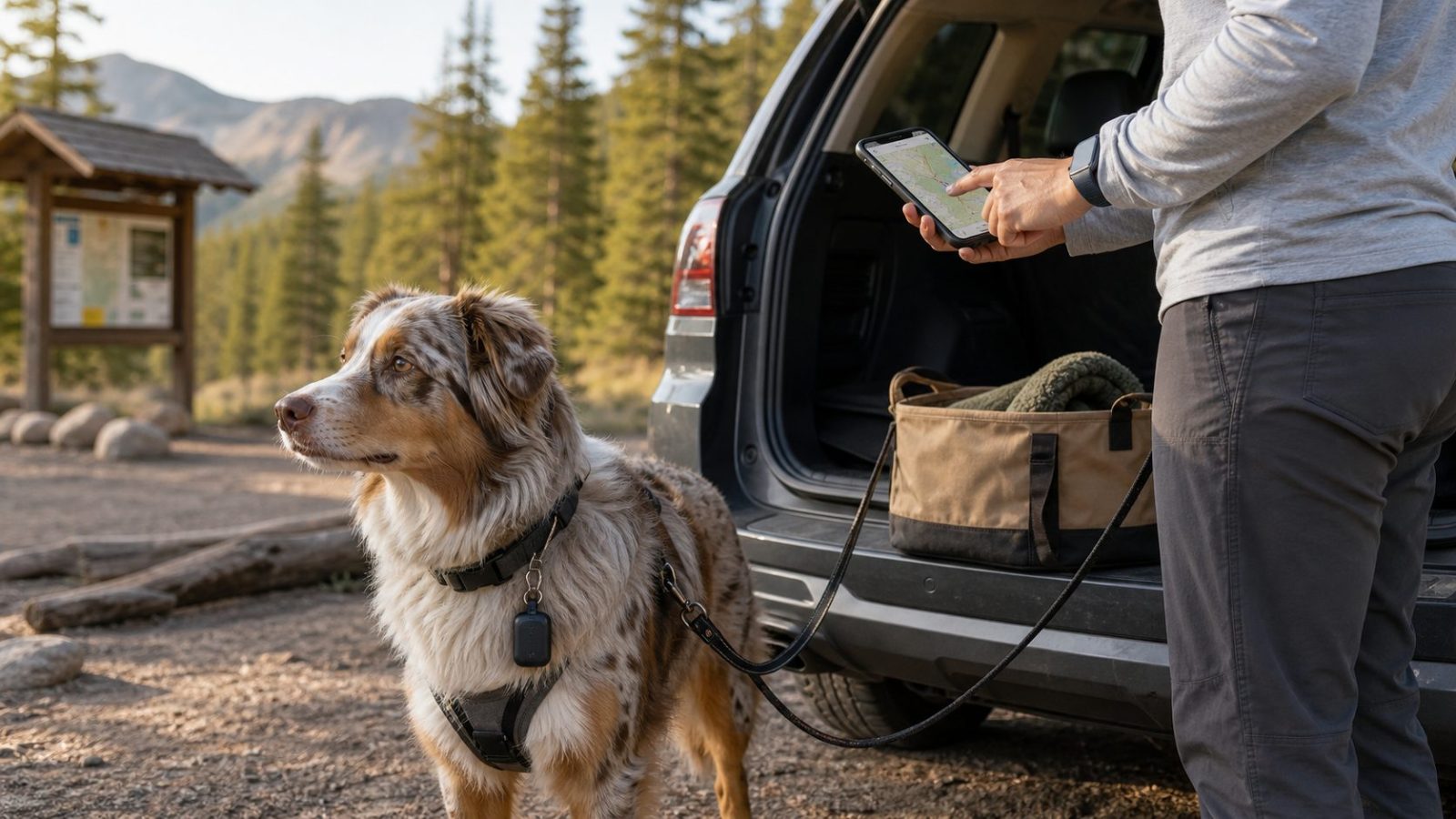
A dog GPS tracker and an AirTag-style Bluetooth tracker can look like they solve the same problem: finding your dog if something goes wrong. In real travel situations, they work very differently.
A GPS dog tracker is built to report location through satellite positioning plus a cellular or network connection. An AirTag-style tracker is mainly designed to help find personal items through nearby Apple devices in the Find My network. That difference matters at campgrounds, trailheads, highway rest stops, cabins, and rural areas where people and signal coverage can be thin.
This guide is for dog owners trying to decide what kind of tracker makes sense before a camping weekend or road trip. It does not replace leash handling, recall training, secure gates, harness fit, or ID tags. A tracker is a backup tool, not permission to let a dog wander.
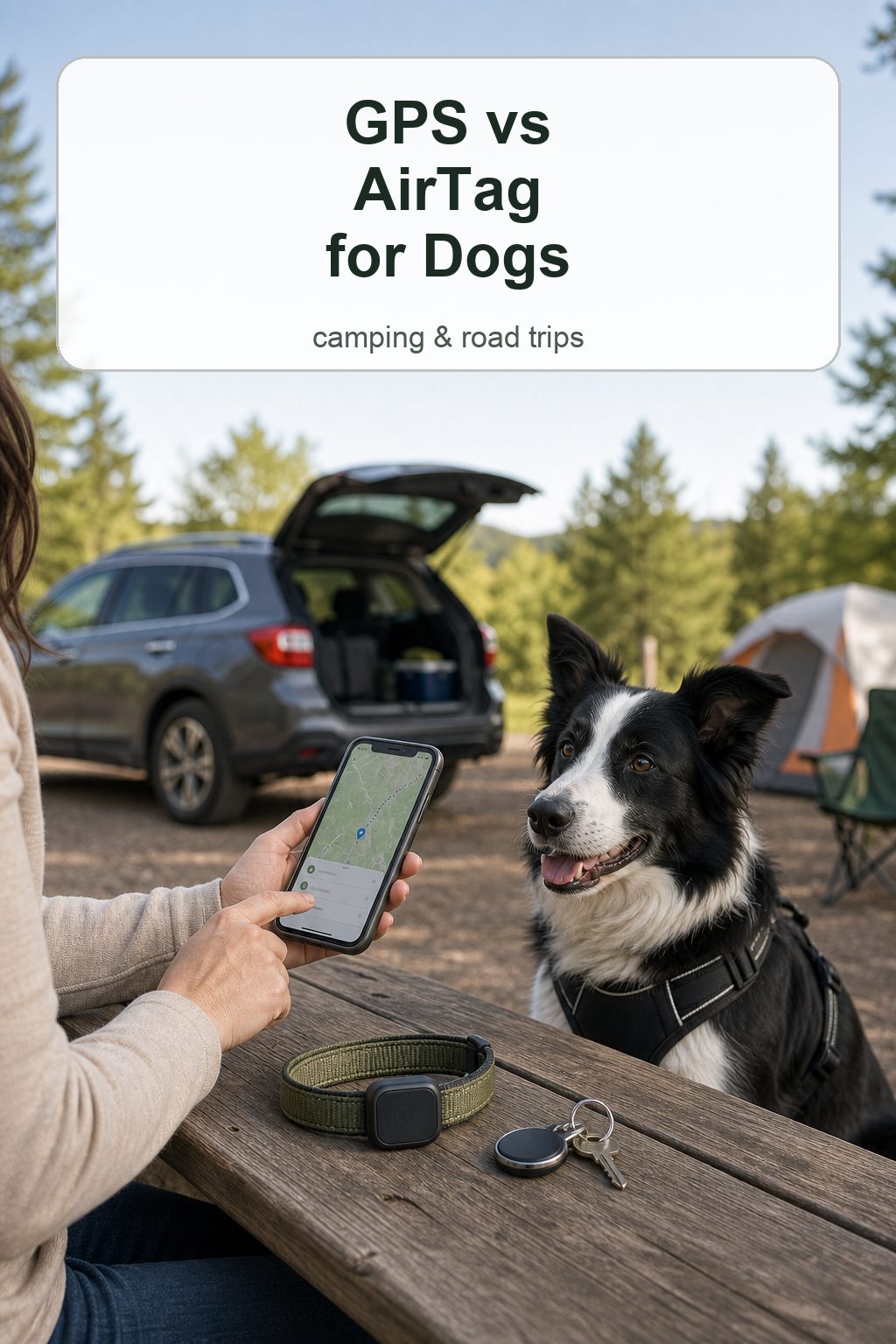
Compare dog GPS trackers on Amazon
Quick Answer
For camping, hiking access roads, rural cabins, and long road trips, a dedicated dog GPS tracker is usually the better fit if your main concern is locating a dog who gets away from you. It is designed for moving animals, wider-area location updates, and app-based tracking.
An AirTag-style Bluetooth tracker can be useful as a small extra item tracker in busy areas, hotels, neighborhoods, or around people using compatible devices. It is not the same as a GPS dog tracker, and it should not be treated as one for remote outdoor travel.
If your dog is a flight risk, slips harnesses, bolts at trailheads, chases wildlife, or camps in rural areas, start your research with dog GPS trackers. If your dog is usually leashed and you mostly want a small backup tag for everyday places, a Bluetooth-style tracker may still have a place.
How GPS Dog Trackers Work
A dog GPS tracker estimates location using GPS and then sends that location to an app through a cellular or connected network service. That is why many dedicated dog GPS trackers require a subscription.
The advantage is that the tracker is meant to follow a moving dog over a wider area. Depending on the device, app, plan, and signal conditions, you may be able to see recent location points, set safe zones, check activity, or receive alerts.
The limitation is coverage. If the tracker cannot connect to the network it uses, updates may slow down or stop until service returns. Heavy tree cover, canyons, remote campsites, low battery, and weak cellular coverage can all affect real-world performance.
For road trips and camping, the best GPS tracker is not simply the one with the most features. It is the one that has coverage where you actually travel, a battery routine you can maintain, and a secure attachment your dog cannot shake off.
How AirTag-Style Trackers Work
An AirTag is made for finding items such as keys, bags, and luggage through Apple’s Find My network. It does not work like a dedicated GPS collar.
In practical terms, an AirTag-style tracker depends on nearby compatible devices to help update its location. That can be useful in populated places. It can be much less useful where there are few people, few phones nearby, or no compatible devices passing close enough.
For a dog at a busy hotel, neighborhood, parking lot, or urban park, that may still provide helpful clues. For a dog running away from a remote campsite, it is a weaker tool because the tracker is not independently reporting GPS location the way a pet GPS device is intended to.
If you use one on a dog, use honest expectations. It can be an extra layer. It should not be the only plan for outdoor travel.
Camping: Why Location Updates Matter
Camping changes the tracking problem. A dog can disappear behind a tent loop, cross into another campsite, follow a scent trail, or slip out while someone opens a car door. You may not see which direction they went.
This is why a tracker belongs inside a real camp routine. The dog camping gear mistakes guide covers the ordinary setup gaps, like loose traffic flow and buried essentials, that make a missing-dog moment more likely.
In those moments, update speed and coverage matter more than a pretty app screen. A tracker that last updated near the picnic table may not help much if your dog is already moving toward a trail, road, or campground entrance.
Dedicated GPS trackers are better suited for this kind of movement, but they still depend on battery and network conditions. Before a trip, check the coverage map or service notes for the places you plan to visit. If you camp in remote areas often, do not assume the tracker will update the same way it does at home.
Bluetooth-style trackers are more dependent on nearby people and devices. At a crowded campground, that may help. At a quiet dispersed campsite, it may not.
Road Trips and Rest Stops
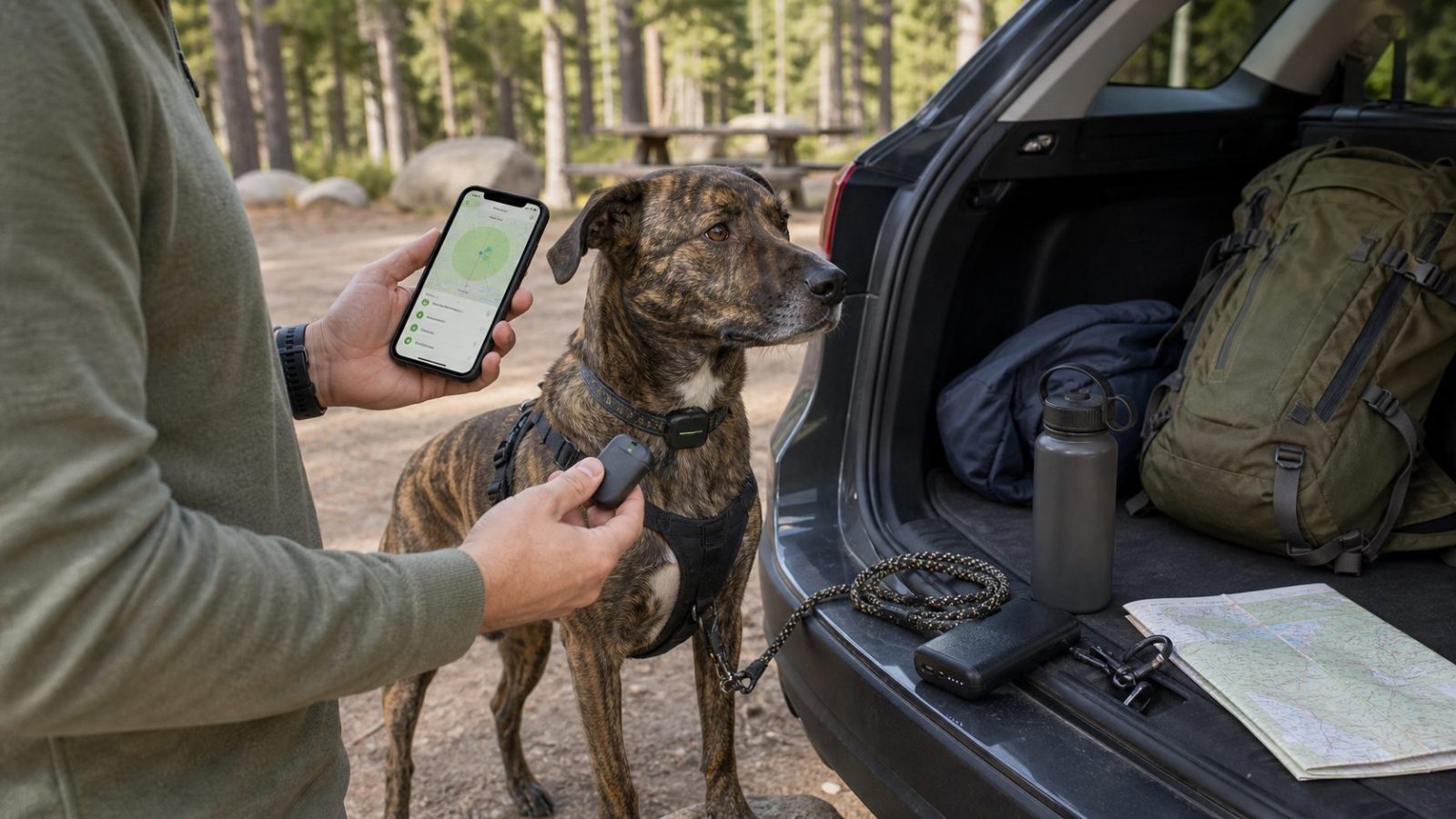
Road trips create a different risk pattern. Dogs often get loose during transitions: opening the car door, clipping a leash, unloading bags, checking into a hotel, or stopping at a rest area.
A GPS tracker can help if your dog bolts beyond the immediate parking area, especially if you are in an unfamiliar town. You still need cellular coverage and battery, but the device is built for tracking movement.
An AirTag-style tracker may be more useful around populated areas where compatible devices are likely to pass nearby. A busy rest stop, hotel hallway, or city sidewalk gives it more chances to update than an empty rural turnout.
Either way, do not rely on the tracker as your first line of defense. Keep the leash clipped before the door opens. Use a harness that fits. Check gates at dog-friendly rentals. Keep an updated ID tag on your dog even if you use a tracker.
Subscription and Battery Trade-Offs
Many dedicated GPS dog trackers require an ongoing plan. That can be annoying if you only travel a few times a year, but it is part of how the tracker sends location data.
Bluetooth-style trackers often have lower ongoing cost, depending on the device and ecosystem, but the trade-off is tracking capability. Lower cost does not help much if the tracker cannot update in the place where your dog gets loose.
Battery is another difference. GPS tracking uses more power, especially with frequent updates. You may need to charge the device before every trip, bring a charging cable, and check battery before trail time.
AirTag-style devices are usually lower-maintenance, but that does not make them stronger outdoor trackers. They are simpler because they do a different job.
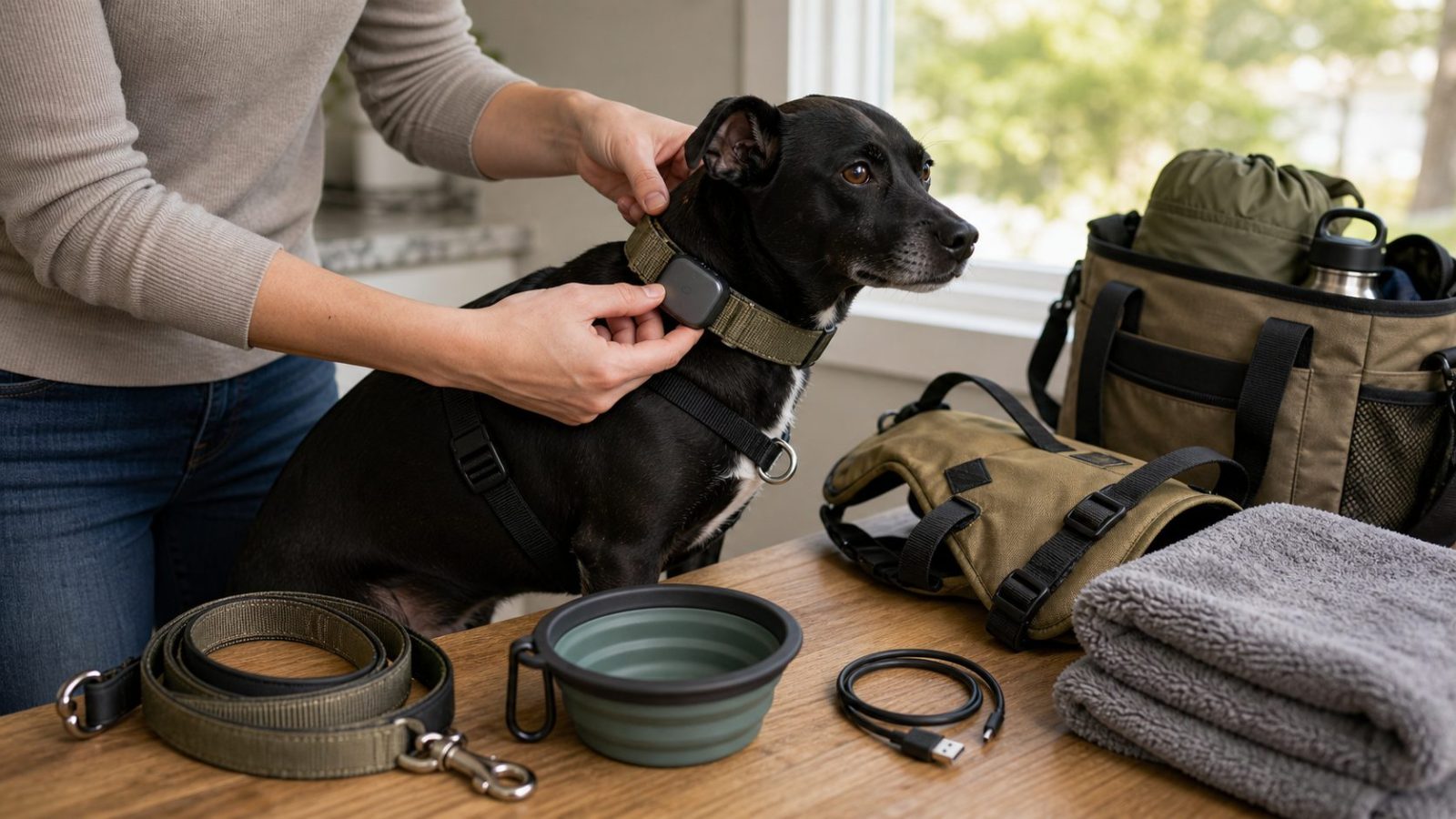
For camping, build the tracker into your packing routine. Charge it with your phone, headlamp, and power bank. Check the app before leaving the driveway, not after you reach the trailhead.
Fit and Attachment
A tracker only helps if it stays attached to the dog. This is where small details matter.
Check whether the tracker is designed for a collar, harness, or separate case. A loose silicone holder may be fine for quiet walks and still fail when a dog shakes, rolls in grass, runs through brush, or rubs against a crate.
The device should not dangle where your dog can chew it. It should not press into the throat, rub under the jaw, or make the collar sit crooked. On very small dogs, even a light tracker can feel bulky if the collar is narrow.
If your dog wears both a walking collar and a car harness, decide where the tracker belongs for the trip. Some owners prefer the collar because it stays on during rest stops. Others prefer a harness attachment for outdoor hikes. The right choice depends on what your dog actually wears all day.
When a GPS Tracker Makes More Sense
A GPS tracker is the better starting point if your dog has any real chance of getting beyond your immediate area.
That includes dogs who:
- bolt when car doors open
- chase wildlife
- slip collars or harnesses
- camp in rural or wooded areas
- hike near trail systems
- stay at unfamiliar cabins or rentals
- are newly adopted and not fully predictable
- panic during storms or fireworks
GPS is not magic. It can lose signal, run out of battery, or update slowly. But compared with a Bluetooth item tracker, it is built closer to the problem dog owners worry about outdoors: a moving dog in a wider area.
When an AirTag-Style Tracker May Be Enough
An AirTag-style tracker may make sense as a secondary backup for dogs who are normally leashed, stay close, and travel mostly in populated places.
It can be useful around:
- hotels
- neighborhoods
- urban parks
- busy campgrounds
- family visits
- luggage and dog gear bags
- crates or carriers during travel
It is less convincing as the main tracker for remote camping, back roads, dispersed sites, or dogs with a history of bolting.
If you already use Apple devices and want a small backup tag, it may be reasonable as an extra layer. Just do not buy it expecting dedicated GPS behavior.
Common Mistakes
One mistake is assuming “tracker” means the same thing across products. A GPS dog tracker and a Bluetooth item tracker use different systems and solve different problems.
Another mistake is waiting until the trip to set up the app. Pair the device, test alerts, check battery, and practice finding it around home before you need it.
A third mistake is attaching the tracker poorly. If the holder twists, dangles, or pops loose during normal play, it is not ready for a campground.
Finally, do not let a tracker change your handling habits. Keep dogs leashed where required, secure them before opening car doors, and use a long line only where it is safe and allowed.
Quick Buying Checklist
Before buying a dog tracker for camping or road trips, check:
- Does it use GPS, Bluetooth, or both?
- Does it require a subscription?
- Does coverage match the places you travel?
- How often does location update in normal use?
- How long does the battery last with tracking on?
- Can you charge it easily on a road trip?
- Is the tracker waterproof or water-resistant enough for your use?
- Will it fit your dog’s collar or harness?
- Is the attachment secure during running, shaking, and rolling?
- Does the app let you share access with another adult?
- Does the tracker still make sense if your dog is very small?
- Is it a primary tracker or just an extra backup?
Related PawTripKit Guides
For a fuller outdoor travel setup, read these next:
- Best GPS Dog Collars for Road Trips and Camping
- Dog First Aid Kit for Road Trips and Camping
- Dog Camping Shade Setup
- Dog Rest Stop Routine for Road Trips
- How to Keep Your Dog Safe in the Car
Final Thoughts
For outdoor travel, a dedicated dog GPS tracker is usually the stronger choice if your concern is finding a dog who may move beyond sight. It is built for wider-area tracking, but it still depends on coverage, battery, setup, and a secure attachment.
An AirTag-style Bluetooth tracker can still be useful in the right context. It is small, simple, and better suited to populated areas or as a backup on collars, crates, bags, and everyday gear. It should not be treated as the same thing as a GPS dog tracker.
The best choice depends on your dog’s behavior and your trip style. A calm city dog on hotel weekends has different needs from a young trail dog at a rural campground. Start with the actual risk, then choose the tracker that fits that risk honestly.
FAQ
Is an AirTag good enough for a dog?
It can be useful as an extra backup in populated areas, but it is not the same as a dedicated dog GPS tracker. For camping, rural road trips, or dogs who may run beyond the immediate area, a GPS tracker is usually the better fit.
Do dog GPS trackers work without cell service?
Many dog GPS trackers need a network connection to send location updates to your phone. GPS may help estimate location, but if the tracker cannot communicate, app updates may be delayed until service returns.
Do GPS dog trackers require a subscription?
Many dedicated GPS dog trackers do require a subscription or service plan because they send location data through a network. Check the current plan details before buying.
Can I put a tracker on a harness instead of a collar?
Sometimes. It depends on the tracker holder and your dog’s gear. The attachment should be secure, comfortable, and out of chewing range. Test it before a trip.
Should I use a tracker instead of an ID tag?
No. Keep an ID tag on your dog even if you use a tracker. A person who finds your dog may see the tag before they know anything about the tracker.