
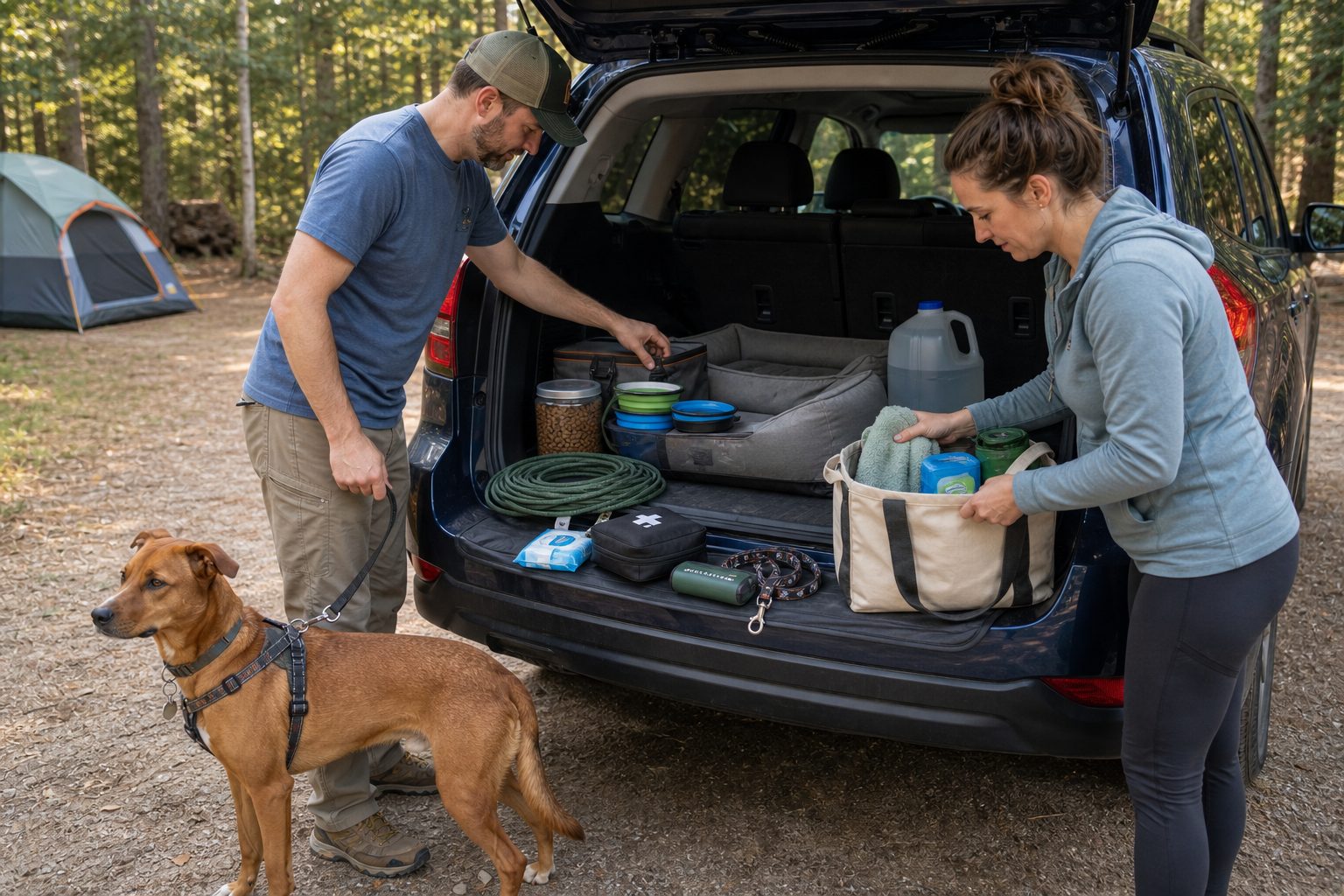
Packing for a dog camping trip gets easier when you stop thinking in one long pile of gear.
A better way is to pack by campsite zone: what stays in the car, what goes near the tent, what you need for leash handling, what belongs at the food table, and what has to be reachable after dark or after a muddy walk.
This checklist is built for ordinary car camping with a dog: campgrounds, state parks, lake weekends, forest sites, and cabin-adjacent camps where your car is nearby. It is not a backpacking list, and it does not replace campground rules, leash laws, or your dog’s medical needs. If your dog has health issues, heat sensitivity, severe anxiety, or a history of escaping, plan more carefully and ask your vet or trainer where needed.
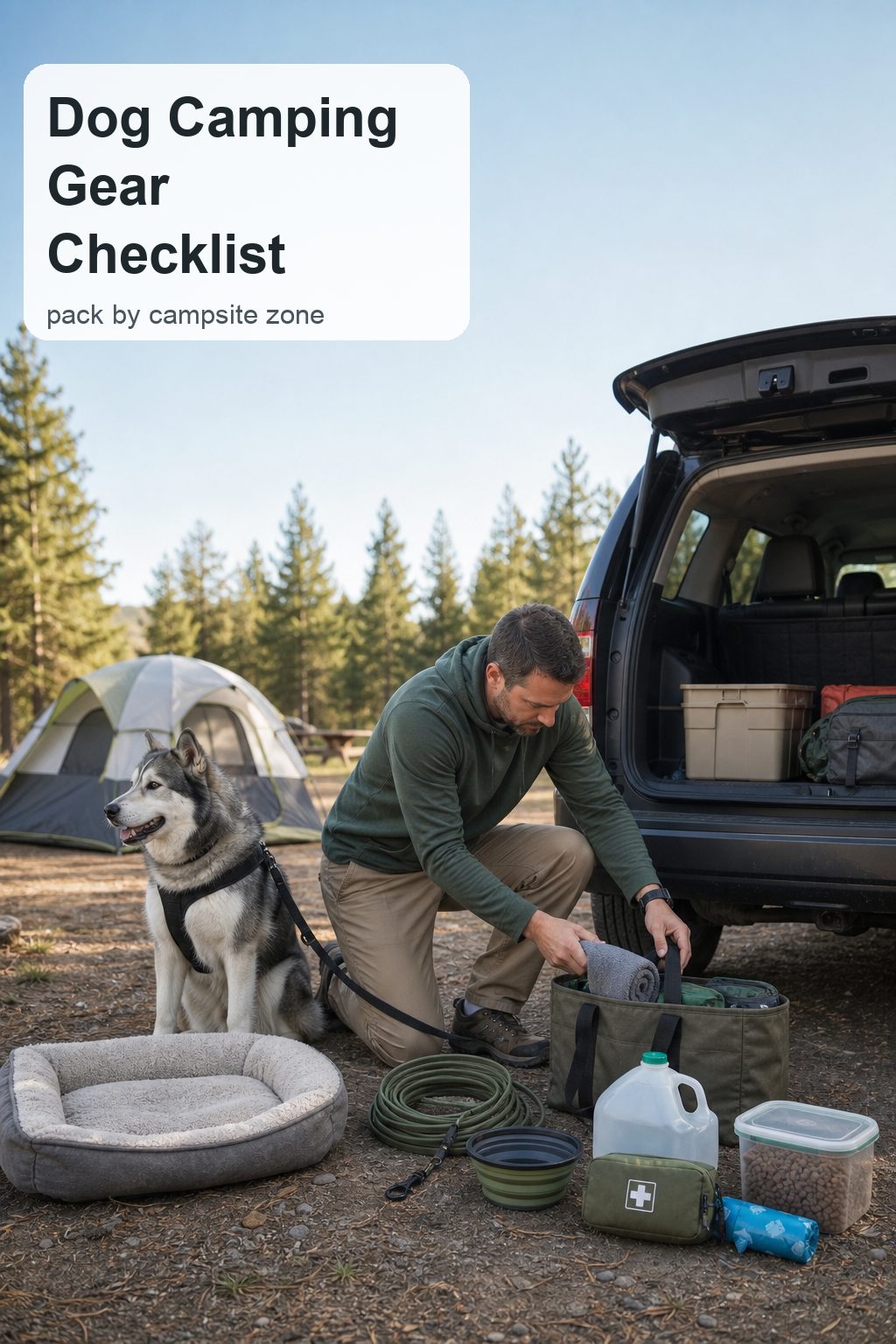
The Short Version
For most dog camping weekends, pack these core items first:
- leash and backup leash
- harness or collar with readable ID
- long line or campsite tether if allowed
- dog bed, mat, or crate pad
- towel and dirty-gear bag
- food in a sealed container
- water and bowl
- waste bags
- wipes or paw-cleanup supplies
- basic first-aid pouch
- light or reflective item for night walks
- GPS tracker or backup ID if your dog is at risk of slipping away
The gear matters, but the layout matters more. A towel buried under the cooler is not useful. A long line packed in the roof box will not help when you first arrive. Food that sits open on the picnic table can attract trouble. Think about when each item is used, then pack it where your hand naturally goes.
If you are driving to camp, it also helps to plan the car setup before you think about the campsite. Our dog car travel gear guide is a good starting point if the back seat, cargo area, and cleanup kit still feel disorganized.
Zone 1: The Arrival Zone at the Car
The first ten minutes at camp are messy. You are checking the site, opening the tailgate, moving coolers, finding the reservation slip, and trying to keep your dog from greeting every person, dog, and squirrel in view.
Keep arrival gear near the car door or tailgate, not deep in the camping bins.
Pack for this zone:
- leash already clipped or easy to reach
- backup leash
- harness or collar check
- waste bags
- towel for paws or damp fur
- water access
- collapsible bowl
- long line, if the campground allows it
The first rule is simple: leash before unloading. Your dog should be secure before the trunk becomes a distraction.
If your dog rides in the SUV cargo area, keep the leash where you can clip it before the tailgate opens wide. If your dog rides in the back seat, keep the leash by the rear door. This is the same logic as a road-trip stop: manage the dog first, then manage the gear.
For long drives before camp, pair this with a dog rest stop routine so the dog does not arrive overexcited, thirsty, and hard to handle.
Zone 2: The Dog’s Sleep Area
Your dog needs one predictable place to rest. It can be inside the tent, inside a crate, on a mat under a shelter, or in a dog bed near your sleeping area. What matters is that the dog can understand, “This is where I settle.”
Pack for this zone:
- washable dog bed, camp mat, or crate pad
- familiar blanket if your dog uses one
- crate if your dog is crate-trained and the site allows practical use
- small towel for damp paws before bedtime
- low light or lantern nearby, not shining in the dog’s face
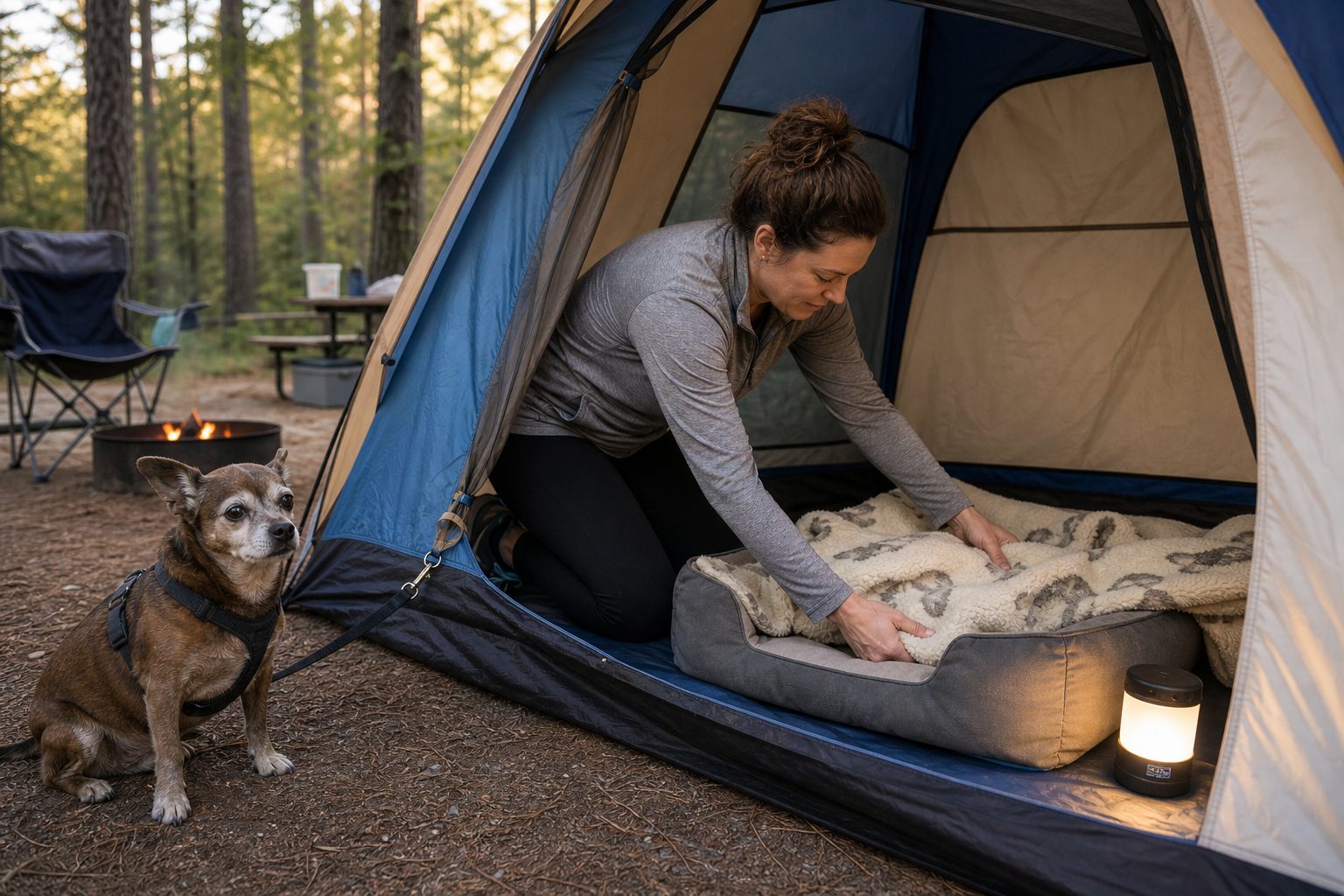
The sleep area should be dry, flat, and away from foot traffic. Do not put the bed where people step over the dog all evening. Do not place it right beside the fire ring, food table, or the path other dogs use to pass your site.
For senior dogs, padding matters more than looks. A thin mat on hard ground may be fine for a young dog for one night, but older dogs often need more insulation and joint support. If your dog already uses a crate pad for car travel, that may also work at camp if it stays dry. Our crate pad for car travel and camping guide can help you compare that kind of setup.
At bedtime, wipe paws before the dog goes into the tent or onto the bed. A small towel near the tent door saves you from bringing half the campsite into the sleeping area.
Zone 3: The Leash and Boundary Zone
Camping does not make a dog automatically easier to manage. In many ways, it adds more triggers: other dogs, kids on bikes, wildlife, food smells, tent zippers, and people walking past in the dark.
Pack for this zone:
- standard leash
- backup leash
- long line or tie-out system, if allowed
- harness that fits well
- collar with ID
- reflective leash, clip light, or light-up collar for night walks
- stake or anchor only if it is allowed and your dog will not panic or pull hard
Check campground rules before relying on a long line or tie-out. Some campgrounds have strict leash length rules. Some do not allow dogs to be tethered unattended. Even where tie-outs are allowed, do not treat them as a babysitter.
A long line is best used when you are present and watching. It gives a dog more room to lie on a mat, sniff nearby, or sit beside the picnic table without wandering into another site. It is not a solution for a dog who lunges at passing dogs or bolts after wildlife.
For dogs with escape history, add a location backup. A GPS tracker is not a leash, but it can help if a normal routine fails. If you are comparing tracker types, start with GPS tracker vs AirTag for camping and road trips and keep the GPS tracker battery checklist with your charging routine.
Zone 4: Food and Water
Food gear should be boring, sealed, and easy to clean. Campsites are not the place for loose kibble bags, open treat pouches, or bowls that stay dirty until morning.
Pack for this zone:
- dog food in a sealed container
- measured meals or scoop
- treats in a closed pouch
- water jug or extra water for the dog
- food bowl
- water bowl
- small mat or towel under bowls
- cleaning cloth or wipes
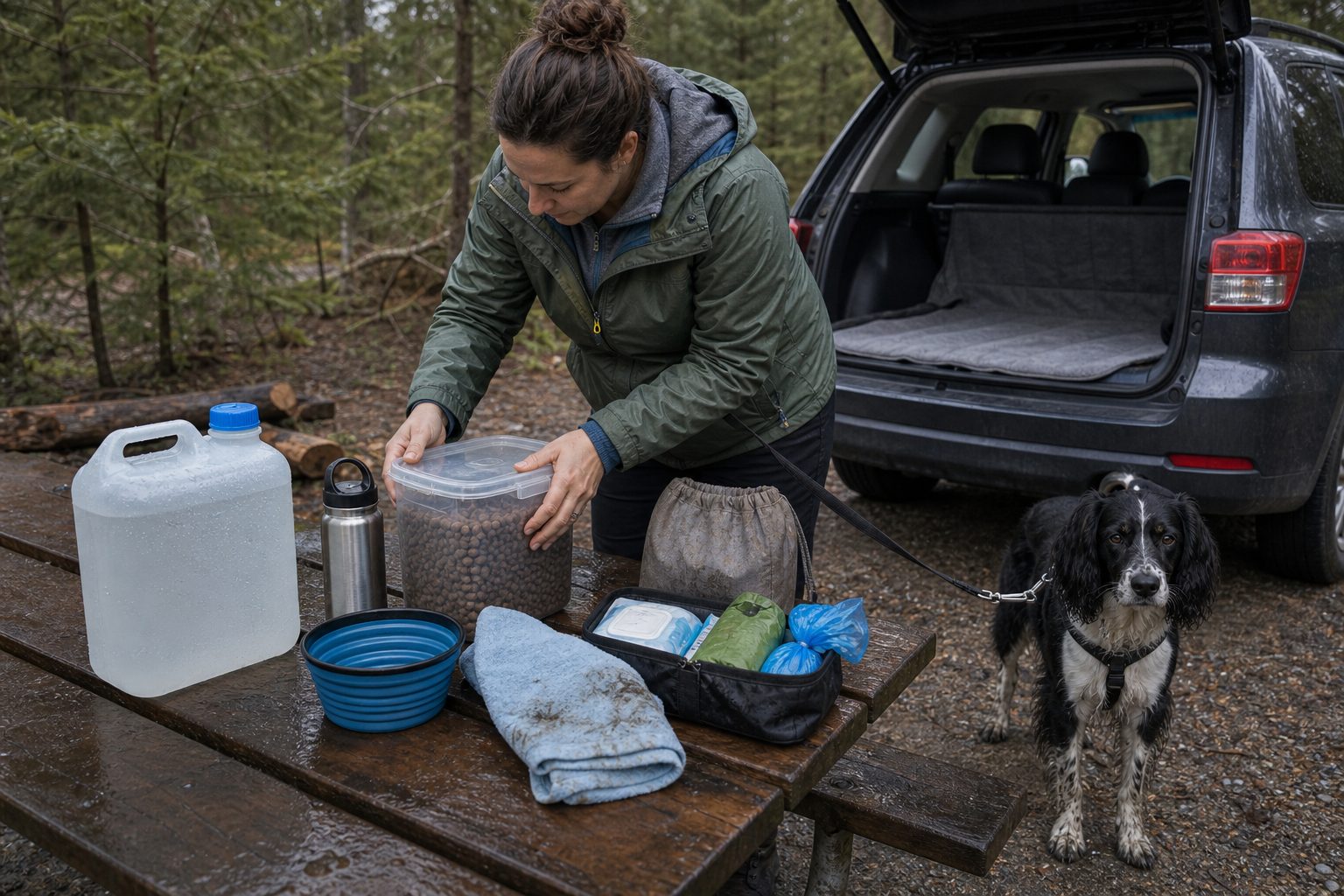
Keep dog food closed when you are not serving it. A sealed dog food storage container for road trips is easier to manage than a rolled-up bag, especially if you are camping for more than one night.
Water deserves its own plan. Dogs may drink more at camp because of heat, activity, dust, or excitement. Do not assume campground water will be close to your site or pleasant to reach after dark. Bring enough water to cover drinking and light cleanup, or know exactly where you will refill.
For quick stops and hikes from the campsite, a bottle can be easier than carrying a bowl separately. For camp meals and long breaks, a bowl is usually better. The dog travel water bottle vs collapsible bowl guide explains when each one makes sense.
Zone 5: Cleanup and Dirty Gear
Camping with a dog is mostly dirt management.
That does not mean the trip has to be fussy. It means you need a place for wet paws, used towels, dirty bowls, and wipes before they spread through the tent and car.
Pack for this zone:
- two towels if your dog gets wet or muddy
- paw wipes or pet-safe wipes
- waste bags
- larger trash bag or dirty-gear bag
- small brush or comb if your dog picks up burrs
- extra water for rinsing paws or bowls
- mat near the tent or car door
The dirty-gear bag is the item many people forget. A used towel should not go back into the clean dog bag. A muddy leash should not sit on top of food. A wet blanket should not get sealed for two days and then surprise you at home.
For car-based trips, keep cleanup gear near the hatch or rear door. For tent cleanup, keep one towel near the entrance. For hotel or cabin stops on the same trip, separate wet camping items before they move indoors.
Our dog road trip cleanup kit covers the car side of this in more detail. If towels are your main problem, compare the practical trade-offs in dog travel towels for road trips and camping.
Zone 6: Weather and Comfort
Weather changes the list fast. A dry summer site and a chilly rainy site need different dog gear.
For warm weather, think about shade, water, and surface temperature. Your dog may need a shaded resting spot, more water, and fewer high-energy activities in the hottest part of the day. Do not rely on a tent as a cool space if the sun is heating it.
For cool nights, pack enough insulation between your dog and the ground. A dog that seems fine around the fire may be cold at 3 a.m. once the ground has cooled and the sleeping bag is not shared.
For rain, pack a towel where you can reach it and a place to put wet fabric. Rain also makes leashes muddy, bowls gritty, and dog beds damp. A waterproof outer layer can help some dogs, but it is not necessary for every dog. What matters is whether your own dog stays comfortable and can dry off.
Add based on conditions:
- shade cloth, canopy, or shaded resting plan
- cooling mat only if it fits your dog and trip
- dog jacket for cold-sensitive dogs
- extra towel for rain or lake trips
- waterproof mat under the dog bed
- booties only if your dog is already comfortable wearing them
Do not bring brand-new comfort gear and expect your dog to accept it at camp. Try jackets, booties, beds, crates, and cooling mats at home first.
Zone 7: Night Routine
Night at camp is where small mistakes feel bigger.
You need to see the dog, clip the leash, find waste bags, and keep the dog from stepping into food scraps, firewood, tent lines, or another campsite.
Pack for this zone:
- headlamp or small flashlight
- reflective leash or clip light
- waste bags near the tent door
- water within reach
- towel by the tent entrance
- ID tag checked before the trip
- GPS tracker charged, if you use one
Before dark, decide where the dog will sleep, where the leash will hang, and where the last potty walk starts. Do not wait until everyone is tired.
If your dog is noise-sensitive, night can be harder than day. Campfires, late arrivals, car doors, other dogs, and wildlife sounds can keep a dog alert. A predictable bed, a shorter leash, and less visual stimulation can help. If your dog becomes frantic or unsafe, the best gear may be a calmer trip plan next time, not a new accessory.
What Not to Pack
Do not pack gear that creates more work than it solves.
Skip fragile bowls that crack easily, oversized beds that never dry, treat bags that do not close, and toys that encourage loud or frantic play around other campsites.
Be careful with retractable leashes at camp. They can tangle around chairs, tables, tent lines, and other dogs. A standard leash plus a supervised long line is often easier to control.
Do not bring only one towel if your dog swims, hikes in mud, or sleeps in the tent. One towel becomes wet quickly. The second towel is what keeps the car or tent manageable.
Do not rely on a GPS tracker as permission to loosen your routine. It is a backup tool. The first layer is still leash, harness, ID, attention, and campground rules.
A Simple Packing List by Bag
Pack the car so each bag has a job.
Dog camp bag:
- bed or mat
- blanket
- food container
- bowls
- treats
- waste bags
- wipes
- towel
- first-aid pouch
Door or tailgate pouch:
- leash
- backup leash
- waste bags
- small towel
- water access
- clip light or reflective item
Dirty gear bag:
- wet towels
- muddy leash
- used wipes in a trash bag
- damp mat or blanket
- dirty bowl until it can be washed
Night pouch:
- flashlight or headlamp
- waste bags
- small towel
- charged tracker or spare battery item if your setup uses one
This is not the only way to pack. It is just easier than putting everything in one tote and hoping you can find the right item in the dark.
Final Campsite Check
Before you settle in, walk the site once with your dog on leash.
Look for broken glass, food scraps, fish hooks, sharp sticks, fire ring debris, other dogs, gaps under picnic tables, and places where the leash could wrap around something. Decide where the dog will rest, where food will stay, and where dirty gear will go.
That five-minute walk is part of the gear setup. It tells you whether your packing plan matches the actual site.
The best dog camping gear checklist is not the longest one. It is the one that makes the campsite easier to manage: dog secure, food closed, water reachable, towels ready, sleep area dry, and cleanup separated before the mess spreads.