
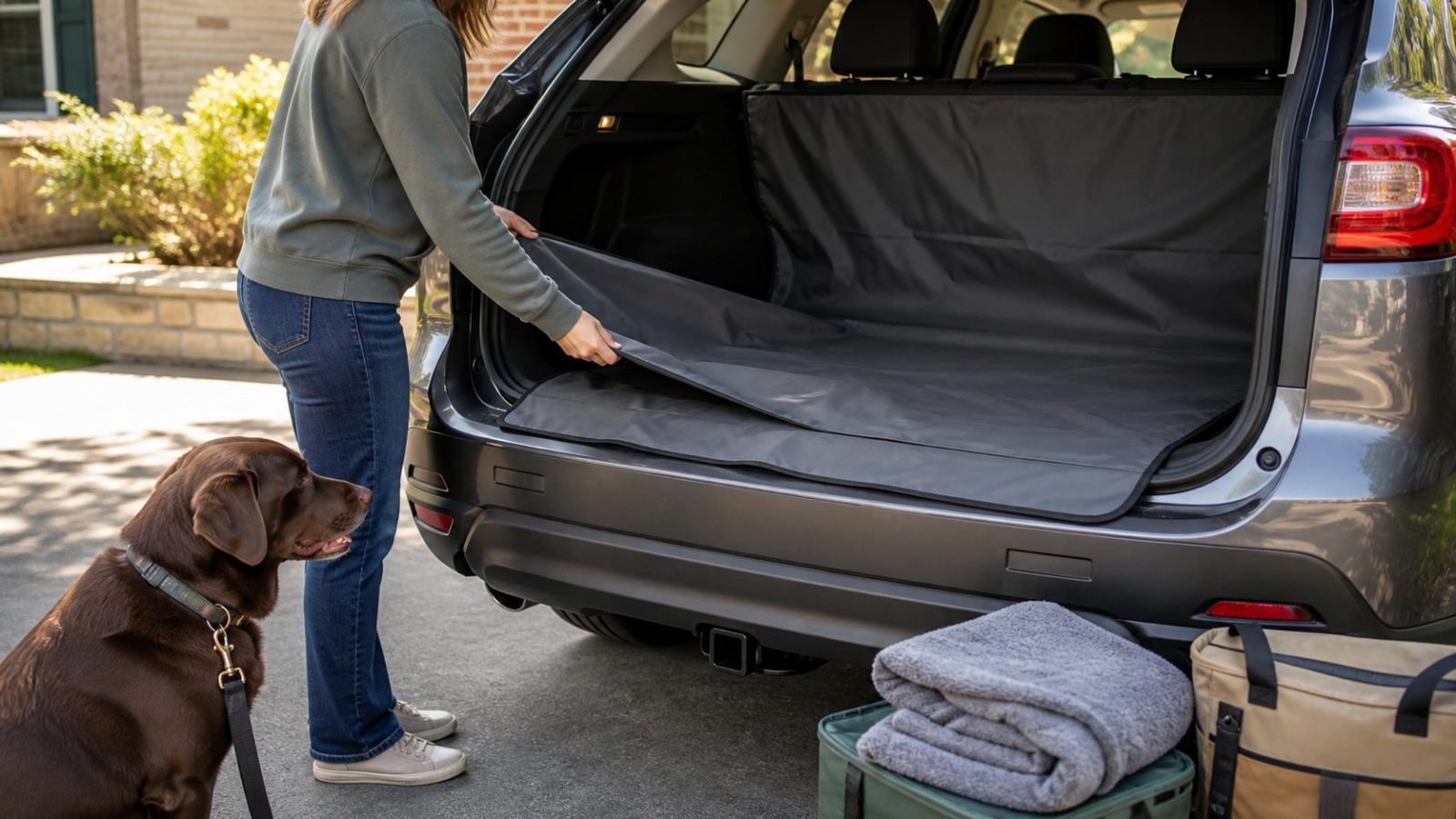
A dog cargo liner for an SUV protects the space that gets dirty fastest: the cargo floor, bumper edge, seat backs, and side walls where paws, fur, drool, towels, crates, and camping gear all end up.
It is not a restraint system. A liner protects the vehicle. Your dog still needs a safe riding setup, whether that means a secured crate, a properly used harness system, or another setup that fits your dog and vehicle. But for owners who use the cargo area for dog gear, muddy towels, folded ramps, food bins, or a crate, the right liner can make every stop easier to clean up.
This guide is for SUV owners who want a practical cargo liner before road trips, trail days, camping weekends, or wet-weather errands.
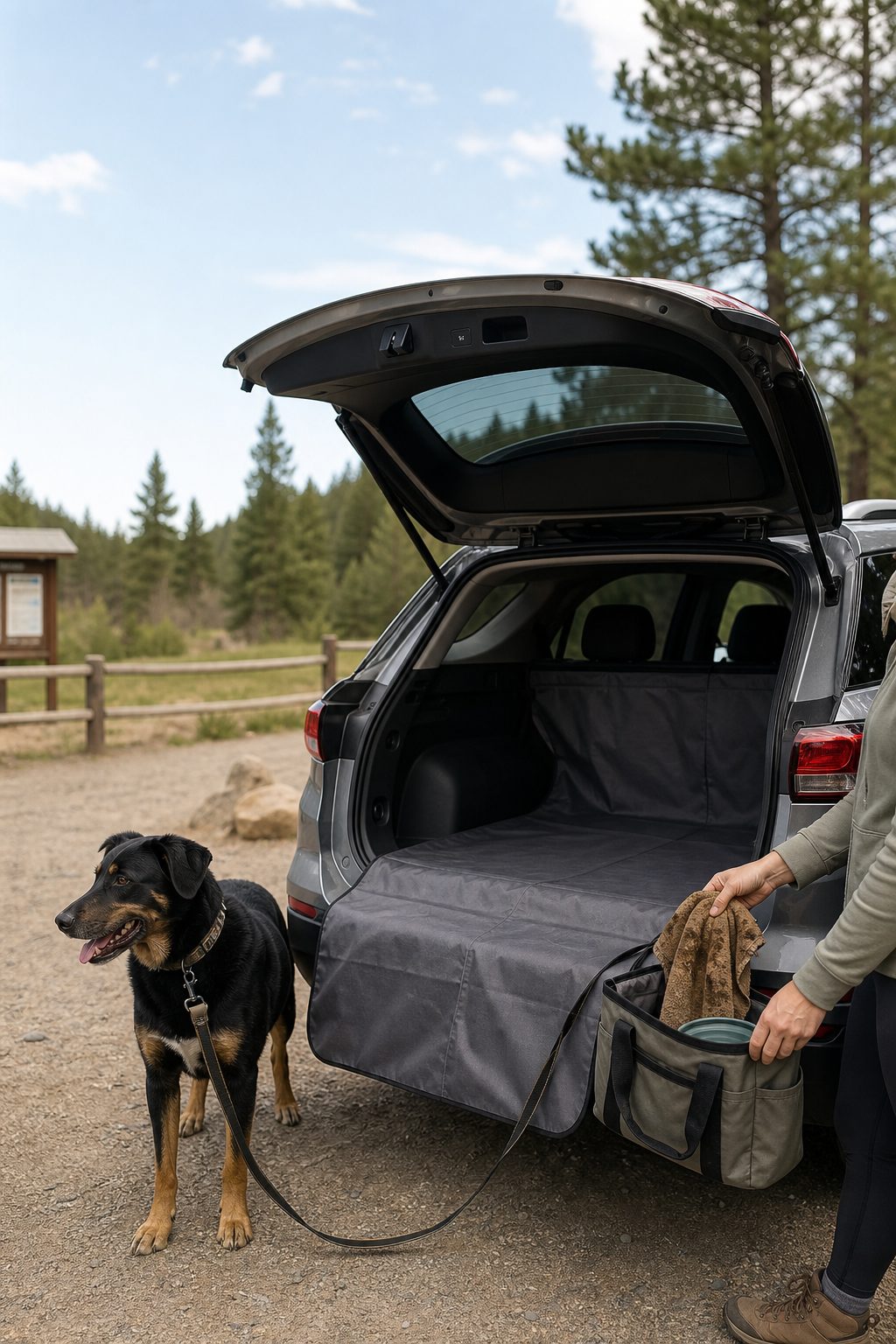
Compare dog cargo liners for SUVs on Amazon
Quick Answer
For most SUV road trips, the best dog cargo liner is a waterproof or water-resistant mat that fits your cargo floor, has raised or covered edges, includes a bumper flap, stays in place when your dog steps in, and can be removed without dumping dirt into the car.
If your dog rides in a crate, measure for the crate first and choose a liner that does not bunch underneath it. If your dog enters through the tailgate, a bumper flap is worth having because claws, mud, and ramps usually hit the bumper before they hit the cargo floor.
The right liner should make cleanup easier without interfering with tie-down points, rear seat latches, cargo hooks, or the way you secure your dog’s gear.
What a Cargo Liner Actually Protects
An SUV cargo liner mainly protects the cargo floor. Better designs also cover part of the rear seat backs, the bumper lip, and sometimes the lower side panels.
That matters on dog trips because mess rarely stays in one place. A wet dog shakes near the tailgate. A towel picks up sand and drops it near the bumper. A collapsible bowl spills next to the crate. A dog ramp leaves dirt right where the liner ends if there is no bumper flap.
A liner can help with:
- muddy paws after trailheads and rest stops
- wet fur after rain, lake trips, or campground mornings
- dog hair in cargo carpet
- spilled kibble or water near food storage bins
- crate scuffs on the cargo floor
- dirty towels, blankets, and cooling mats
- scratches near the bumper edge
It will not keep a loose dog safe in the cargo area. It also will not fix a crate that slides, a ramp that is too steep, or gear that rolls around during a turn. Think of the liner as the cleanable layer under the real travel setup.
Start With Your SUV Layout
Before comparing materials or colors, look at your cargo area. SUVs vary more than product photos make it seem.
Measure the cargo floor from the back of the second-row seats to the inside edge of the tailgate. Then measure the width at the widest point and at the narrowest point between the wheel wells. If the liner needs to work with the rear seats folded down, measure that layout too.
Check whether your cargo floor is flat or slightly raised near the bumper. Some SUVs have cargo rails, tie-down loops, storage handles, or latch covers that a thick liner may block. If you use those points to secure a crate or gear bin, they need to stay reachable.
Also think about how your dog gets in. A large dog who jumps in from the ground will hit the bumper edge differently than a senior dog using a ramp. If your dog uses a ramp, the liner should not slide when the ramp rests against it.
Best for Most SUV Owners: Waterproof Cargo Mats
A waterproof cargo mat is the easiest starting point for most dog owners. It covers the floor, catches hair and grit, and can usually be wiped down after a trip.
Look for a surface that is flexible enough to remove but not so soft that it bunches under a crate. A slick mat may wipe clean quickly, but it can also let storage bins or a crate shift if there is no grip underneath. A textured surface can help with traction, though deep grooves may hold dirt.
The best fit is usually a liner that sits flat against the floor and follows the wheel well shape. If the corners curl up or leave wide gaps, dog hair and sand will find those gaps by the second trip.
This type is a good fit for weekend road trips, dogs who ride in secured crates, and owners who use the cargo area for towels, water bowls, first-aid kits, and camping gear.
Bumper Flaps Are Worth Checking
A bumper flap is the extra piece that folds out over the rear bumper when the tailgate is open. It sounds small, but it is one of the most useful details for dog travel.
Dogs do not always step cleanly into the cargo area. They brace, pause, hop, drag a back paw, or turn sideways at the last second. That movement can scratch the bumper trim and leave mud right at the edge of the car.
A bumper flap also helps when you are loading a ramp, crate pad, muddy towel, or food bin. Instead of setting dirty gear directly on the bumper, you can rest it on the flap and fold the flap back in after wiping it.
Check how the flap stores when the tailgate closes. It should fold inside cleanly without trapping grit against painted surfaces. If the flap is stiff, too short, or always in the way, you may stop using it.
Fit Around Wheel Wells and Seat Backs
Wheel wells are where many universal cargo liners fall short. A liner that fits the center floor but leaves curved side gaps will still let hair and dirt settle into the cargo carpet.
If your dog rides in a crate, side gaps may not matter much. If your dog stands in the cargo area while you are parked and loading gear, side coverage matters more. Dogs often turn around near the wheel wells, especially when waiting for a leash, bowl, or towel.
Seat-back coverage is useful when you fold down the second row or stack soft gear against the seats. It can protect fabric from dirty beds, travel blankets, and crate pads. Just make sure the liner does not block seat latches or prevent the seats from locking properly when you put them back up.
Non-Slip Backing and Real-World Grip
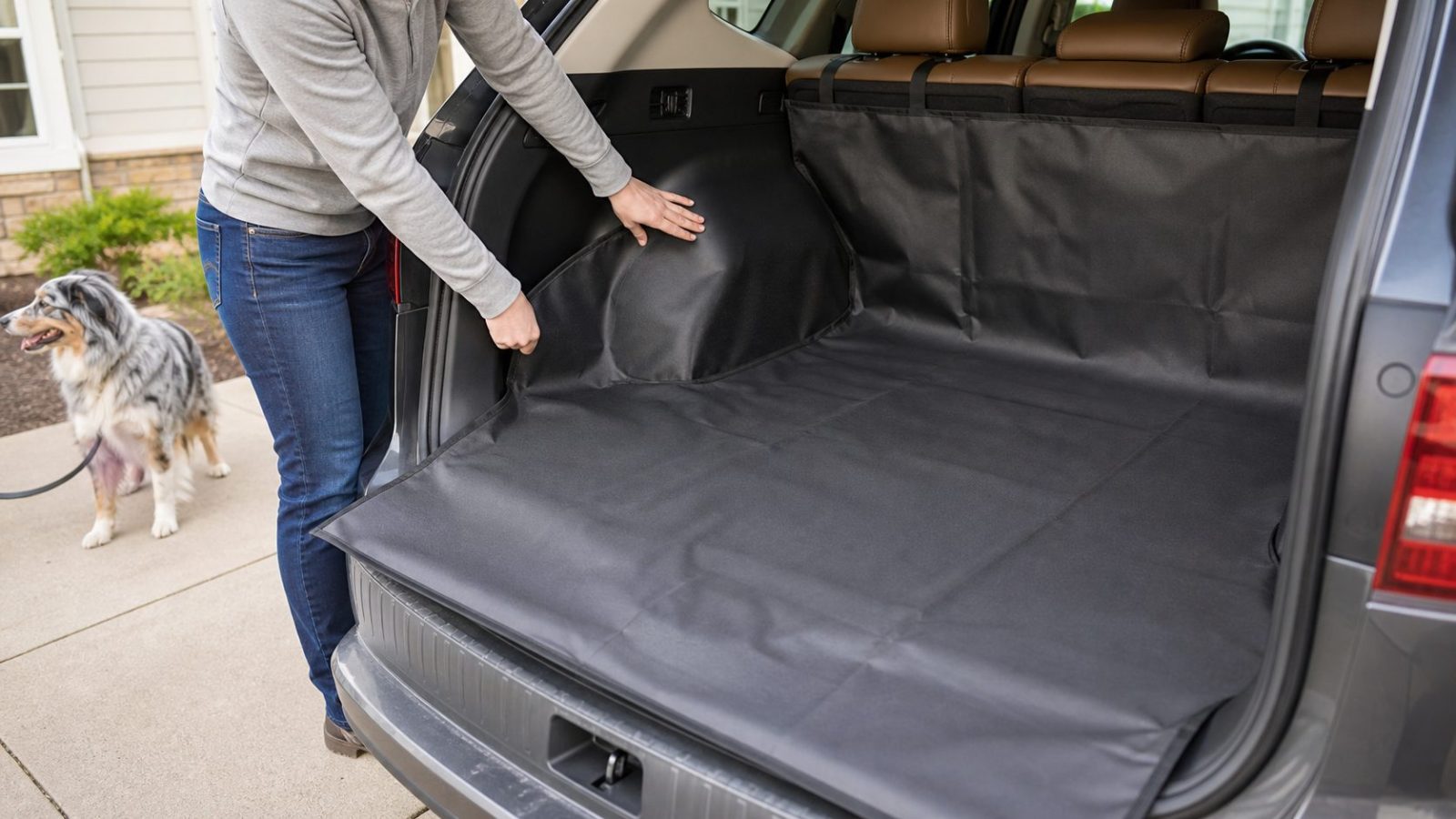
Non-slip backing matters most when your dog steps in, turns around, or exits. A liner that slides toward the bumper can make your dog hesitate, especially if the cargo floor is already high.
Grip depends on more than the label. Cargo carpet, plastic floor trays, crate weight, moisture, and dog size all change how the liner behaves. A heavy dog stepping onto a wet mat can shift it even if the listing says non-slip.
Test the liner at home before a trip. Place it in the cargo area, open the tailgate, and press your hand across the corners and center. Then load the crate, ramp, towel bin, or other gear you normally carry. If the liner wrinkles or slides before your dog even gets in, it needs adjustment.
Do not use loose straps or anchors that create loops near your dog’s feet. Clean is good; tangled is not.
Crates, Ramps, and Cargo Tie-Downs
Many PawTripKit readers use the SUV cargo area for a crate, folded ramp, food storage container, or camping gear. The liner needs to work under that setup, not fight it.
If you use a crate, check whether the liner bunches under the crate corners. A raised seam in the wrong spot can make the crate less stable. You also need access to whatever anchor points or straps you use to secure the crate.
If you use a ramp, check the bumper flap and cargo edge. Some ramps rest partly on the bumper and partly inside the cargo opening. The liner should not create a slippery layer under the ramp feet.
If you pack food bins, water jugs, or a gear tote, choose a liner that can handle small spills and grit. A thin fabric cover may look tidy, but it may not be enough for wet camping gear or muddy paws after a rainstorm.
Cleaning: Wipe, Shake, or Wash
Cleaning is where a cargo liner either earns its place or becomes another dirty thing in the car.
For road trips, a wipe-clean surface is usually more useful than a plush surface. You want to shake out sand, wipe paw marks, and remove the liner without spilling everything back into the cargo carpet.
Some liners can be hosed off. Some are better wiped with a towel. Some fabric-backed versions need more drying time. Read care instructions before you buy, especially if you travel in rainy areas or camp where the liner may stay damp overnight.
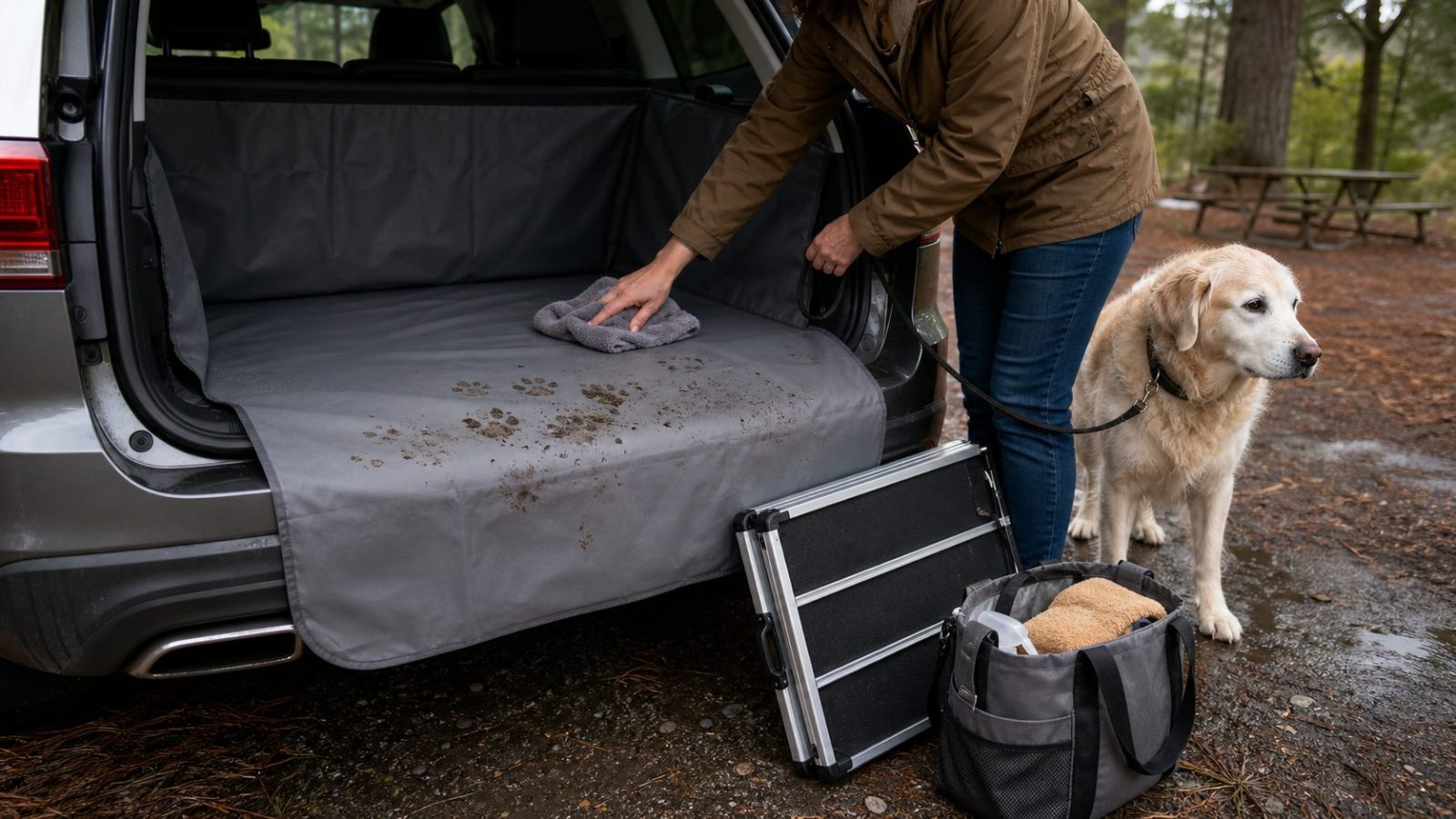
For long trips, pack one small towel just for the cargo area. Wipe the bumper flap and the tailgate edge before closing everything up. That small habit keeps mud from transferring to clean blankets, food bags, or hotel luggage.
What to Avoid
Avoid a liner that blocks tie-down points you need for a crate or gear. A clean floor is not worth a less stable crate setup.
Avoid covers that fit only in product photos. If your SUV has deep wheel wells, a cargo rail system, or an uneven floor, a flat rectangle may leave more gaps than you expect.
Avoid very slick surfaces for dogs who jump in quickly or have weak footing. Older dogs and large dogs need a stable entry surface, especially when the cargo floor is high.
Avoid assuming waterproof means odor-proof. If wet towels, food crumbs, or muddy gear sit on the liner for a full weekend, the liner still needs to be cleaned and dried.
Quick Buying Checklist
Before buying a dog cargo liner for an SUV, check:
- cargo floor length and width
- narrow width between wheel wells
- whether rear seats will be up or folded down
- bumper flap length and how it folds away
- side edge coverage
- seat-back coverage
- non-slip backing or grip
- crate and ramp compatibility
- access to tie-down points and cargo hooks
- wipe-clean or hose-off care instructions
- whether muddy gear can be removed without dumping dirt into the car
Related PawTripKit Guides
Cargo liners fit naturally with these road trip and cleanup guides:
- Best Dog Ramps for Cars and SUVs
- Dog Road Trip Cleanup Kit
- Best Dog Travel Towels for Road Trips, Camping, and Hotels
- Best Dog Food Storage Containers for Road Trips
- How to Keep Your Dog Safe in the Car
Final Thoughts
A dog cargo liner for an SUV is not the most exciting piece of travel gear, but it solves a real problem. It gives mud, fur, spilled water, and dirty towels a place to land that is easier to clean than cargo carpet.
Choose the liner around your actual setup: dog size, SUV shape, crate or ramp use, and the kind of trips you take. A good liner should fit flat, protect the bumper edge, wipe clean without fuss, and stay out of the way of the gear that keeps your dog and car organized.
FAQ
Do dogs need a cargo liner in an SUV?
Not every dog needs one, but a cargo liner is useful if your dog leaves hair, mud, water, or gear mess in the cargo area. It is especially helpful for trailheads, camping weekends, beach trips, and large dogs who enter through the tailgate.
Can a dog ride loose on a cargo liner?
A cargo liner protects the vehicle surface. It does not restrain your dog. Use a safe riding setup that fits your dog and vehicle, such as a secured crate or another appropriate restraint system.
Are waterproof cargo liners better than fabric liners?
For muddy road trips and wet gear, waterproof or water-resistant liners are usually easier to clean. Fabric liners may feel softer, but they can hold hair, moisture, and odors if they are not cleaned and dried well.
Should I get a cargo liner with a bumper flap?
For most SUV dog owners, yes. A bumper flap helps protect the edge where dogs step in, ramps rest, and muddy gear gets loaded.
Will a cargo liner work with a dog crate?
Often, but measure first. Make sure the crate sits flat, the liner does not bunch underneath, and tie-down points remain accessible if you secure the crate.