
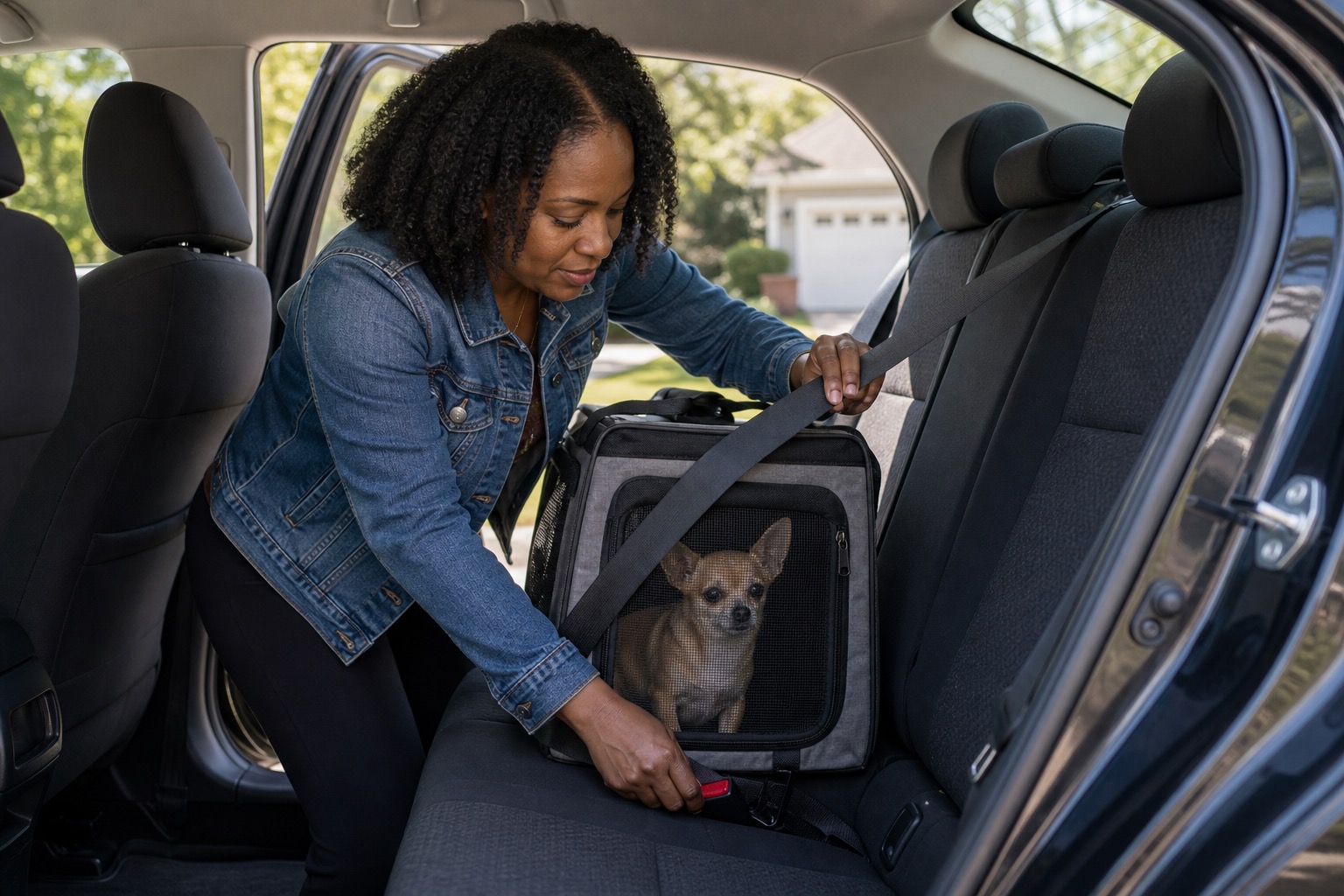
How to Secure a Small Dog Carrier in the Car
A small dog carrier should not slide across the seat, tip into the footwell, or sit loose in the cargo area. Before you drive, the carrier needs a stable position, clear ventilation, a way to reduce movement, and enough space for your dog to sit or lie naturally inside. That does not mean every carrier becomes a crash-tested restraint. It means you are giving the carrier the most stable setup your car and carrier design allow.
For many small dogs, the rear seat is the most practical place to start. The carrier is easier to monitor, easier to buckle around if the design allows it, and usually less exposed than the front passenger seat. Always read the carrier instructions and your vehicle manual before relying on any specific routing method.
If the carrier sits near a sunny rear window, compare dog car window shades as a comfort layer. Keep airflow and visibility clear, and do not let the shade interfere with carrier securement.
Short Answer
To secure a small dog carrier in the car:
- choose the rear seat or a stable rear floor area, depending on the carrier and vehicle
- keep the carrier level
- route the seat belt only where the carrier design allows it
- check that the belt does not crush mesh, zippers, or ventilation panels
- push the carrier gently to see whether it slides or tips
- keep loose bags and hard items away from the carrier
- avoid placing the carrier in the front seat
If you are still choosing the carrier, start with Best Dog Carriers for Car Travel and How to Choose the Right Size Dog Carrier. Fit matters before you ever get to the seat belt.
Start With the Carrier, Not the Seat Belt
The seat belt is not the first decision. The first decision is whether the carrier itself fits your dog and sits properly in your car. A carrier that is too tall for the seat angle, too wide for the bench, or too soft to hold its shape will be harder to secure well.
Check the bottom of the carrier. It should sit flat, not half on a seat crease or tilted against a door panel. Check the sides too. Mesh windows and vents should stay open, not pressed hard against the seatback or crushed by the belt.
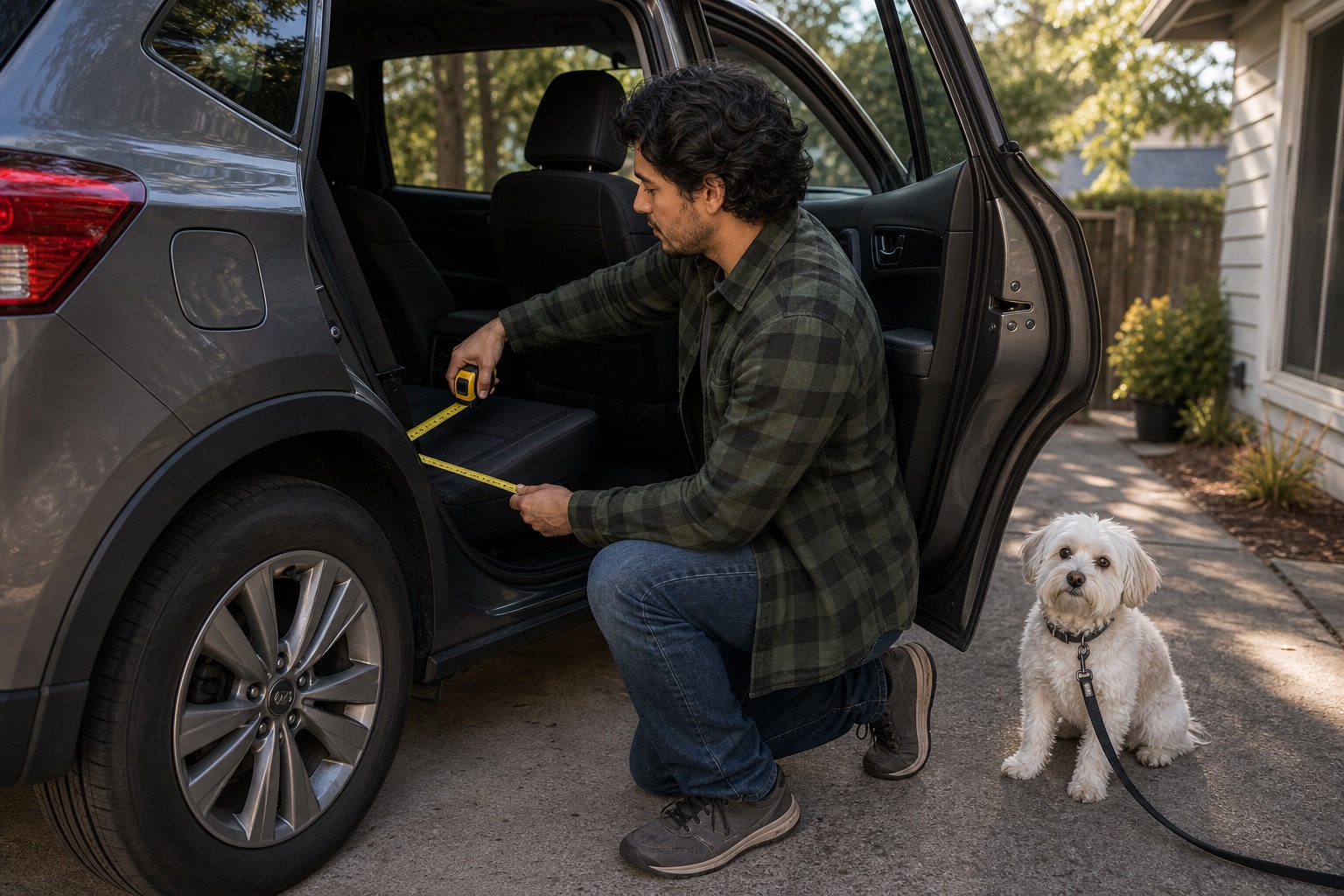
For a small dog, extra interior space is not always better in the car. Your dog needs enough room to settle, but a carrier that is much larger than your dog may shift more and give your dog more room to slide inside. Measure the dog and the car space together, not separately.
Rear Seat Setup
For many soft-sided carriers, the rear bench seat is the easiest place to create a controlled setup. Place the carrier so the broadest, most stable side faces forward or sits flat against the seat. If the carrier has a sleeve, strap, or routing point made for a seat belt, use that. If it does not, do not invent a tight belt path that bends the frame or blocks airflow.
The goal is to reduce sliding without squeezing the carrier. A belt should not pull across a zipper so tightly that the door becomes hard to open. It should not press into mesh panels your dog needs for ventilation. It should not create a gap where the carrier could twist if the car turns or stops quickly.
After routing the belt, use your hands to check movement. The carrier may move a little, but it should not skate across the seat or tip easily.
If you are setting up the whole rear row for a trip, this pairs well with How to Set Up the Back Seat for a Dog Road Trip.
Rear Floor Area Setup
Some hard-sided carriers or compact crates sit better on the rear floor area than on a sloped seat. This depends on the vehicle layout, carrier shape, and available space. The floor area can give a flatter base, but only if the carrier fits without being wedged, tilted, or pushed against a hot vent or moving seat rail.
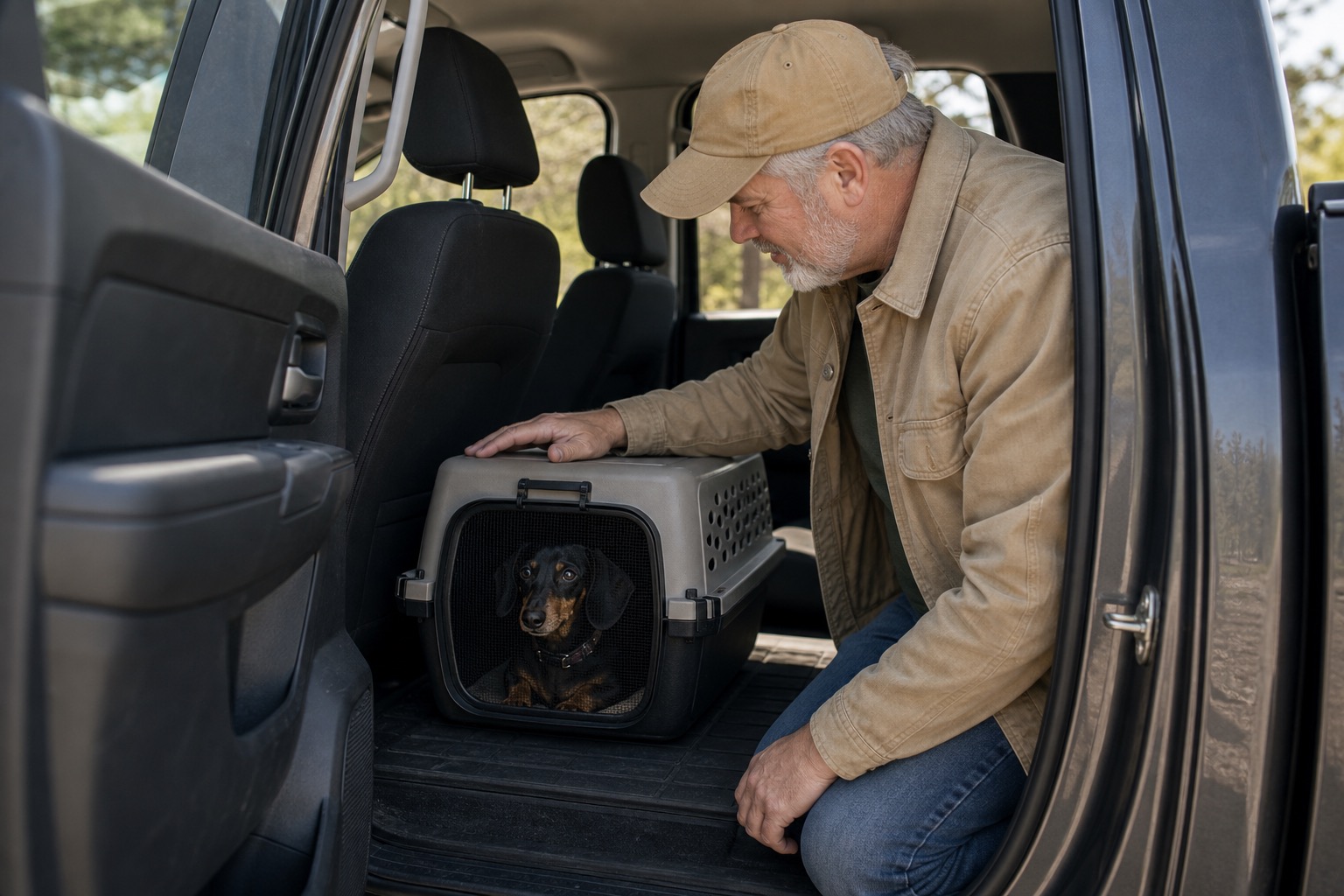
If you use the floor area, make sure your dog still has airflow and that the carrier door can open when needed. Do not trap the carrier under loose bags, coolers, or groceries. A carrier surrounded by hard gear is not a calm travel setup.
This can be a better direction for short dogs, compact hard carriers, and vehicles with a flat rear floor. It is less practical if passengers need legroom or if the carrier blocks seat movement.
Do a Movement Check Before Driving
Before starting the car, do a simple movement check. Push the carrier gently from the front, side, and top. You are looking for obvious sliding, tipping, twisting, or pressure points.
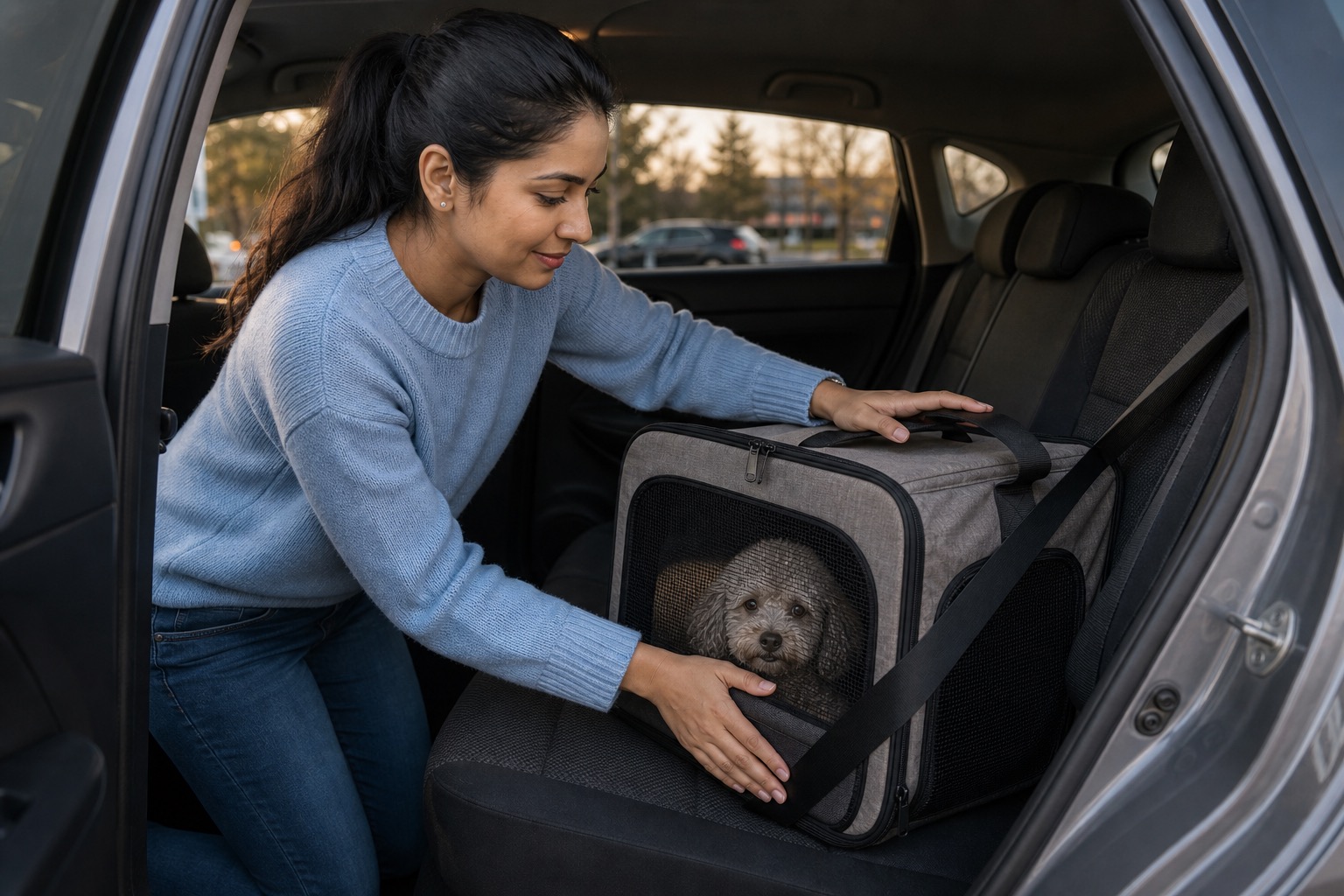
Then check the dog. Can your dog sit or lie naturally? Is the mesh clear? Is the zipper closed fully? Is the leash unclipped or safely managed so it cannot tangle inside the carrier? A leash clipped to a dog inside a carrier can create a snag risk if it is left loose.
For a nervous small dog, do this setup before the trip day. Let the dog spend short, calm moments in the carrier while the car is parked. The goal is not to force a long ride immediately. It is to find problems while you still have time to adjust.
What Not to Do
Do not put a loose carrier on the front passenger seat. Airbags, seat angle, and driver distraction all make that a poor default choice for most situations.
Do not run a belt across the carrier in a way that crushes the sides. A carrier that looks “tight” may actually be less usable if the door, frame, or mesh is distorted.
Do not place the carrier on top of a soft blanket stack. It may feel cushioned, but it can make the carrier less stable.
Do not let luggage press against the carrier door. You should be able to reach and open the carrier when parked.
Do not assume a carrier is safe for car travel just because it is labeled for travel. Read the instructions, look at the structure, and think about how it will sit in your actual vehicle.
Quick Setup Checklist
Before each drive, check:
- carrier sits flat
- dog fits comfortably inside
- mesh and vents are not blocked
- door and zipper close properly
- seat belt routing follows the carrier design
- carrier does not slide or tip easily
- loose bags are kept away
- water, cleanup supplies, and leash are easy to reach at stops
- dog is not riding in the front seat
If one of those checks fails, fix the setup before driving rather than hoping it will be fine for a short trip.
Carrier Setup for Longer Road Trips
Longer drives add a few practical details. Put cleanup supplies within reach, because small dogs can get carsick, spill water, or track dirt into the carrier after a rest stop. A small towel is useful under or beside the carrier, but do not use so much soft material that the carrier becomes unstable.
If your dog drinks from a bowl at stops, pack the bowl separately so it does not leak into the carrier. Our Dog Travel Bowl Cleaning Routine and Dog Travel Water Bottle vs Collapsible Bowl can help with that part of the trip.
For broader travel planning, use Dog Road Trip Checklist for Beginners before you pack the car.
You can also compare general small dog car carrier options here: Compare small dog car carriers on Amazon.
Final Thoughts
Securing a small dog carrier is mostly about fit, position, and movement. Choose a stable spot, keep the carrier level, use the seat belt only as the carrier design allows, and check that the setup does not block ventilation or access.
Small dogs are easy to carry, but that does not mean their car setup should be casual. A few minutes of checking the carrier before you drive can prevent sliding, tipping, clutter, and stressful stops later.
FAQ
Can I buckle a dog carrier with a seat belt?
Sometimes, but only if the carrier design allows it. Look for a seat belt sleeve, strap, or manufacturer guidance. Do not route the belt in a way that crushes the carrier or blocks ventilation.
Is the rear seat better than the front seat for a small dog carrier?
For most routine car trips, the rear seat is the better starting point. It keeps the carrier away from the front airbag area and usually creates a calmer setup with less driver distraction.
Can I put a dog carrier on the rear floor?
Sometimes. A hard-sided carrier may sit well on a flat rear floor area if it does not block airflow, seat movement, or access. Check that the carrier is level and not wedged into place.
Should my dog wear a leash inside the carrier?
Be careful. A loose leash inside a carrier can tangle. If you use a leash for moving your dog in and out of the car, manage it so it does not become a snag risk during the ride.
Is a carrier the same as a crash-tested restraint?
No. A regular carrier can help contain your dog, but that does not automatically mean it has been crash tested or rated as a restraint system. Check the product information and use cautious, realistic expectations.