
Dog Back Seat Barrier: Do You Need One for Road Trips?
A dog back seat barrier can help keep a dog from climbing into the front seat, but it is not a restraint by itself. For road trips, it works best as a boundary tool for dogs who already have a clear riding space. It is not a replacement for a carrier, crate, harness setup, or a back seat layout that actually gives the dog room to settle.
The right answer depends on your dog’s behavior, your vehicle, and what you already use in the back seat. Some dogs benefit from the extra boundary. Others do better with a simpler setup and fewer things hanging between the seats.
Short Answer
A dog back seat barrier may help if:
- your dog keeps trying to climb into the front seat
- you use the full rear bench as the dog’s riding area
- your dog is calm enough not to chew or paw at the barrier
- the barrier does not block buckles, tethers, vents, or visibility
Skip it or rethink the setup if:
- your dog needs a crate or carrier instead
- the barrier sags into the dog’s space
- it interferes with a hammock, tether, or seat belt buckle
- your dog becomes more anxious when blocked from view
- your car layout makes the barrier unstable
If you are comparing options, you can compare dog car barriers on Amazon.
What a Back Seat Barrier Actually Does
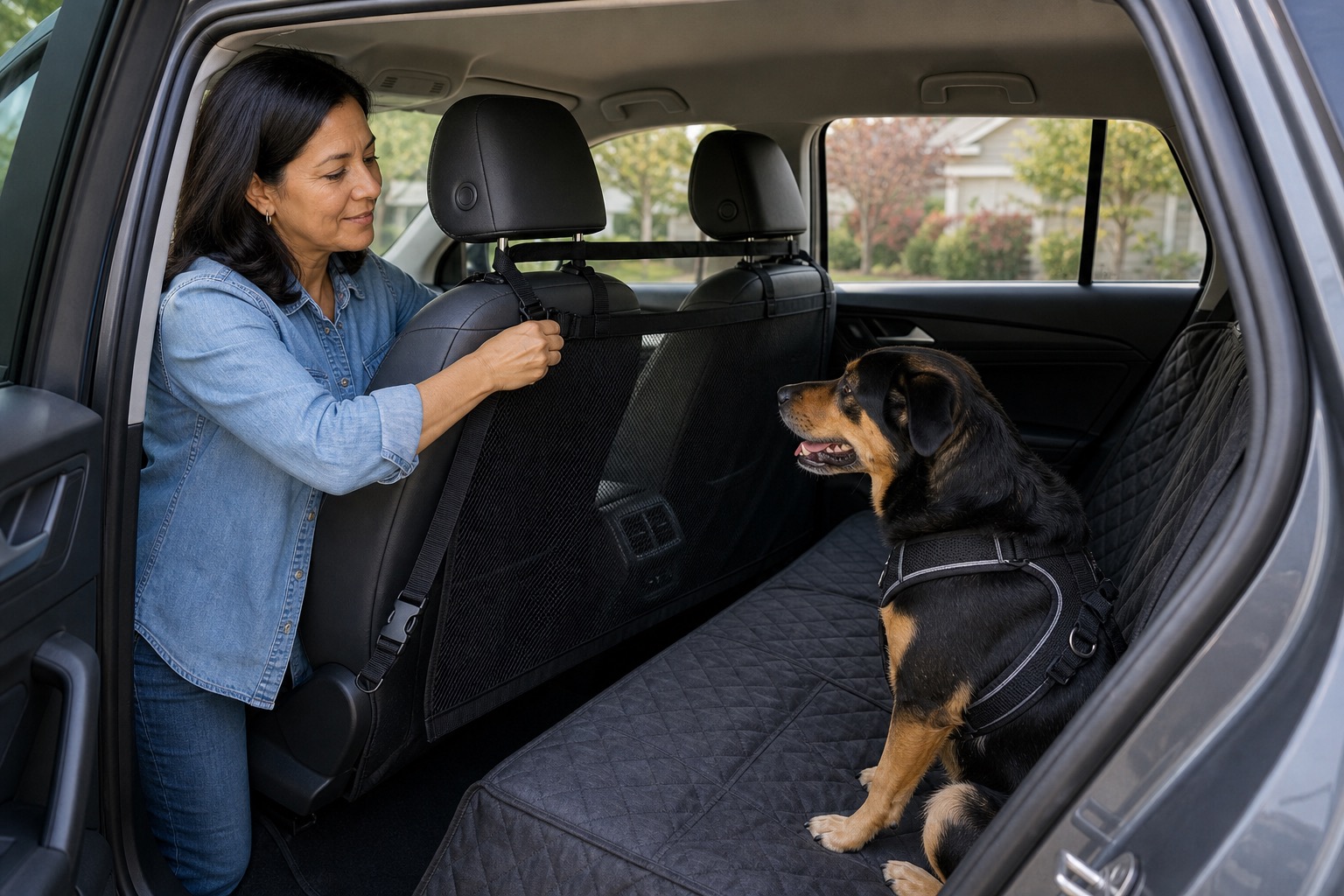
A barrier creates a visual or physical boundary between the front seats and the back seat. Some are mesh panels that attach around the front seats. Some are sturdier dividers. Some are designed more for cargo areas than rear benches.
For a road trip, the useful job is modest: it can discourage a dog from pushing forward, stepping onto the center console, or distracting the driver. That can make the ride calmer if the dog already understands the back seat as their travel zone.
What it does not do is restrain the dog in a crash or sudden stop. A barrier can reduce wandering, but it is not the same as a properly used harness, carrier, or crate. For that bigger safety picture, start with How to Keep Your Dog Safe in the Car.
When a Barrier Makes Sense
A barrier makes the most sense when the dog rides on the rear bench and mostly needs a reminder not to come forward. This can be helpful with curious dogs, dogs who want to stand between the seats, or dogs who settle better when the front-seat boundary is obvious.
It can also help when you drive alone and do not have a passenger to redirect the dog. In that case, a clear back seat setup matters even more. Pair the barrier with a flat cover, reachable buckle access, and enough room for the dog to lie down.
If you have not built the back seat layout yet, read How to Set Up the Back Seat for a Dog Road Trip before adding another piece of gear.
Check Buckles, Tethers, and Hammock Straps First
The barrier should not make the important parts harder to use. Before a trip, sit in the back seat and check whether you can still reach the buckles, tether route, cover openings, and any hammock straps.
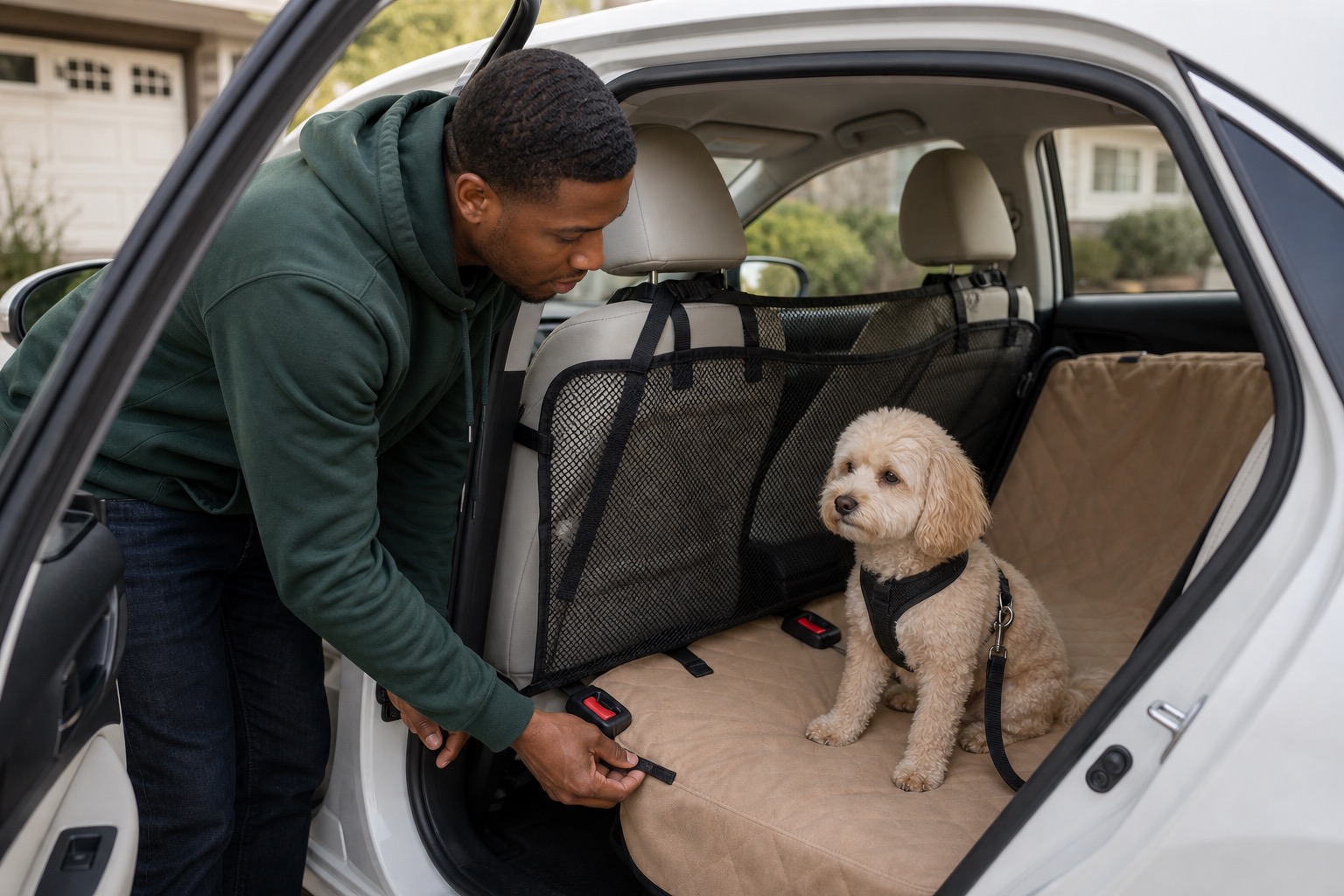
This is where a simple product can become annoying. A mesh panel may look fine in a photo but hang too low once installed. A strap may cross the seat belt path. A pocket or panel may press into the area where your dog usually lies down.
If seat belt access is already a concern, our Best Dog Car Seat Covers With Seat Belt Access guide is a useful companion.
When a Barrier Gets in the Way
A barrier is not always an upgrade. If it sags, rattles, blocks air flow, blocks your view, or crowds the dog’s space, it may create more frustration than it solves. Some dogs also paw at mesh or try to push underneath it, which can make the ride less calm.
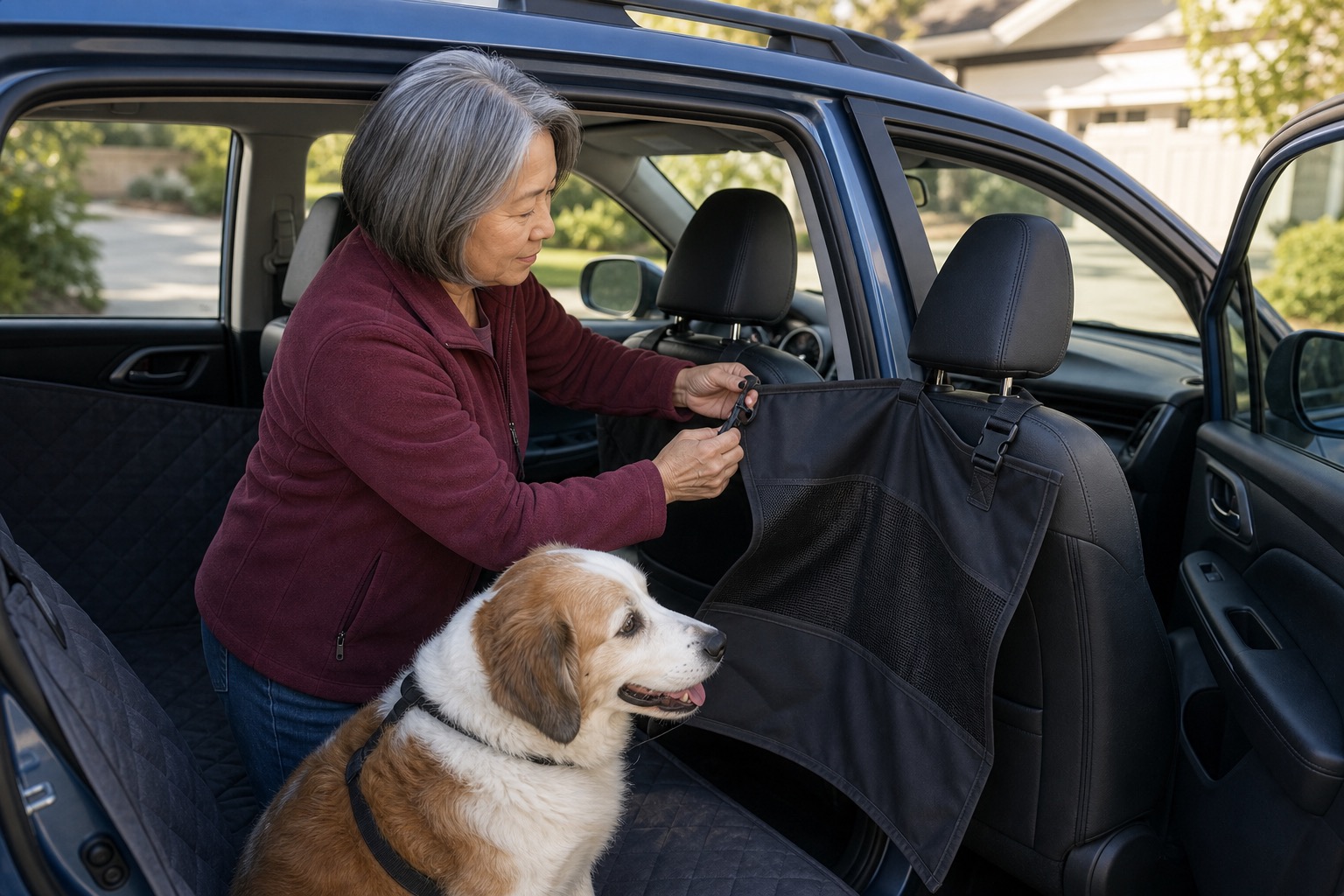
It is also a poor fix for a dog who is very anxious, unrestrained, or constantly moving around the car. In that situation, the problem is not just the front-seat gap. The dog may need a different travel setup, a crate, a carrier, or training help before long road trips feel manageable.
Barrier vs Hammock vs Crate
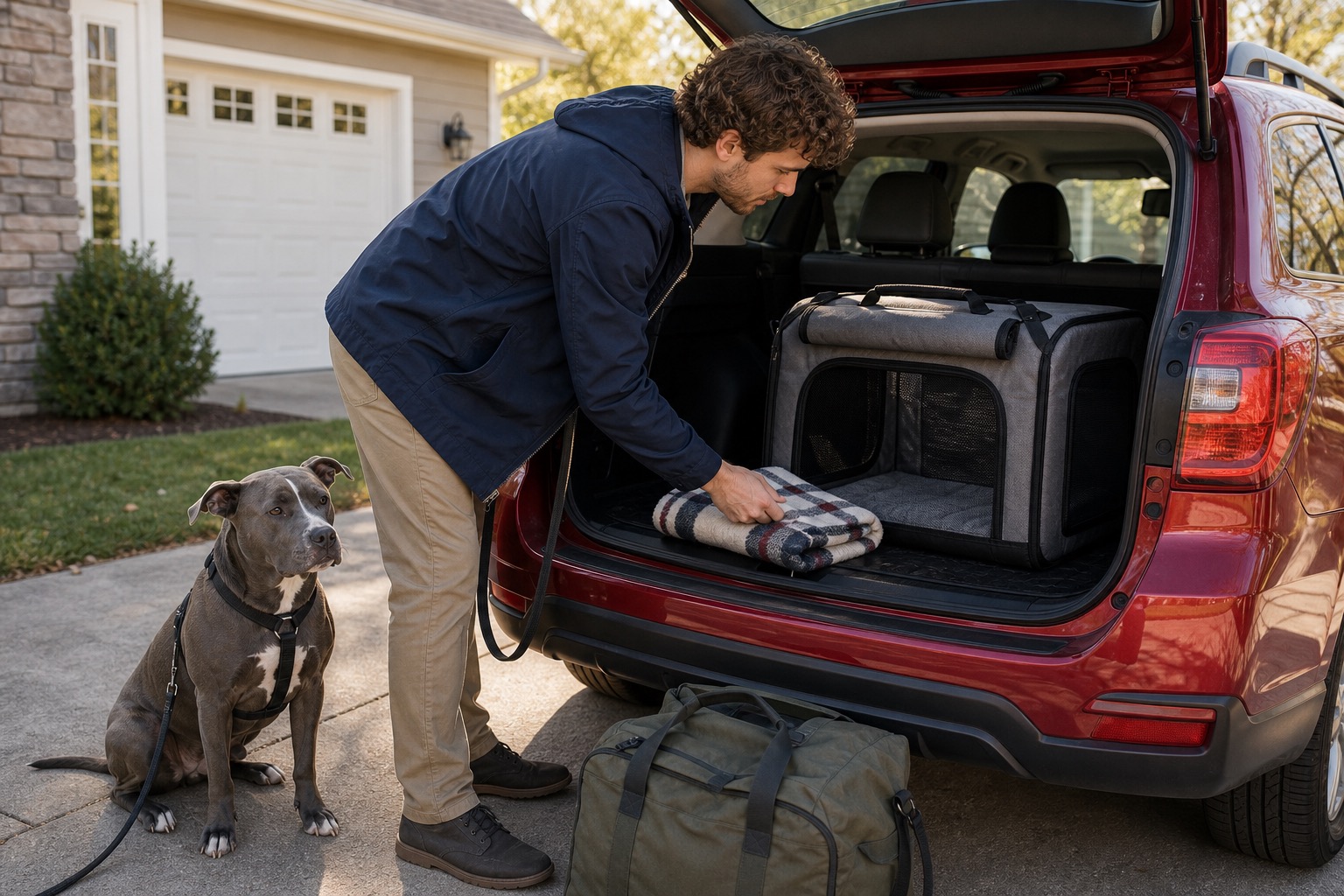
A barrier, hammock, and crate solve different problems. A hammock protects the seat and can reduce access to the footwell. A barrier discourages forward movement. A crate or carrier creates a more contained travel space.
For many back-seat dogs, a hammock or bench cover matters more than a barrier because it defines the riding zone and protects the car. See Dog Car Hammock vs Bench Seat Cover if you are still choosing that foundation.
For dogs who cannot settle on the rear bench, a crate or carrier may be the more practical answer. That does not mean every dog needs one, but it is worth considering when a barrier is only covering up a bigger problem.
Common Mistakes
One mistake is buying a barrier before deciding where the dog should ride. If the back seat is already crowded with bags, a barrier will not fix the lack of dog space.
Another mistake is assuming “barrier” means “safe.” It may help reduce distraction, but it is not a substitute for a restraint or secured travel setup.
A third mistake is ignoring the dog’s reaction. If your dog paws at the barrier, chews it, or becomes more stressed, the setup needs a rethink.
Finally, do not let the barrier block your routine. You still need access to water, waste bags, towels, and cleanup gear. Our Dog Car Organizer for Road Trips guide helps keep those small items reachable without crowding the dog.
Final Thoughts
A dog back seat barrier is useful when it supports an already sensible setup. It can help define the back seat and reduce front-seat wandering, especially for dogs who are curious but mostly calm.
It is less useful when the dog needs real containment, the car layout makes the barrier unstable, or the barrier blocks the gear you rely on. Start with the dog’s riding space, buckle access, and comfort. Add a barrier only if it solves a real problem without creating a new one.
FAQ
Is a dog back seat barrier safe for road trips?
It can help reduce distraction, but it is not a crash restraint. The dog still needs an appropriate travel setup, such as a carrier, crate, or properly used harness system.
Can I use a barrier with a dog car hammock?
Sometimes. Check whether the barrier straps and hammock straps interfere with each other, and make sure the dog still has enough space to sit or lie down.
Will a barrier stop my dog from jumping into the front seat?
It may discourage some dogs, but determined or anxious dogs may push around it, paw at it, or try to climb under it. Do not rely on a soft barrier as the only control.
Is a mesh barrier better than a hard barrier?
It depends on the vehicle and dog. Mesh barriers are lighter and easier to store, but may sag or move. Harder barriers may feel more stable but can be bulky and less flexible.
What should I check before buying one?
Check your front-seat shape, rear seat space, headrests, buckle access, tether route, visibility, and whether your dog is likely to chew or push against the barrier.