
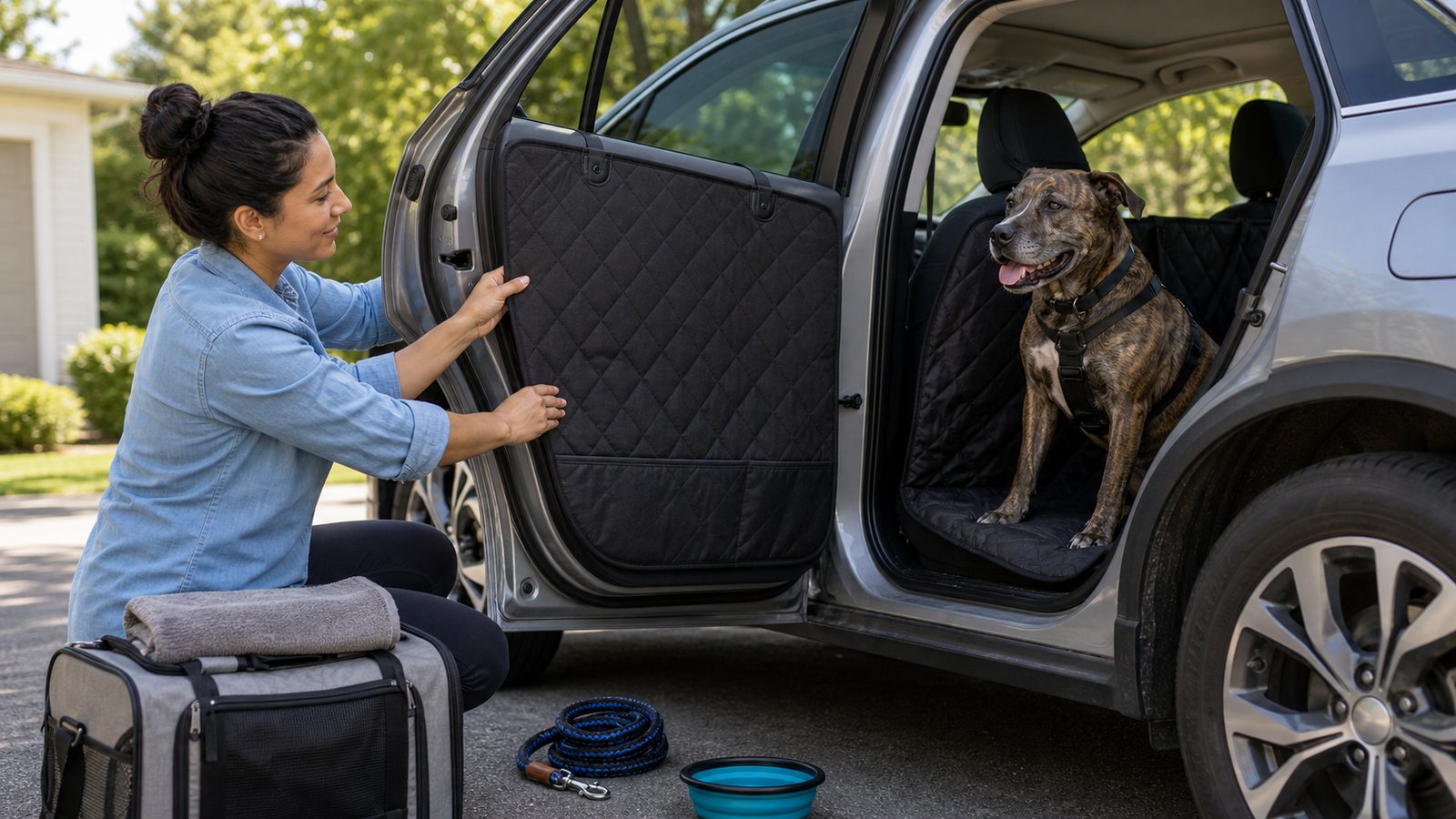
Dog Car Door Protectors for Road Trips
Dog car door protectors are easy to overlook until your dog puts muddy paws on the rear door panel, drools down the armrest, or scratches at the window because something moved outside. A seat cover protects the bench. A door protector covers the part dogs often lean on during the ride.
They are most useful for dogs who ride in the back seat, look out the side window, step on door trim when getting in or out, or leave nose marks and paw marks after every stop. They are not restraint gear, and they should not block door handles, window controls, seat belt access, or the driver’s visibility.
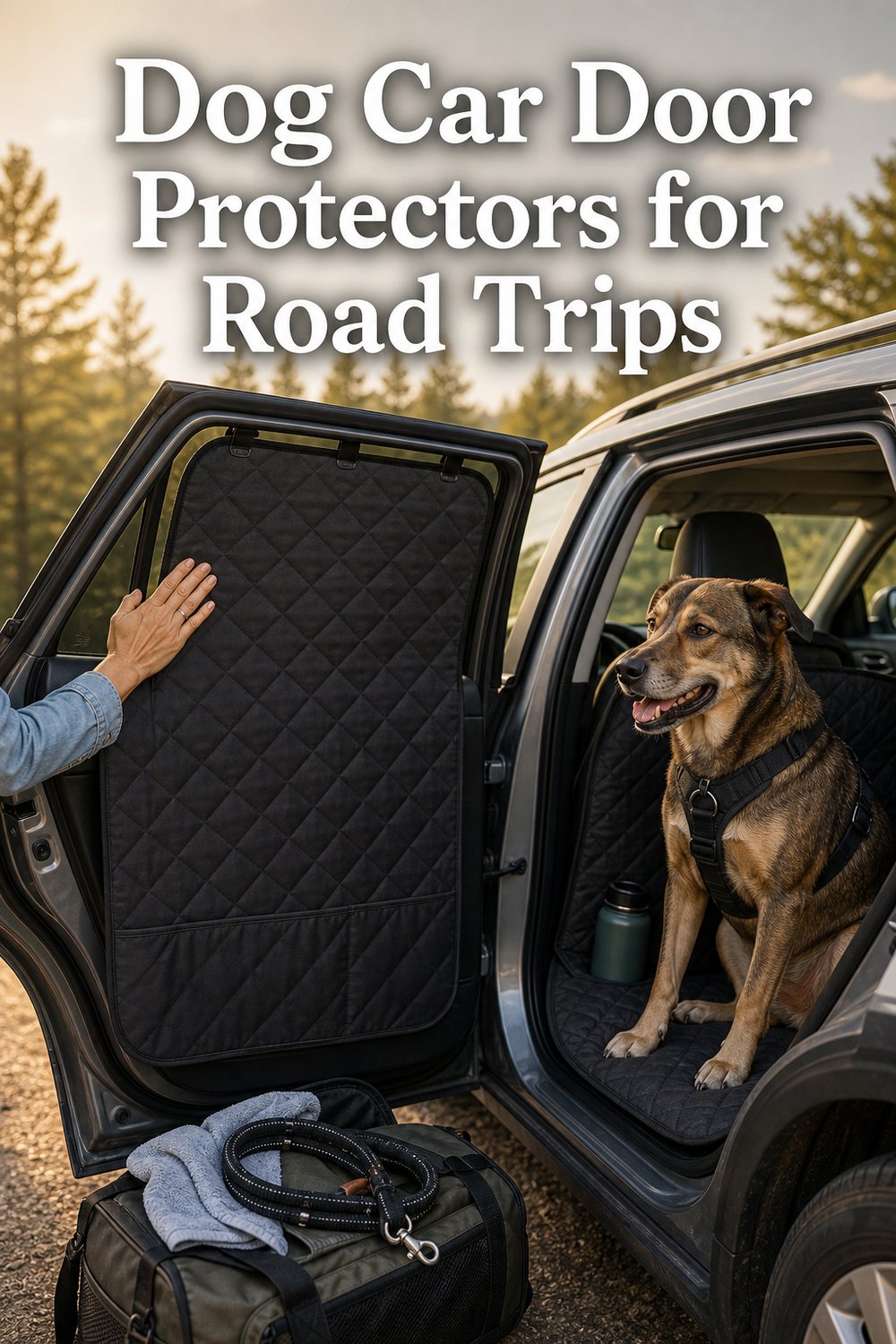
This guide is for ordinary dog owners trying to keep a car cleaner on road trips without making the back seat harder to use.
Compare dog car door protectors on Amazon
Quick Answer
For most road trips, the best dog car door protector is a washable panel that fits the rear door, stays in place without damaging trim, lets you reach the door handle and window switch, and works with your seat cover or hammock.
Quilted fabric panels are usually the easiest to live with because they protect against paws, drool, and light scratches while folding flat for storage. Clear plastic guards may protect against scratches and slobber, but they can look less natural inside the car and may show smudges quickly. Hammock-style seat covers with side flaps can help, but they do not always protect the actual door panel.
The key is fit. A protector that slides down, blocks the handle, or gets caught when the door closes becomes more annoying than the scratches it was supposed to prevent.
What Door Protectors Actually Protect
Door protectors mainly cover the inside rear door panel. That includes the soft trim, plastic, armrest area, and sometimes the lower part of the window area depending on the design.
They can help with:
- muddy paws after rest stops
- nail marks from dogs who stand at the window
- drool and nose marks
- wet fur rubbing against the door
- dirt from camping, hiking, or dog park stops
- light protection when your dog climbs in and out
They do not replace a back-seat cover, cargo liner, harness, carrier, or crate. If your dog slides across the seat, chews trim, or rides unrestrained, a door protector is only solving one piece of the problem.
Main Types of Dog Car Door Protectors
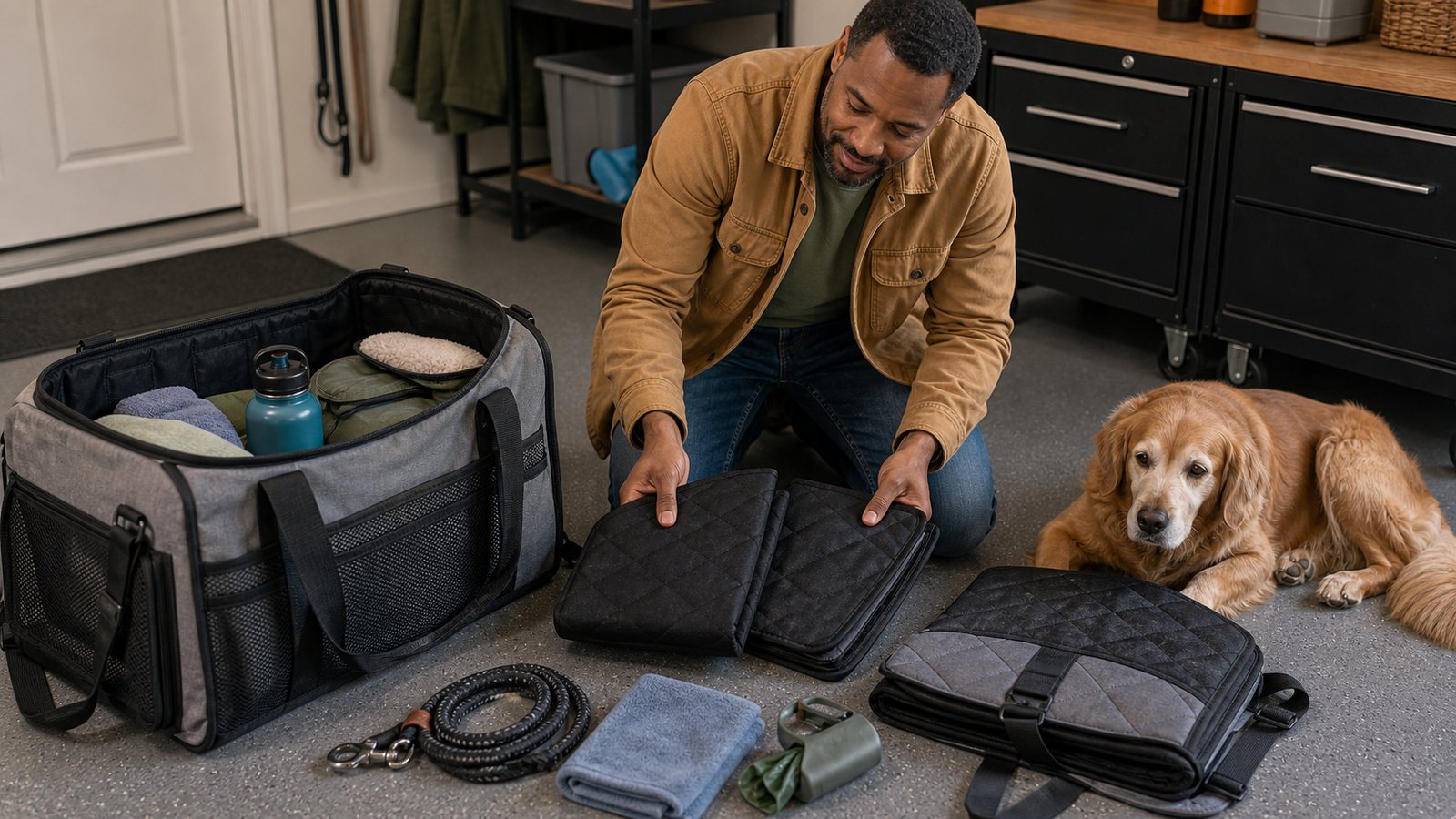
Quilted fabric door protectors are the most common choice. They often hang from tabs that tuck into the window gap, attach with straps, or use small anchors. They are soft, foldable, and easier to pack with seat covers and towels.
Clear plastic door guards are better if your main problem is scratches or slobber on hard surfaces. They can be easier to wipe, but they may not blend into the car interior as well. Some dogs also notice the slick feel and paw at it.
Seat covers with side flaps are not true door protectors, but they help protect the lower door edge and seat side. They are useful if you already use a hammock cover. They are less useful if your dog stands high against the door panel.
For most PawTripKit readers, a quilted rear door protector is the most practical starting point.
Best for Most Back Seats: Quilted Door Panels
Quilted door protectors make sense for everyday road trips because they are simple and forgiving. They can catch paw dirt, soften contact with the door, and fold into the dog travel bag when you do not need them.
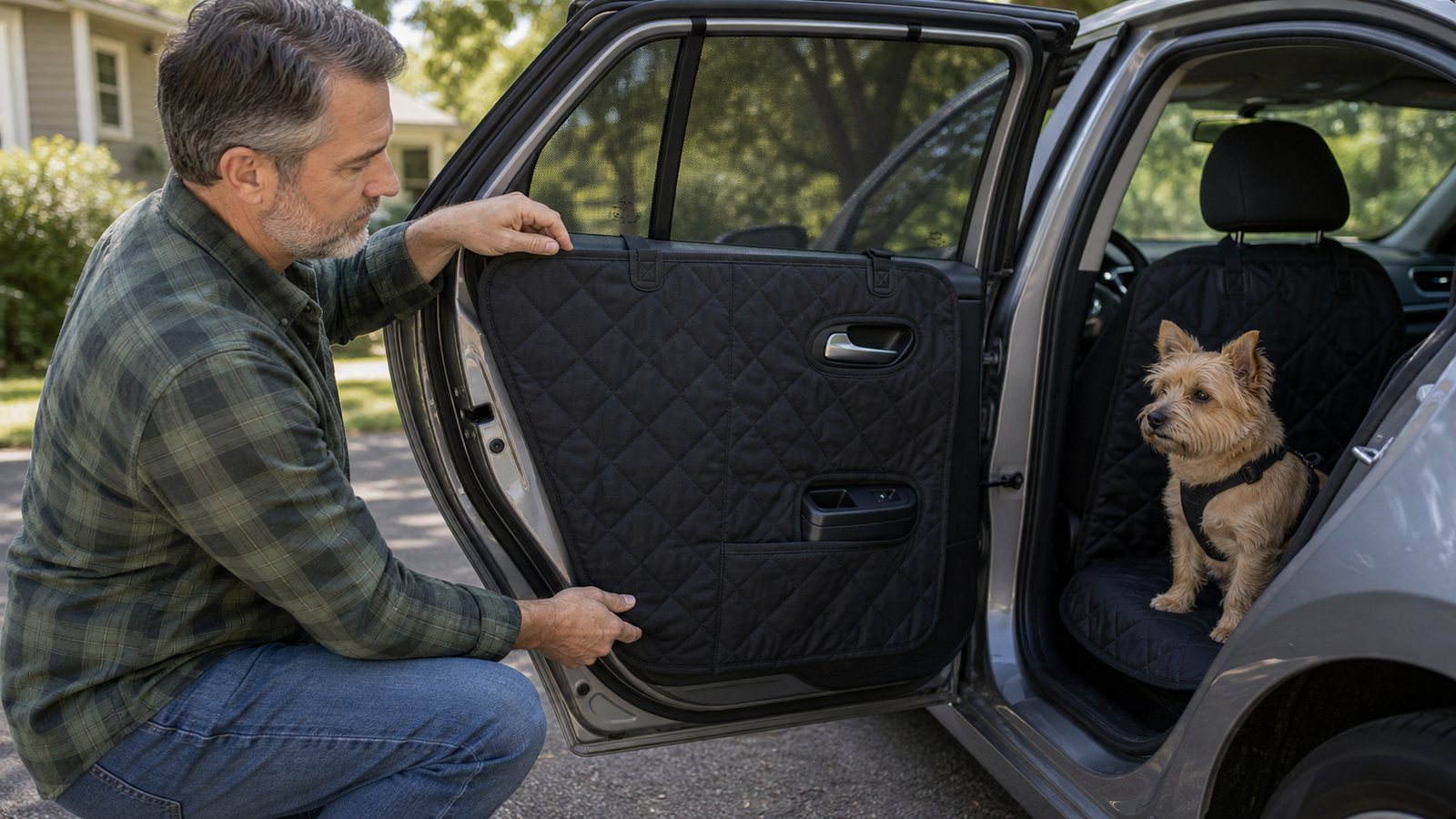
Before buying, check the panel size against your rear door. Some protectors look large online but leave the armrest exposed. Others are tall enough but too narrow for wider SUV doors.
Also check how the protector attaches. Tabs that slide into the window channel may work well in many cars, but you should confirm that the window still operates normally and the panel does not bunch when the glass moves. Straps and anchors can help, but they should not create loose loops your dog can tangle in.
Best for: dogs who lean on the door, muddy road trips, back-seat riders, and owners who already use a seat cover.
Not ideal for: dogs who chew fabric, cars with unusual door trim, or owners who need completely clear access to every door control at all times.
Best for Mud and Drool: Easy-Wipe Surfaces
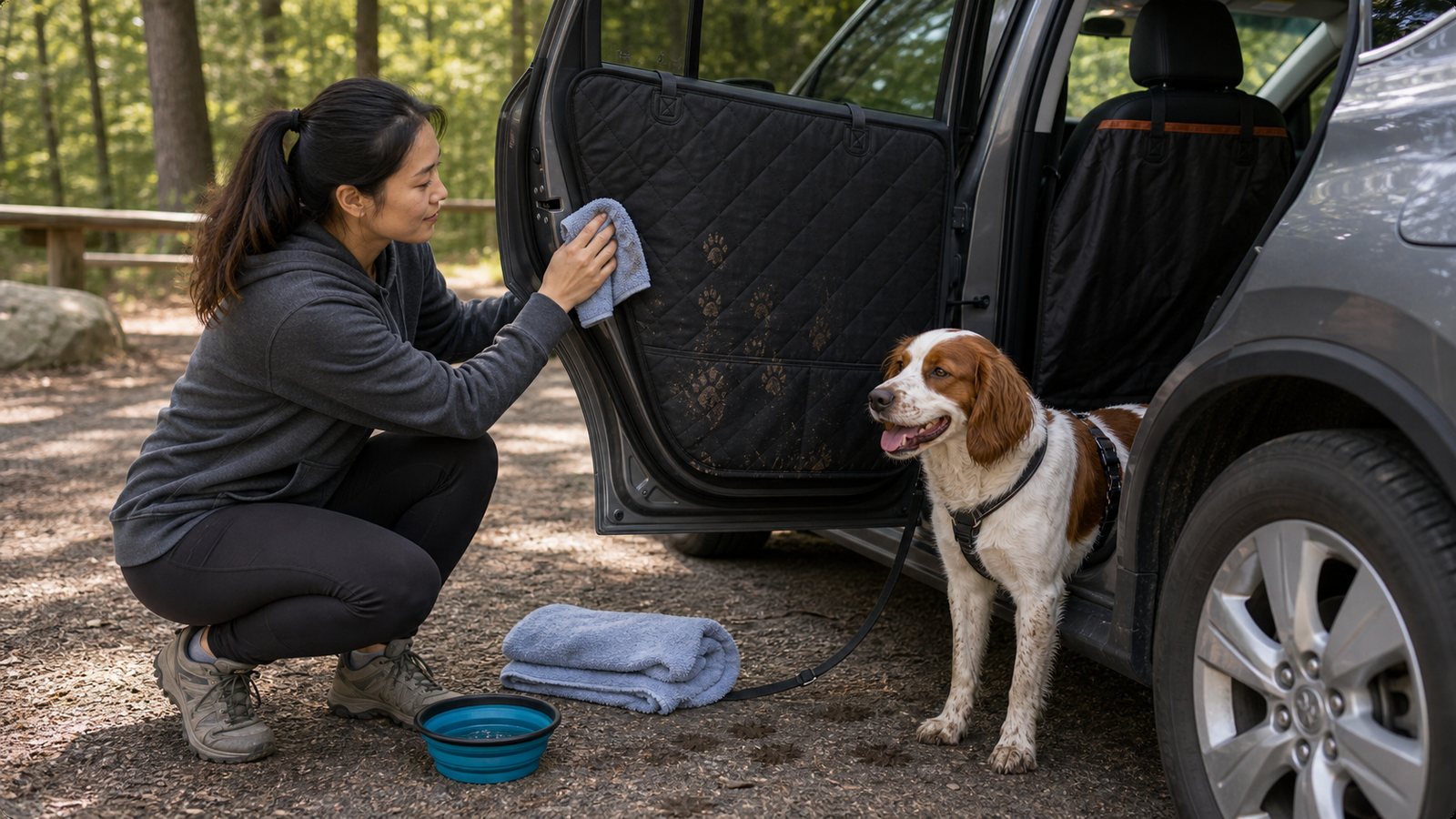
If your dog gets wet, drools heavily, or loves muddy trails, cleaning matters more than padding. Look for a surface that wipes down with a damp towel and does not trap grit in deep stitching.
Quilted protectors can still be fine, but check whether the material is slick enough to wipe. Very soft fabric may look comfortable and still hold hair, dirt, and moisture. Smooth plastic guards wipe faster but can look messy if every nose print shows.
For camping and hiking weekends, keep a towel near the door. Wipe paws before your dog jumps in, then wipe the door protector before mud dries into the seams. That small habit keeps the back seat from slowly turning into a trailhead.
Best for Dogs Who Look Out the Window
Some dogs ride quietly until a cyclist, squirrel, truck, or dog appears outside. Then they stand up, brace on the door, and push their nose toward the glass. If that sounds familiar, a door protector can help, but it does not solve the behavior by itself.
Choose a protector that reaches the area where your dog’s front paws land. If the panel only covers the lower door and your dog stands high, it may miss the damage zone.
At the same time, do not encourage unsafe window behavior. A protector does not make it safe for your dog to hang out the window or ride unrestrained. Keep your dog secured with an appropriate harness, carrier, or crate setup, and keep window openings controlled.
Handle, Window, and Lock Access
This is the detail that separates useful door protectors from annoying ones. The protector should not block the handle, window switch, lock button, child lock area, or anything you need in an emergency.
After installing, sit in the back seat and use the door normally. Open it, close it, reach the handle, check the window, and make sure the panel does not get pinched. Then let your dog get in and out while you watch how the protector moves.
If the panel slides, curls, or blocks the switch every time your dog shifts, adjust it or choose a different design. Door protection should not make the car harder to operate.
Fit With Seat Covers and Hammocks
Door protectors work best when they match the rest of the back-seat setup. If you use a hammock, check whether the hammock already has side flaps. You may not need separate door panels, or you may only need them on one side.
If you use a bench seat cover, door protectors can fill the gap between the seat cover and the door. This is especially useful for dogs who press against the side during turns or stand near the window during stops.
If your dog rides in a carrier, door protectors may not matter unless the carrier sits near the door or your dog exits over the door-side seat edge. In that case, a towel or small side cover may be enough.
Storage and Packing
Door protectors should be easy to remove when people use the back seat. If they are awkward to fold, dirty to handle, or hard to store, you may stop using them.
Keep them with the seat cover, towel, and cleanup kit. If they are wet or muddy, do not fold them against clean gear. Shake them out, wipe them, and let them dry before packing them tightly.
For shared family cars, store the protectors in a flat cargo pocket or tote rather than leaving them loose on the floor. Loose panels become clutter quickly.
Buying Checklist
Before buying, check:
- Does the protector fit your rear door size and shape?
- Does it cover the area where your dog’s paws actually land?
- Does it leave the handle, lock, and window switch usable?
- Will it interfere with the window moving up or down?
- Does it attach without damaging trim?
- Will your dog chew, paw, or pull at loose edges?
- Is the surface easy to wipe clean?
- Does it work with your seat cover or hammock?
- Can passengers still use the back seat when needed?
- Can you remove and pack it quickly after a dirty trip?
Common Mistakes
One mistake is buying a door protector when the real problem is an unsecured dog. If your dog is pacing across the whole back seat, start with the riding setup first.
Another mistake is ignoring the handle and switch area. A perfectly clean door panel is not worth it if the protector makes the door annoying or unsafe to use.
A third mistake is assuming every rear door is the same. Curved trim, small windows, narrow sedans, large SUVs, and trucks can all change how a panel fits.
Finally, do not wait until the first muddy trip to test installation. Put the protectors on at home, let your dog get in and out, and see what moves.
Related PawTripKit Guides
Door protectors fit naturally with these back-seat and cleanup guides:
- Best Dog Car Seat Covers for Road Trips
- Best Dog Car Seat Covers With Seat Belt Access
- How to Set Up the Back Seat for a Dog Road Trip
- Dog Road Trip Cleanup Kit
- How to Keep Your Dog Safe in the Car
Final Thoughts
Dog car door protectors are not essential for every dog, but they make sense if your dog rides in the back seat and regularly leaves paw marks, scratches, drool, or mud on the rear door panels.
Choose a protector that fits cleanly, wipes down easily, and keeps the door usable. If it blocks controls or becomes another loose thing in the back seat, it is the wrong design for your car. The best setup protects the car without getting in the way of a safe, calm ride.
FAQ
Are dog car door protectors worth it?
They are worth considering if your dog leans on the rear door, looks out the side window, or leaves paw marks and scratches on the door panel. They are less important if your dog rides in a crate or stays centered on a seat cover.
Do door protectors work with dog hammocks?
Sometimes. Some hammocks already have side flaps that protect part of the door area. Separate door protectors can add more coverage if your dog stands higher against the window or door trim.
Can a dog door protector block the window switch?
Yes, if it fits poorly. Always install it and test the handle, lock, and window switch before driving. A protector should not make the door harder to use.
What is the easiest type to clean?
Smooth surfaces wipe fastest, but they may show smudges. Quilted panels can still be easy to clean if the fabric does not trap too much hair or grit.
Do door protectors keep dogs safe in the car?
No. They protect the door panel. They do not restrain your dog. Use a proper harness, carrier, crate, or other safer travel setup for movement control.