
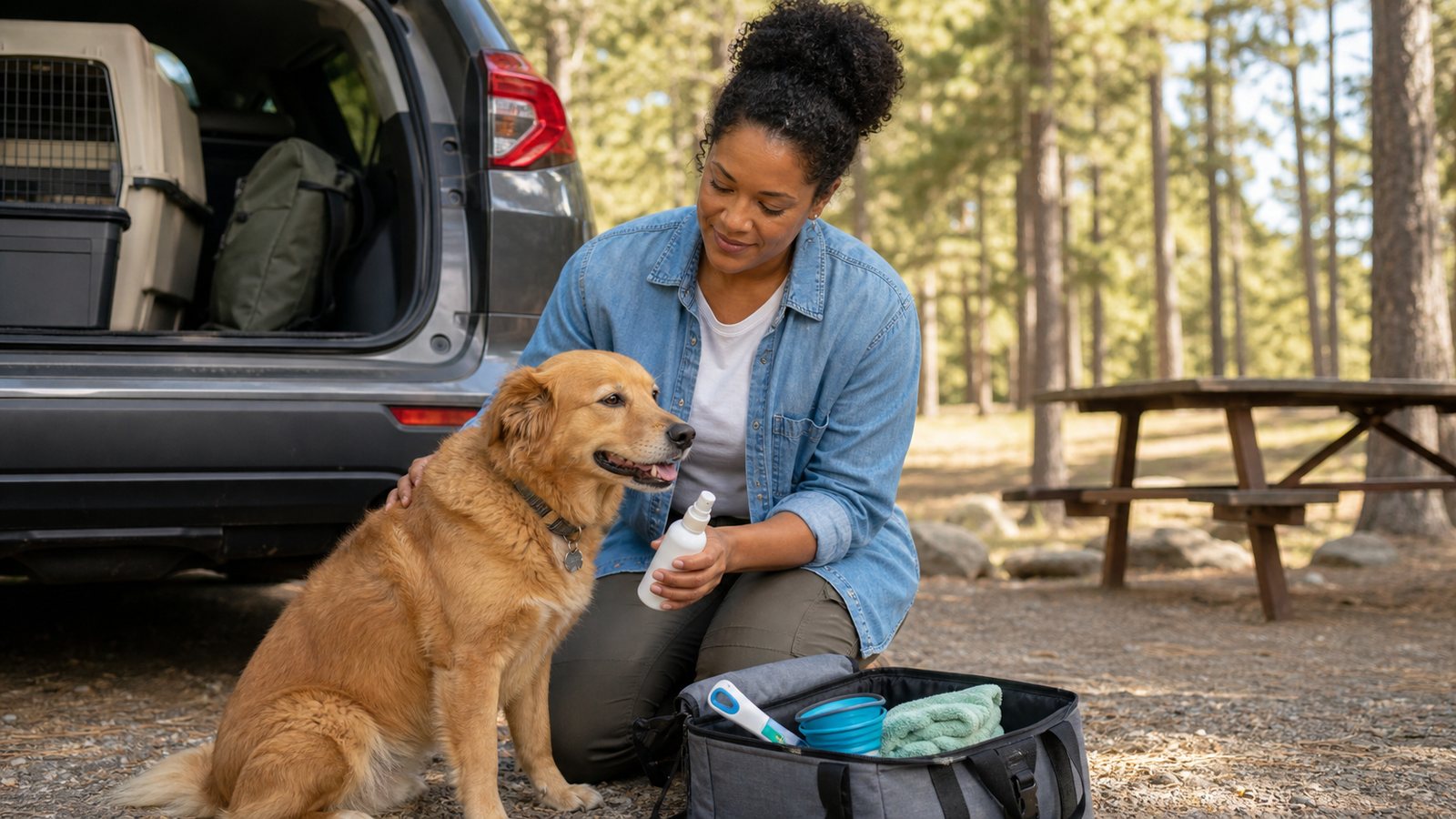
Dog Bug Spray and Insect Repellent for Camping and Road Trips
Dog bug spray sounds simple until you are standing at a campsite with mosquitoes around your ankles, a dog sniffing through grass, and a bottle of human repellent in your hand. The important rule is boring but useful: use products labeled for dogs, follow the label, and do not treat human insect spray like dog gear.
For camping and road trips, insect protection works best as a few small habits layered together. Pack a dog-safe repellent if it fits your trip, keep up with the flea and tick prevention your vet recommends, avoid the worst bug-heavy areas when you can, and check your dog after wooded trails, tall grass, and rest stops.
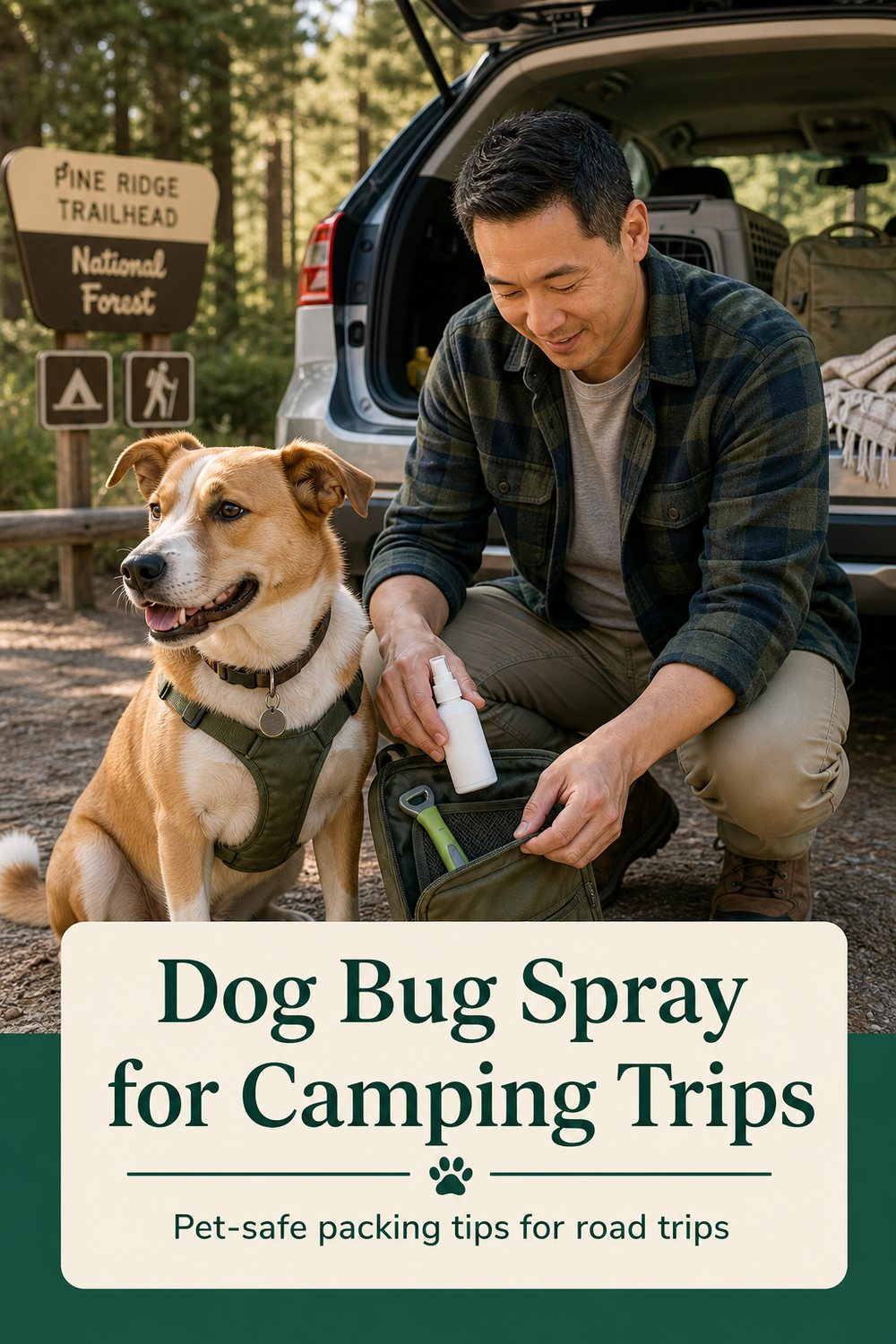
This guide is not veterinary advice. It is a practical travel checklist for dog owners who want fewer bug problems without guessing with products that were not made for dogs.
Compare dog insect repellent options on Amazon
Quick Answer
For most dog camping trips, pack a dog-labeled insect repellent spray or wipe, a tick remover, a small towel, and your dog’s normal flea and tick prevention routine. Use the spray only as the label allows, keep it away from the eyes, nose, mouth, and broken skin, and stop using it if your dog acts uncomfortable or shows irritation.
Do not spray your dog with a human mosquito repellent because it happens to be in the car. The U.S. EPA notes that repellent labels explain how a product should be used, and dog owners should treat that label as the rulebook, not a suggestion.
The best setup is not one magic bottle. It is a small dog travel kit plus a routine: spray or wipe only where appropriate, check the coat after outdoor time, clean up campsite food and water spills, and keep your dog away from standing water, brush piles, and heavy vegetation when practical.
What Dog Bug Spray Can and Cannot Do
A dog bug spray may help reduce biting insects during a walk, campsite evening, or stop near a lake. Some products are designed for mosquitoes, flies, fleas, or ticks. Others are more general outdoor sprays. The label matters because “insect repellent” does not mean every product works for every insect or every dog.
Bug spray cannot replace flea and tick prevention from your vet. It also cannot make a campsite risk-free. A tick can still crawl onto your dog after a walk through grass. Mosquitoes can still be active near water. Flies can still bother ears and thin-coated areas. Think of spray as one layer, not the whole plan.
It also does not fix a bad campsite setup. If your dog’s bed sits beside wet leaves, spilled food, or standing water near the picnic table, you are making the spray do too much work.
Start With the Label
Before buying or packing any repellent, read the label like you would read a medication instruction. Check that it says it is for dogs. Check whether it has age, weight, breed, pregnancy, nursing, or health warnings. Check how often it can be applied. Check whether it should be sprayed directly, sprayed onto a cloth first, or avoided on certain body areas.
Also check whether the product is safe around cats if you travel with a cat, live with a cat, or share gear at home. Some ingredients used in flea, tick, or insect products can be dangerous for cats even when they are used in dog products. If your household has both dogs and cats, this is worth asking your vet about before the trip.
Do not assume “natural” means automatically safe. Essential oil products, strong scents, and plant-based formulas can still irritate some dogs. A small, dog-labeled product used correctly is safer than a homemade mix you cannot dose or explain.
Safer Application Habits
Most problems start when people spray too much, spray too close to the face, or use a product that was never meant for dogs. Keep application boring and controlled.
Use the product outdoors or in a well-ventilated area. Keep it away from your dog’s eyes, nose, mouth, genitals, and any irritated skin. If the label allows cloth application, spray the cloth first and then wipe the coat where appropriate. For the face and ears, be especially careful and follow the product directions closely.
Do not let your dog lick wet product. Wait until the coat is dry if the label requires it before letting your dog roll on bedding, climb into a carrier, or lie next to another pet.
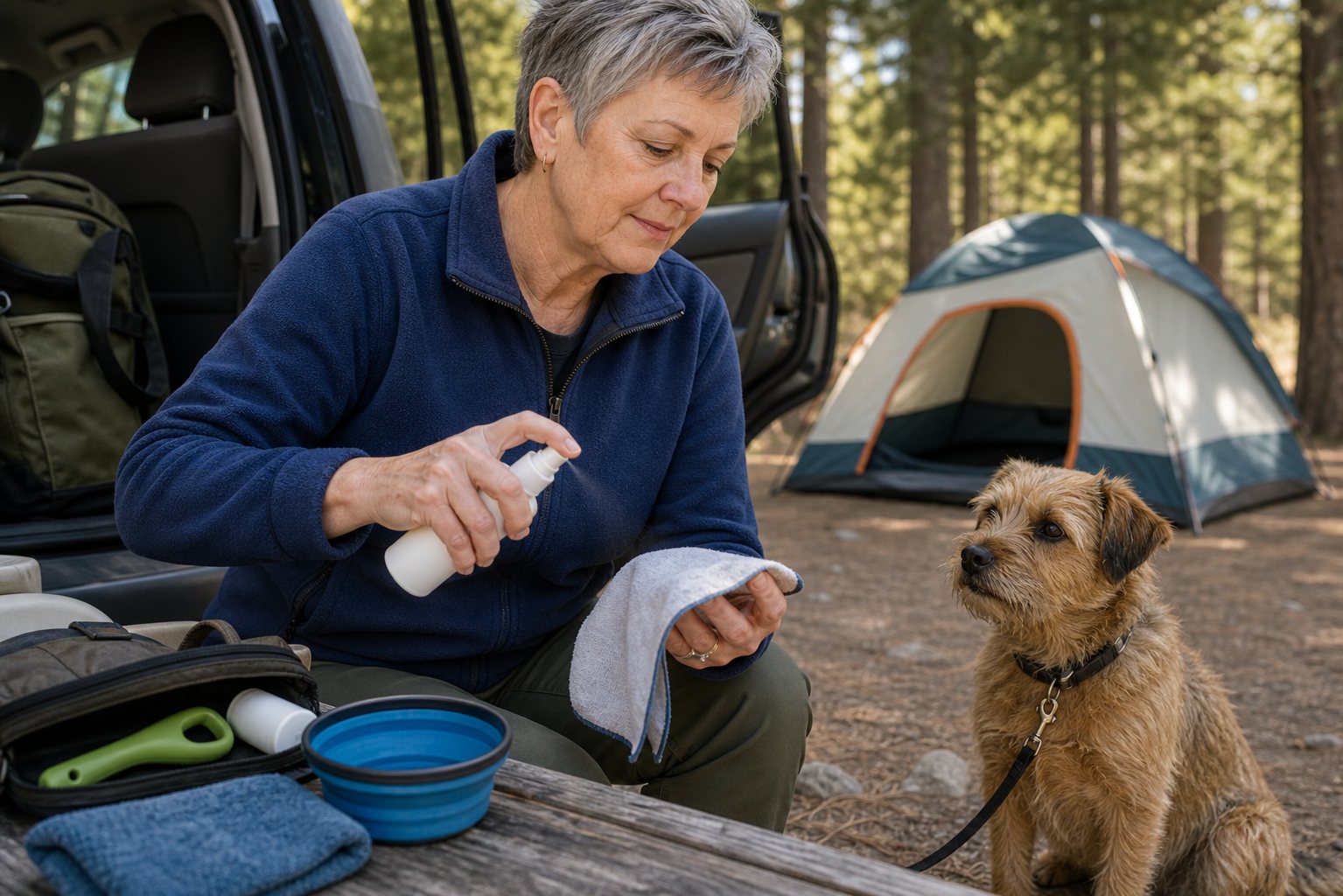
If your dog drools heavily, paws at the area, rubs their face, vomits, shakes, seems weak, or acts unusual after application, stop using the product and contact a veterinarian or poison control resource. Do not “wait and see” if the reaction looks serious.
What to Pack for Camping
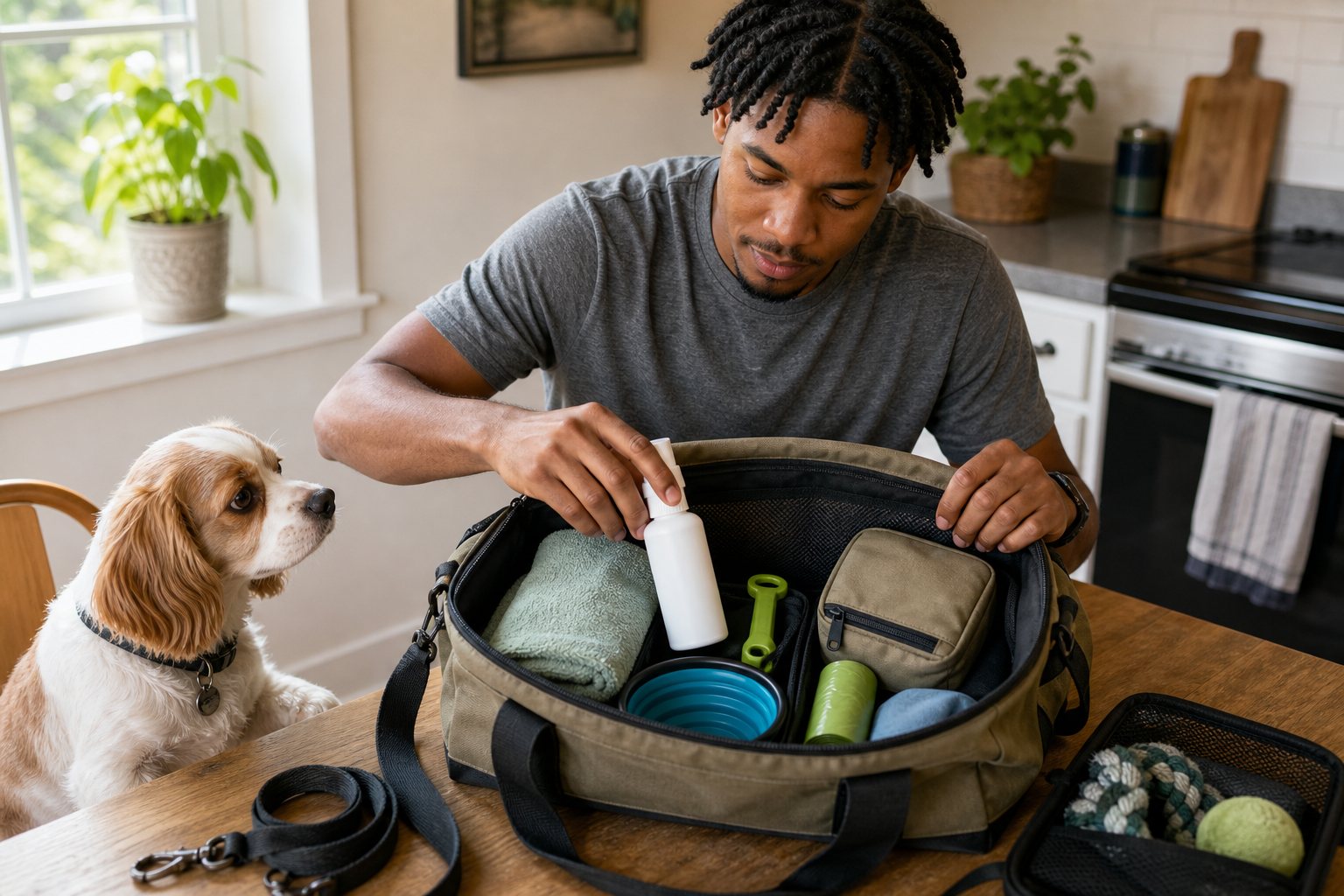
For a camping weekend, your bug kit can stay small:
- dog-labeled insect repellent spray or wipes
- tick remover tool
- fine-tooth comb or small grooming comb
- light towel
- waste bags
- dog bed, mat, or blanket that keeps your dog off damp ground
- sealed food container
- travel water bowl
- your dog’s usual flea and tick prevention notes
- emergency vet contact information for the area
That is enough for most ordinary trips. If your dog hikes through brush, swims, or has a thick coat, the tick remover and post-walk check matter as much as the spray.
Compare dog camping bug spray and tick tools on Amazon
Campsite Habits That Help
Where your dog rests matters. Put the dog bed or mat on dry ground, not damp leaves. Keep food sealed. Rinse bowls and spills instead of letting sticky residue sit near the tent. Empty waste bags quickly and keep trash closed.
During buggy evenings, move your dog away from standing water, dense brush, and wet grass when you can. A campsite that looks pretty at sunset may still be the worst place for a dog to lie down if it is near a marshy edge.
For dogs with thin coats, short bellies, or sensitive skin, check the areas that touch the ground: belly, armpits, inner thighs, and around the ears. Long-coated dogs need a slower check because ticks and burrs can hide in the coat.
Tick Checks After Trails and Rest Stops
Tick checks are not just for deep hiking trips. Rest areas, wooded picnic stops, lake paths, and tall grass near campgrounds can all be enough.
The CDC recommends checking pets and gear after being in tick habitats. For dogs, that means using your hands and eyes after walks, especially around the ears, neck, collar area, armpits, groin, tail base, and between toes.
Do the check before your dog climbs into the tent, carrier, hotel bed, or back seat. A quick check at the car is easier than finding a tick on a blanket later.
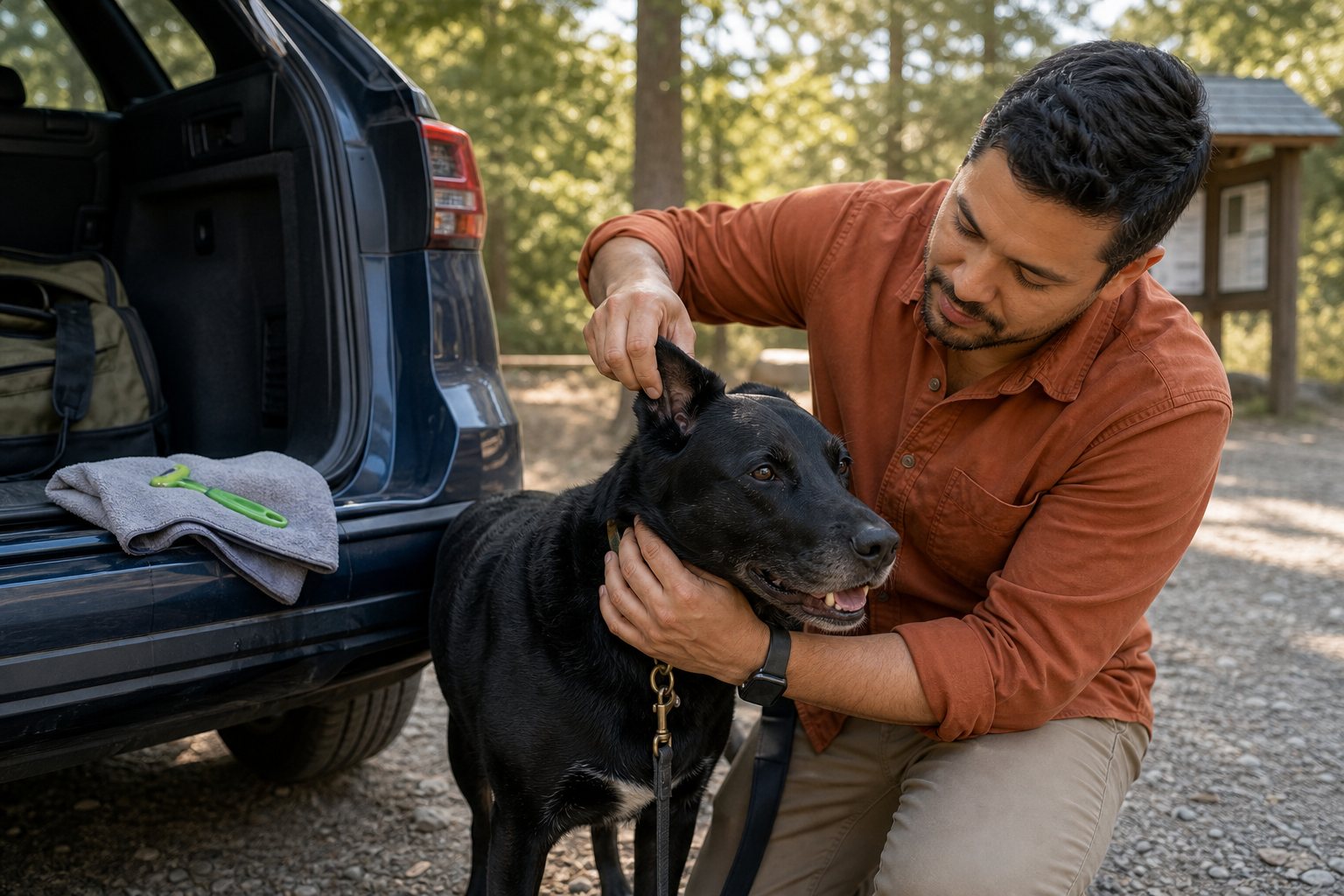
If you find a tick, use a tick remover or fine-tipped tweezers and follow reliable removal guidance. If the bite area looks irritated, your dog seems sick, or you are unsure whether the tick was removed completely, call your vet.
Compare dog tick remover tools on Amazon
Road Trip Use Is Different From Campsite Use
On a road trip, most dog owners need insect protection around stops, not inside the moving car. Spraying inside a closed vehicle is usually a bad idea. The smell can bother your dog, linger in fabric, and make the car unpleasant for people too.
If you need to apply repellent, do it outside before a walk or campsite break. Let it dry as directed before your dog gets back on the seat cover, into the carrier, or onto a shared blanket.
Keep the bottle in a zip pouch or upright pocket so it cannot leak into food, treats, medication, or documents. Heat can also be hard on travel supplies, so do not leave products baking in the car for weeks.
For camping, keep insect supplies close to the first-aid kit without mixing them into food storage. The dog first aid kit guide covers the emergency side, while the dog camping gear checklist helps you place repellents, towels, and cleanup items where you can actually reach them.
Puppies, Seniors, and Sensitive Dogs
Be more cautious with puppies, senior dogs, dogs with skin problems, and dogs with known sensitivities. A product that seems fine for one adult dog may be wrong for another dog.
For puppies, check the minimum age on the label. For seniors or dogs with medical conditions, ask your vet before adding a new topical product. For dogs who lick everything, a wipe or limited-area application may be easier to manage than a broad spray, but the label still decides what is appropriate.
If your dog has irritated skin, a healing wound, hot spots, or allergy flare-ups, skip repellent on that area and ask your vet what to use. Travel convenience should not come ahead of skin safety.
Choosing a Product
You do not need the strongest-smelling bottle on the shelf. You need the clearest label and the best fit for your trip.
Look for:
- a label that clearly says it is for dogs
- target insects that match your trip
- age and weight guidance
- simple application instructions
- warnings you can actually follow
- packaging that will not leak in a travel bag
- a scent level your dog tolerates
- compatibility with your household if you have cats
Avoid products that make vague claims, hide the actual use directions, or rely on dramatic language instead of clear instructions. If you cannot understand how to use it safely before leaving home, it does not belong in the travel bag.
Where Affiliate Links Fit Naturally
For this topic, links should help readers compare categories, not push one magic product. Useful link placements are:
- after the quick answer, for dog insect repellent sprays and wipes
- near the camping kit section, for dog camping bug spray and tick tools
- near the tick check section, for tick remover tools
- in a related travel kit article, for first aid and cleanup supplies
That keeps the article useful even for readers who already have flea and tick prevention from their vet and only need a travel add-on.
Common Mistakes
The first mistake is using human repellent on a dog because it is already in the backpack. That is not a safe shortcut. If the product is not labeled for dogs, do not use it on your dog.
The second mistake is applying repellent and skipping the tick check. Spray may reduce risk, but it does not inspect the collar line, toes, ears, or thick coat for you.
The third mistake is packing the bottle but forgetting the rest of the routine. Campsite cleanup, dry bedding, sealed food, and controlled walks all matter.
The fourth mistake is assuming more product works better. More product can mean more irritation, more licking, and more smell in the car. Use the amount and frequency on the label.
Related PawTripKit Guides
Bug protection fits into a larger travel setup:
- Dog Camping Checklist for Beginners
- Dog First Aid Kit for Road Trips and Camping
- Dog Camping Shade Setup: How to Keep Your Dog Cooler at Camp
- Dog Road Trip Checklist for Beginners
- Dog Road Trip Cleanup Kit: What to Pack Before You Leave
- Dog Rest Stop Routine for Road Trips
Final Thoughts
Dog bug spray is useful when it is treated as dog gear, not borrowed human gear. Choose a product labeled for dogs, use it exactly as directed, and keep the rest of the travel routine simple: dry resting spots, sealed food, tick checks, and a small kit you can reach before your dog jumps back into the car.
For summer camping and road trips, that calm routine matters more than any single bottle. It helps you notice problems early, avoid careless application, and keep outdoor breaks comfortable without turning the whole trip into a pest-control project.
FAQ
Can I use human bug spray on my dog?
Do not use human insect repellent on your dog unless the product label clearly says it is safe and appropriate for dogs. In normal travel planning, buy a dog-labeled product instead.
Is dog bug spray enough for ticks?
No. A dog bug spray may help depending on the product, but it does not replace your dog’s regular flea and tick prevention or a careful tick check after wooded trails, tall grass, campgrounds, and rest stops.
Where should I apply dog insect repellent?
Follow the label. In general, keep products away from the eyes, nose, mouth, genitals, and irritated skin. Some products may be sprayed onto a cloth first and wiped onto the coat, but the product directions decide.
Should I pack bug spray for a hotel road trip?
Usually it matters less for a simple hotel trip than for camping, lake days, wooded trails, or summer rest stops. If your dog will walk through grass or wooded areas, a tick remover and post-walk coat check are still smart.
What should I do if my dog reacts badly after bug spray?
Stop using the product, prevent licking if you can do so safely, and contact a veterinarian or poison control resource if your dog shows worrying signs such as vomiting, heavy drooling, weakness, tremors, skin swelling, or unusual behavior.