
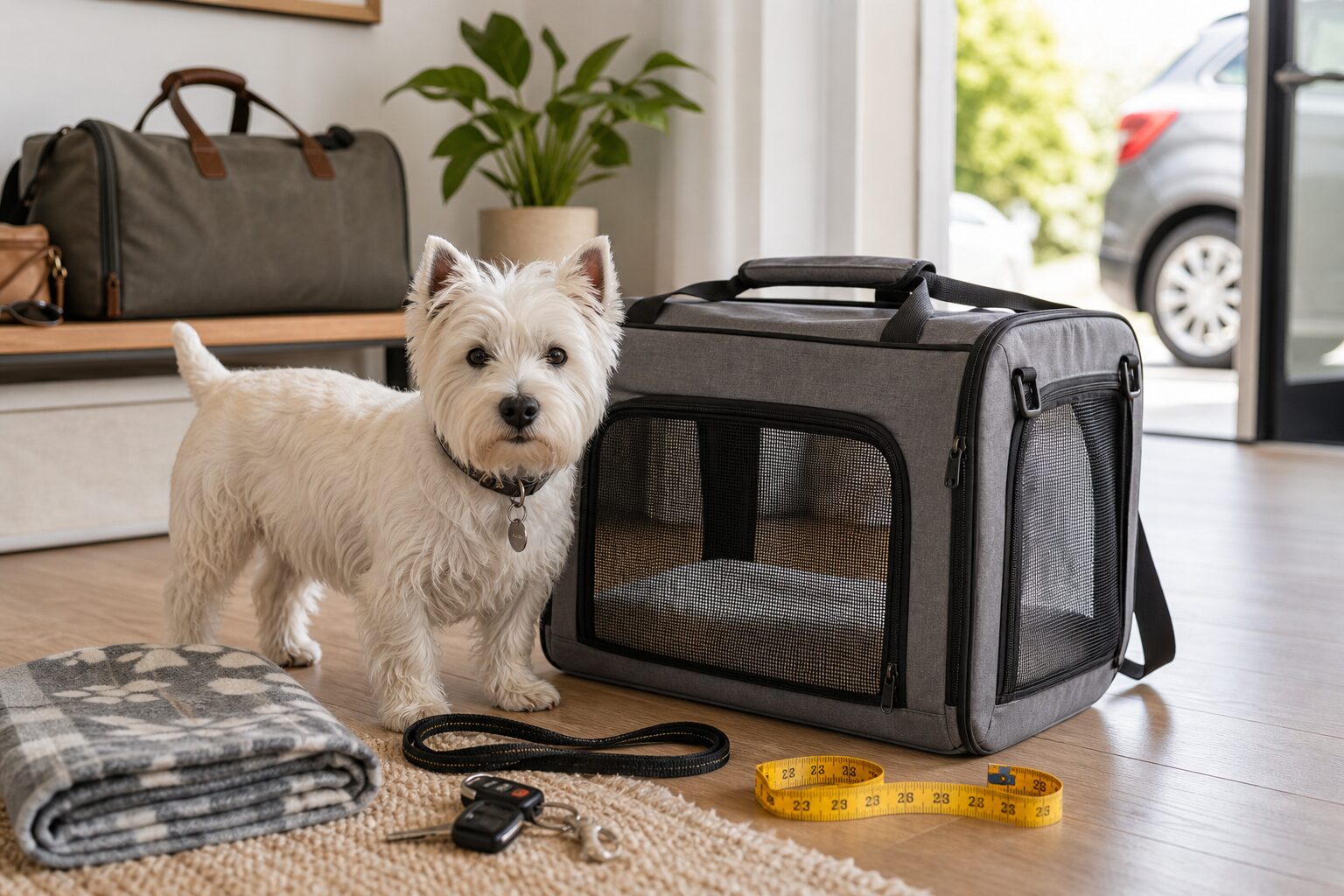
A good dog carrier for car travel should do more than hold your dog. It should fit your dog without crowding them, sit securely in your vehicle, offer enough ventilation, and be easy to clean after a long ride or a nervous accident.
This guide is written for ordinary car rides and road trips, not for people trying to buy a show crate or a decorative bag. Some of the carriers below can also be used for in-cabin air travel, but airline rules and under-seat dimensions change. Always check the carrier measurements, your dog’s measurements, and your airline’s current pet policy before flying.
We have not personally crash-tested these carriers. The notes below are based on product design, published manufacturer details, common travel needs, and the kinds of trade-offs dog owners usually face when choosing a carrier.
Quick Picks
- Best car-safety-focused soft carrier: Sleepypod Air
- Best polished travel-day carrier: Away The Pet Carrier
- Best familiar airline-style soft carrier: Sherpa Original Deluxe Travel Bag
- Best flexible-height carrier: SturdiBag Pro 3.0
- Best car-only hard-sided kennel option: RuffLand Mini or Small Kennel
What Matters Most in a Car Travel Carrier
Start with fit. Your dog should be able to get in without being squeezed, turn around enough to settle, and lie down in a natural position. A carrier that looks roomy online can feel tight once you add bedding, a harness, or a nervous dog who will not curl up neatly.
For car use, also look at how the carrier stays in place. Some soft carriers include seat belt latches or straps. Some hard-sided kennels need to be secured with tie-downs in the cargo area. A loose carrier can slide, tip, or become a problem during a hard stop.
Ventilation matters more than people think, especially in warm weather or when the carrier sits near luggage. Mesh panels help, but they should be strong enough to handle scratching. Privacy flaps can be useful for anxious dogs, as long as they do not block too much airflow.
Cleaning is the other practical detail. Removable bedding, wipeable lining, and simple shapes make a big difference after wet paws, shedding, drool, or motion sickness.
Best for Car Safety Focus: Sleepypod Air
Sleepypod Air is one of the stronger options if you want a soft-sided carrier that is built with car travel in mind. It is designed for pets up to 18 pounds and has published dimensions of 16 to 22 inches long, 10.5 inches wide, and 10.5 inches tall, with the length compressing for under-seat spaces.
The main reason it stands out is that Sleepypod says the Air has been independently crash-tested and certified by the Center for Pet Safety for pets up to 18 pounds. That does not mean every dog will fit, and it does not remove the need to use the carrier correctly, but it is a meaningful signal for people who care about car restraint.
This is a better fit for small dogs than medium dogs. It also works best for people who are willing to spend more for a carrier that can serve multiple roles: car carrier, travel bag, and familiar resting space.
Good for: small dogs under the published weight limit, owners who care about car restraint details, and dogs who settle better in a more enclosed soft carrier.
Watch out for: the interior may be too small for long-bodied small dogs, and it costs more than basic soft carriers. Check the sizing guide before buying.
Best Polished Travel-Day Carrier: Away The Pet Carrier
Away’s Pet Carrier is a good option for dog owners who want a clean, luggage-style carrier that can move from car to hotel to airport without feeling awkward. Away lists the carrier at 18.7 by 10.8 by 10.75 inches, with a capacity for pets up to 18 pounds.
The feature set is practical: a trolley sleeve, water-repellent materials, washable bedding, mesh ventilation, pockets, and car seat belt latches. Away also says the carrier is certified by the Center for Pet Safety.
This is not the carrier I would choose for a muddy camping weekend or a dog who paws hard at mesh. It makes more sense for smaller dogs, hotel trips, city travel, and owners who already travel with rolling luggage.
Good for: small dogs on car-and-hotel travel days, owners who want pockets and a trolley sleeve, and people who want a soft carrier with car seat belt latches.
Watch out for: light-duty travel style may not suit rough outdoor use. Check airline rules separately if you plan to fly.
Best Familiar Airline-Style Soft Carrier: Sherpa Original Deluxe Travel Bag
The Sherpa Original Deluxe Travel Bag is the kind of soft-sided carrier many dog owners picture when they think about flying or taking a small dog through a station, hotel lobby, or car rental counter. It is not the most rugged car setup, but it is familiar, relatively easy to carry, and built around a soft-sided travel shape.
Sherpa says the Original Deluxe is part of its Guaranteed On Board program and uses a spring wire frame that can push down at the rear to help fit under airplane seats. For car travel, the practical value is different: it gives small dogs a contained, ventilated place to ride, and it is easier to move in and out of the car than a rigid crate.
This is a sensible option for occasional travel with a calm small dog. If your dog claws at mesh, hates confinement, or needs a stronger car restraint system, look at a more structured carrier or a secured crate instead.
Good for: small dogs who already tolerate soft carriers, short car rides, hotel stays, and occasional travel days.
Watch out for: it is not the strongest choice for rough car use, and airline acceptance still depends on the airline, aircraft, and size.
Best Flexible-Height Carrier: SturdiBag Pro 3.0
SturdiBag is worth considering if you want a soft carrier with more flexibility than a boxy travel bag. The Pro 3.0 line uses a flex-height design, and Sturdi lists several sizes. For example, the Small is 18 by 10 by 9.25 inches, the Medium is 15 by 12 by 11.75 inches, and the Large is 18 by 11.5 by 11.5 inches.
The appeal is not just the dimensions. It is the combination of flexible structure, ventilation, privacy flaps, a washable fleece pad, and a lighter carry feel. That can work well for dogs who need a little visual cover in busy places but still need airflow.
For car use, pay attention to how you will secure it. A flexible carrier is convenient, but convenience is not the same as crash protection. Use the product according to the manufacturer’s directions, and do not assume every size will work for every airline or every vehicle.
Good for: small dogs who need a softer, flexible carrier, travel days with cars and hotels, and dogs who do better in a less rigid space.
Watch out for: larger sizes may not work for in-cabin airline use. Measure your dog carefully before choosing a size.
Best Car-Only Hard Kennel Option: RuffLand Mini or Small Kennel
If your main concern is car travel, not carrying your dog through an airport, a hard-sided kennel may make more sense than a shoulder bag. RuffLand’s Mini and Small Kennels are examples of car-oriented travel kennels with rigid bodies, ventilation holes, and wipe-clean materials.
The Mini Kennel is listed at 19.25 by 14 by 14.25 inches outside, while the Small Kennel is listed at 22.25 by 16 by 15 inches outside. Those dimensions matter because a kennel that fits your dog may not fit your back seat, cargo floor, or second-row footwell.
This kind of kennel is better for dogs who ride in the cargo area of an SUV, owners who want something easier to clean after outdoor trips, or dogs who need more structure than a soft carrier. It is not a casual handbag-style solution, and it is not for in-cabin flying.
Good for: car-only travel, outdoor weekends, wet paws, easier cleanup, and dogs who settle better in a rigid crate.
Watch out for: it needs proper placement and securement, takes more storage space, and is not convenient for carrying through hotels or airports.
Soft Carrier or Hard Crate?
Choose a soft carrier if your dog is small, calm, and you need something you can carry from the car into a hotel, vet office, or airport. Soft carriers are easier to store and move, but they vary a lot in structure and restraint features.
Choose a hard crate or kennel if you mainly travel by car, have enough vehicle space, and want easier cleaning, stronger walls, and a more defined travel spot. Hard crates are not as convenient to carry, but they can be the better fit for messy outdoor trips or dogs who do not relax in soft bags.
For larger dogs, a carrier-style bag usually is not realistic. Look at a properly sized travel crate, car harness, barrier setup, or secured cargo-area system instead.
How to Measure Before You Buy
Measure your dog while they are standing naturally. Check nose-to-base-of-tail length, shoulder height, and body width. Then compare those numbers with the carrier’s interior dimensions, not just exterior dimensions.
For a soft carrier, leave room for bedding and for your dog to settle without being pressed into the mesh. For a hard kennel, many manufacturers recommend a snugger fit for travel than you might use for a home crate, but your dog still needs to fit safely and comfortably.
If your dog is between sizes, do not guess from weight alone. A 15-pound long-bodied dachshund and a 15-pound compact terrier may need very different carrier shapes.
Car Travel Tips for Carrier Use
Place the carrier where it can sit flat and stable. For many small dogs, that means the back seat rather than the front seat. Avoid placing a carrier near an active airbag.
Use the carrier’s seat belt straps, latches, or tie-down instructions if provided. If the carrier does not include a restraint method, think carefully before using it for longer drives.
Add a familiar blanket or washable pad, but do not overpack the inside. Your dog needs airflow and space to shift position. Keep water, waste bags, and cleaning wipes nearby, but not loose inside the carrier.
On longer trips, stop regularly. Let your dog drink, stretch, and take bathroom breaks. A carrier can make car travel calmer, but it should not turn a long drive into hours of being ignored in the back seat.
Final Thoughts
The best dog carrier for car travel depends on your dog’s size, your vehicle, and the kind of trips you actually take. For small dogs and safety-focused car use, Sleepypod Air and Away’s Pet Carrier are strong candidates to compare. For more flexible travel days, Sherpa and SturdiBag are practical soft-sided options. For car-only trips, especially outdoor weekends, a hard-sided kennel like RuffLand may make more sense.
Do not buy by weight limit alone. Measure your dog, check interior space, look at how the carrier is secured in the car, and choose the option that fits your real travel routine.
FAQ
Can a dog carrier be used as a car seat?
Some carriers are designed with car seat belt latches or restraint systems, but not every carrier is safe to use this way. Follow the manufacturer’s instructions and avoid using a loose carrier on the seat.
Is a soft carrier safe for car travel?
A soft carrier can be useful for small dogs, but safety depends on structure, fit, placement, and how it is secured. A basic soft bag sitting loose on the seat is not the same as a carrier designed for car restraint.
What size carrier does my dog need?
Measure your dog’s length, height, and width, then compare those numbers with the carrier’s interior dimensions. Weight limits are only a starting point.
Can I use an airline carrier in the car?
Sometimes, but not always. Airline-style carriers are built around under-seat travel and portability. For car use, check whether the carrier has seat belt latches, a stable base, and clear instructions for vehicle use.
Should a dog carrier go in the front seat or back seat?
For many dogs, the back seat or secured cargo area is the better choice. Avoid placing pets near active airbags, and follow your carrier or crate manufacturer’s instructions.