
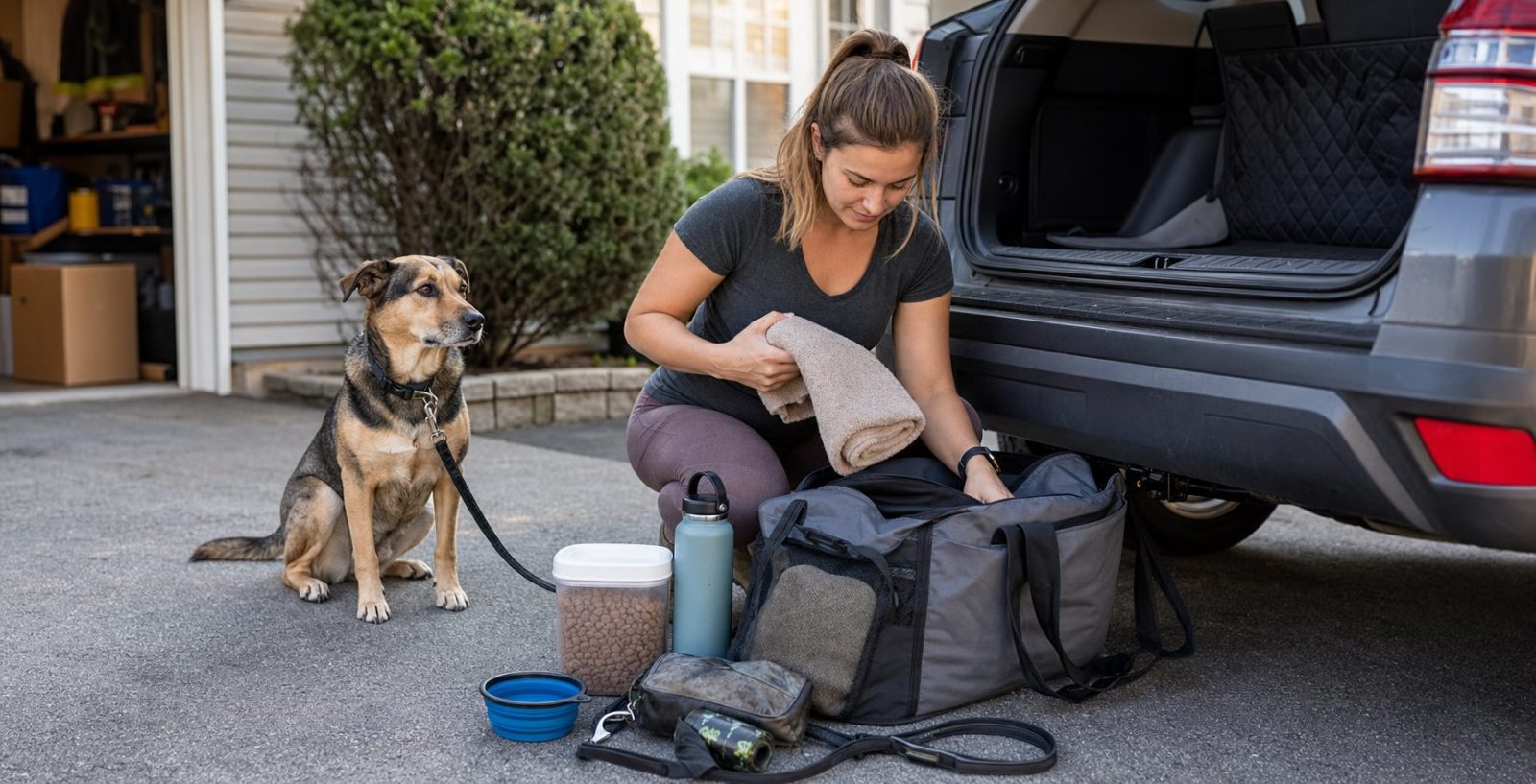
Dog Road Trip Packing Guide: Bags, Cleanup, Food, and Rest Stops
A dog road trip gets harder when every item goes into one bag and the thing you need is always at the bottom. The leash is buried when the door opens. The towel is behind the suitcase after a muddy stop. The food container is easy to pack at home but awkward to use in a hotel room.
The better system is to pack by stop, not by stuff. Think about what happens during the trip: leaving home, opening the car door, offering water, feeding your dog, checking into a hotel, handling wet towels, and unloading when you get back. Once you pack around those moments, the list gets shorter and easier to use.
This guide is built around common dog road trip needs, not hands-on testing of every product mentioned. Use it as a packing workflow, then adjust for your dog, vehicle, weather, and trip length.
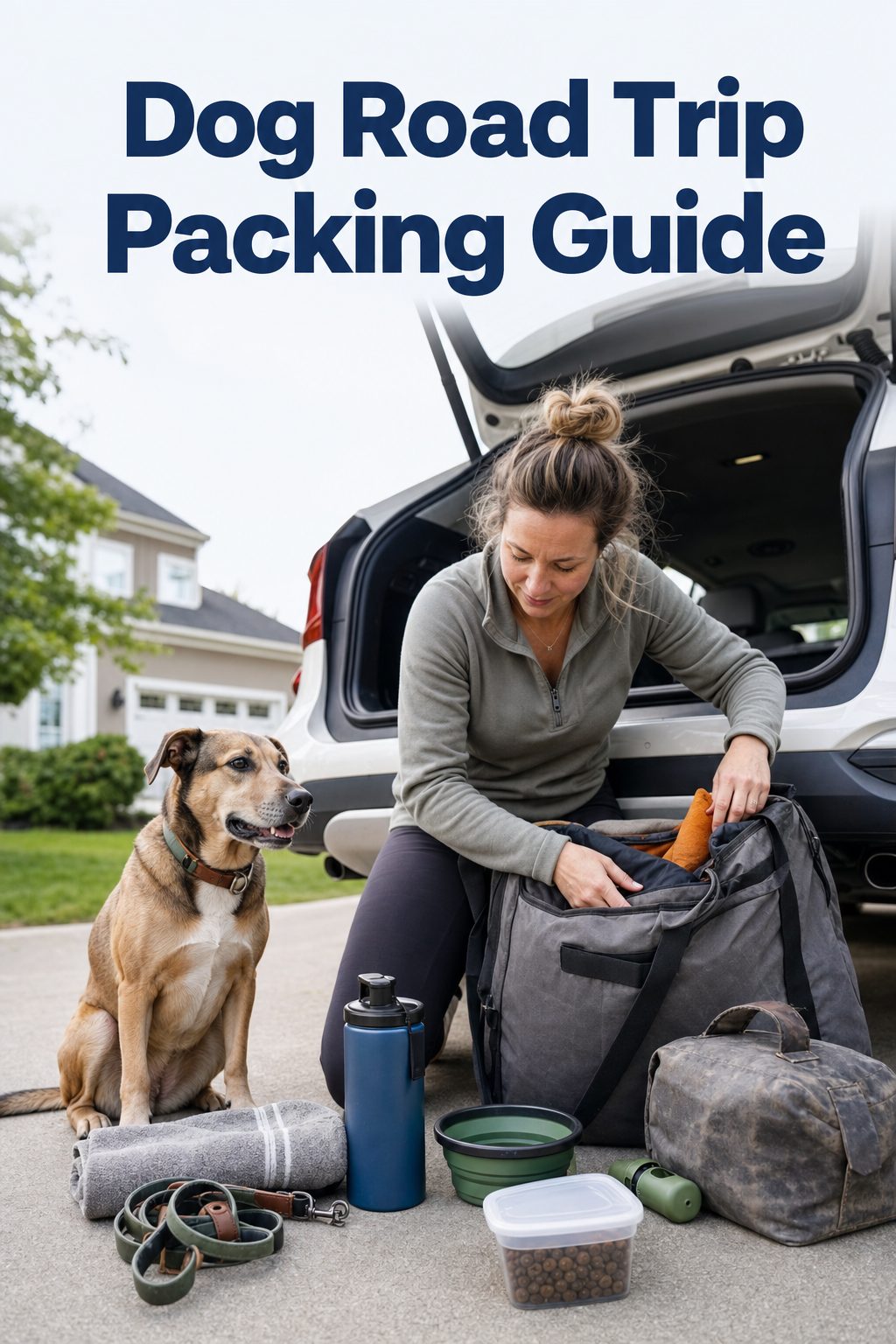
Short Answer: The Road Trip Packing System
For most dog road trips, start with five zones:
- a reach-now kit for leash, waste bags, water, towel, wipes, and urgent medication
- a clean dog bag for food, bowls, paperwork, medication, and one familiar comfort item
- a food and water setup packed by meal, not loose in the original food bag
- a cleanup kit with towel, wipes, bags, and a place for trash
- a dirty gear bag for wet towels, muddy leashes, used wipes, and damp bowls
That may sound like more organization, but it usually means fewer loose items. You are not packing five giant bags. You are giving each item a job and a place.
If you want a smaller car setup first, start with the dog car organizer for road trips. If cleanup is the weak spot in your current setup, use the dog road trip cleanup kit as your starting point.
Pack by Stop, Not by Category
Most packing lists group items by category: food, water, bedding, cleanup, safety. That is useful at home, but it is not how a road trip feels while you are doing it.
At a rest stop, the leash matters before the car door opens. Water matters after your dog has had a minute to settle. The towel matters before your dog jumps back onto the seat cover. Food storage matters when you are tired in a hotel room and do not want kibble spilling near your luggage.
The same logic applies to dirty gear. A wet towel does not belong in the same clean bag as food, medication, and bowls. If you give damp gear a destination before the first muddy stop, the whole trip feels less chaotic.
For the actual roadside sequence, see the dog rest stop routine for road trips. For the messy half of packing, the dog dirty gear bag guide goes deeper.
The Reach-Now Kit
The reach-now kit is the small group of items you should be able to grab before you unload anything else. It can live in a seat-back organizer, door-side tote, top pocket of the dog bag, or a small pouch near the rear door.
For most trips, keep these within reach:
- leash or backup leash
- waste bags
- one towel
- water bottle
- collapsible bowl if your dog uses one
- pet-safe wipes
- small trash bag
- any medication you might need during the drive
Do not put full food containers, extra bedding, big toys, and backup blankets here. Those items crowd the car and make the useful supplies harder to find.
If your dog rides in the back seat, keep the kit where you can reach it without climbing over luggage. If your dog rides in the cargo area, keep it near the hatch. The test is simple: can you grab the leash and towel before the dog fully steps out?
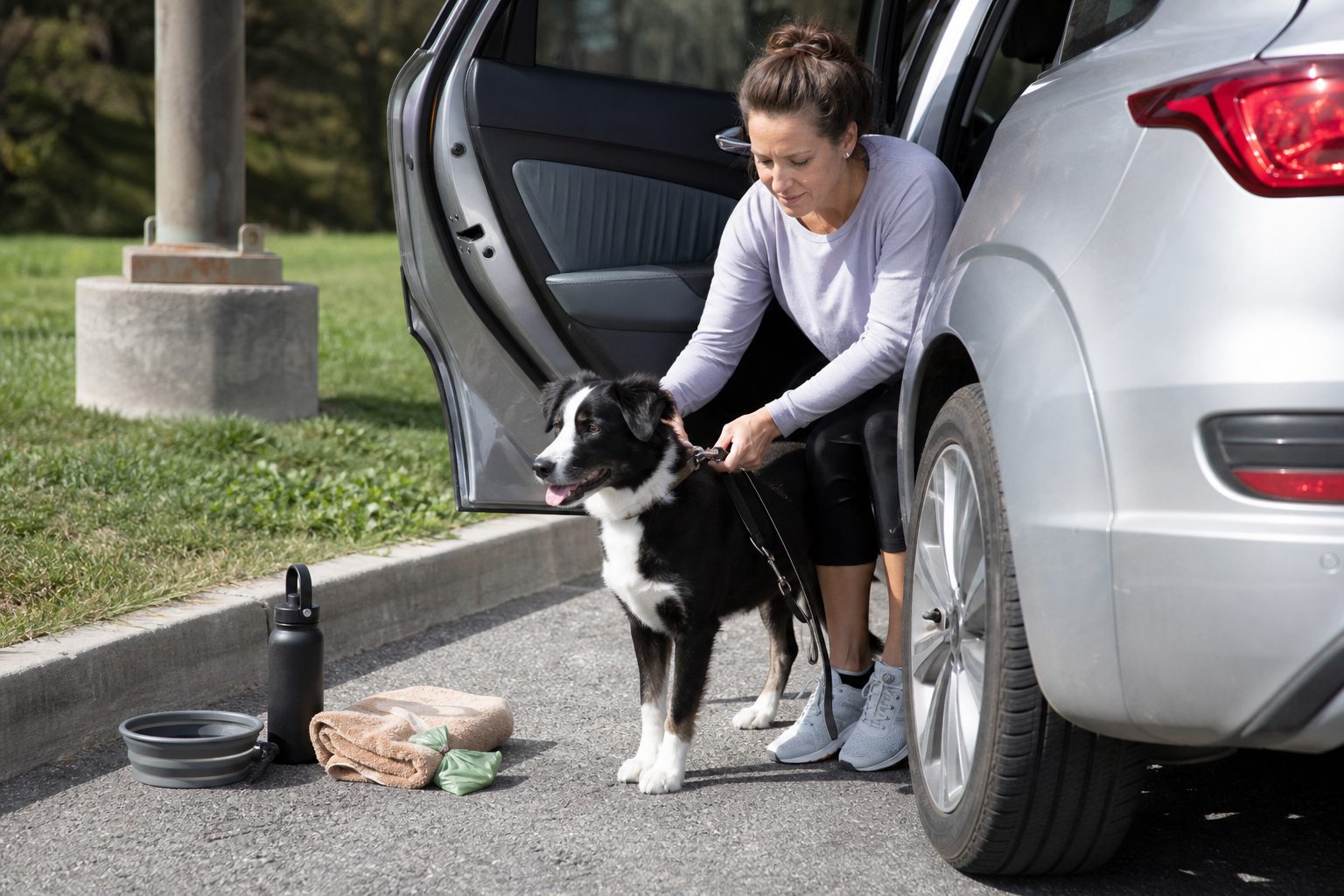
Main Dog Bag: What Actually Belongs Inside
The main dog bag should stay clean. It is for the items you want protected from wet towels, muddy paws, food residue, and trash.
Pack:
- regular food or pre-measured meal pouches
- clean bowls
- medication
- travel paperwork if you need it
- one familiar blanket, mat, or soft item
- spare waste bags and wipes
- a quiet chew or toy if your dog uses one during travel
The main bag is not the place for a damp leash, used paw wipes, or a bowl that just sat on wet pavement. Once the clean bag becomes the dirty bag, everything inside starts to feel stale.
For a short overnight stop, pair this with how to pack a dog overnight bag without overpacking. For hotel-specific packing, use the dog hotel checklist for a cleaner stay.
Food and Water Setup
Food is easier to manage when you pack by meal. For many trips, that means a sealed container for the main supply and a smaller pouch or scoop for the next meal. If your dog has a sensitive stomach, bring the normal food and enough extra for a delay. A road trip is not a good time to improvise with unfamiliar treats or a new feeding routine.
For storage, choose something that closes securely, fits your car, and is easy to use in a hotel room or at a tailgate. A huge bin can be useful for long trips, but it is annoying if you only need two meals and the bin blocks half the cargo area. See best dog food storage containers for road trips if your current system is bulky or messy.
Compare dog food storage containers for travel on Amazon
Water is its own decision. A dog travel water bottle is convenient for quick stops. A collapsible bowl is better for dogs that drink more comfortably from an open bowl, eat away from home, or need a longer break. For many road trips, carrying both is reasonable: bottle for fast stops, bowl for hotels, meals, and longer breaks.
If you are choosing between them, read dog travel water bottle vs collapsible bowl. If bowls are the messy part, the dog travel bowl cleaning routine will help you keep clean and damp gear separate.
Compare dog travel water bottles and bowls on Amazon
Cleanup Kit
Cleanup is what makes the trip feel manageable. People often pack extra toys and forget the towel. On a real driving day, the towel gets more use.
A practical cleanup kit usually includes:
- one absorbent towel
- pet-safe wipes
- waste bags
- one larger trash or odor bag
- lint roller or small hair remover if your dog sheds
- small mat or cargo towel if your dog steps into the car muddy
- backup leash or clip for messy stops
Think in scenes: muddy paws at a rest stop, spilled water on a seat cover, wet fur after a trail, drool on a carrier mat, loose hair before hotel check-in. The kit does not need to fix every disaster. It needs to handle the small messes before they spread.
For a deeper supply list, use the dog road trip cleanup kit. If towels are the weak point, compare dog travel towels for road trips and camping. For repeated muddy stops, a dog paw washer for road trips and camping may be useful, but only if you also pack a towel and a place for the wet gear.
Dirty Gear Bag
The cleanup kit holds clean supplies. The dirty gear bag holds what those supplies become after use.
That difference matters. A towel is helpful before it wipes muddy paws. Afterward, it needs somewhere to go. The same is true for a wet leash, used wipes, damp bowl, sandy blanket, or small mat that did its job.
A good dirty gear setup can be simple:
- one water-resistant bag or washable tote
- a mesh pouch for items that need airflow
- a separate spot for used wipes or trash
- a habit of opening damp items at the end of the day
Do not seal wet towels in a bag overnight unless you have no other option. Use the dirty gear bag for containment during the drive, then hang or wash items when you reach a hotel, campsite, or home.
For a full setup, use how to pack a dog dirty gear bag for road trips and camping.
Rest Stop Routine
A good rest stop routine starts before the door opens.
Use this sequence:
- Clip the leash before the dog steps out.
- Go to the potty area first.
- Offer water after the first minute or two, once your dog is not pulling in every direction.
- Check paws before your dog gets back in.
- Put damp or dirty items in the right place.
- Reset the dog’s riding position before driving again.
The goal is not to make every stop slow. It is to make every stop repeatable. The more predictable the sequence, the less you have to think when you are tired, it is raining, or the parking lot is busy.
For the full routine, read how to set up a dog rest stop routine on road trips.
Hotel or Overnight Stop
Hotel stops are where a loose packing system starts to show. If the food, bowls, towels, leash, and dirty gear all land in one pile near the door, the room gets messy quickly.
Carry in the clean dog bag first. Set the bowl on a towel or small mat. Keep food sealed. Put the dirty gear bag near the entry or bathroom, not beside the clean food and medication. Give your dog one familiar resting item instead of unpacking every blanket in the car.
If you are only staying one night, resist unloading the whole vehicle unless you truly need to. A good overnight setup should let you feed, walk, wipe paws, and sleep without rebuilding the entire road trip inside the room.
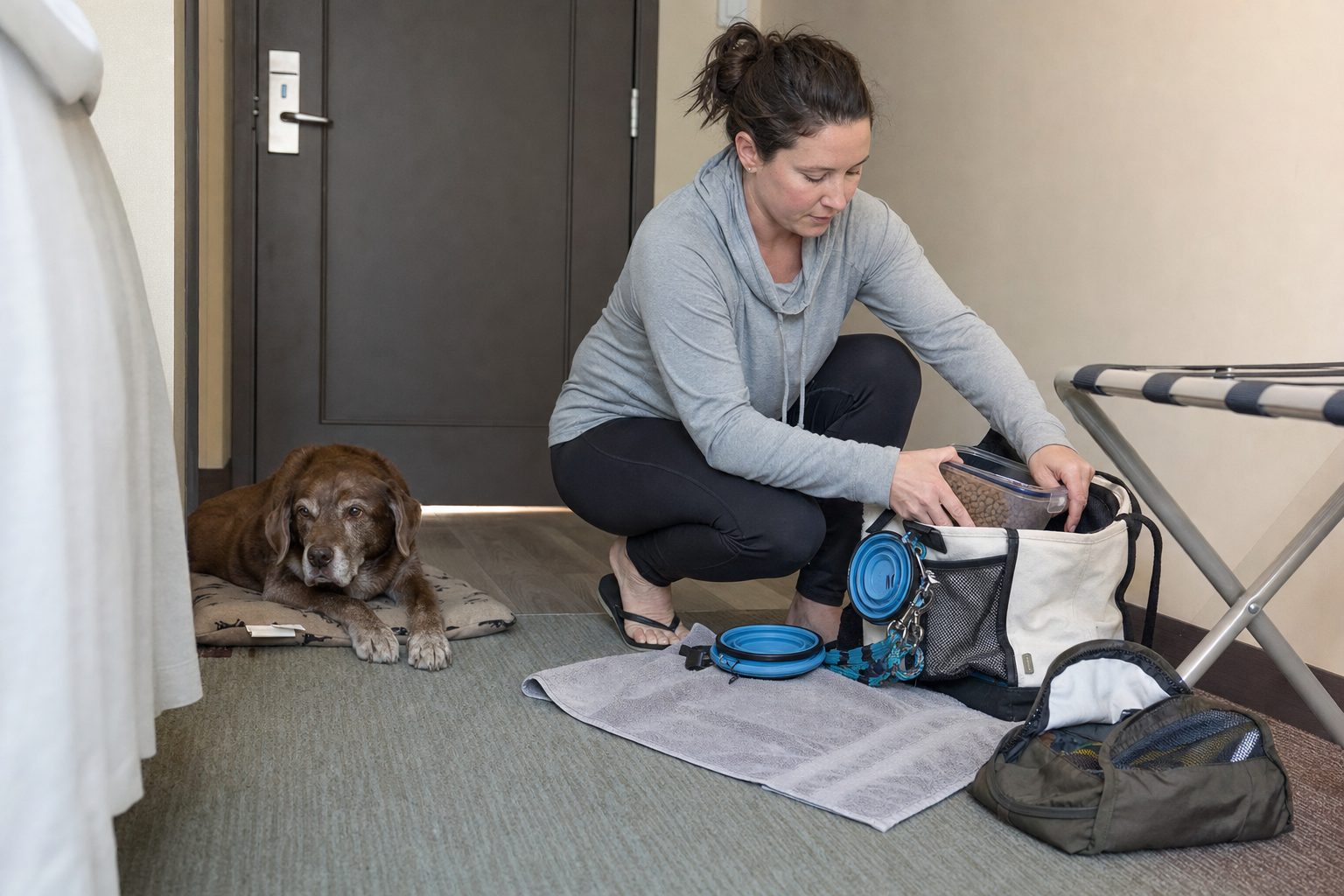
Use the dog hotel checklist for a cleaner stay for room setup, and how to pack a dog overnight bag without overpacking for shorter stays.
What Can Stay in the Cargo Area
Not everything needs to be within reach. In fact, the car feels calmer when backup items stay out of the active zone.
These can usually stay in the cargo area:
- extra food
- backup towel
- larger blanket or spare bed
- cargo liner items
- crate pad or travel bed
- rain or cold-weather gear
- larger cleanup supplies
If you drive an SUV, a cargo liner can make this easier because it gives dirty or bulky gear a clear surface. See best dog cargo liners for SUV road trips. If your dog sleeps in a crate or uses a pad during overnight stops, best dog crate pads for car travel and camping can help you choose the right layer without overpacking bedding.
What to Skip for Most Road Trips
The hardest part of packing is leaving out things that could be useful but probably will not be used.
Most dog owners can skip:
- multiple toys for a short drive
- a full-size food bag for a one-night trip
- duplicate bowls in every pocket
- bulky grooming tools
- a stack of backup bedding
- products your dog has never used before
Do not skip medication, ID, leash, water, or basic safety gear. Those are not clutter. The extras become clutter when they make the useful items harder to reach.
If you are unsure, ask one question: am I likely to use this before the next real stop? If the answer is no, it can probably stay in the cargo area or at home.
End-of-Day and Return-Home Reset
The return-home reset is what keeps the next trip from starting with stale gear.
When the driving day ends:
- dump trash
- hang damp towels
- rinse bowls
- refill waste bags
- check the food supply
- move dirty gear to laundry
- restock the reach-now kit before the next drive
This takes only a few minutes, but it makes the system work. If bowls stay damp, towels stay sealed, and bags stay half-empty, the next trip starts with a mess you already created.
For bowl-specific cleanup, use the dog travel bowl cleaning routine. For the larger dirty-gear system, revisit the dog dirty gear bag guide.
Final Thoughts
A good dog road trip packing guide should make the car easier to use, not heavier. The point is not to carry every possible item. It is to know what you need before the door opens, what stays clean, what gets dirty, and what can wait in the cargo area.
Pack by stop. Keep the leash and towel reachable. Separate food from wet gear. Give dirty items somewhere to go. That is enough to make most dog road trips cleaner, calmer, and easier to repeat.
FAQ
What should I pack for a dog road trip?
Pack leash and ID, waste bags, water, bowls, regular food, medication if needed, one familiar comfort item, cleanup supplies, a towel, and a separate place for dirty or damp gear. Add trip-specific items for hotels, camping, heat, rain, puppies, senior dogs, or medical needs.
What should stay within reach during a dog road trip?
Keep the leash, waste bags, water, a bowl, towel, wipes, small trash bag, and any urgent medication within reach. Full food containers, backup bedding, and bulky extras can usually stay in the cargo area.
Do I need a separate dog travel bag and cleanup bag?
You do not always need separate physical bags, but you do need separate clean and dirty zones. Food, medication, and clean bowls should not share space with wet towels, used wipes, muddy leashes, or damp bowls.
How much dog food should I pack for a road trip?
Pack enough for the meals you expect to serve plus a small buffer in case the drive takes longer than planned. Dogs vary by diet and routine, so avoid relying on a generic quantity. Bring the food your dog normally eats.
Should I pack a dog water bottle or collapsible bowl?
A dog travel water bottle is easiest for quick stops. A collapsible bowl is better for longer breaks, hotels, meals, and dogs that prefer an open bowl. For longer road trips, many owners are better off packing both.
How do I keep dog gear from making the car messy?
Use a towel or wipes before your dog gets back in, keep clean supplies separate from damp items, and pack a dirty gear bag for wet towels, muddy leashes, used wipes, and damp bowls. Unload and dry dirty gear at the end of the day.
Related PawTripKit Guides
- Dog Car Organizer for Road Trips
- Dog Road Trip Cleanup Kit
- Dog Rest Stop Routine for Road Trips
- How to Pack a Dog Overnight Bag Without Overpacking
- Dog Hotel Checklist for a Cleaner Stay
- Best Dog Food Storage Containers for Road Trips
- Dog Travel Water Bottle vs Collapsible Bowl
- Dog Travel Bowl Cleaning Routine