
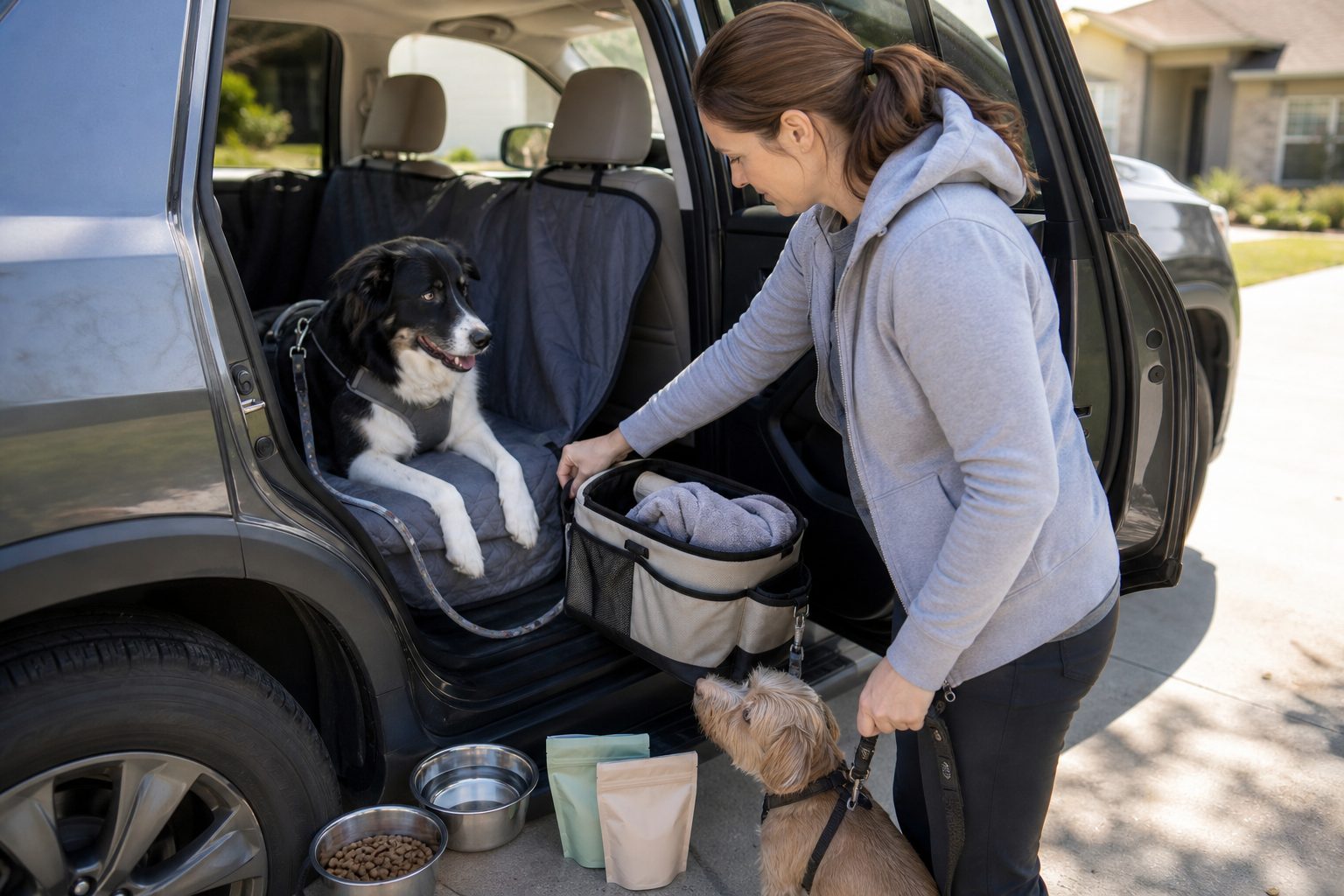
Two dogs do not just double the packing list. They double the places where small things can cross over: leashes twist, one dog steals the other dog’s water spot, the larger dog takes the whole back seat, and the small dog somehow ends up standing on the clean towel.
The fix is not a bigger pile of gear. It is a clearer setup. Each dog needs a riding place, a leash order, a food and water plan, and a simple routine for getting in and out of the car.
This guide is for ordinary two-dog road trips: weekend drives, hotel stops, camping weekends, and long days where the car has to stay usable. It is based on practical setup criteria and common travel needs, not hands-on testing of every product category mentioned.
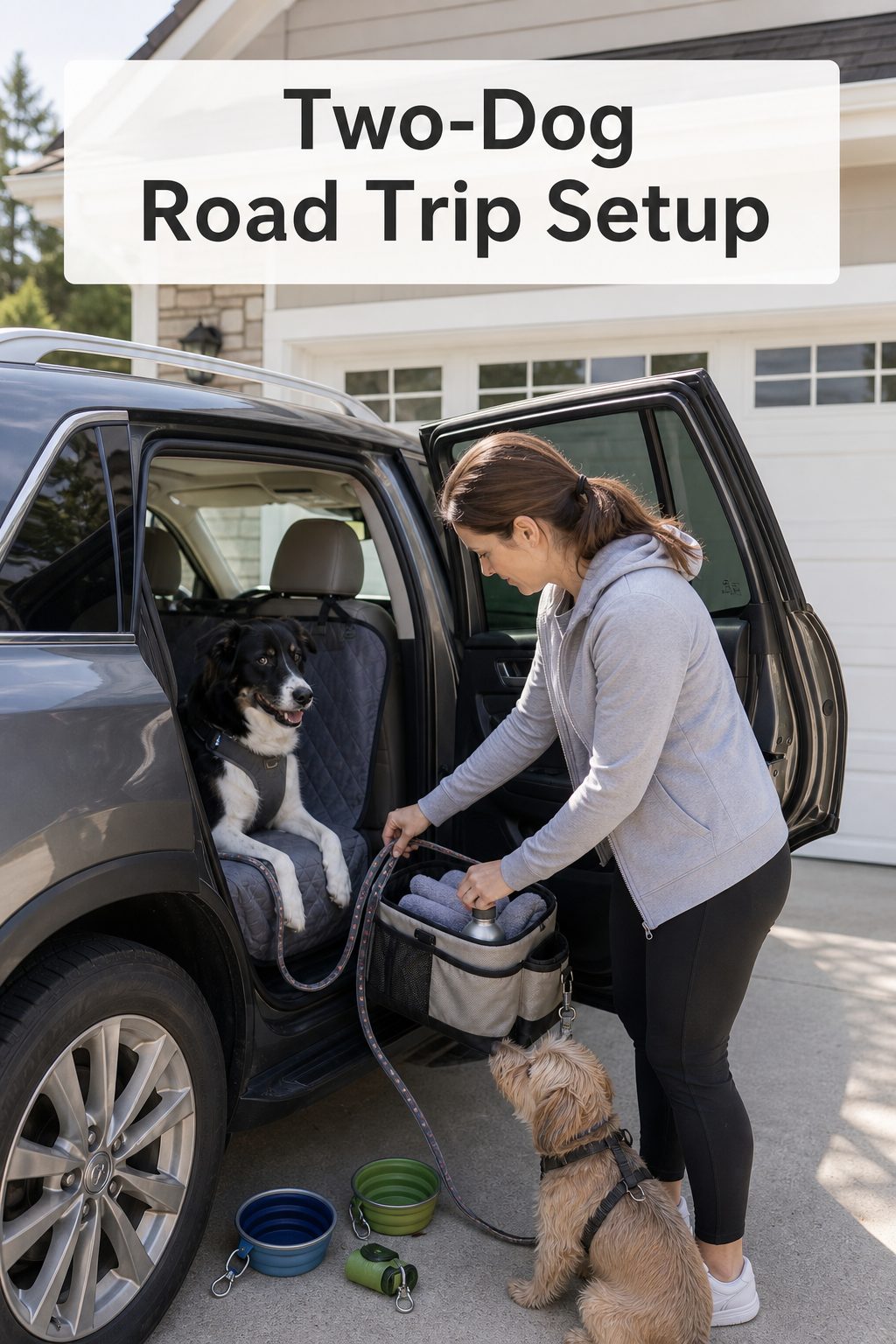
The Short Setup
For a two-dog road trip, build the car around four decisions:
- where each dog rides
- which dog exits first
- how food, water, and medication stay separated
- where dirty towels, damp leashes, and used bowls go after each stop
That is the whole system. Once those decisions are made, the packing list gets less confusing.
If you are starting from a broader packing list, use the Dog Road Trip Packing Guide first. If the back seat itself needs work, pair this with How to Set Up the Back Seat for a Dog Road Trip.
Give Each Dog a Real Seat Zone
Two dogs sharing the back seat can work, but “sharing” should not mean both dogs slide around wherever they want. Before you pack bags, decide where each dog belongs while the car is moving.
Common setups include:
- one dog on a back seat cover and one dog in a secured carrier or booster-style bed
- both dogs in separate harness-and-tether zones, if your vehicle and gear allow it
- one dog in the cargo area crate and one dog in the rear seat
- two crates, if your vehicle has enough room and the dogs are crate-trained
The right setup depends on dog size, temperament, your vehicle, and the restraint system you use. A seat cover protects the car, but it is not a restraint by itself. Each dog still needs an appropriate harness, carrier, crate, or other travel restraint that fits the dog and the vehicle.
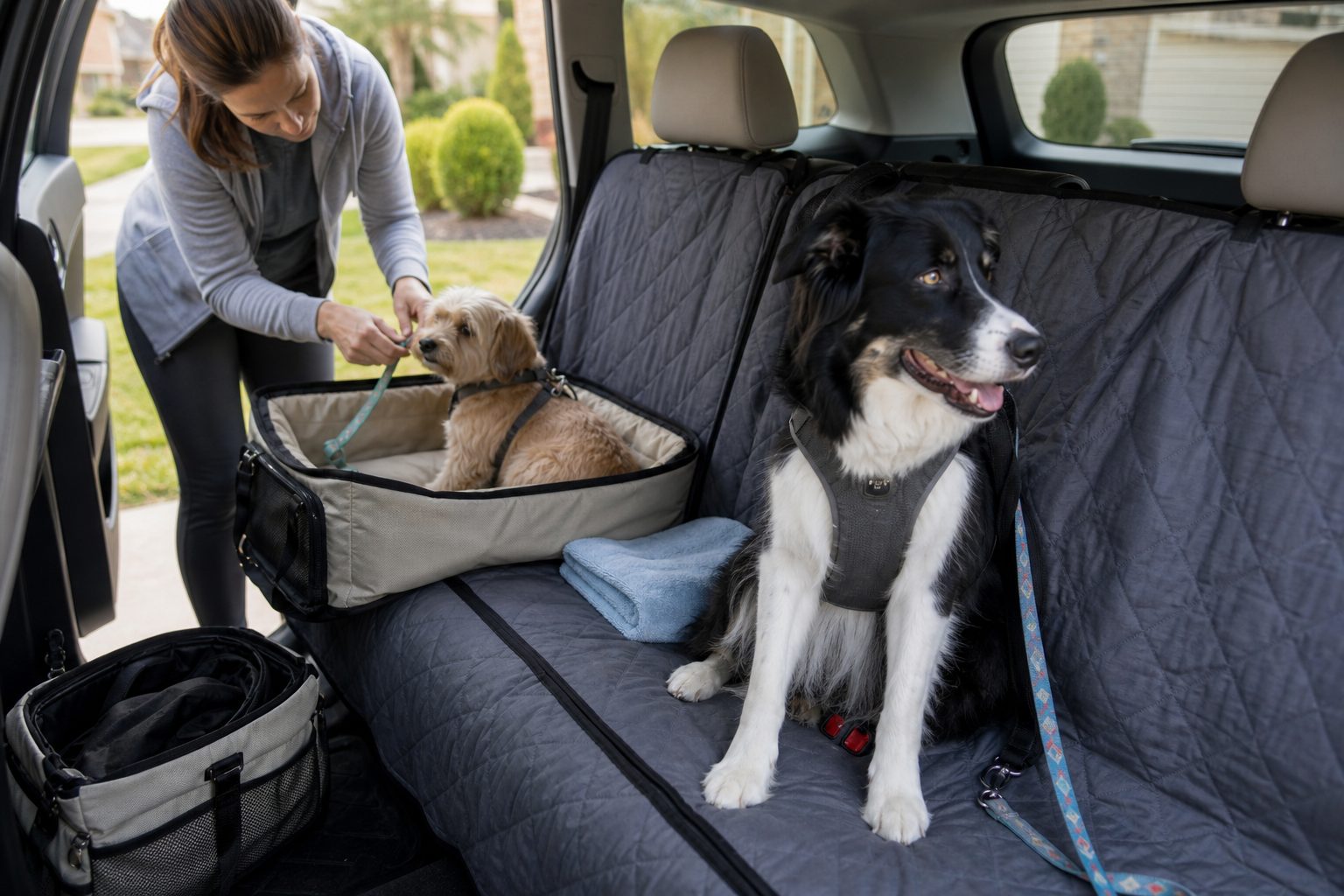
Leave a small buffer between the two dogs if possible. A folded towel, a soft bag on the floor, or a center divider can help mark space. The goal is not to build a wall. It is to reduce paw-stepping, blanket stealing, and the constant shuffle that starts before you have left the driveway.
Choose the Door Order Before You Need It
Door order matters more with two dogs than people expect.
If both dogs rush the same door, the first thirty seconds of every stop become harder. One leash is under your shoe, the smaller dog is behind the larger dog, and the dog who needs to potty most is still stuck waiting.
Pick an order and repeat it:
- clip Dog A before opening the door wider
- bring Dog A out and move them slightly away from the car
- return for Dog B only when the first leash is controlled
- use the same order at rest stops, hotels, and home arrival when possible
The more excitable dog does not always need to exit first. Sometimes the calmer dog comes out first so the second dog has fewer moving parts to react to. Sometimes the small dog comes out first because they are easier to lift or guide. The point is to choose on purpose.
For longer drives, this fits neatly into the Dog Rest Stop Routine for Road Trips.
Use Two Leashes That Are Easy to Tell Apart
Two identical black leashes look tidy at home and annoying in a parking lot.
Use different colors, different handle styles, or a small clip marker so you can tell which leash belongs to which dog without thinking. This is especially helpful when one dog uses a harness clip and the other uses a collar for a short potty walk, or when one dog needs a shorter leash in busy areas.
Keep the active leashes near the door where each dog exits. Do not toss both leashes into the same tote under blankets. At a gas station or hotel entrance, you want the leash in your hand before the dog has a chance to lean out.
A small organizer can help here, but it does not need to be elaborate. The dog car organizer road trip guide explains the reach-now idea: leash, waste bags, towel, and water should be available before luggage moves.
Pack Food by Dog, Not Just by Meal
If both dogs eat the same food and portion size, food packing is easy. Most two-dog households are not that tidy.
One dog may need medication. One may eat slower. One may need a smaller portion before a long drive. One may not tolerate new treats. When everything is poured into one container, mistakes become easier at the end of a driving day.
Pack food in a way that makes the dog obvious:
- labeled meal pouches
- separate small containers
- different scoop colors
- medication stored with that dog’s meal, if safe for the medication and clearly labeled
- one backup meal per dog for delays
Do not rely on memory in a dark hotel room or at a windy campsite. The system should still make sense when you are tired.
For the larger food and bag system, see the Dog Road Trip Packing Guide.
Water: One Bowl Can Work, But Two Is Often Easier
Some dogs drink politely from the same bowl. Others crowd, splash, or guard the space. If one dog drinks fast and the other hangs back, a single bowl can leave the quieter dog short on water.
For two dogs, I would rather pack two simple bowls than one fancy setup that creates a traffic jam. Collapsible bowls are useful because they are light, cheap to replace, and easy to assign by color.
Use one bowl if your dogs are relaxed and you are watching them. Use two bowls when:
- one dog is pushy around water
- one dog drinks slowly
- the weather is hot
- the stop is busy
- you are feeding meals away from home
- one dog takes medication with food or water
Clean water habits matter more than the product. Dump dirty water before it sits in the car, keep damp bowls away from dry food, and let bowls air out when you reach the hotel or campsite.
Build a Rest Stop Routine for Two Dogs
Rest stops are where a two-dog setup proves itself.
Use a simple order:
- leash one dog before opening their door
- move that dog to a safe standing spot
- leash the second dog
- walk to the potty area without letting the leashes braid together
- offer water after the first minute
- check paws before loading back in
- return each dog to their own seat zone
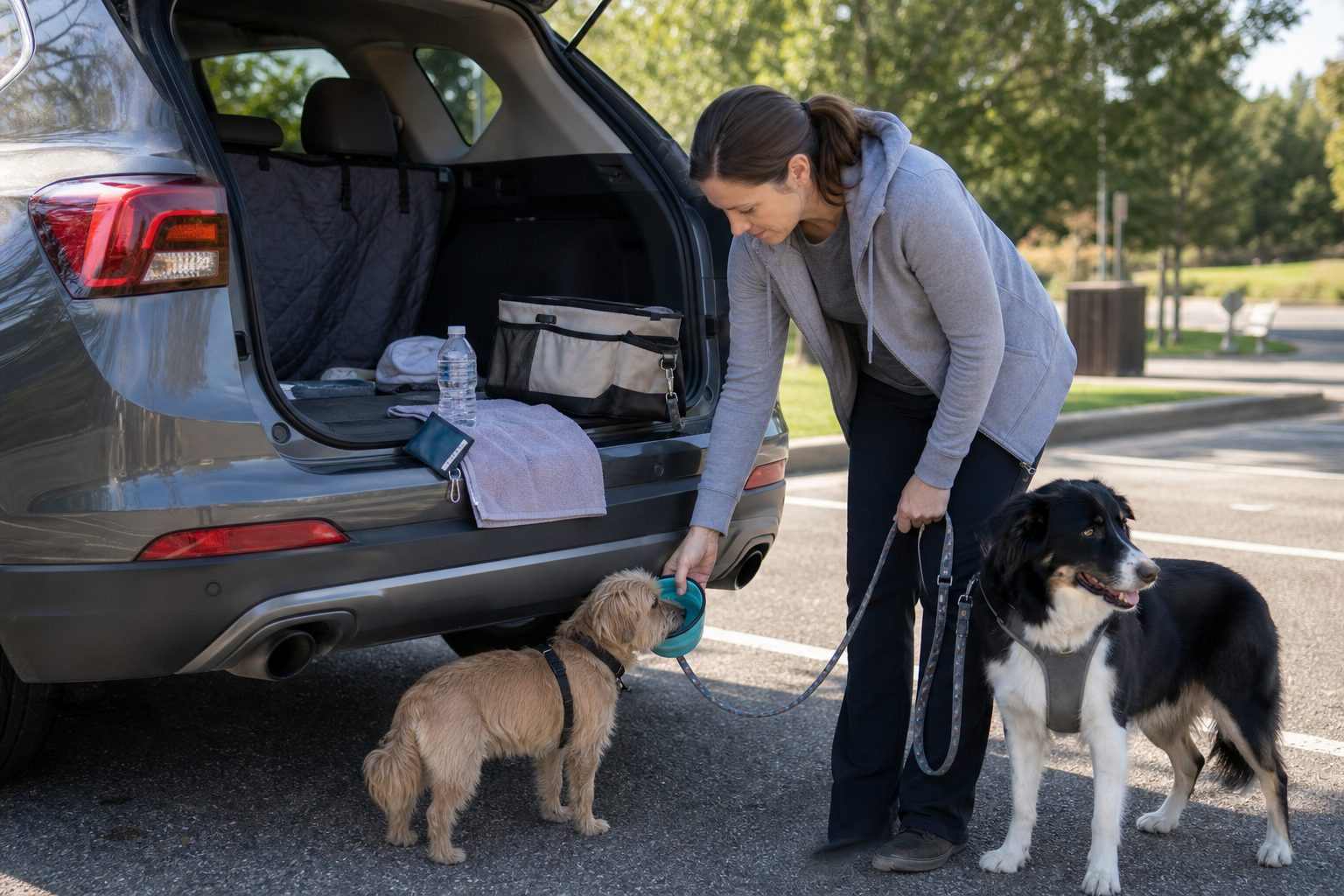
If you are traveling alone with two dogs, slow this part down. One controlled minute outside the car is better than two dogs spilling into a parking lot at once.
If you have two adults, assign jobs clearly. One person handles Dog A. One person handles Dog B. Avoid the vague handoff where both people think the other person has the leash.
Keep Cleanup Separate by Dog When It Helps
You do not need two complete cleanup kits. You do need enough towel space that one wet dog does not ruin the clean setup for the other.
For most two-dog road trips, pack:
- one main towel for the messiest dog or first wipe
- one backup towel or smaller paw cloth
- waste bags within reach
- wipes if you use them
- a dirty gear bag or washable tote
- a place for damp leashes and used bowls
If one dog has long hair and the other is short-haired, the long-haired dog may need the towel first. If one dog is small and low to the ground, check the belly, not just the paws. If one dog is older, give them the drier resting spot after a rainy stop.
The Dog Road Trip Cleanup Kit is a useful base. The main adjustment for two dogs is capacity: more towel surface, more waste bags, and a dirty bag that does not fill after one stop.
Hotel Arrival: Do Not Unload Both Dogs and All Gear at Once
Hotel arrival is where two-dog trips can feel messy fast. You are holding two leashes, checking the room location, watching doors, and deciding which bag needs to come inside.
Keep the first trip simple:
- both dogs leashed and controlled
- clean food and medication bag
- water bowl or bowls
- one resting mat, blanket, or crate pad per dog if they need separate spaces
- cleanup towel
- waste bags
Leave backup gear in the car until the dogs are settled. If the room is tight, place each dog in a predictable zone before you unpack: one mat near the bed, one crate or bed near the wall, bowls away from luggage, wet gear near the bathroom or door.
For a room-specific process, use Dog-Friendly Hotel Room Setup: A 10-Minute Arrival Routine.
What to Skip
Two-dog packing gets bulky when every “maybe” item comes along twice.
Most trips do not need:
- duplicate toys for every stop
- a separate giant bag for each dog
- more than one backup leash unless your dogs are hard on gear
- extra beds if the dogs already have car-safe resting spots
- new chews or treats your dogs have never eaten before
- complicated organizers that hide the items you need quickly
Do not skip ID, leashes, water, medication, food, and safe travel restraints. Skip the items that make the car harder to use.
A Simple Two-Dog Packing Checklist
Use this as a starting point:
- restraint or crate setup for each dog
- two leashes that are easy to tell apart
- waste bags near the exit door
- water bottle and one or two bowls
- labeled meals for each dog
- medication clearly assigned to the right dog
- towel plus backup paw cloth
- dirty gear bag
- one familiar resting item per dog if needed
- copies or photos of important vaccination or travel paperwork, if your trip requires it
Before leaving, do one door test. Can you open the dog door, clip the first leash, reach the towel, and find water without moving luggage? If not, the setup is not ready yet.
FAQ
Is it safe for two dogs to share the back seat?
It can be, but only if each dog has an appropriate travel restraint or secured space. A seat cover helps protect upholstery, but it does not restrain dogs during sudden stops. The setup should match each dog’s size, behavior, and your vehicle.
Should I use one large seat cover or two separate dog seats?
A full back seat cover works well when both dogs are calm and similar in size. Separate beds, carriers, crates, or restraint zones are often easier when one dog is small, nervous, older, pushy, or likely to crowd the other dog.
How do I stop two leashes from tangling at rest stops?
Use different leash colors and pick a door order. Bring one dog out first, move them slightly away from the car, then bring out the second dog. If two people are traveling, assign one person to each dog before opening doors.
Do two dogs need separate food containers?
Separate containers or labeled meal pouches are safer when the dogs eat different portions, take medication, or have different diets. If both dogs eat the same food, one main container can work, but the portions should still be clear.
Final Thoughts
A good two-dog road trip setup should make the car calmer before the first mile. Decide where each dog rides. Give each leash a place. Pack food so the right dog gets the right meal. Make rest stops repeatable.
The less you improvise at the car door, the easier the whole trip feels.