
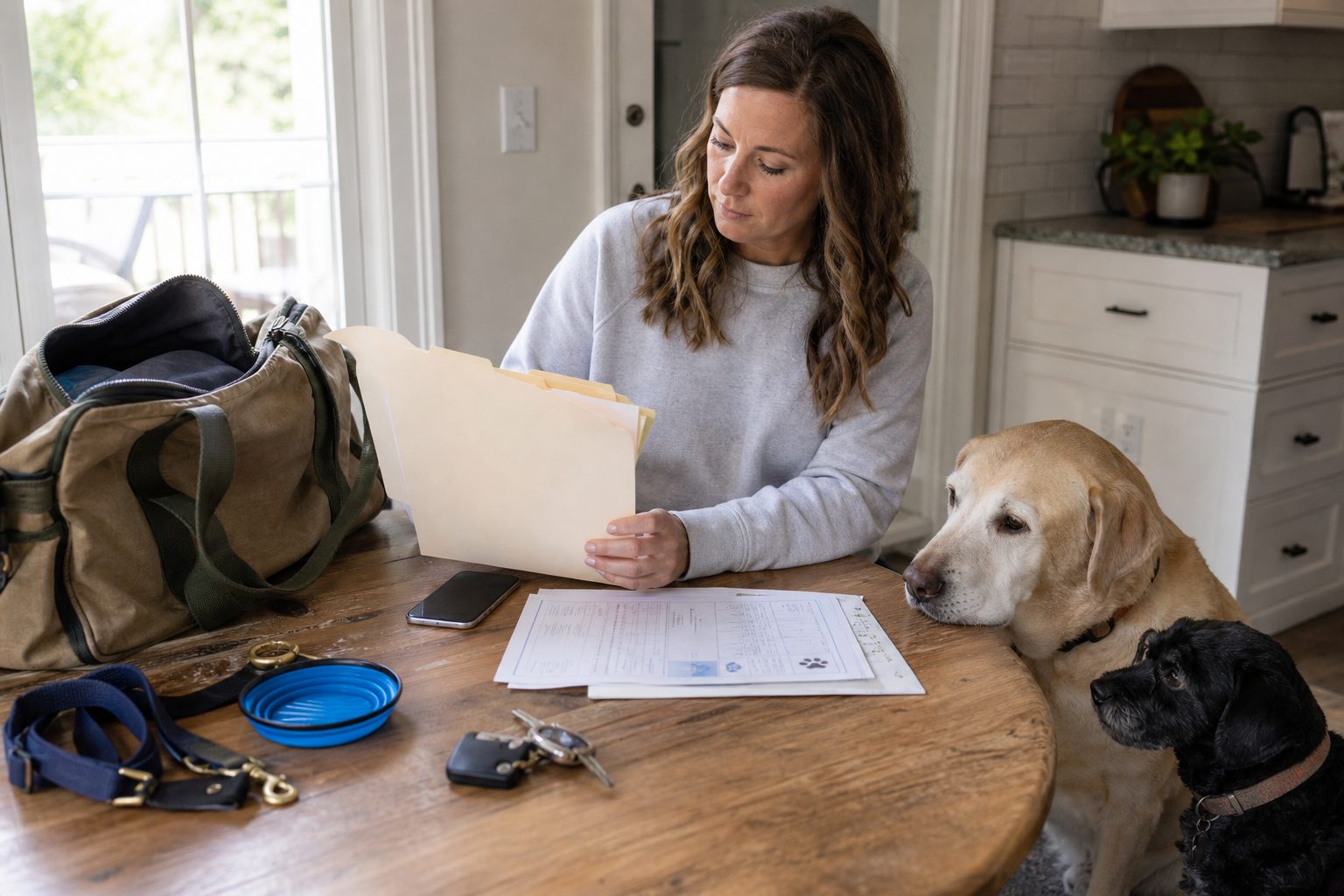
The leash is usually easy to remember. The folder is not.
That becomes annoying at the hotel counter, the campground office, the boarding facility near a wedding weekend, or the moment you need a vet’s phone number in a town you do not know. Most dog travel paperwork is not exciting. It just needs to be easy to find when your dog is on a leash and the car is full.
A dog travel documents folder does not need to be large. One slim folder, a few labeled sections, and a digital backup on your phone can make road trips, hotel stays, and camping weekends much less scattered.
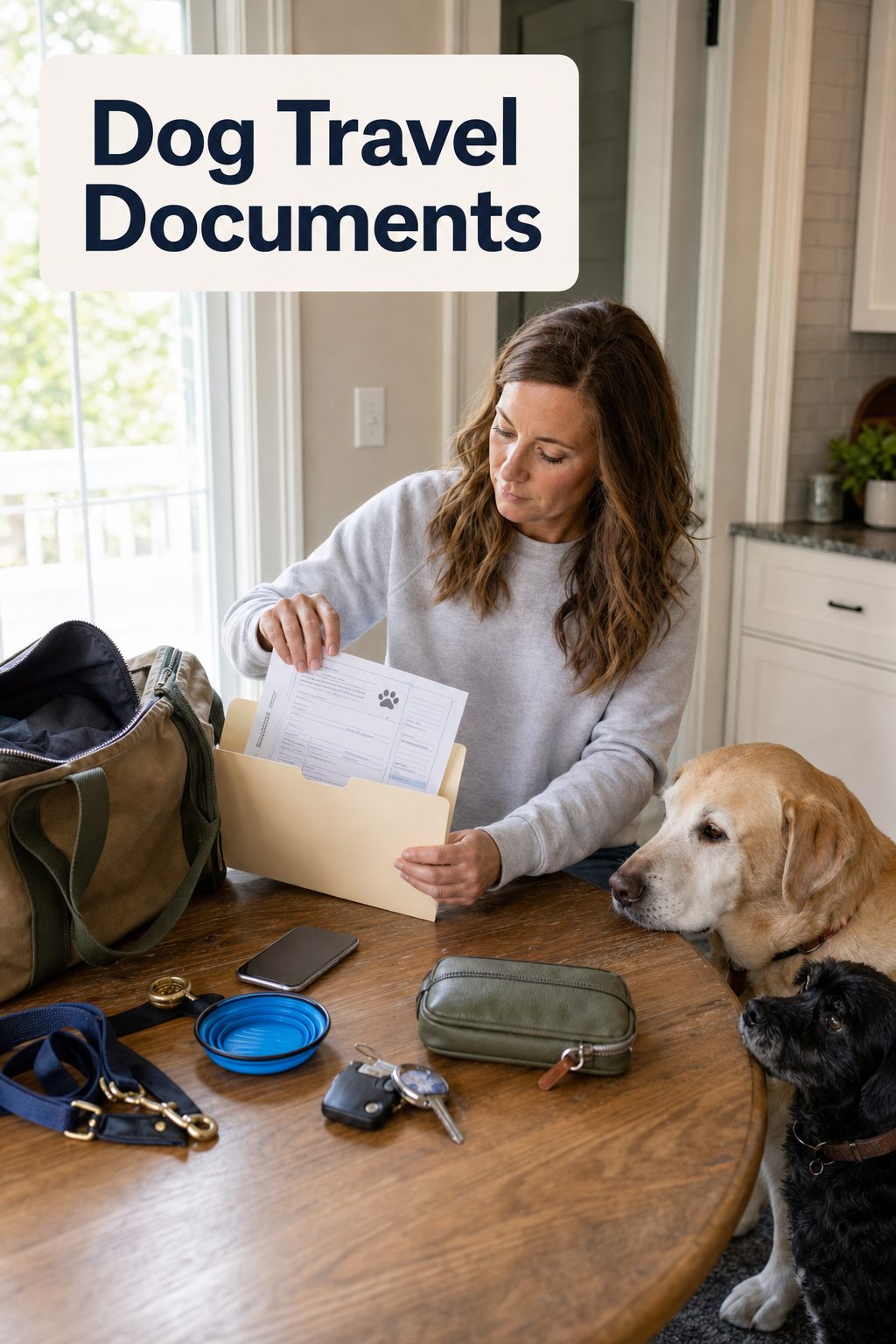
The Short Version
For most dog road trips, keep these items in one folder or pouch:
- current vaccination record or proof your destination may ask for
- your dog’s microchip number and registration contact
- recent photo of your dog
- medication list and feeding notes
- your regular vet’s contact information
- emergency vet search notes for the area you are visiting
- hotel, campground, or rental pet policy notes
- copies of booking confirmations that mention your dog
- license or ID tag information, if relevant for your trip
Keep the folder where you can reach it without unloading the car. A glove box, front door pocket, seat-back organizer, or top pocket of the dog travel bag all work better than the bottom of a suitcase.
For the larger packing system, use the Dog Road Trip Packing Guide. If you are staying overnight, pair this with the Dog Hotel Checklist for a Cleaner Stay.
Why a Dog Travel Folder Is Worth Packing
Most trips do not require someone to inspect your dog’s paperwork at every stop. That is exactly why the folder gets forgotten.
The problem is that paperwork only matters when it suddenly matters. A hotel may want to confirm pet details. A campground may have rules about vaccination records or leashes. A daycare, boarding facility, ferry, rental property, or event venue may ask for information before they let your dog stay. If your dog gets sick away from home, you do not want to search old emails while standing in a parking lot.
The folder is not about being formal. It is about reducing friction.
It also keeps your phone from carrying the whole job. Digital copies are helpful, but dead batteries, weak service, cracked screens, and messy inboxes are poor filing systems.
Start With One Slim Folder
Use something boring and easy to replace: a plastic envelope, thin accordion folder, zip pouch, or document sleeve. It should fit in the car, not take over the dog bag.
Look for:
- enough room for standard letter-size papers without folding them too tightly
- a closure, especially if it rides in a tote or door pocket
- simple tabs or labels
- water resistance if you camp, hike, or travel in rain often
- a size you will actually keep within reach
Do not overbuild it. If the folder becomes a giant office project, it will stay home. A small folder with the right papers beats a perfect binder that never leaves the kitchen.
What to Put in the Folder
Start with the documents and details that would slow you down if you had to find them on the road.
Vaccination and Health Records
Keep a current vaccination record or proof of vaccines if your trip may involve hotels, boarding, daycare, campgrounds, events, or shared dog areas. Requirements can vary by business, destination, and local rules, so check directly with the place you are visiting before you leave.
Do not use this folder as medical advice. It is a travel organization tool. If your dog has a health condition, medication schedule, or vaccine question, ask your vet before the trip.
Microchip and ID Information
Write down your dog’s microchip number and the contact information for the microchip registry. Also keep a clear recent photo of your dog on your phone and, if you like paper backups, printed inside the folder.
This is especially useful for camping trips, long drives, and unfamiliar rest stops. If your dog slips a collar or someone else needs to help, you want the basic ID details in one place.
Medication and Feeding Notes
If your dog takes medication, keep a plain list:
- medication name
- dose and timing as provided by your vet
- what it is for
- where it is packed
- your vet’s contact information
For feeding, write enough that another adult could help without guessing. This is useful on family trips, wedding weekends, shared cabins, and any trip where one person may handle the dog while another checks in or unloads.
Vet and Emergency Contacts
Keep your regular vet’s phone number and address in the folder. Before a longer trip, search for an emergency vet near your destination and save the information on your phone.
You do not need a complicated emergency plan for every short drive. But if you are traveling several hours away, camping outside town, or staying somewhere unfamiliar, a few minutes of prep is worth it.
Hotel, Campground, or Rental Notes
For each stay, save the pet-related details where you can find them:
- pet fee notes
- weight or size rules, if listed by the property
- leash rules
- where dogs can and cannot go
- check-in instructions
- quiet hours or campground rules
- booking confirmation that includes your dog, if available
Rules can change, and third-party booking pages are not always complete. Check the property directly when the details matter.
Keep It Reachable in the Car
The folder should live with “reach-now” items, not with backup gear.
Good spots include:
- glove box, if it fits and stays dry
- front passenger door pocket
- seat-back organizer
- top pocket of the dog travel bag
- a small pouch clipped inside the main tote
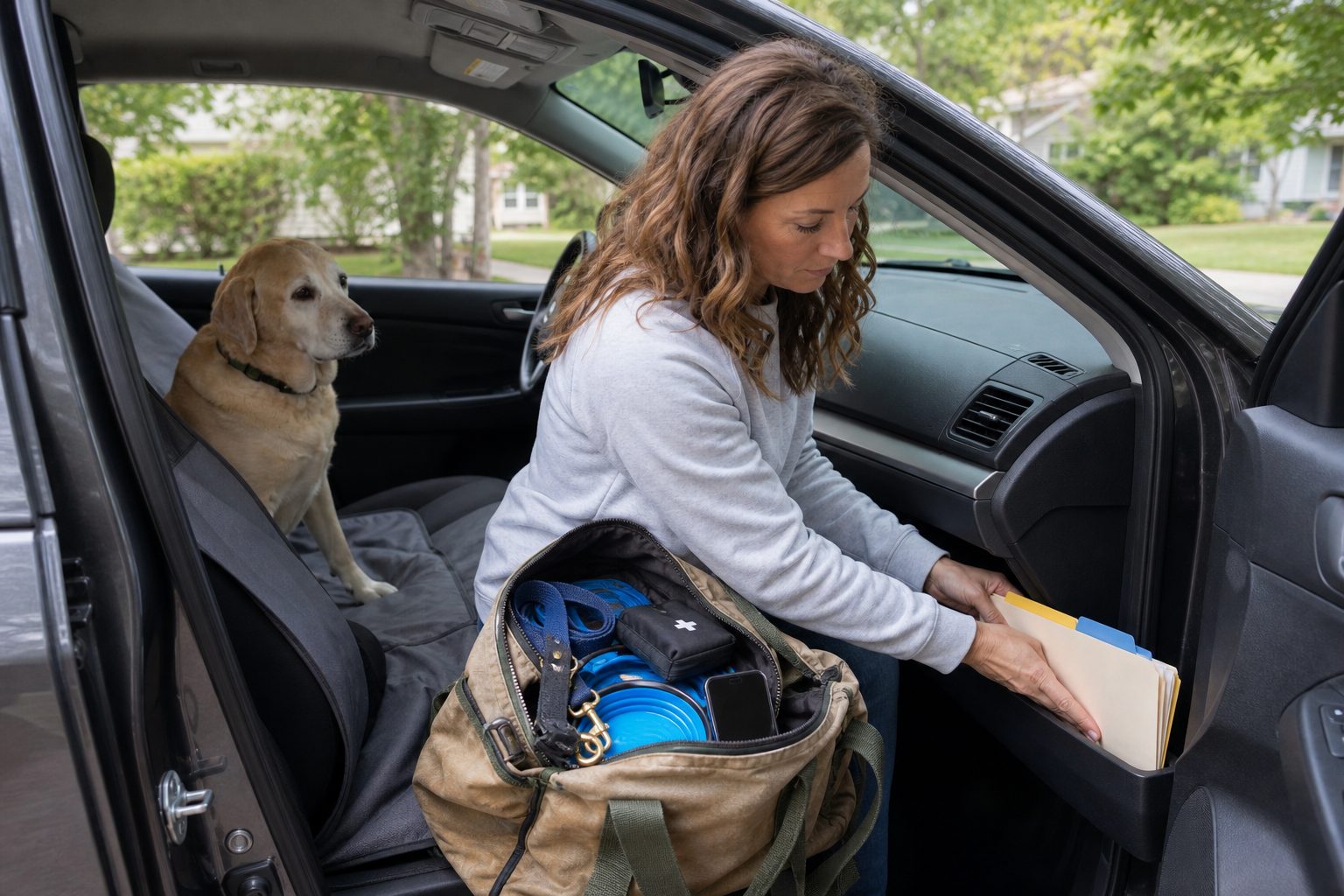
Avoid packing it under food containers, towels, cargo liners, or overnight bags. If you need it at check-in, you should be able to reach it while one hand is still handling a leash.
This pairs well with the dog car organizer road trip guide, especially if your car already has too many loose items around the front seat.
Use a Simple Digital Backup
Paper is useful, but your phone should carry a backup.
Save clear photos or PDFs of key records in a folder on your phone. Name them plainly, not creatively. Something like “Dog vaccination record,” “microchip info,” and “medication list” is better than a mystery file name from a scanner app.
If you travel with another adult, share the folder before the trip. Do not make one person the only keeper of every document. If you are driving and the hotel calls, the passenger should be able to find the information without asking where you hid it.
For longer trips, consider keeping offline copies as well. Cell service is not guaranteed at every campground, mountain road, or rural rest stop.
What Not to Keep in the Dog Folder
Do not turn the folder into a junk drawer.
Skip:
- expired records unless you have a reason to keep them
- old hotel confirmations
- receipts you will never need
- random training handouts
- product manuals
- paperwork with unnecessary personal information
- anything you would not want loose in a car if the folder fell open
If a document has sensitive information, keep only what you truly need for travel and store it carefully. A folder that rides in the car should be useful, but it should not expose more private details than necessary.
Before You Leave: The 10-Minute Folder Check
Do this the day before the trip, not in the driveway.
- confirm the folder is in the car or dog bag
- check that vaccination proof is current enough for the places you are visiting
- confirm your dog’s ID tag and microchip contact details are up to date
- save your vet’s contact information
- save one emergency vet near the destination for longer trips
- screenshot or print hotel, campground, or rental pet notes
- add medication and feeding notes if someone else may help care for your dog
- remove old papers from past trips
This is the paperwork version of checking the leash before opening the car door. It is small, but it prevents avoidable scrambling.
When You May Need More Than a Basic Folder
Some trips need extra planning.
Ask directly before travel if your plans include:
- flights or airline travel
- international travel
- boarding or daycare
- events with dog entry rules
- ferries or public transportation
- rental homes with detailed pet agreements
- medical travel or dogs with ongoing health needs
For airline or international travel, do not rely on a general blog checklist. Rules can change and may depend on route, airline, destination, timing, and your dog’s paperwork. Confirm with the airline, destination authority, and your vet.
At Check-In, Keep the Folder Out Until You Are Settled
Once you reach a hotel, campground, or rental, do not bury the folder immediately. Keep it with your phone and leash until check-in is finished and you know where your dog will settle.
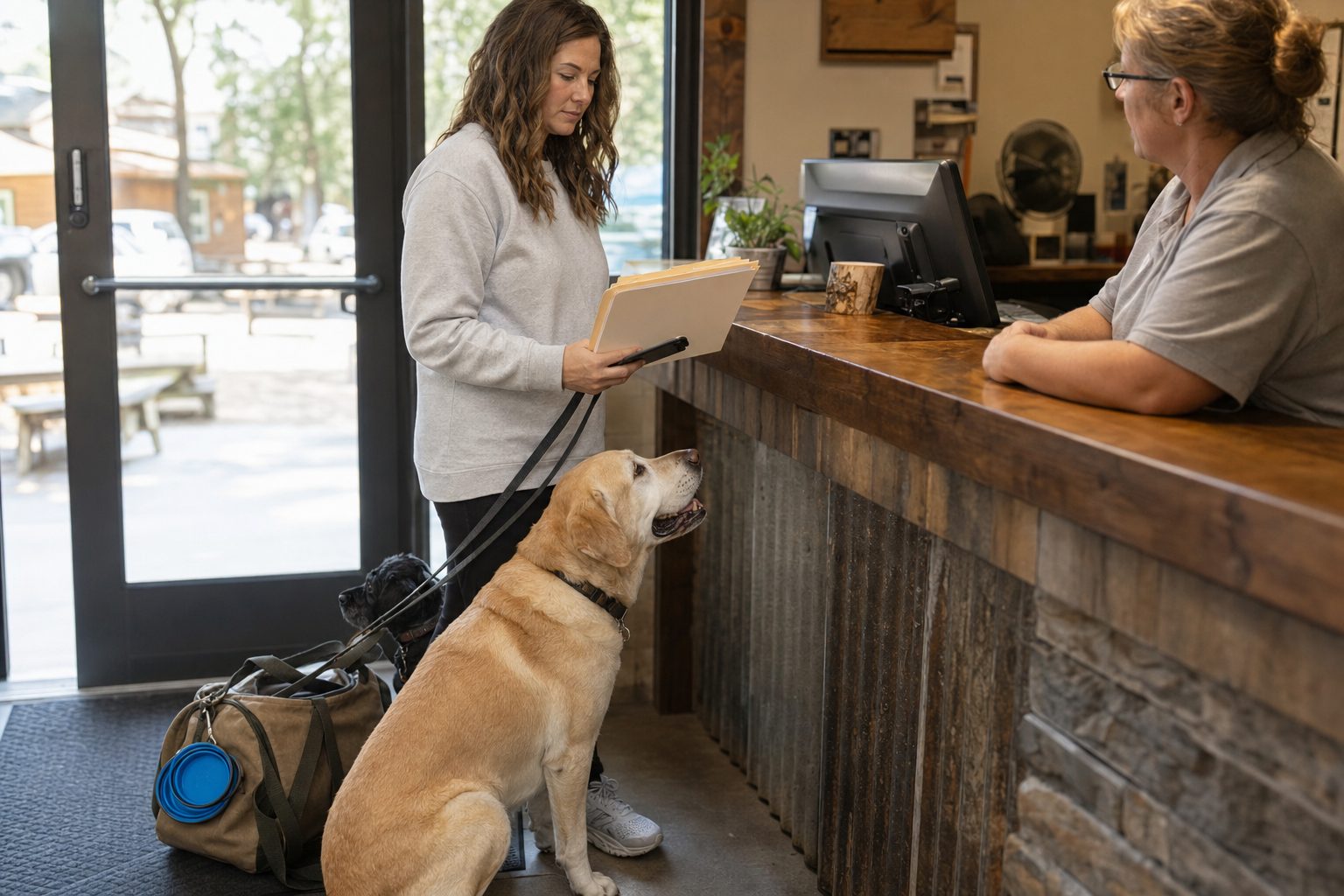
After that, put the folder in one consistent room spot: entry table, nightstand, top of the dog bag, or a zip pocket. Avoid leaving it on the bed with towels, bowls, treats, and damp leashes.
For the room setup itself, use Dog-Friendly Hotel Room Setup: A 10-Minute Arrival Routine. If you are dealing with wet gear, the rainy dog road trip cleanup routine keeps clean items and damp items apart.
A Small Gear Note
You do not need a special “pet document organizer” to do this well. A slim envelope, plastic file pouch, or small accordion folder is enough for most dog road trips.
If you are buying one, choose based on:
- whether it fits in the car
- whether it closes securely
- whether tabs are easy to read
- whether it can handle light moisture
- whether it is simple enough that you will keep using it
Product links should stay secondary here. The real value is the habit: one folder, one location, current records, and a phone backup.
FAQ
Do I need dog travel documents for a regular road trip?
Not always, but it is smart to carry basic records for overnight stays, campgrounds, boarding, daycare, and longer trips away from your regular vet. Some places may ask for proof of vaccination or pet details, and requirements vary.
Is a photo on my phone enough?
A phone copy is helpful, but it should not be the only system for longer trips. Keep digital copies and, when useful, a small paper folder. Weak service, dead batteries, and hard-to-search email threads can slow you down.
What is the most important document to carry?
For many domestic road trips, current vaccination proof and your dog’s ID information are the most useful. If your dog takes medication, add the medication list and your vet’s contact information.
Should I keep the folder in the car all the time?
Only if the information is current and you are comfortable storing it there. For sensitive documents, many owners prefer to keep the folder with the packed dog bag and place it in the car before each trip.
Final Thoughts
A dog travel documents folder is not glamorous gear. It is the thing that keeps a small question from becoming a parking-lot search through emails, screenshots, and luggage.
Keep it slim. Keep it current. Put it where you can reach it with a leash in your hand. That is enough for most road trips, hotel stays, and camping weekends.