
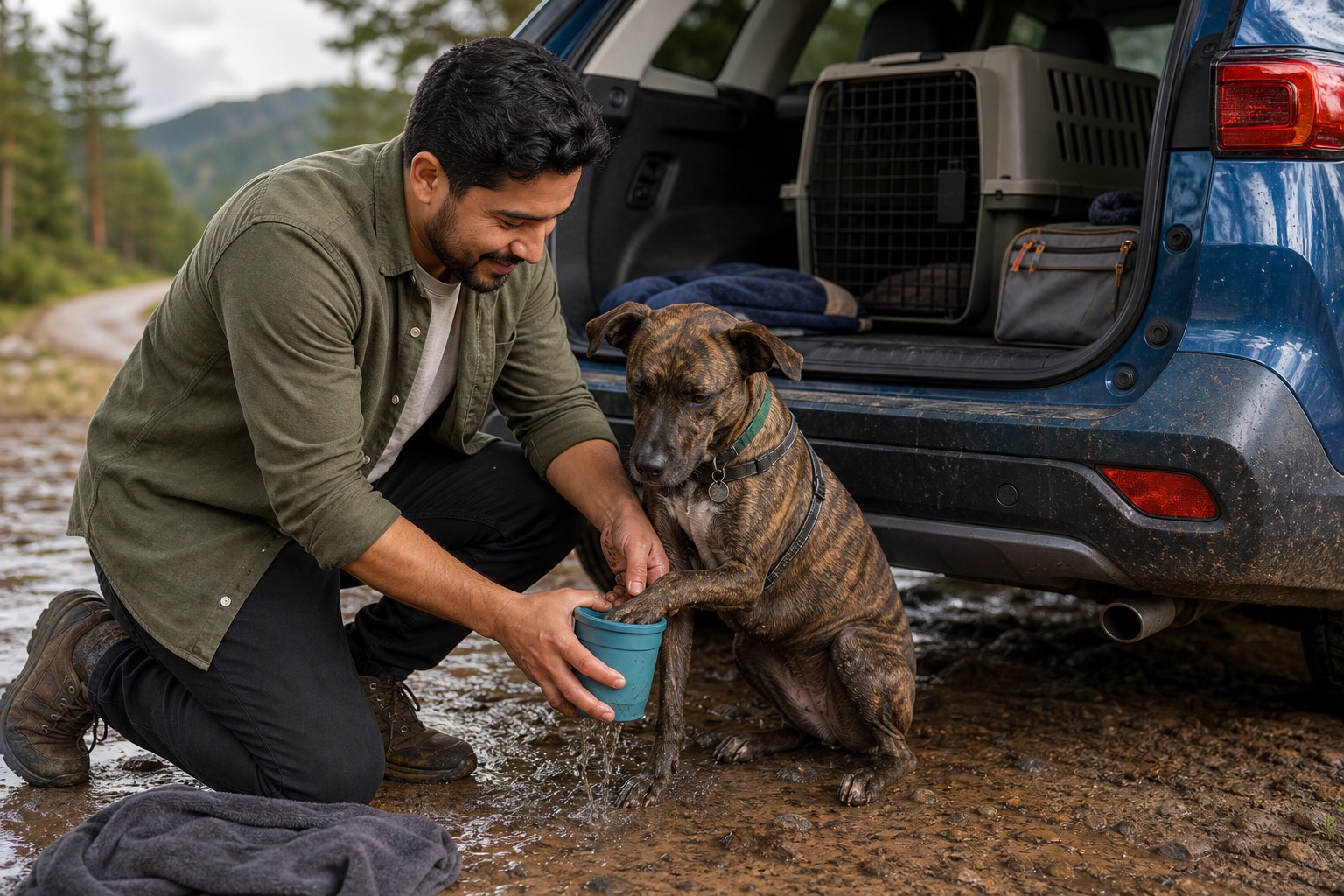
A dog paw washer sounds like a small thing until you are dealing with muddy paw prints on a seat cover, motel floor, or sleeping bag. For road trips and camping, the right one can make cleanup faster and less frustrating. The wrong one is just another wet item rolling around in the car.
That is why this is not really about whether a paw washer works in theory. Most of them do. The better question is whether it works with your dog’s paw size, your travel pace, your water access, and the kind of mess you are actually dealing with.
For a dog owner driving to campgrounds, trailheads, lakes, or rainy rest stops, a paw washer is most useful when it fits into a repeatable routine: clean the paws, dry them well enough, and pack the dirty gear so the mess does not move from the ground to the car. This guide is based on travel use cases, product features, and common cleanup problems, not hands-on lab testing of every model on the market.
Quick Answer
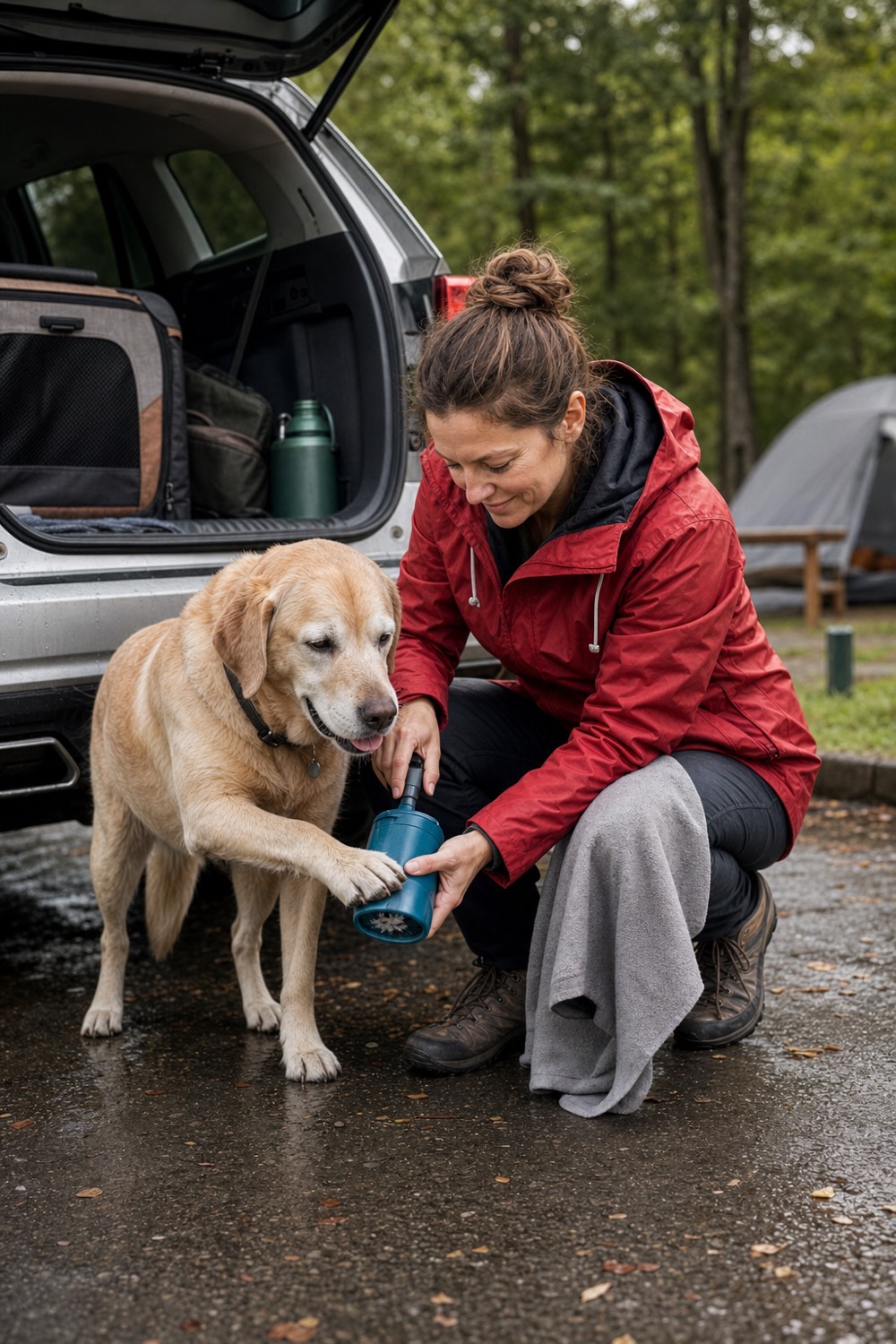
For most trips, the best dog paw washer is a simple silicone cup with soft internal bristles, a stable shape that does not tip easily, and an opening that matches your dog’s paw size without being too tight. It should be easy to rinse out, easy to dry, and practical to pack next to a towel.
Small dogs usually do better with a lighter, narrower cup that is easier to grip with one hand. Large dogs and muddy campground trips often need a wider cup, more water, and a backup drying towel because the cup alone will not finish the job.
If your dog only gets light dust or occasional wet grass on their paws, a full paw washer may be more gear than you need. In that case, a travel towel, wipes for backup, and a more deliberate dog road trip cleanup kit may be enough.
Compare dog paw washer cups on Amazon
What Actually Makes a Paw Washer Travel-Friendly
The first thing to check is opening size. Some cups look roomy in photos but feel awkward once you try to fit a broad paw through the top. If the opening is too tight, your dog will pull away before you get the paw clean. If it is too loose, the paw moves around without enough contact from the bristles.
Weight and grip matter more on trips than they do at home. At home, you can refill the cup at a sink and set it down on a stable floor. On the road, you may be balancing by a car door, crouching on gravel, or trying to clean one paw before your dog steps into the back seat. A slippery cup with a narrow base gets annoying fast.
Leak control is another overlooked point. A paw washer is a wet container you are carrying around your car kit. If it does not seal well, if the top flexes too easily, or if the dirty water spills while you are moving between the trailhead and the car, you have traded muddy paws for muddy gear.
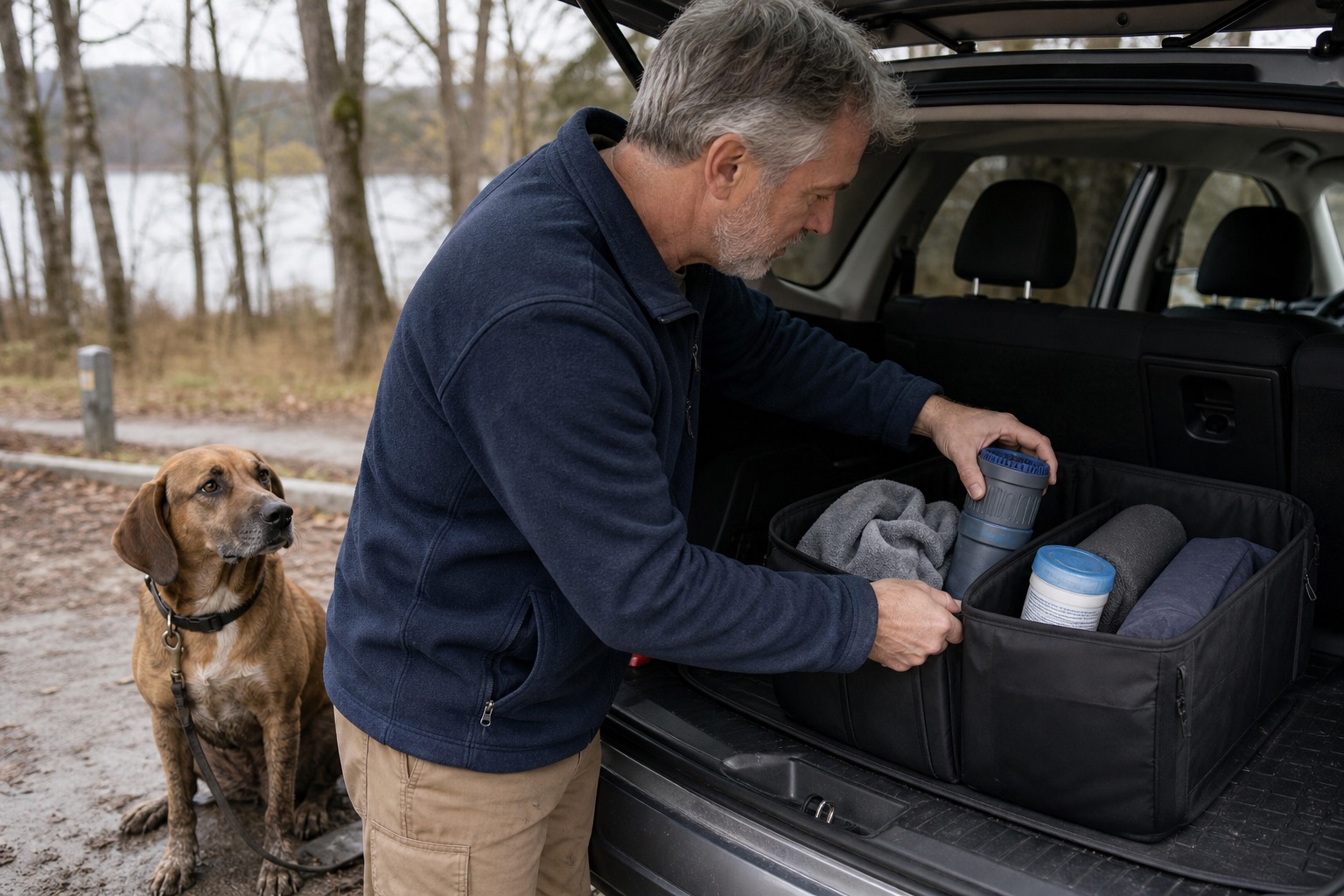
Also think about cleanup after cleanup. Some models are easy to rinse and air dry. Others trap grit inside the bristles or stay damp too long. That matters if you are heading straight to a hotel or packing gear into a tote after a rainy hike. This is one reason a paw washer works best as part of a system with a dog dirty gear bag for road trips and camping and at least one towel you do not mind getting filthy.
Best for Most Road Trips: A Medium Silicone Cup With Removable Bristles
For the average road-trip dog, the easiest format to live with is a medium-size silicone cup with soft internal bristles and a removable sleeve or insert for rinsing. This kind of washer usually gives the best balance between actual cleaning and packability.
It is a better fit for owners who stop often, walk the dog at rest areas, visit damp parks, or end the day at a hotel where they do not want muddy prints on the entry floor. It is usually compact enough to store near the door pocket, cargo organizer, or cleanup tote.
What to check before buying is how much twisting and water movement the cup really needs. Some dogs tolerate a gentle up-and-down motion better than a full spin. A cup with flexible bristles can be easier to use on a dog who is impatient or suspicious about paw handling.
Best for: medium dogs, ordinary road trips, wet grass, light mud, park stops, and motel check-ins.
Not ideal for: very large paws, deep clay mud, or dogs who hate having their feet guided into a narrow opening.
Compare medium dog paw washer cups on Amazon
Best for Small Dogs: A Narrower Cup You Can Control With One Hand
Small dogs do not always need less cleaning. They often just need a different shape of tool. A bulky cup designed for a large retriever can feel clumsy on a little dog, especially if the paw drops too deep into the container or the bristles do not make even contact.
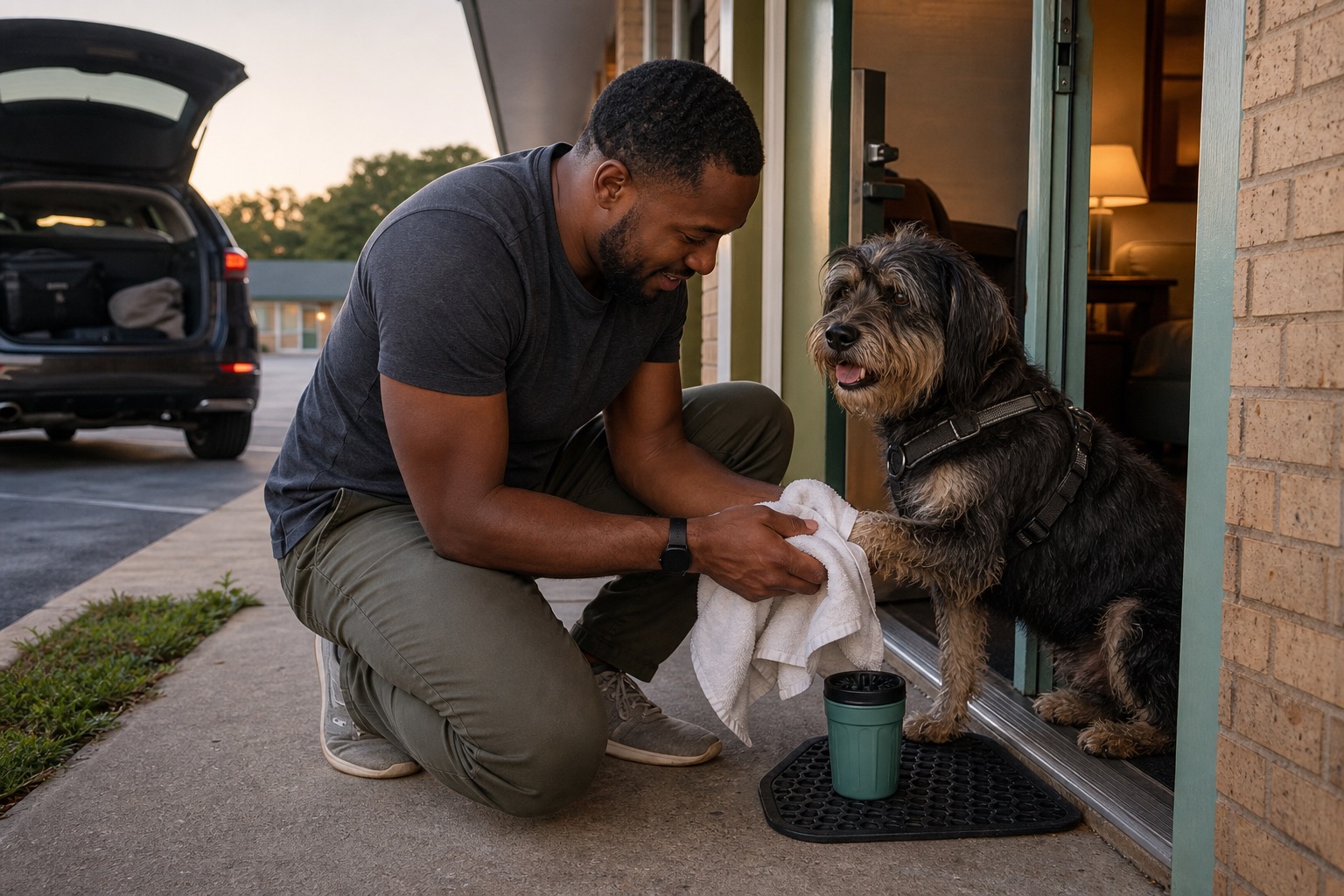
For a small dog, look for a narrower cup that feels stable in one hand and lets you support the leg gently with the other. The goal is not force. It is control. A smaller opening can actually make cleanup faster if it fits the paw correctly and keeps the dog from twisting away.
This matters on trips because small dogs are often picked up into the car, carrier, or hotel room more quickly. That means you notice dirty paws right at the transition point. If your dog rides in a small carrier secured in the car, cleaner paws also help keep bedding and carrier liners from getting filthy too soon.
Best for: toy and small dogs, short legs, quick parking-lot cleanups, and owners who want compact gear.
Not ideal for: broad paws, thick long leg fur, or homes that want one shared washer for both a tiny dog and a large dog.
Compare small dog paw cleaner cups on Amazon
Best for Muddy Campgrounds: A Wider Cup Plus a Real Drying Plan
Camping mud is different from wet sidewalk dirt. You may be dealing with packed grit, pine needles, red clay, dark soil, or damp sand that sticks between the pads. In that setting, the best option is usually a wider paw washer for easier entry plus a follow-up towel routine.
This is where buyers sometimes expect too much from the cup alone. A paw washer can loosen and remove a lot, but it does not replace drying. If you put a damp dog straight into the tent, onto a camp blanket, or onto a sleeping platform in the car, you still end up carrying the mess with you.
A camping setup works better when the washer lives with a squeeze bottle or refill bottle, one absorbent towel, and a mesh bag for the wet items. If your dog is large or heavily coated, plan for one pass to loosen the mud and a second pass with the towel around the paw and lower leg.
For rainy campsites, this paw-cleaning step belongs in the larger gear plan. Use the dog camping gear checklist to place the washer, towel, and dirty bag, and read the dog camping gear mistakes guide if cleanup keeps spreading into the tent or car.
This type of setup also pairs well with a more deliberate dog camping food and water station and a dog camping sleep setup because the cleaner your dog comes back to camp, the easier the rest of the gear stays to manage.
Best for: campgrounds, muddy trails, larger dogs, rainy weekends, and repeated in-and-out camp routines.
Not ideal for: ultralight packers, dry-weather trips, or owners who want a one-piece cleanup solution with no towel backup.
Compare large dog paw washers on Amazon
Best for Hotel Stops and Short Pull-Offs: A Washer That Packs Cleanly
Hotels create a different kind of mess pressure. You are usually tired, arriving late, and moving from parking lot to hallway quickly. In that situation, a paw washer is most useful if it packs cleanly after use.
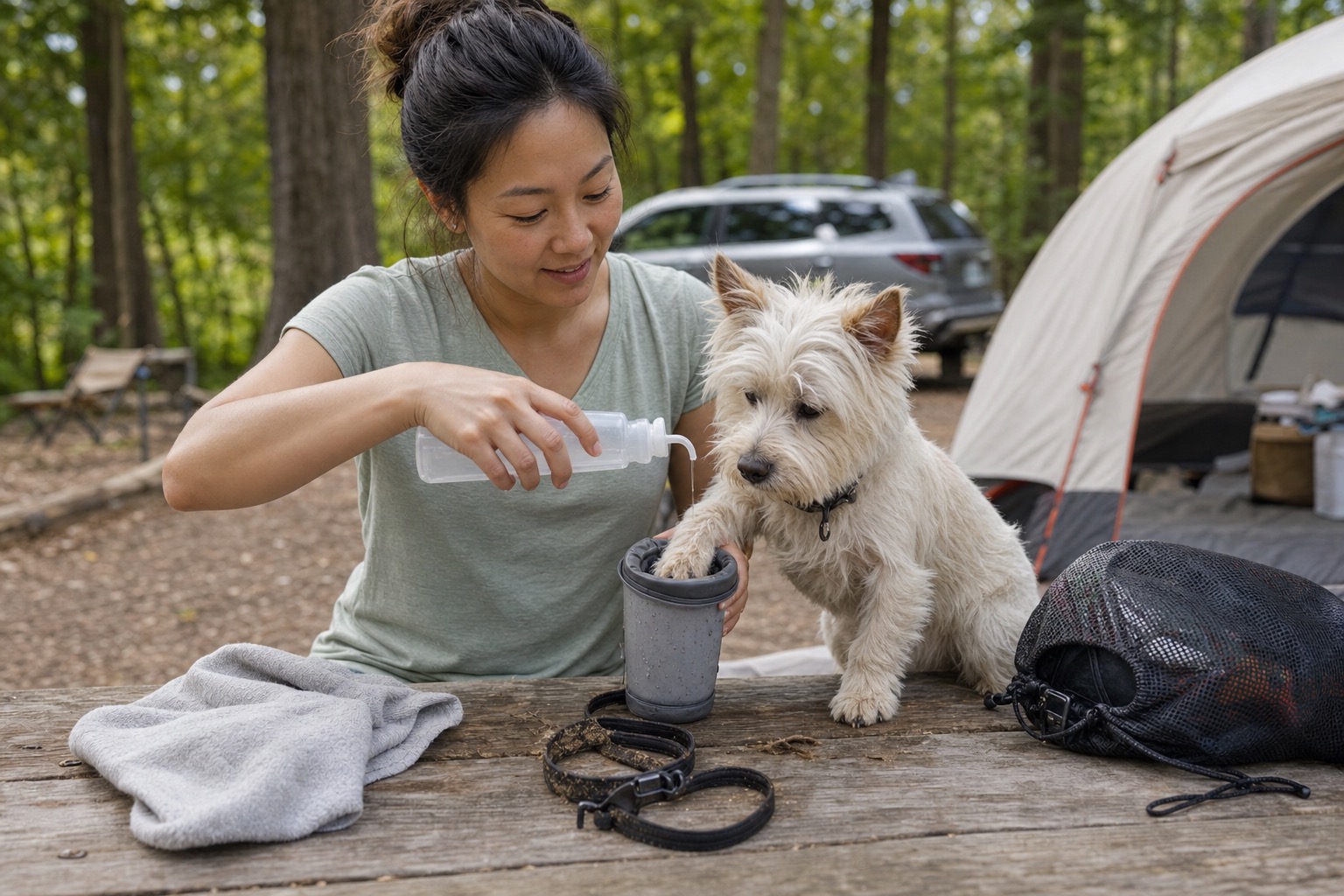
That means the best hotel-friendly choice is often not the biggest cup or the deepest-cleaning design. It is the one you can empty, wipe, and drop into a dirty-gear pouch without leaking through the rest of your bag. A travel towel matters just as much as the washer here. So does a small mat by the door if your dog tends to step down before you finish the cleanup.
If your dog travels with a lot of wet-weather gear, combine this with a dog hotel checklist for a cleaner stay rather than relying on the washer alone. It is usually the combination of paw cleaning, towel control, and where you set the gear down that keeps the room manageable.
When a Paw Washer Is Not Enough
Some dogs have long feathering, furry feet, or mud packed high above the paw. Some trips involve beach sand, sticky clay, or slush. In those situations, a paw washer helps, but it is not the whole answer.
You may need a towel to squeeze out moisture, a second rinse, or a quick wipe of the lower leg. If the dog is very messy, it can be smarter to pause at the hatch, finish the cleaning there, and then bring the dog inside. That is slower in the moment, but it usually saves time compared with cleaning the car or room afterward.
This is also where a paw washer overlaps with broader travel organization. If your dog routinely comes back dirty, it is worth building around the washer instead of treating it as a standalone gadget. A dog car organizer for road trips or cargo bin with a dedicated spot for the cup, towel, spare water, and dirty bag makes the routine easier to repeat.
Common Mistakes
One mistake is buying by “large” or “small” label alone. Dog paw shape matters as much as overall dog size. A lean medium dog with long narrow feet may fit a different cup better than a stocky dog of the same weight.
Another mistake is skipping the towel. A paw washer loosens and removes dirt, but wet paws still leave marks. For trips, the practical pairing is washer plus towel, not washer instead of towel. That is why articles like Best Dog Travel Towels for Road Trips and Camping belong in the same cleanup cluster.
A third mistake is storing the washer wet without a plan. If it goes back into a sealed bag or organizer dripping with dirty water, the smell and mess spread to everything else. Rinse it, shake it out, and store it where the rest of the gear can tolerate moisture.
Finally, some owners expect the dog to cooperate immediately in a new environment. If your dog dislikes paw handling, practice at home before the trip. A rushed first attempt in a dark campground parking area is usually the worst possible introduction.
A Better Road-Trip Paw Routine
The cleaner routine is usually simple:
- Stop the dog before they step onto the seat, carrier liner, or hotel floor.
- Clean the front paws first, then the rear paws.
- Dry each paw enough that it is not dripping.
- Put the wet washer and dirty towel into a separate bag or organizer section.
- Do a fast seat or floor check before driving off.
If you already use a dog rest stop routine on road trips, the paw washer should slot into that same sequence instead of becoming a separate production.
Related PawTripKit Guides
- Dog Road Trip Cleanup Kit: What to Pack Before You Leave
- Best Dog Travel Towels for Road Trips and Camping
- How to Pack a Dog Dirty Gear Bag for Road Trips and Camping
- Dog Hotel Checklist: What to Pack for a Cleaner Stay
- How to Set Up the Back Seat for a Dog Road Trip
Final Thoughts
The best dog paw washer for travel is the one that fits your dog’s paw, does not spill all over your gear, and works with the kind of cleanup you actually do on trips. For many people, that means a medium or large silicone cup, a towel that dries fast, and a separate place to stash the dirty gear afterward.
If your dog only gets a little dust now and then, you may not need one. But if muddy paws keep ending up on your seat cover, motel blanket, or camp bed, a good paw washer can earn its spot in the car.
FAQ
Do dog paw washers really work for muddy paws?
Yes, they can work well for ordinary mud, wet grass, and trail dirt, especially when the cup opening matches the paw size. They work best when followed with a towel, not as a complete replacement for drying.
What size paw washer should I buy?
Start with your dog’s paw width, not just body weight. A cup that is too tight makes your dog pull away. A cup that is too loose may not clean well because the bristles do not contact the paw evenly.
Are dog paw washers worth it for road trips?
They can be worth it if your dog gets in and out of the car often, walks through wet rest areas, or tracks mud into hotels and camp setups. They are less useful for dry-weather trips with very little dirt.
Can I use a paw washer without a towel?
You can, but it usually leaves the paw wet enough to transfer dirt or moisture somewhere else. For travel, a towel is part of the same system.
What if my dog hates having paws handled?
Practice at home before the trip with calm, short sessions. A dog who already tolerates paw handling will usually accept the washer more easily in a parking lot, campground, or hotel stop.