
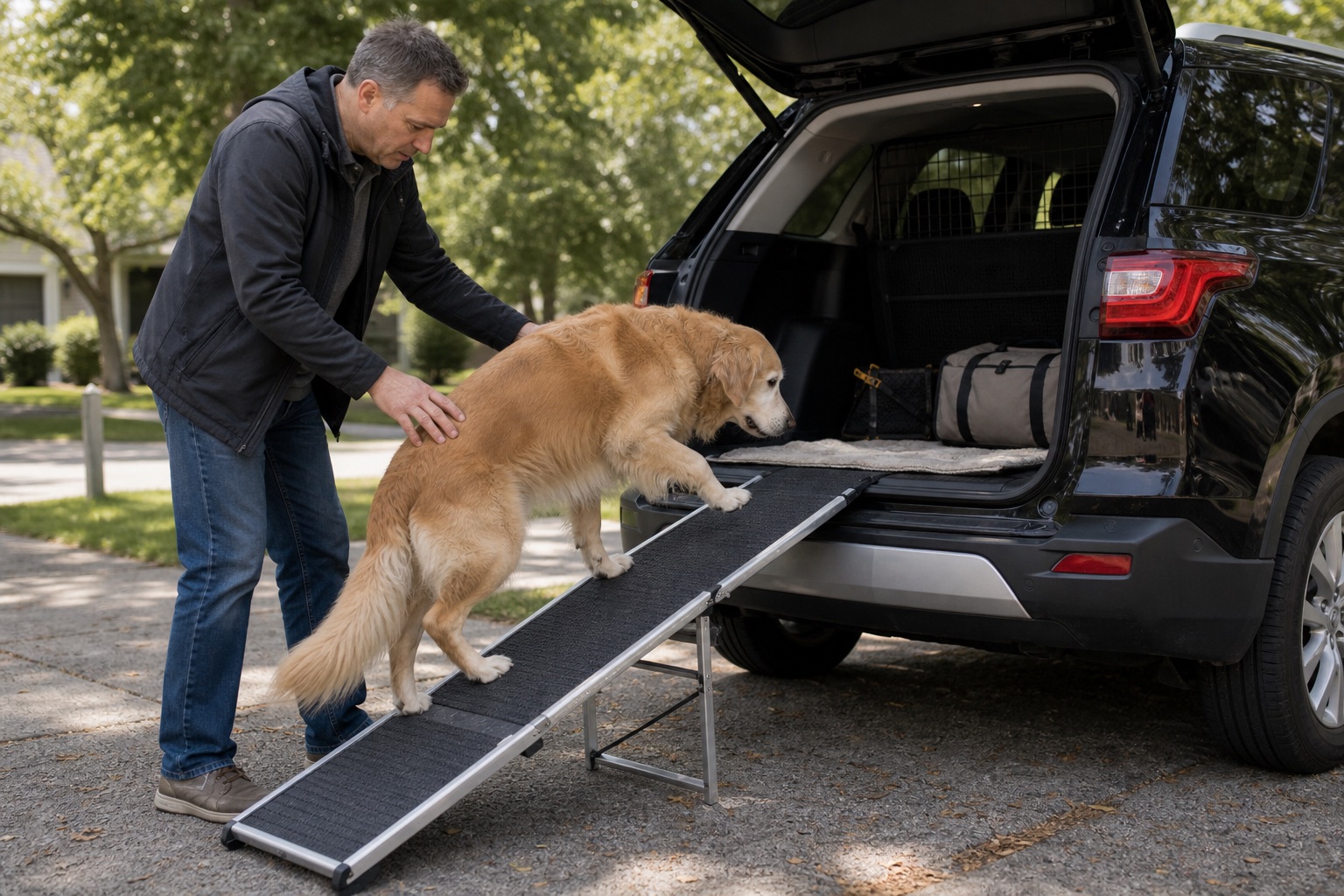
Best Dog Ramps for Cars and SUVs
The best dog ramp for a car or SUV is the one your dog will actually use calmly, at the height your vehicle requires, without slipping or making storage impossible. For a low sedan, a shorter folding ramp may be enough. For a tall SUV, pickup, or cargo area, you need more length, better traction, and a setup that does not feel too steep.
This guide is meant for ordinary dog owners comparing ramp styles for road trips, daily errands, senior dogs, large dogs, and dogs who should not jump in and out of a vehicle repeatedly. It is based on common ramp features and travel use cases, not hands-on testing of every ramp on the market.
Short Answer
For most cars and SUVs, start with a ramp that is long enough for your vehicle height, has a non-slip walking surface, folds or telescopes into a size you can store, and feels stable under your dog’s weight. A ramp is usually a better choice than steps for senior dogs, dogs with short legs, large breeds, or dogs that hesitate to climb.
If you are comparing general options, you can compare dog ramps for cars and SUVs on Amazon.
Why a Dog Ramp Can Be Worth It
Jumping in and out of a vehicle looks normal until it becomes a problem. A young, athletic dog may handle it for years. A senior dog, a short-legged dog, a nervous dog, or a heavy dog can struggle with the same height, especially after a long drive when legs are stiff.
A ramp gives the dog a more controlled way to enter the car. It can also make the routine easier for the owner. Instead of lifting a muddy 65-pound dog into the cargo area or coaxing a small dog to leap from the back seat, you create one repeatable path.
That does not mean every dog needs a ramp. Some dogs are fine with a low back seat and a good harness setup. But if your dog hesitates, lands hard, refuses the cargo area, or needs help after rest stops, a ramp is worth considering.
Related: How to Keep Your Dog Safe in the Car.
What to Check Before You Buy
The first detail is vehicle height. A ramp that works for a low hatchback may feel too steep for a tall SUV. Longer ramps create a gentler angle, but they also take more storage space. Measure from the ground to the place where your dog will enter: rear cargo floor, back seat, or side door.
The second detail is traction. Smooth plastic can be scary for dogs, especially when paws are wet. Look for a walking surface that gives the dog grip without being rough enough to bother paws. Raised side rails can also help some dogs feel more guided, though they do not replace training or supervision.
The third detail is storage. A ramp you hate packing will stay in the garage. Think about where it will live: cargo floor, back seat, under luggage, or garage between trips. Folding ramps are often simpler. Telescoping ramps can be more compact in length, but they may feel heavier or more awkward depending on the design.
Finally, think about your dog. A ramp for a calm 18-pound dog is a different decision from a ramp for a large senior dog who shifts weight slowly. Check weight guidance, walking width, surface feel, and how much confidence your dog needs.
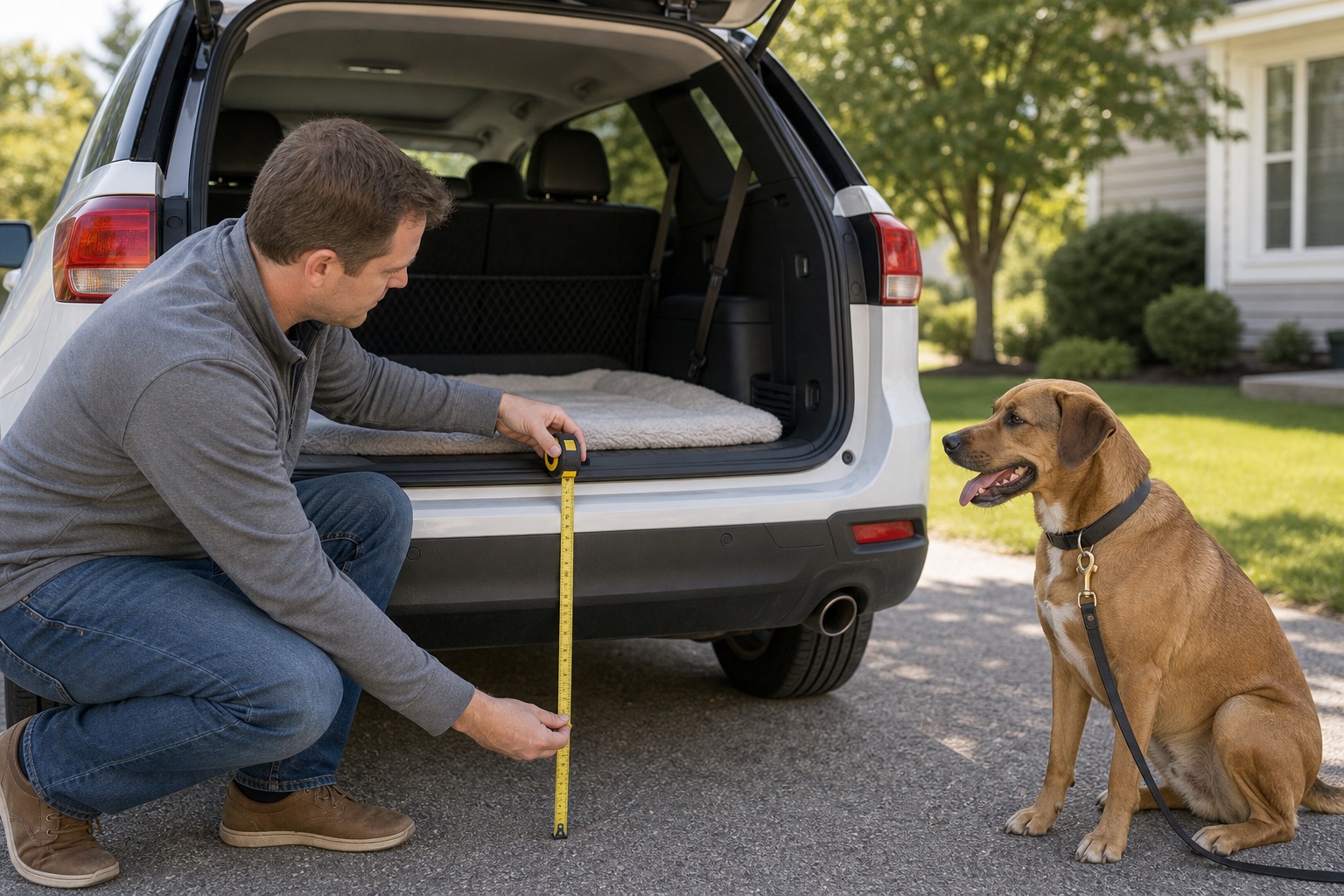
Best for Most SUV Owners: A Longer Folding Ramp
For many SUV owners, a longer folding ramp is the safest place to start. The extra length helps reduce the angle from the ground to the cargo area, which matters if your dog is older, heavier, or cautious.
This type of ramp is usually a better fit for the rear hatch than for a side door. It gives the dog a straight path into the cargo area and can be paired with a cargo liner, blanket, or crate setup once the dog is inside.
Best for: medium and large dogs, senior dogs, SUV cargo areas, and owners who want one practical ramp for most travel days.
Not ideal for: very tight cargo storage, small sedans, or dogs who only enter through a rear passenger door.
Compare folding dog ramps for SUVs on Amazon
Best for Small Cars: A Shorter Lightweight Ramp
If your dog enters a low hatchback, wagon, or sedan back seat, a large SUV ramp may be more ramp than you need. A shorter lightweight ramp can be easier to lift, faster to set up, and less annoying to store.
The trade-off is angle. A short ramp on a tall vehicle becomes too steep quickly. Before buying a compact ramp, measure the actual entry height. Do not rely on “fits most cars” language alone.
This style can be useful for smaller dogs that are capable of walking steadily but should not be jumping repeatedly. It is also easier for owners who want something they can pull out at rest stops without rearranging the whole trunk.
Best for: lower vehicles, small and medium dogs, short errands, and owners who care most about easy handling.
Not ideal for: tall SUVs, large dogs who need a wide walking surface, or dogs who are nervous on steeper angles.
Best for Senior Dogs: A Wide Ramp With Strong Traction
Senior dogs often need more than a ramp that technically reaches the car. They need a surface that feels secure. A wider walking area, visible edges, and reliable traction can make the difference between a dog using the ramp and refusing it.
If your senior dog is already stiff, weak, or recovering from an injury, ask your vet what kind of movement is appropriate before changing the car routine. A ramp can reduce jumping, but it still requires balance, walking control, and confidence.
For older dogs, training matters. Put the ramp flat on the ground first. Let the dog sniff it, walk across it, and get rewarded before you ask for the full vehicle angle. Trying to force the first attempt at the back of a tall SUV is a good way to make the ramp scary.
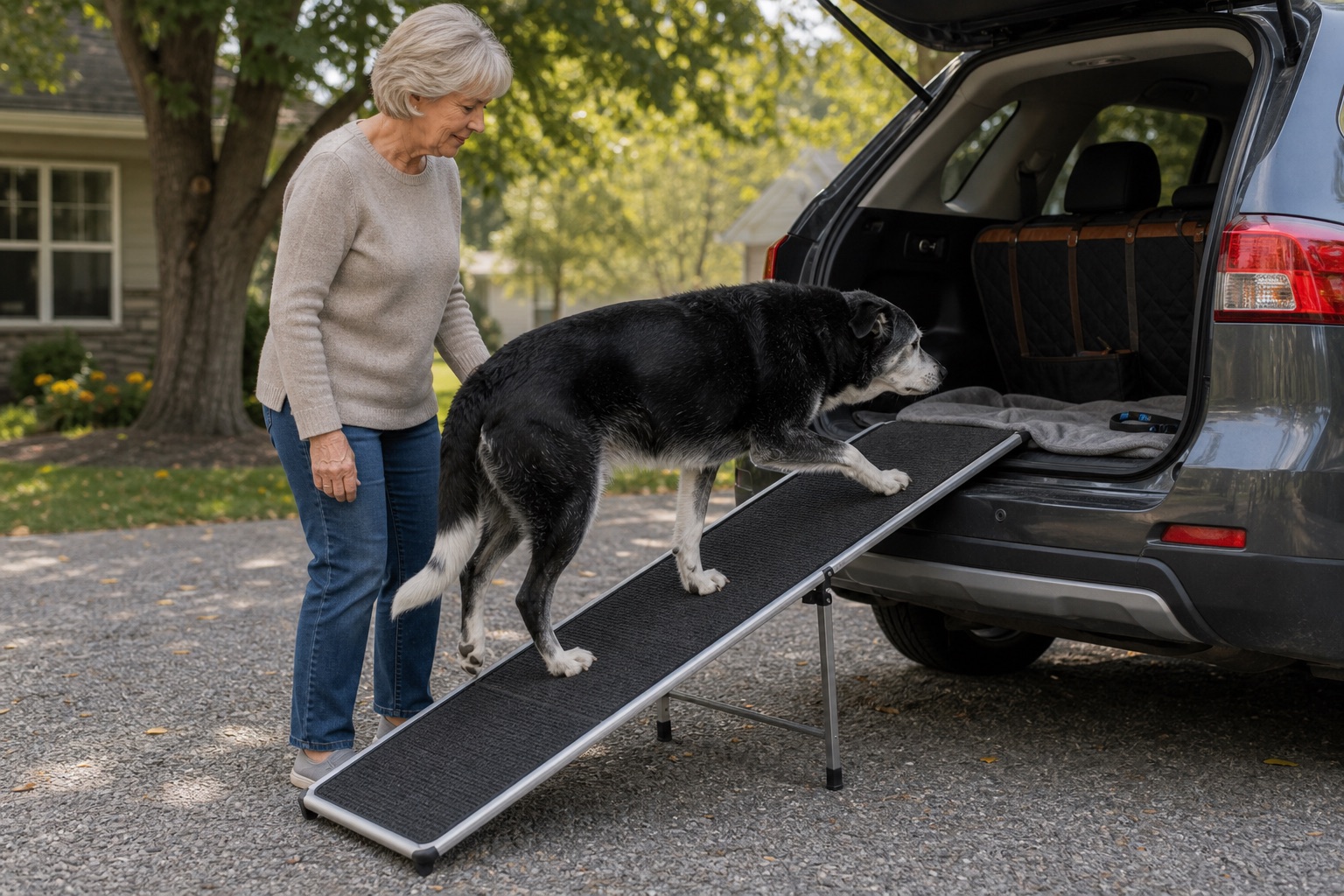
Best for: older dogs, dogs with careful footing, and owners who want a gentler car-entry routine.
Not ideal for: dogs who cannot safely walk the ramp without support or dogs who need veterinary guidance before using one.
Ramp vs Steps: Which Is Better for Car Travel?
Ramps and steps solve different problems. Steps can be compact and familiar to dogs who already use stairs at home. They can work for small dogs entering a low back seat or for dogs that understand the motion.
Ramps are usually better when the goal is to reduce jumping and avoid repeated stair-like movement. They are often easier for large dogs, senior dogs, and dogs with short legs because the dog walks up a single slope instead of lifting each leg onto separate steps.
The downside is space. A ramp needs room behind the car. At a busy rest stop or tight parking lot, steps may be easier to place. The right answer depends on your vehicle, your dog’s body, and where you usually load and unload.
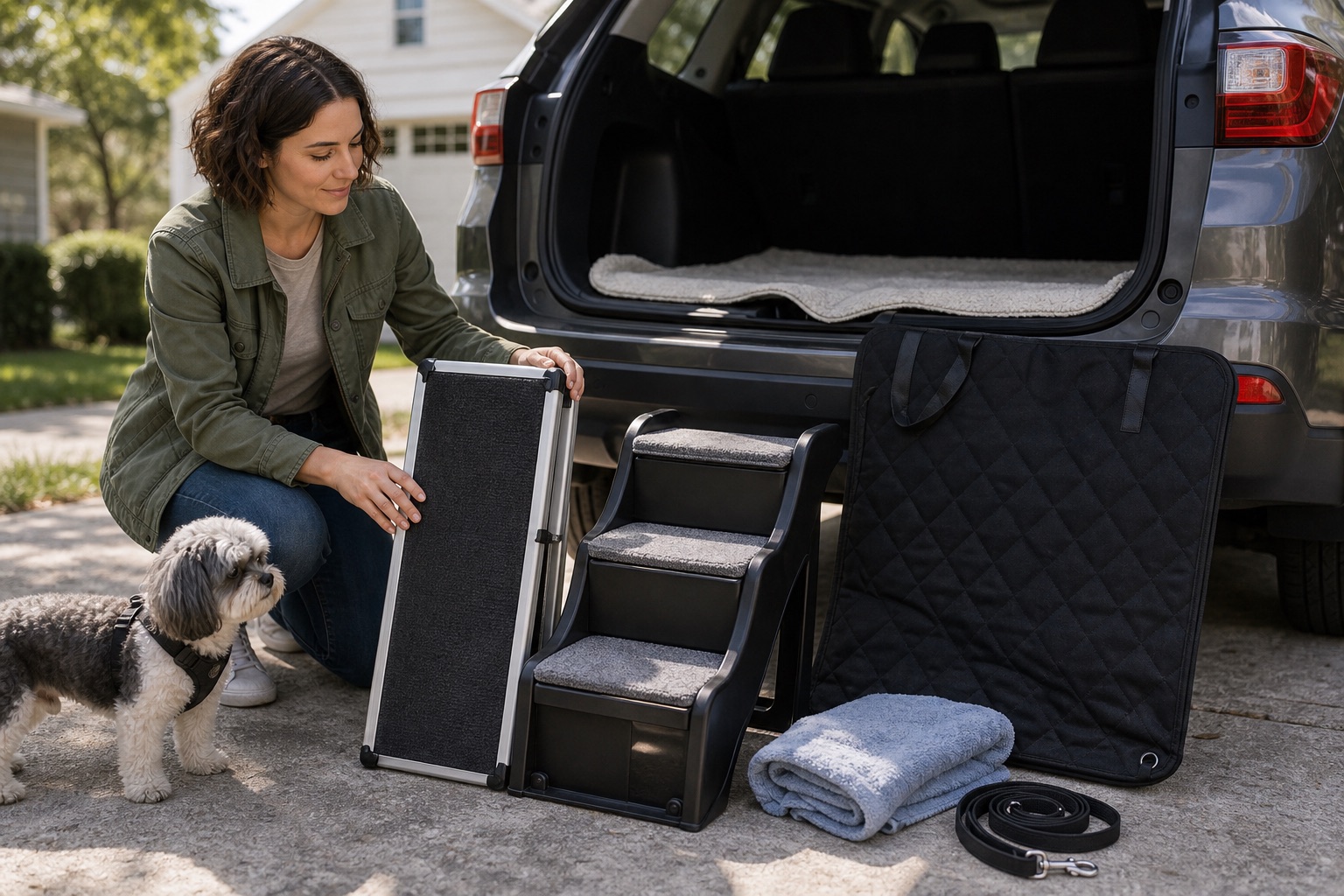
If your dog rides in the back seat instead of the cargo area, also read How to Set Up the Back Seat for a Dog Road Trip.
What Makes a Ramp Easier to Use on Road Trips
Road trips expose small design problems. A ramp that is fine in the driveway may be awkward when the ground is wet, the parking lot is uneven, or luggage is blocking the cargo area.
Look for details that make setup predictable:
- a latch or lock that keeps the ramp closed when stored
- a handle or shape that is easy to carry
- a walking surface that still grips when paws are damp
- rubber feet or contact points that do not slide against the vehicle
- enough width for your dog to turn confidence into actual steps
- a folded size that fits with your regular travel gear
Also think about where the dog goes after using the ramp. If the ramp leads into a messy cargo area with bags, bowls, and loose gear, the dog may still hesitate. Keep the entry path clear before asking the dog to climb.
Related: Dog Road Trip Cleanup Kit and Dog Travel Essentials Checklist.
Training Your Dog to Use the Ramp
Do not save ramp training for the morning of a trip. A dog that has never seen the ramp before may not understand it, even if the ramp is well made.
Start with the ramp flat on the ground. Let your dog walk over it for treats or praise. Then raise it slightly, using a low step or stable surface. Only move to the car once your dog is comfortable with the surface and the motion.
Keep the first vehicle sessions short. Use a leash for guidance, not pulling. Stand beside the ramp if your dog needs reassurance, and avoid crowding the dog from behind. Some dogs need several sessions before the ramp feels normal.
If the dog refuses, check the angle, surface, and noise. A ramp that shifts, flexes, or rattles can make a cautious dog back away.
Common Mistakes
One mistake is buying the shortest ramp because it is easier to store. Shorter ramps can work, but only if the vehicle height is low enough. If the angle is too steep, the dog may slip, rush, or refuse.
Another mistake is ignoring width. A large dog may technically fit on a narrow ramp, but that does not mean the dog will feel steady. Wider ramps can be easier for big dogs and cautious dogs.
A third mistake is assuming the ramp solves the whole car setup. The ramp helps the dog get in and out. It does not restrain the dog during the drive, protect the seat, or keep gear organized. You still need a safe riding setup once the dog is inside.
For the rest of the ride, see Best Dog Car Seat Covers With Seat Belt Access and Dog Car Hammock vs Bench Seat Cover.
Final Thoughts
The best dog ramp for a car or SUV is not just the strongest one or the longest one. It is the ramp that fits your vehicle height, gives your dog enough grip and width, and stores in a way you can live with.
For tall SUVs and larger dogs, start with a longer folding ramp. For lower cars and smaller dogs, a lighter ramp may be enough. For senior dogs, prioritize traction, width, and a slow training routine. A ramp only helps if your dog trusts it and you can use it consistently.
FAQ
Are dog ramps better than dog stairs for cars?
For many senior dogs, large dogs, and short-legged dogs, a ramp is often easier than steps because it creates one continuous path. Steps may be more compact, but they still require the dog to climb.
How long should a dog ramp be for an SUV?
It depends on the height of your SUV’s cargo floor. Taller vehicles need longer ramps to reduce the angle. Measure from the ground to the entry point before choosing.
Can small dogs use car ramps?
Yes. Small dogs can use ramps, especially if they hesitate to jump or ride often. Just make sure the ramp is not too steep and the walking surface feels secure.
Do I need a ramp if I can lift my dog?
Not always. But lifting becomes harder with large dogs, muddy dogs, or frequent stops. A ramp can make the routine more consistent, especially on road trips.
How do I get my dog to use a ramp?
Start with the ramp flat on the ground, reward calm walking, then gradually raise the angle. Avoid forcing the first attempt at full vehicle height.