
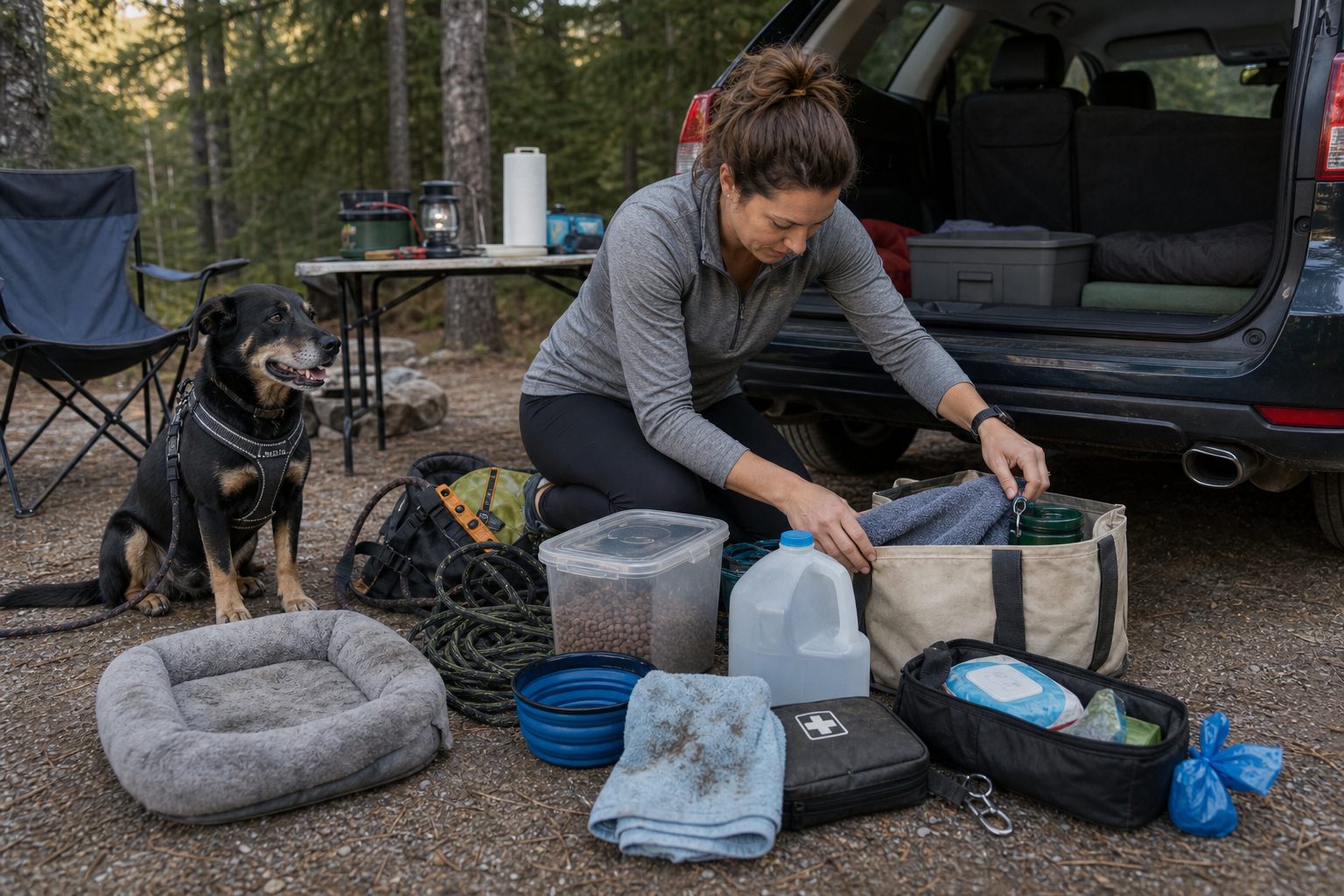
Most dog camping problems do not come from forgetting one fancy piece of gear. They come from small setup mistakes: the leash is buried, the dog bed is in the wrong spot, the towel is already wet, the food bag is open, or the flashlight is in the car when you need it at the tent.
That is good news. You can fix most of these problems without buying a huge pile of new gear.
This article is for car camping, campground weekends, lake trips, state park sites, and forest campsites where your vehicle is nearby. It is not a backpacking list. If you want the full packing framework first, start with the dog camping gear checklist. This page is the more blunt version: what tends to go wrong, and how to make it easier next time.
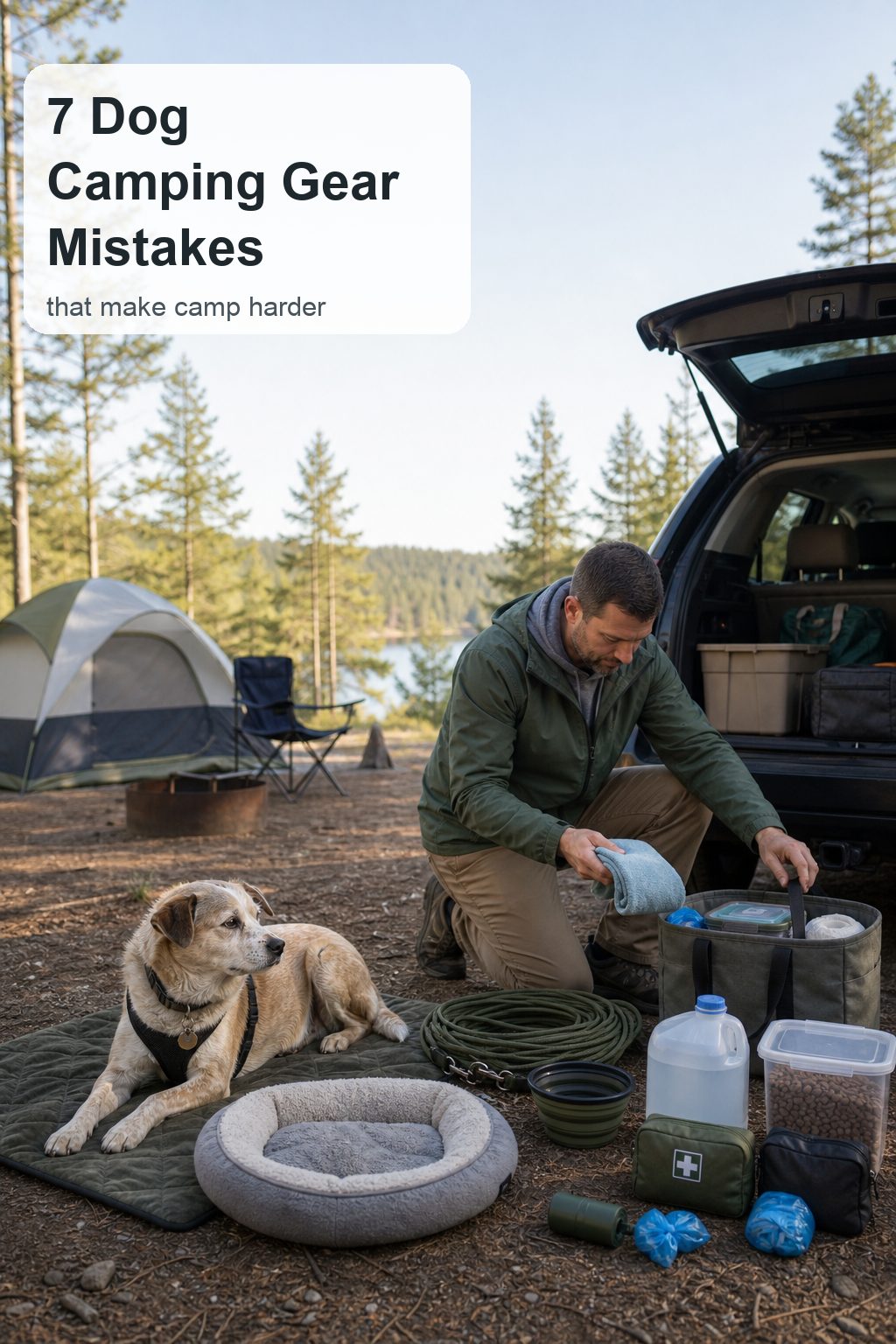
Mistake 1: Packing Dog Gear as One Big Bag
One giant dog bag feels efficient at home. At camp, it usually becomes a small excavation project.
The leash is under the food container. The towel is wrapped around a bowl. The waste bags are somewhere near the bottom. The long line comes out tangled with the blanket. By the time you find what you need, your dog has already stepped into mud, pulled toward another campsite, or knocked the water bowl over.
The fix is to pack by use, not by category.
Keep arrival gear near the door or tailgate: leash, waste bags, water, towel, and long line if you use one. Keep food gear together: sealed food, bowls, scoop, mat, and cleaning cloth. Keep sleep gear separate: bed, blanket, crate pad, or tent mat. Keep dirty gear separate from all of it.
That small separation changes the whole campsite. You are not digging through clean bedding to find waste bags. You are not putting a muddy leash back on top of the food container. You are not trying to find a towel after the dog is already wet.
If you like a zone-based packing system, use the broader dog camping gear checklist as your main reference. For this mistake, the simple rule is enough: if you use it at a different moment, it probably deserves a different pocket, pouch, or tote.
Mistake 2: Treating the Leash Setup Like an Afterthought
At home, a leash is just a leash. At camp, it is the thing that keeps your dog from walking into another site, crossing a campground road, rushing toward kids on bikes, or tangling around the picnic table while you cook.
The mistake is packing one leash and assuming you will figure it out when you arrive.
A better setup has layers:
- a normal leash for arrival, walks, and tight spaces
- a backup leash in case one gets wet, dirty, or lost
- a long line or tie-out only if the campground allows it and your dog can use it calmly
- a harness or collar with readable ID
- a light or reflective item for night walks
A long line can be useful, but it is not magic. It can wrap around chairs, table legs, tent stakes, and other people. It can also give a reactive dog too much room to build speed before hitting the end of the line. Use it only when you are watching.
Do not leave a dog tied out unattended unless the campground rules allow it and your dog is truly calm with that setup. Even then, think carefully. Dogs can tangle, chew lines, pull stakes loose, or panic at passing dogs and unfamiliar sounds.
For dogs with escape history, add a backup layer. A GPS tracker does not replace a leash, but it can help if the normal routine fails. Our GPS tracker vs AirTag camping guide explains the difference, and the GPS tracker battery checklist covers the charging routine that people often forget.
Mistake 3: Putting Food and Water Wherever There Is Space
The dog food station should not be improvised every meal.
The common mistake is putting bowls at the tent entrance, leaving an open food pouch on the picnic table, or letting the water bowl sit where everyone steps over it. It works for five minutes. Then someone kicks the bowl, the dog tracks food into the tent, or the open bag attracts attention you did not want.
Choose one boring place for food and water.
Use a washable mat or towel under the bowls. Keep the food sealed until you serve it. Put the main food container away after meals. Keep the water bowl somewhere the dog can reach without blocking the tent door, fire ring, or walkway.
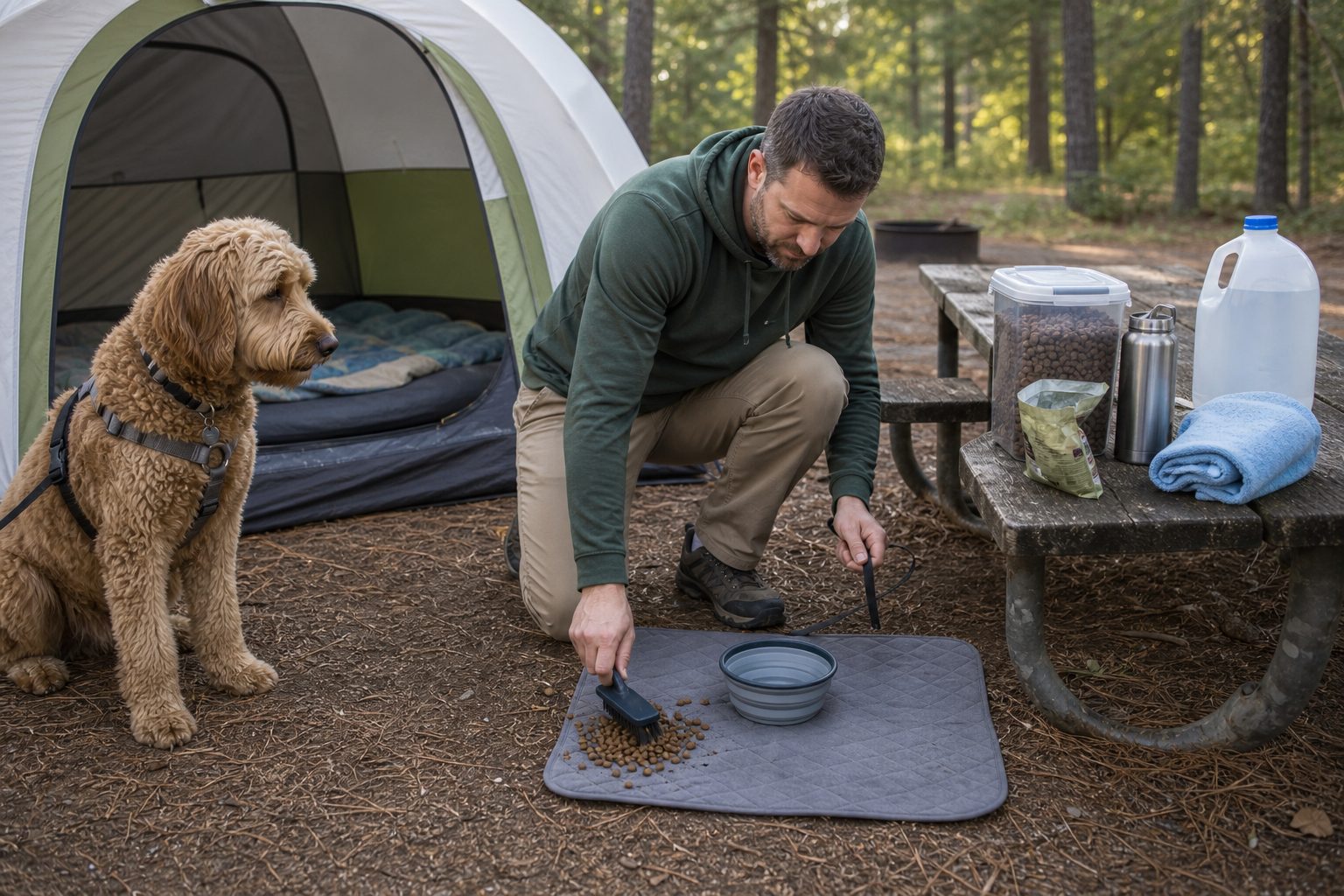
For longer trips, a sealed dog food storage container for road trips is easier to manage than a floppy bag of kibble. If you are still deciding what bowl setup makes sense, compare a dog travel water bottle vs collapsible bowl before buying more than you need.
The campsite food routine should be simple:
Serve food. Let the dog eat. Pick up the bowl. Close the food. Wipe or rinse what needs it. Put dirty towels and cloths somewhere separate.
That sounds basic because it is. Basic is what still works after dark, in light rain, or when everyone is tired.
Mistake 4: Forgetting That Shade Moves
Shade is not a thing you set once in the morning and trust all day.
The dog bed that was comfortable at breakfast can be in direct sun by lunch. The tent that looked cool at 9 a.m. can feel stuffy by afternoon. The water bowl can warm up. The dog can choose a bad spot because it is near you, not because it is comfortable.
The mistake is treating shade as a campsite feature instead of a routine.
Check the dog’s resting place during the day. Move the bed or mat if the sun shifts. Keep water reachable. Avoid asking your dog to settle on hot ground, gravel, or a tent floor that has been heating in the sun.
Shade gear can help, but do not overtrust it. A canopy, shade cloth, car hatch, or tree cover still needs airflow and supervision. A cooling mat may help some dogs, but only if your dog uses it comfortably and it stays in a practical place.
Avoid medical claims here. If your dog has heat sensitivity, breathing issues, age-related weakness, or a health history that makes warm weather risky, talk to your vet before planning hot-weather camping. Gear is not a substitute for choosing the right weather, activity level, and schedule.
Mistake 5: Bringing a Bed but Not a Sleep Plan
A dog bed is not the same as a sleep setup.
The bed might be too thin for cold ground. It might get damp before night. It might be placed where everyone steps over the dog. It might be too close to the fire ring, food table, or tent door. Or your dog might ignore it because camp is too stimulating.
The better question is: where will your dog settle when everyone is done moving around?
For some dogs, that means a washable bed inside the tent. For others, it is a crate pad in a crate, a mat under a shelter, or a familiar blanket next to your sleeping area. The spot should be dry, predictable, and away from the busiest path through the site.
Senior dogs may need more padding and insulation than they need at home. Small dogs may get cold faster on the ground. Muddy dogs need a towel before they go near the bed. Dogs who guard food or react to passing dogs should not be placed in the middle of campsite traffic.
If your dog already uses a pad in the car or crate, that can sometimes become the camp bed too. Just keep it dry. A wet bed is not comfort gear anymore; it is tomorrow’s cleanup problem.
Mistake 6: Letting Dirty Gear Mix Back Into Clean Gear
This is the quiet mistake that ruins the ride home.
The towel is wet. The leash is muddy. The bowl is gritty. The dog bed has pine needles on it. Used wipes are in a bag, but that bag is sitting next to clean bowls. Everything gets tossed into the same tote because you are tired.
By morning, the clean gear smells like damp towel and dog food.
Pack a dirty-gear system before you need it. It can be simple:
- one larger trash bag or washable wet bag
- one spare towel
- one small pouch for used wipes or small trash
- one place in the car where dirty items go
This is not about being fussy. It is about keeping clean food, bowls, bedding, and leashes from turning into one damp mess.
The car side of this matters too. If your dog rides home beside dirty towels, wet blankets, and loose food containers, the car becomes harder to clean. Our dog road trip cleanup kit is a good companion piece for this part, especially if camping is part of a longer road trip.
For dogs who swim, hike in rain, or sleep in the tent, bring two towels. One towel gets used faster than you think.
Mistake 7: Waiting Until Dark to Figure Out the Night Routine
Night makes every campsite problem more annoying.
You cannot find the waste bags. The leash is in the car. The dog’s light is dead. The water bowl is by the picnic table. The towel is already wet. The dog hears something and stands up before you have your shoes on.
Fix the night routine before sunset.
Put waste bags near the tent door. Hang or place the leash in the same spot every time. Keep a small light with the leash. Move food away and close containers. Put the dog’s bed where the dog will actually sleep. Keep one towel near the entrance.
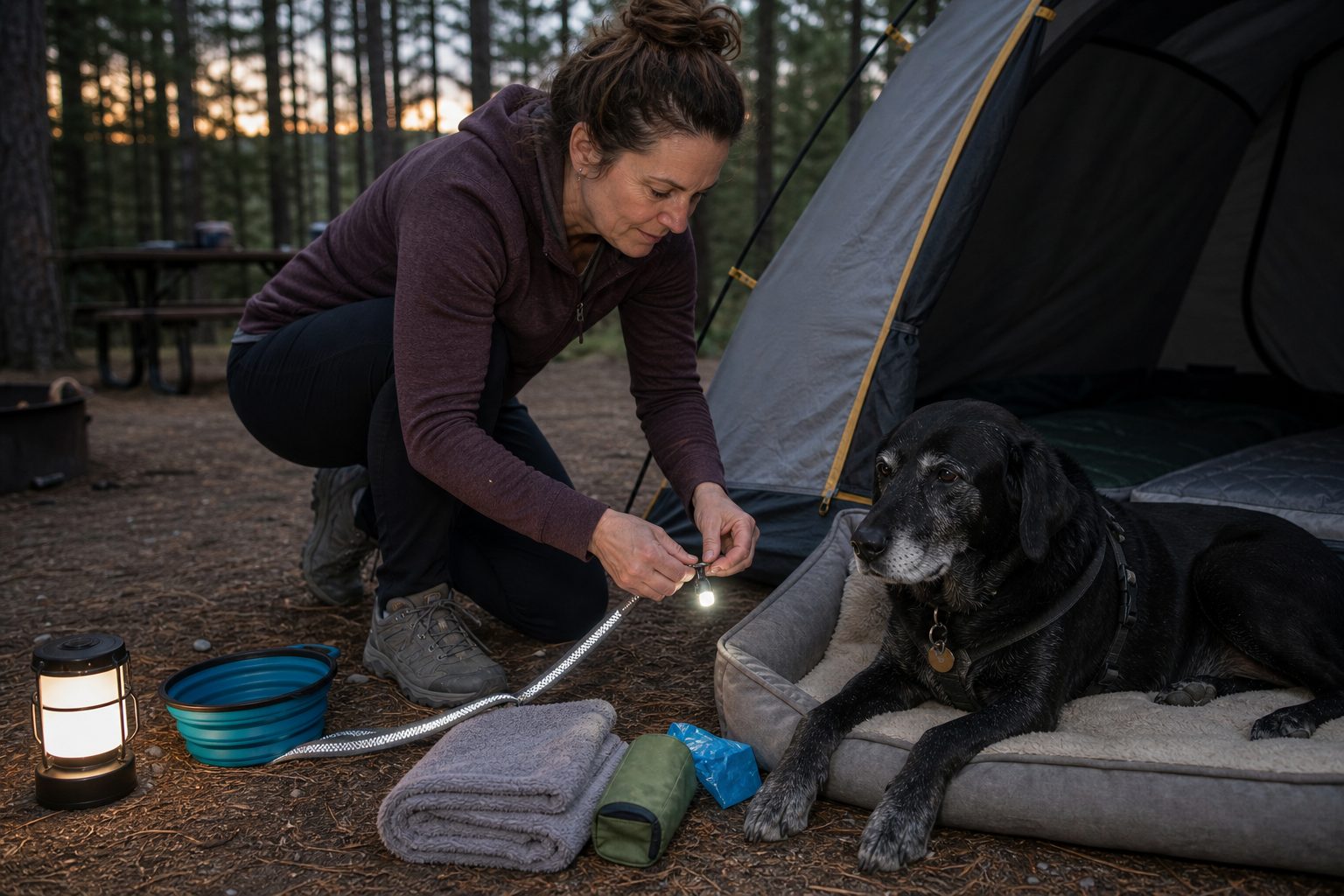
If your dog wears a GPS tracker, check the battery before evening, not after a scare. Dogs are harder to find in low light, and a tracker with a low battery is a bad surprise. If you use a tracker only on trips, test the app and charging routine at home first.
Night also changes behavior. A dog who was calm during the day may react to late arrivals, car doors, campground voices, or movement near the tent. Keep the setup boring: short leash, known bed, water nearby, and fewer loose items around the dog.
A Quick Fix List Before Your Next Trip
Before you buy anything new, fix the layout.
Separate dog gear into four groups: arrival, food and water, sleep, and dirty gear. Put the leash where you can reach it before unloading. Keep food sealed. Bring two towels if the trip involves water, rain, or tent sleeping. Decide where the dog will sleep before dark. Check tracker battery and ID before leaving home.
Then see what still feels hard.
If the dog has nowhere comfortable to rest, upgrade the bed or mat. If food is always messy, improve the food container or bowl setup. If cleanup is the problem, add towels, wipes, or a better dirty-gear bag. If your dog is hard to manage around camp, focus on leash setup and routine before adding more accessories.
Good camping gear does not make the campsite feel loaded. It makes the site easier to run.