
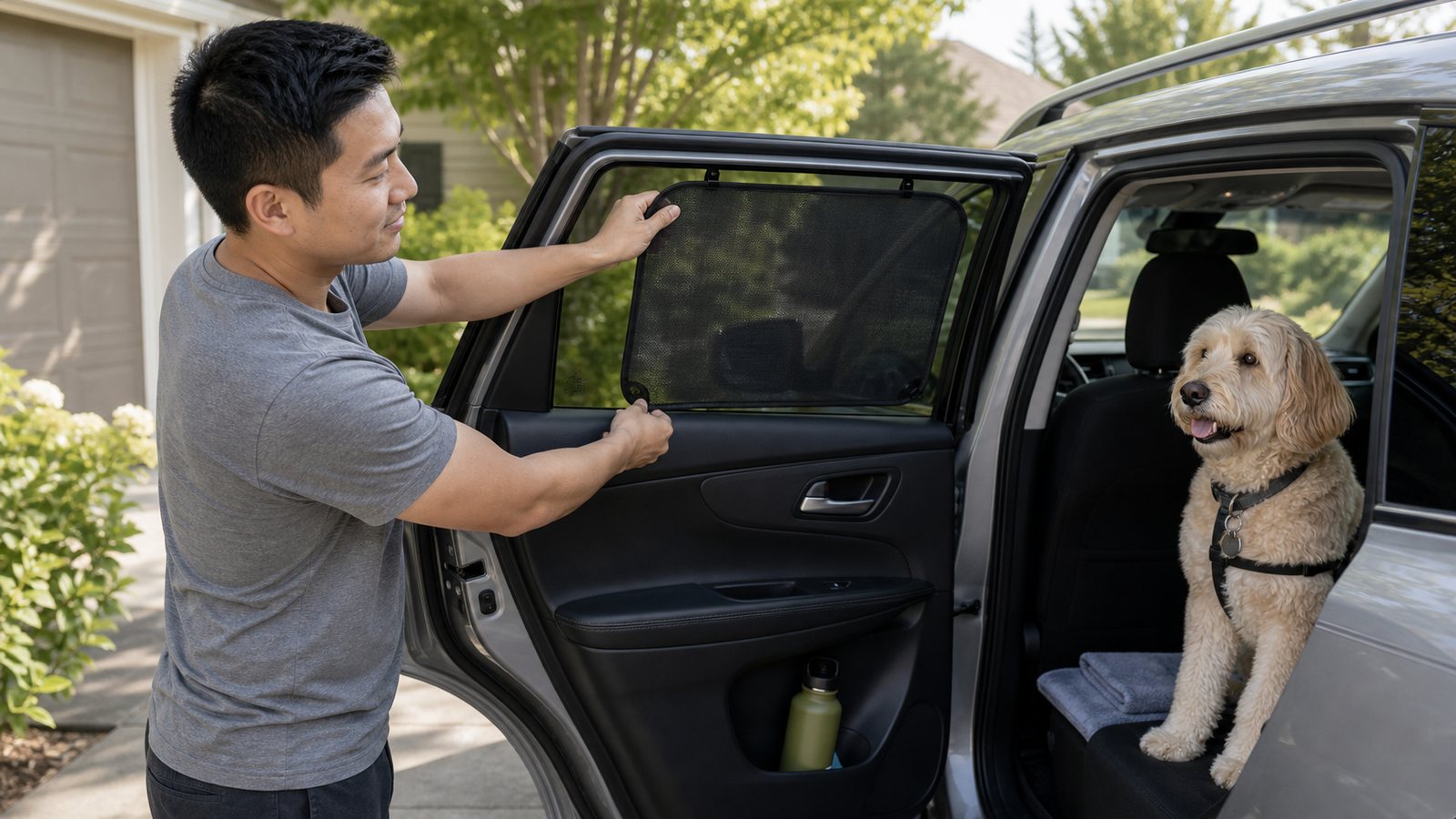
Dog Car Window Shades for Road Trips
Dog car window shades can make the back seat more comfortable on sunny road trips. They reduce direct sun, soften glare, and give your dog a little more shade when the car is moving or when you are parked with doors open during a supervised break.
They are not a heat-safety solution by themselves. A window shade does not make a parked car safe for a dog, and it does not replace air conditioning, water, shade, short breaks, or common sense. Think of it as a comfort accessory, not permission to leave your dog in the car.
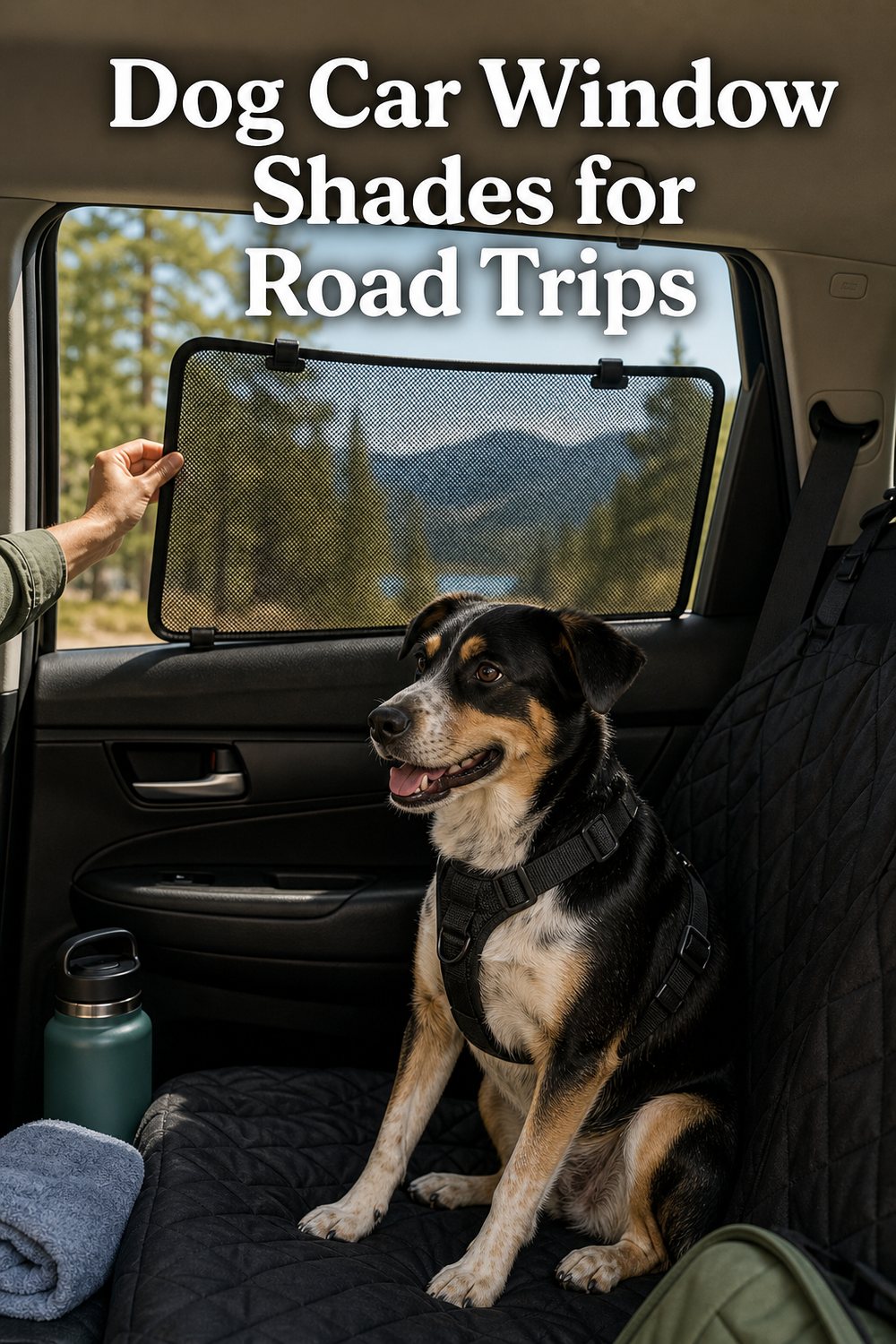
This guide is for dog owners who drive with a dog in the back seat, use seat covers or carriers, take summer road trips, or want to cut down harsh side-window sun without making the car harder to use.
Compare dog car window shades on Amazon
Quick Answer
For most dog road trips, the best car window shade is a stretch-fit mesh shade or a sturdy cling shade that covers the rear side window without blocking the driver’s view, interfering with the door, or getting pulled down by the dog.
Stretch-fit mesh shades are usually better for broad coverage and easy road-trip use. Static cling shades are smaller and simpler, but they may leave gaps or fall off more easily. Roller shades can work in some cars, but suction cups and dangling cords are not ideal around curious dogs.
If your dog rides in a carrier, crate, or secured back-seat area, focus on where the sun actually hits during the drive. You may need one shade on the sunny side, not a full set of accessories.
What Window Shades Actually Help With
A window shade helps with direct sun and glare. That can matter for dogs who ride near the side window, dogs with dark coats, senior dogs who settle better in a softer back-seat environment, or dogs who get restless when bright light hits their face.
It can also help protect the back seat from heating unevenly during the drive. A shaded seat cover or carrier side may feel more comfortable than one sitting in direct sunlight for hours.
But a shade does not lower the whole car to a safe temperature on its own. If the car is parked and the air inside is hot, the dog is still at risk. Use window shades with responsible travel habits, not instead of them.
Main Types of Car Window Shades
Stretch-fit mesh shades slip over the upper part of the rear door like a sleeve. They often cover more of the window and may still allow the window to roll down partway, depending on the car and shade design. They are useful for road trips because they are simple and give broad coverage.
Static cling shades press onto the glass. They are easy to move and store, but they may cover less area. They are better if you want a low-commitment option for occasional drives, rental cars, or one sunny window.
Roller shades attach with suction cups or clips and pull down like a small blind. They can work, but they may rattle, fall off, or tempt dogs who paw at dangling edges. If your dog is curious or rides close to the window, check this carefully before buying.
Best for Most Road Trips: Stretch-Fit Mesh Shades
Stretch-fit mesh shades are usually the most practical for dog travel because they cover the entire rear side window area better than small cling panels. They also pack flat and do not usually require adhesive.
The main thing to check is door shape. Not every rear door is the same. Some sedans, compact SUVs, and crossovers have curved frames, small rear quarter windows, or trim pieces that make a universal shade fit awkwardly. Measure your rear door and compare it with the product’s listed fit range.
Also check whether the shade interferes with closing the door. A shade that bunches at the frame, catches weather stripping, or flaps at highway speed is not worth it.
Best for: regular road trips, dogs who ride on the rear bench, wide back-seat sun exposure, and owners who want broad coverage.
Not ideal for: unusual door shapes, cars where the shade affects door sealing, or dogs who chew fabric near the window.
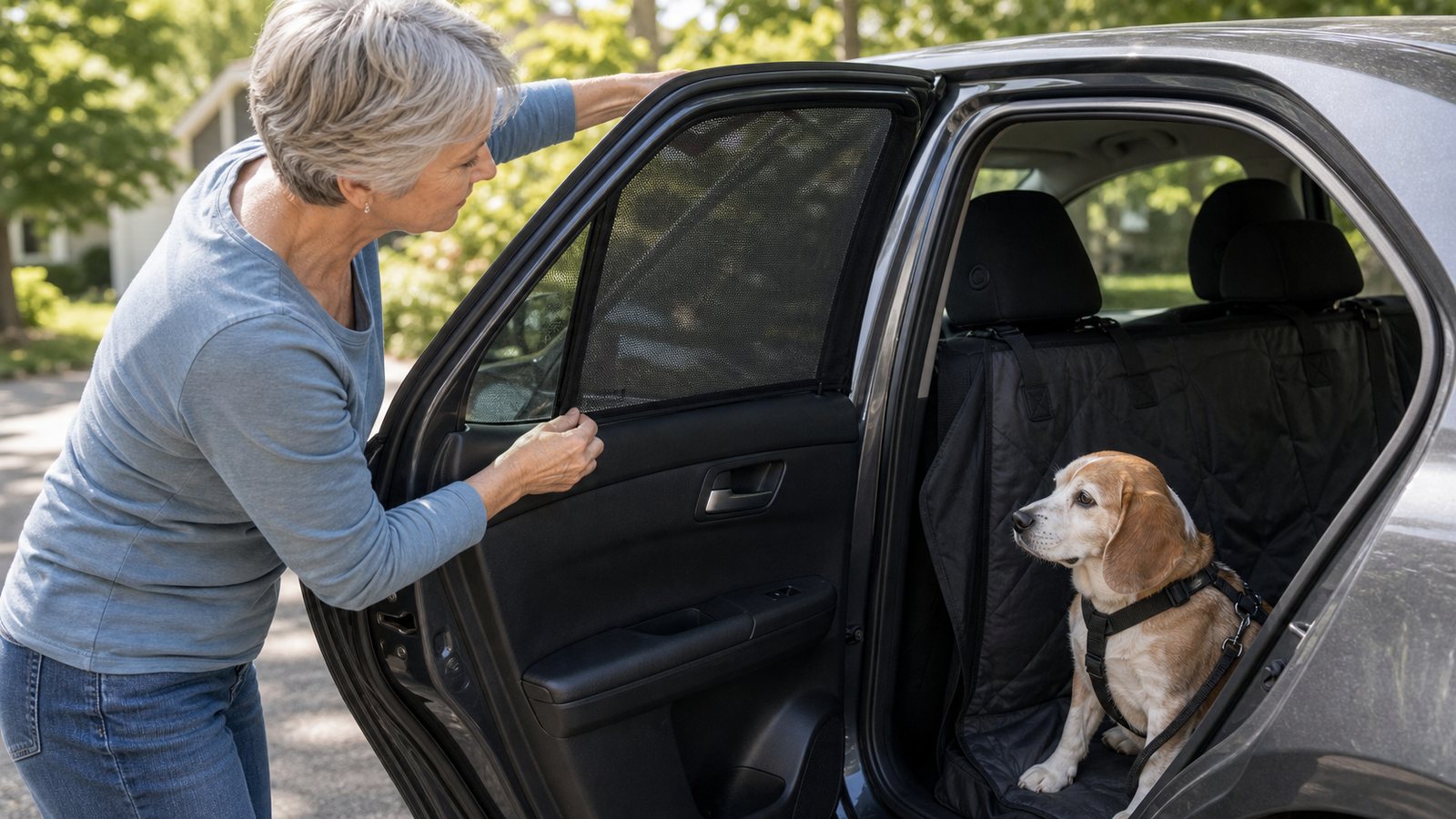
Best for Occasional Use: Static Cling Shades
Static cling shades are simple. Press them onto the glass, move them when the sun angle changes, and peel them off when you do not need them. For occasional dog rides, they may be enough.
They are less useful if your dog sits right in the sun for long stretches, because they often cover only part of the window. They may also leave gaps around curved glass. On a long road trip, those gaps can matter if the sun stays on the same side of the car for hours.
Cling shades are a better fit for short drives, rental cars, or owners who want something small in the glove box. They are not the best choice if you need dependable full-window coverage every weekend.
Best for Carriers and Crates: Shade the Side That Gets Sun
If your dog rides in a secured carrier or crate, do not assume you need shades on every window. Watch where the sun hits the carrier during a normal drive. Sometimes one rear side window is the issue. Sometimes the sun comes through the back glass. Sometimes the dog is already shaded by the seat position.
The goal is not to make the car dark. It is to keep direct sun from baking one side of the carrier or making your dog restless. A shade should not block airflow around the carrier, make it harder to check on the dog, or interfere with securement straps.
For small dogs in carriers, also check the dog’s view. Some dogs relax when they can see out a little. Others settle better with less visual stimulation. A shade can help either way, but the right amount of coverage depends on the dog.
Visibility and Driver Safety
Any shade you add should keep the driver’s visibility clear. Rear side window coverage is usually less of a problem than windshield or front window obstruction, but do not guess. Sit in the driver’s seat after installing the shade and check mirrors, blind spots, and lane-change visibility.
Avoid anything that blocks the front side windows, windshield, or rearview mirror. If a shade makes the car harder to drive, it is the wrong shade.
You should also check visibility from outside the car during stops. If you need to see your dog quickly, a very dark shade may make that harder. Privacy is not the main goal here. Comfort and glare reduction are.
Airflow, Windows, and Door Use
Some mesh shades allow the window to roll down while the shade stays over the door. That can be useful, but it does not mean the dog should stick their head out or ride unrestrained.
If you lower the window, keep the opening small and make sure your dog is secured. Dogs can be injured by debris, jump at unexpected movement, or push farther out than you expect. A shade may reduce bug and sun exposure, but it is not a barrier strong enough to contain a determined dog.
Also check door use. If the shade makes the door harder to close or creates a gap, remove it. A travel accessory should not compromise the car’s normal function.
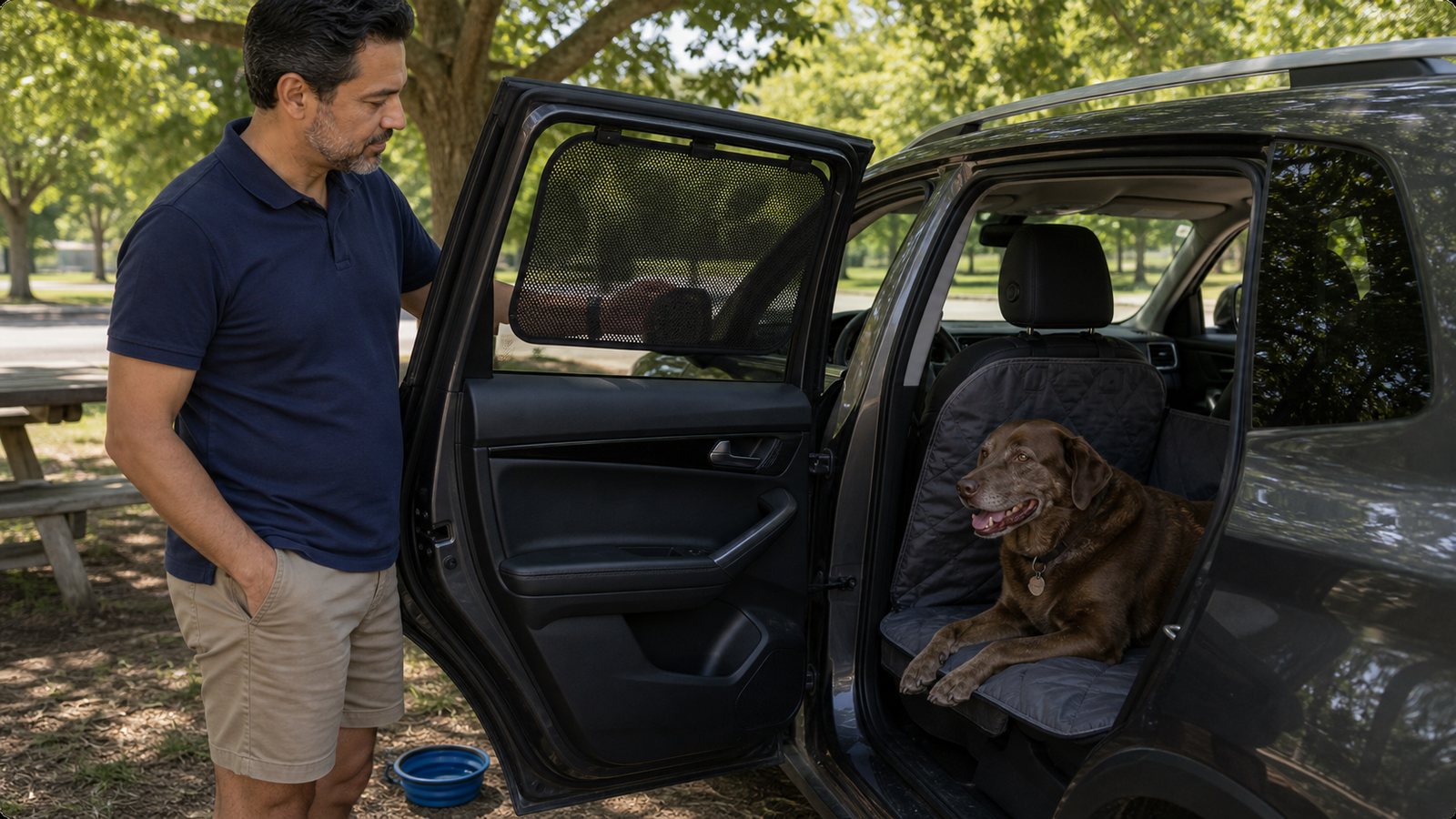
Heat Safety: What Shades Do Not Solve
A window shade can make a sunny back seat feel less harsh during a drive. It cannot make a hot parked car safe for your dog.
Do not leave your dog alone in a parked car because you installed shades. Interior heat can build quickly, and dogs can overheat faster than people realize. Shades may reduce direct sun on one surface, but they do not control the air temperature around your dog.
For summer road trips, the safer routine is simple: use air conditioning while driving, park in shade when possible, take supervised breaks, offer water, and bring the dog with you when you leave the vehicle. If that plan does not work for a stop, choose a different stop.
Storage and Cleaning
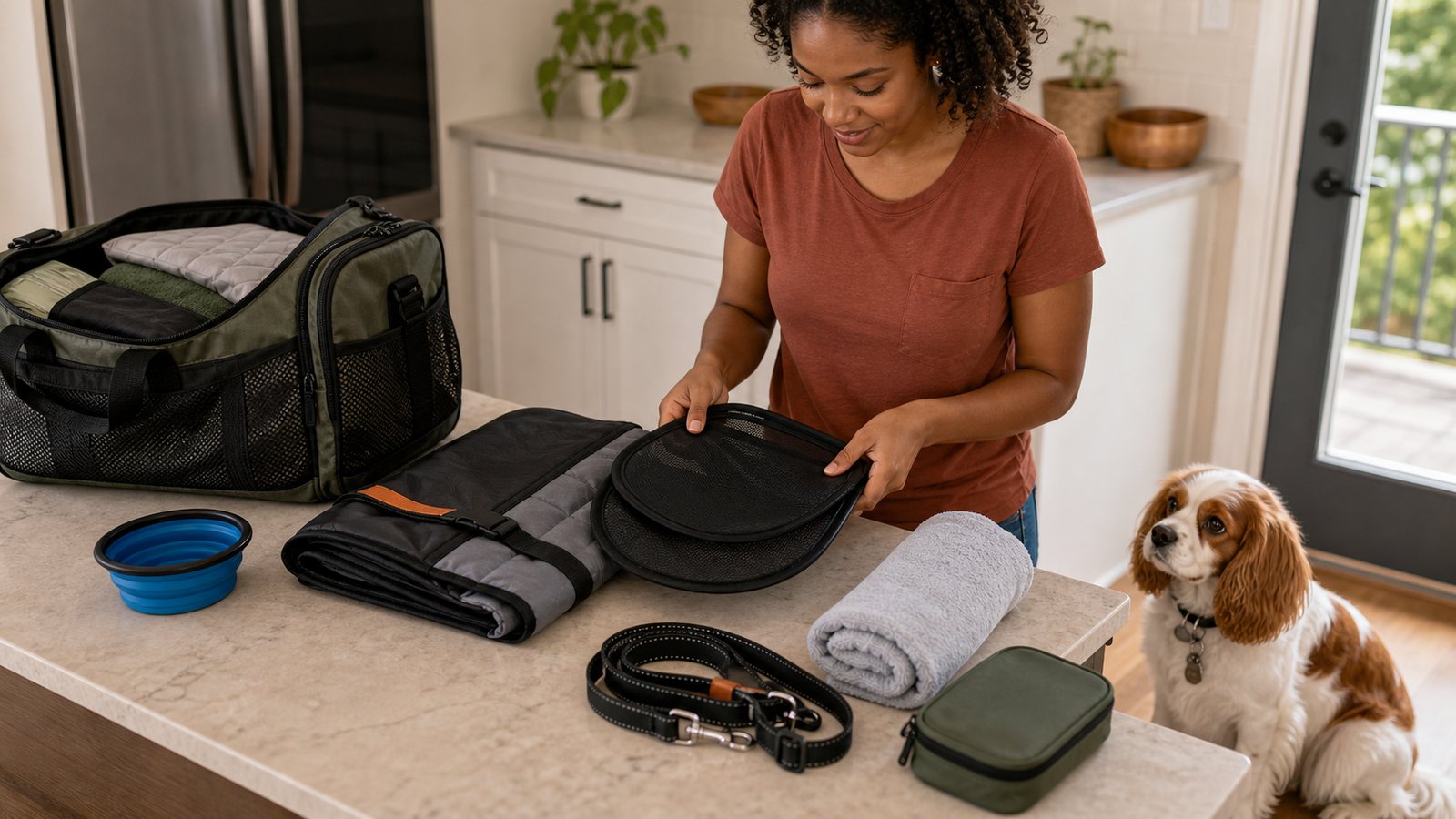
Window shades are easy to forget until they get bent under luggage. Keep them in a flat pocket, seat-back organizer, or the same dog travel bag where you keep towels and cleanup supplies.
Mesh shades can collect dog hair and dust. Shake them out before folding. If they get wet, let them dry before packing them tightly. A damp shade shoved into a bag with towels and leashes can start to smell stale.
Cling shades need clean glass to work well. If they keep falling, wipe both the shade and the glass before blaming the product.
Buying Checklist
Before buying, check:
- Does it fit your rear door or window shape?
- Does it cover the area where sun actually hits your dog?
- Can the driver still see clearly?
- Does it interfere with door closing or weather stripping?
- Can the window still be used safely if needed?
- Will your dog paw at, chew, or pull the shade?
- Does it pack flat without bending?
- Is it easy to clean dog hair and dust off the material?
- Does it work with your seat cover, carrier, or harness setup?
- Are you still using air conditioning, water, shade, and supervised breaks?
Common Mistakes
One mistake is buying a shade by product photo instead of measuring the door. Universal shades are useful, but “universal” does not mean every door shape fits cleanly.
Another mistake is choosing the darkest shade possible. Too much darkness can make it harder to see your dog and may reduce visibility for the driver. You usually want softer light, not a blackout room.
A third mistake is treating shades like heat protection. They are not. Use them with air conditioning and responsible stops, especially in summer.
Finally, do not let the shade create a new distraction. If your dog paws at it, chews it, or pulls it loose during the drive, remove it and try a different setup.
Related PawTripKit Guides
Window shades work best as part of a calmer back-seat setup:
- How to Keep Your Dog Safe in the Car
- How to Set Up the Back Seat for a Dog Road Trip
- Dog Road Trip Checklist for Beginners
- Best Dog Cooling Mats for Car Travel and Camping
- How to Secure a Small Dog Carrier in the Car
Final Thoughts
Dog car window shades are worth considering if your dog gets direct sun in the back seat during road trips. The best ones are simple, fit your car cleanly, do not interfere with visibility, and pack away without fuss.
Just keep the role clear. A shade can reduce glare and direct sun. It cannot solve heat, replace air conditioning, or make a parked car safe. Use it as one layer in a better travel setup: secure restraint, water, shade, airflow, and planned breaks.
FAQ
Are car window shades safe for dogs?
They can be safe if they fit properly, do not block driver visibility, and do not interfere with doors, seat belts, carriers, or harness tethers. Remove the shade if your dog chews or pulls at it while riding.
Do window shades keep a car cool enough for a dog?
No. They can reduce direct sun and glare, but they do not make a parked car safe. Do not leave your dog alone in a hot vehicle because window shades are installed.
What type of window shade is best for dog road trips?
For many road trips, stretch-fit mesh shades offer the broadest rear-window coverage. Static cling shades are easier for occasional use but may cover less area.
Can my dog still look out the window?
Usually yes, especially with mesh shades. The view may be softened, not completely blocked. If your dog gets overstimulated by outside movement, that reduced view may actually help them settle.
Do car window shades work with dog carriers?
They can, as long as they do not block airflow or make it harder to check on your dog. Watch where the sun hits the carrier and shade that side first.