
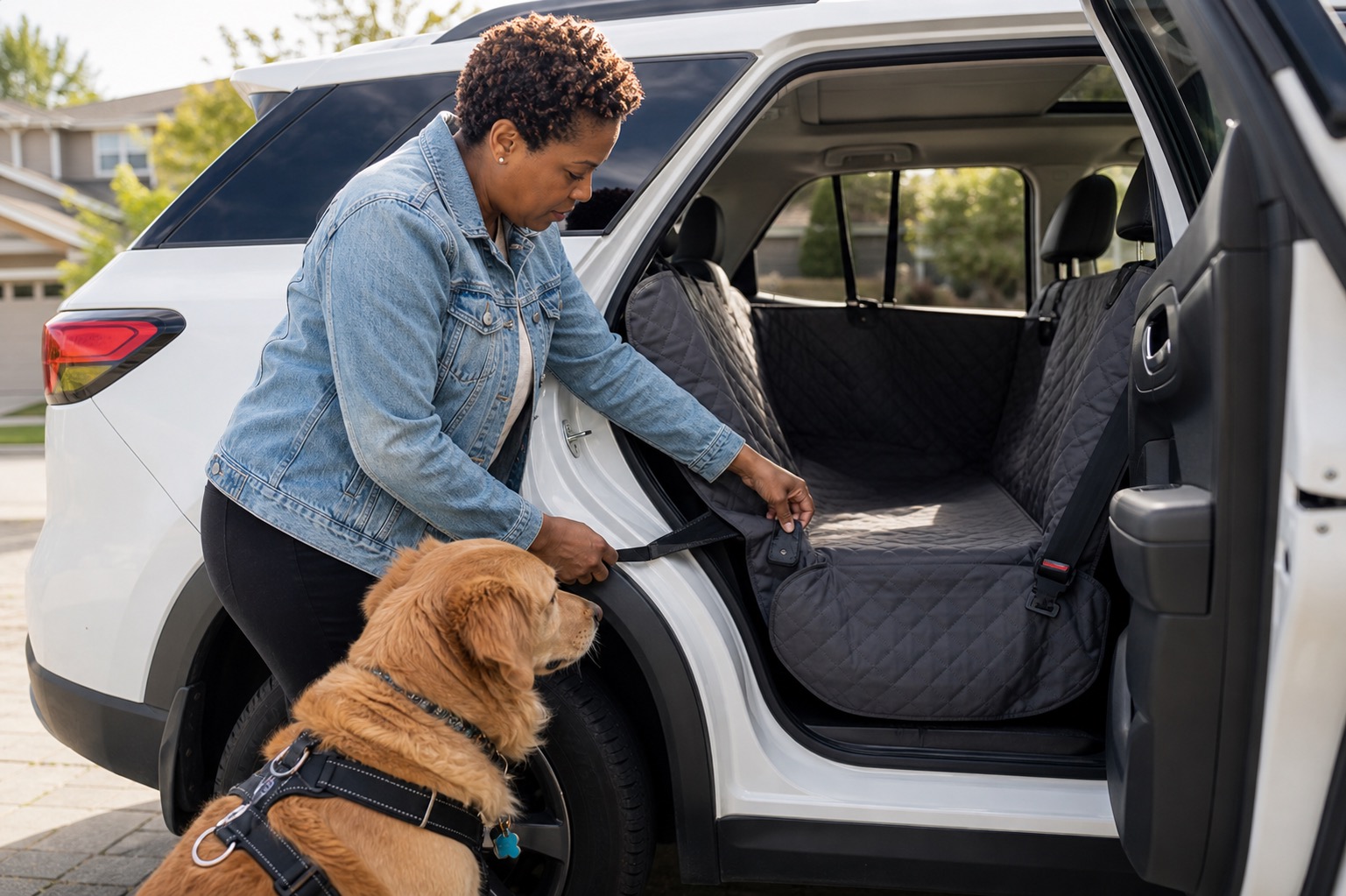
Dog Car Hammock vs Bench Seat Cover
A dog car hammock gives more coverage across the back seat and footwell, while a bench seat cover keeps the rear seat easier for people to share. For many road trips, the better choice depends less on the product name and more on how your dog rides: stretched out, tethered by a harness, sharing space with a passenger, or climbing in with wet paws after every stop.
This guide compares the two setups from a practical road-trip point of view. It is based on common product features and everyday car-travel needs, not hands-on testing of every cover on the market.
Short Answer
Choose a dog car hammock if:
- your dog gets most or all of the back seat
- you want extra footwell coverage
- your dog shifts around during drives
- muddy paws, shedding, or wet gear are a frequent problem
Choose a bench seat cover if:
- a person may sit beside the dog
- you need easier seat belt access
- your dog is calm in the car
- you want a simpler setup that is quick to remove
If you are still comparing general options, you can compare dog car hammocks and bench covers on Amazon.
What a Dog Car Hammock Does Better
A hammock usually clips to the front and rear headrests so it forms a sling across the back seat. That gives you more coverage than a basic bench cover. It can protect the seat bottom, the seat back, and the open space between the front and rear seats.
That extra coverage is useful when a dog moves around, sheds heavily, rides after swimming, or comes back from a rest stop with dusty paws. A hammock can also make the back seat feel more like one defined dog zone instead of a regular passenger row with a cover thrown over it.
The trade-off is access. Some hammocks make seat belt buckles harder to reach. Some do not work well with fixed headrests, bucket-style second rows, or a back seat that needs to stay partly open for a passenger.
For a deeper seat setup view, start with How to Set Up the Back Seat for a Dog Road Trip.
What a Bench Seat Cover Does Better
A bench seat cover is usually flatter and simpler. It covers the seat bottom and often the seat back, but it does not hang forward like a hammock. That makes it easier to use the rear row as a normal seat when needed.
This matters in family cars, rides where a passenger sits beside the dog, or trips where you remove the cover often. Bench covers can also be easier to shake out, fold, and store. If your dog is calm and stays in one place, the extra footwell coverage from a hammock may not be worth the added bulk.
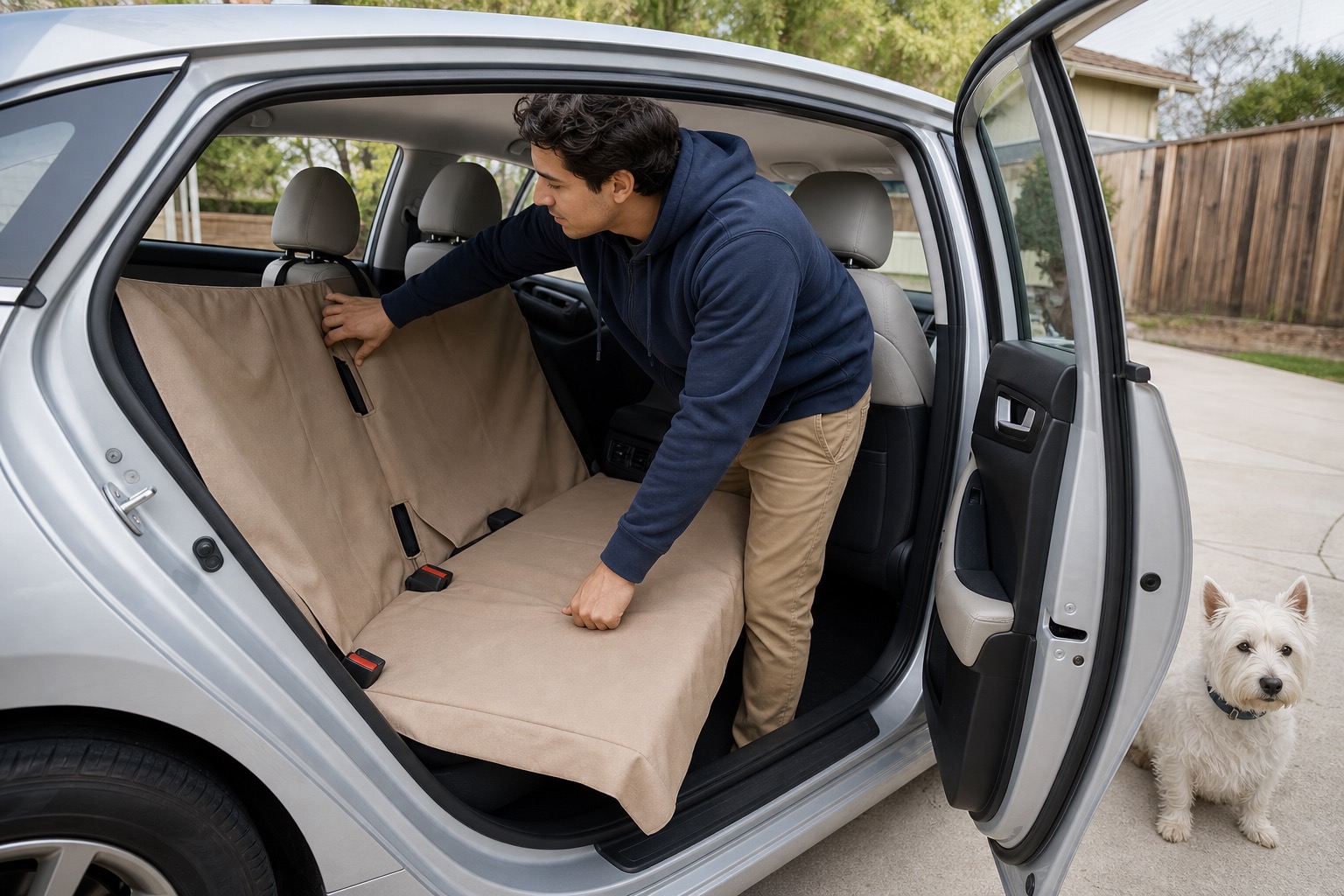
The main weakness is coverage. A bench cover will not protect the footwell, and it may do less to stop a dog from sliding forward during sudden braking. It is still a cover, not a restraint, so your dog still needs an appropriate travel setup.
Seat Belt Access Is Often the Deciding Point
The most important difference may be the least exciting one: buckle access. If you use a dog harness tether, carry passengers, or need the middle belt, you have to check the buckle area before trusting either style.
Some hammocks have hook-and-loop openings for buckles. Some bench covers have simple buckle slots. Both can work. Both can also be frustrating if the openings do not line up with your vehicle.
Before buying, check:
- whether the product photos show the buckle openings clearly
- whether the cover allows outer belt access only or middle belt access too
- whether your rear headrests can hold the straps
- whether fabric bunches around the buckles once the dog is on the seat
- whether the cover works with your dog harness tether if you use one
Our Best Dog Car Seat Covers With Seat Belt Access guide goes further into this specific issue.
Which One Is Better for Road Trips?
For long road trips where the dog owns the back seat, a hammock is often easier. It gives you a clearer dog area, more dirt protection, and less exposed upholstery. This is especially useful with medium and large dogs, dogs who turn around often, or trips with trailheads, campgrounds, and rainy stops.
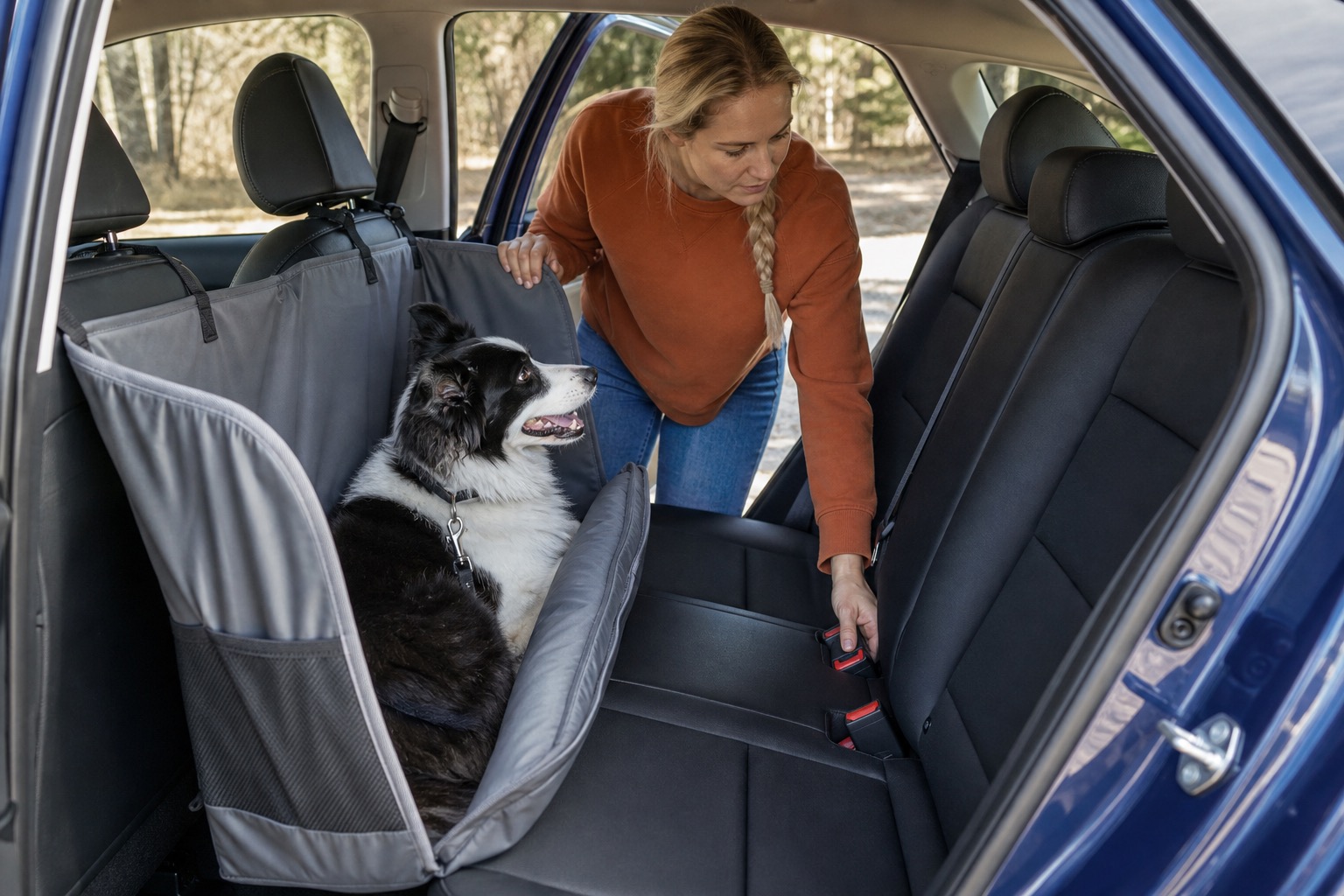
For shared back seats, a bench cover is usually easier to live with. It keeps the car more flexible and makes it less annoying for a passenger to sit beside the dog. A split cover or half hammock can be a good middle ground when one side of the rear seat needs to stay usable.
If your road trip includes a lot of stops, think about re-entry too. A muddy dog climbing back into a hammock is easier to contain. A calm dog stepping onto a bench cover may not need that much coverage.
This also connects with your stop routine. Keep a towel, water, and waste bags where you can reach them, then use How to Set Up a Dog Rest Stop Routine on Road Trips to make the rest of the car routine smoother.
Cleaning and Storage
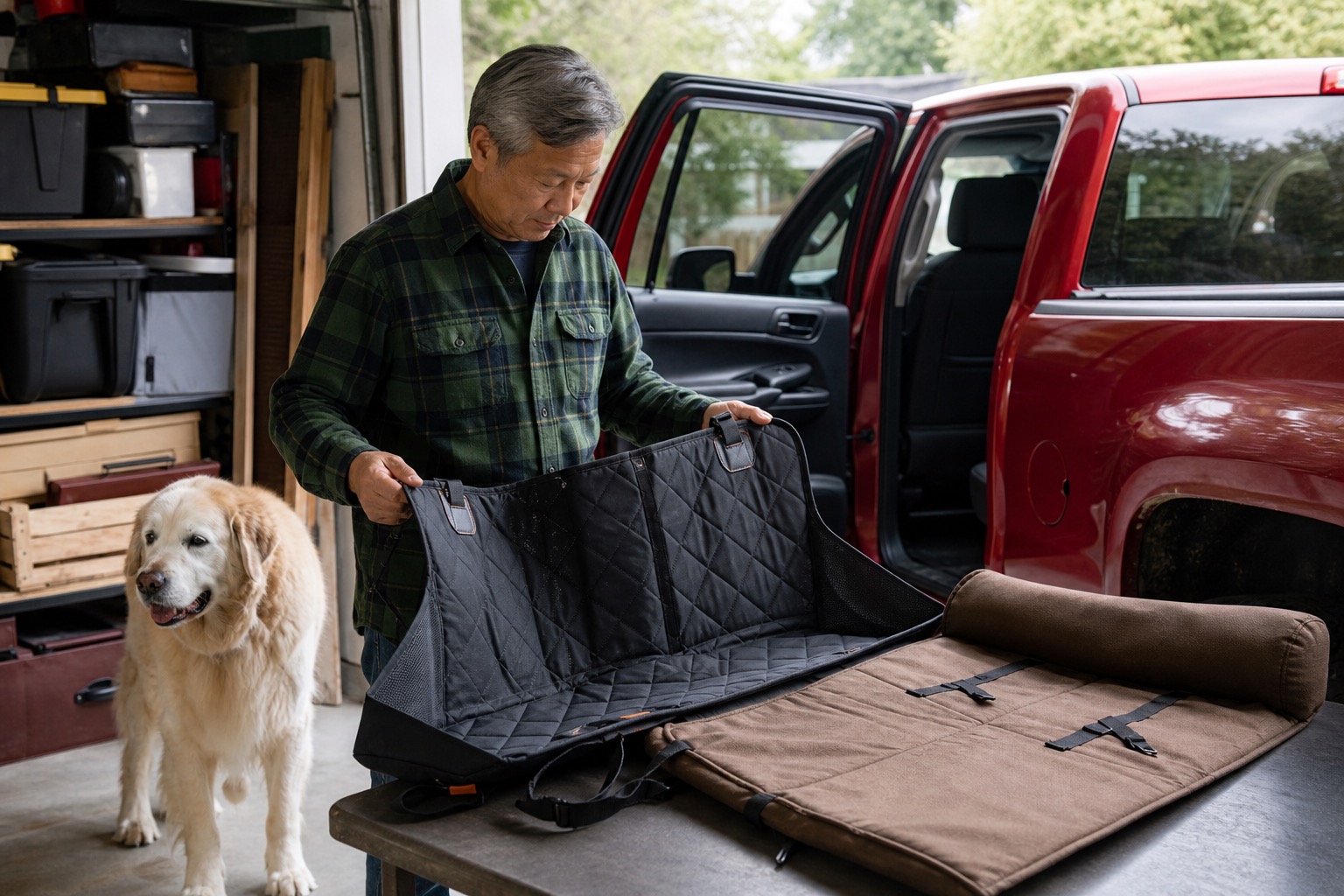
A hammock usually has more fabric, more straps, and more points where hair can collect. That is not a reason to avoid one, but it does mean cleanup takes a little more patience. If your dog sheds heavily, look for a surface that can be shaken out easily and does not trap hair in deep seams.
A bench cover is simpler to remove and fold. For everyday errands, short drives, and cars that switch between dog use and passenger use, that simplicity may matter more than maximum coverage.
For wet or dirty trips, neither option replaces a small cleanup kit. A towel and a separate pouch for damp items make both setups easier. See our Dog Road Trip Cleanup Kit for what to keep in the car.
Common Mistakes
One mistake is choosing a hammock because it looks more protective without checking whether it fits your actual vehicle. Fixed headrests, narrow rear benches, and awkward buckle positions can turn a good-looking cover into a daily annoyance.
Another mistake is choosing a bench cover because it is simpler, then expecting it to protect the footwell or manage a dog that moves constantly. If the dog is restless, larger, or wet after stops, a basic cover may leave too much exposed.
A third mistake is treating either cover as a safety device. A cover protects the vehicle. It does not replace a carrier, crate, harness, or other restraint setup. For that part, read How to Keep Your Dog Safe in the Car.
Final Thoughts
For most dog owners, the hammock vs bench cover decision comes down to how the back seat is actually used. If the dog gets the whole row and mess control is a priority, start with a hammock that still leaves buckles usable. If people and dogs share the rear seat, a bench cover or split setup is usually easier.
The best setup is the one you can use correctly every time. It should protect the car, leave the dog enough room to settle, keep tether or buckle access clear, and not make every stop harder than it needs to be.
FAQ
Is a dog car hammock safer than a bench seat cover?
Not by itself. A hammock may help with coverage and containment, but it does not restrain the dog. Safety still depends on the dog’s full travel setup, such as a carrier, crate, or properly used harness system.
Can a passenger sit next to a dog car hammock?
Sometimes, but it depends on the design. A full hammock usually makes shared seating less convenient. A split hammock, half cover, or bench seat cover is usually better when a person needs to sit beside the dog.
Do dog hammocks work in every car?
No. Many need adjustable rear and front headrests. They may not fit well in vehicles with second-row bucket seats, fixed headrests, or unusual buckle positions.
Is a bench seat cover enough for a road trip?
It can be enough for a calm dog, a shorter trip, or a car where passengers also use the back seat. For muddy trips, large dogs, or dogs who move around a lot, a hammock may protect more of the car.
What should I check before buying either one?
Measure your rear seat, check the buckle openings, look at how the straps attach, and think about whether a person will share the back seat. Those details matter more than the product name.