
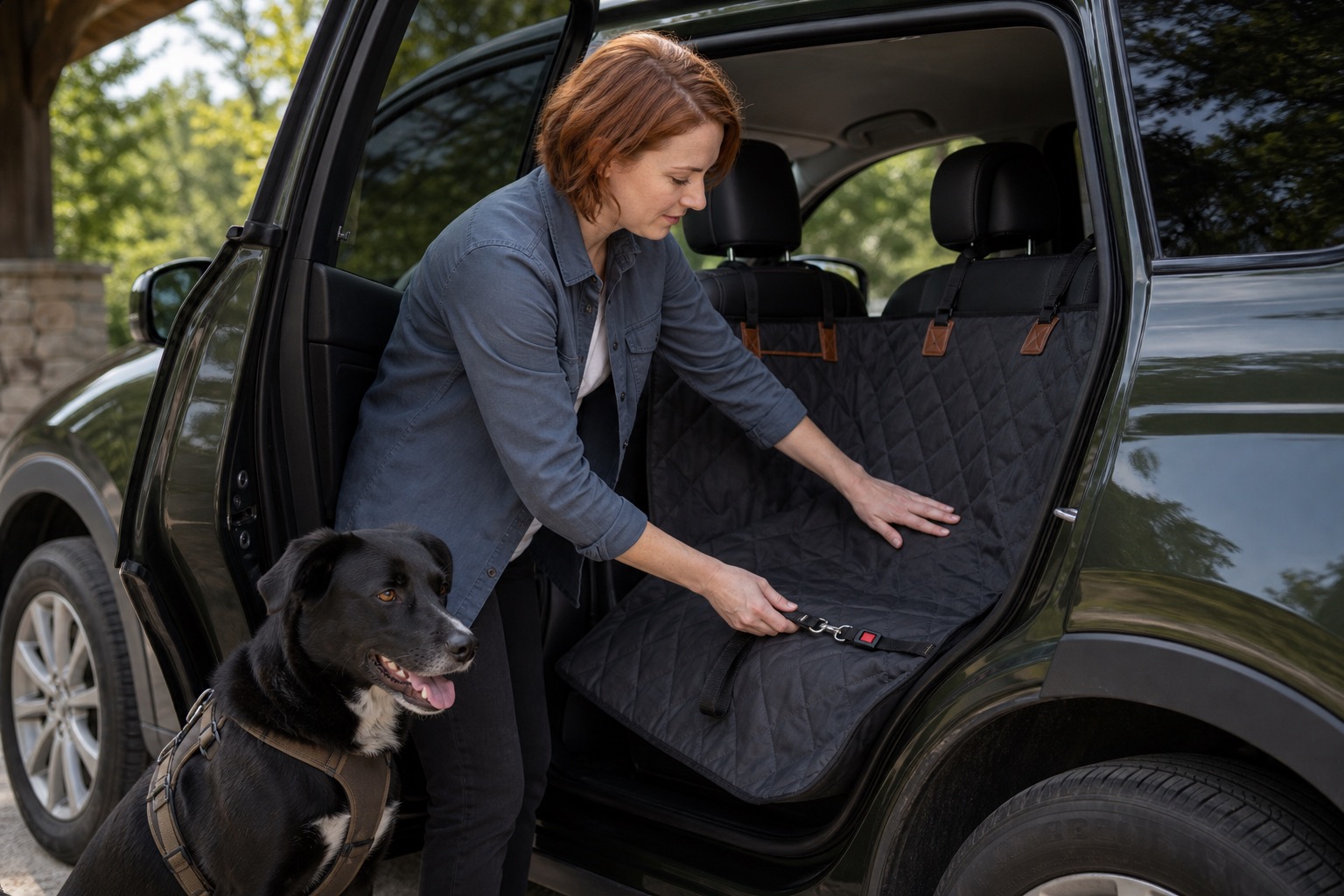
How to Set Up the Back Seat for a Dog Road Trip
The best back seat setup for a dog road trip is the one that keeps the dog secure, gives them enough room to settle, and does not make the car harder to use. For many dogs, that means a seat cover or hammock, a properly fitted harness with safe tether access if you use one, a towel or cleanup layer, and enough open space that the dog is not crowded by bags. The right setup depends on the dog, the car, and how long you will be driving.
This guide is based on common car-travel setups, product features, and ordinary road-trip problems. We have not personally tested every seat cover, organizer, or back-seat accessory mentioned here, so use this as a practical planning guide rather than a lab-style gear review.
Short Answer
- Protect the seat first.
- Keep buckle and tether access usable.
- Do not let luggage squeeze the dog into a smaller space than you intended.
- Give the dog one clear riding zone instead of letting the whole back seat turn into loose gear storage.
- Keep water, towel, and waste bags easy to reach without unloading the whole car.
If you want to compare common seat-cover styles first, compare dog car seat covers on Amazon.
Start With the Riding Zone, Not the Accessories
Most back seat setups go wrong because people start with accessories instead of the dog’s actual space. Before you worry about organizers, bowls, or little hooks, decide where the dog will ride. Is the dog using the full rear bench, one side of the bench, or a carrier? Will a person sit beside the dog sometimes? Will the dog stay in the back seat on every stop, or move in and out often?
If your dog moves in and out often at rest stops, trailheads, or campgrounds, consider whether a GPS dog collar or tracker belongs in your travel setup. It is not a restraint, but it can add a backup layer if a door opens at the wrong moment.
Once the riding zone is clear, the rest of the setup becomes easier. A seat cover, tether point, towel, and organizer only work well when they support that main decision.
This matters even more for:
- large dogs that sprawl across the seat
- anxious dogs that do better with one stable place
- shared family cars where a human passenger may still use one side
- hotel or camping trips where the back seat fills up with extra gear
Protect the Seat Without Blocking the Useful Parts
For most road trips, some form of rear seat cover makes the setup easier to live with. It catches dirt, hair, damp paws, and the little messes that turn into a full cleanup later. But the cover still has to leave you access to the parts you actually use, especially the seat belt buckles and any tether attachment point.
That is why a back seat setup should not be judged only by how much fabric it covers. A cover that hides the buckles, bunches up under the dog, or blocks the split seat too much can make the trip more annoying than leaving the seat bare.
Our Best Dog Car Seat Covers With Seat Belt Access guide is the best next step if that part is still unresolved.
Measure the Seat and Check the Buckle Area Before the Trip
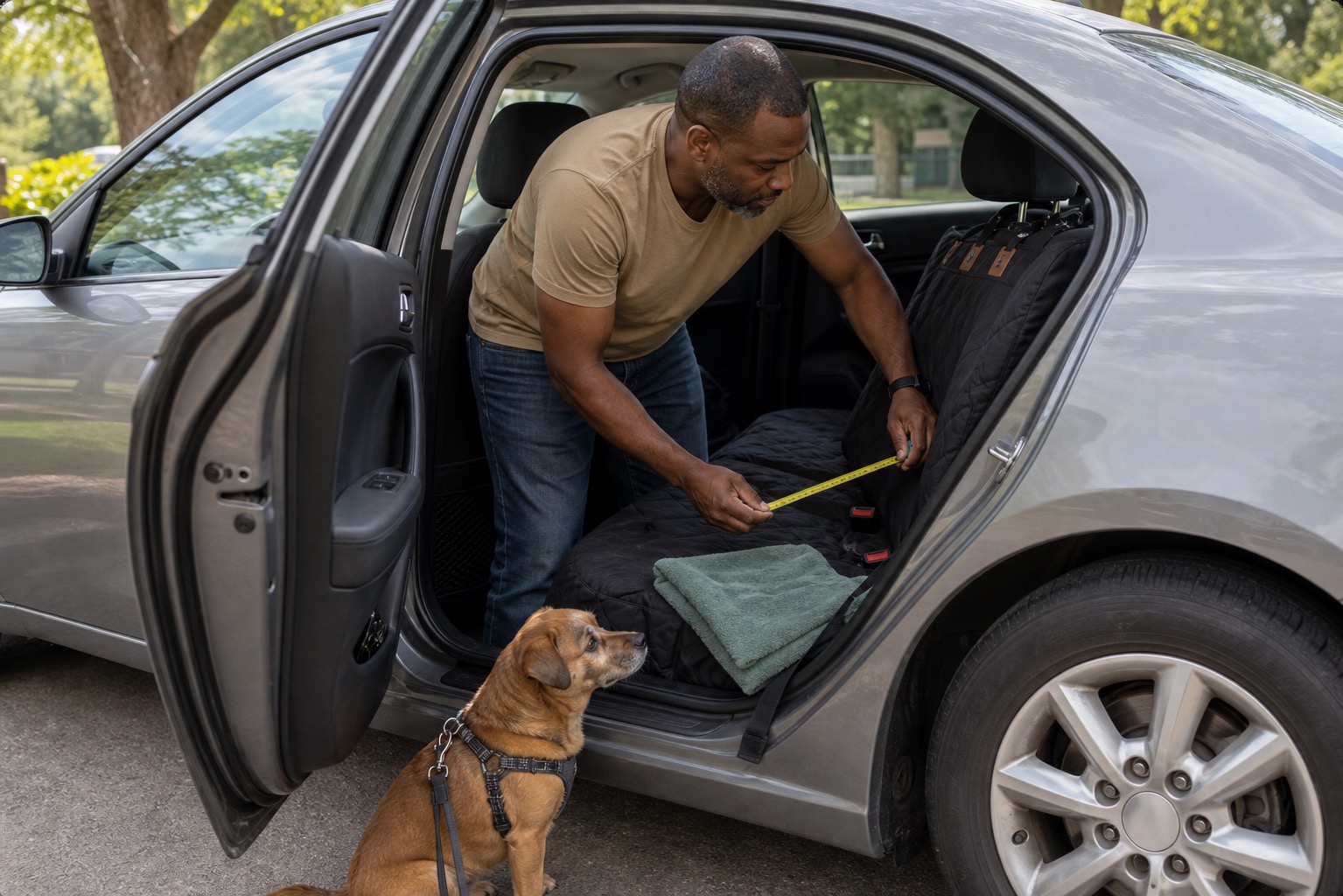
A surprising number of back seat problems are just fit problems. The cover may be too narrow, the dog may ride farther toward the middle than expected, or the buckle openings may sit in the wrong place. If you are setting up for a longer drive, check the seat before the travel day instead of assuming it will all work once the dog is already loaded.
Things worth checking:
- how wide the usable seat area really is
- whether the buckle openings line up cleanly
- whether the dog can lie down without sliding into luggage
- whether the seat cover stays flat once clipped in
Even a simple tape-measure check can save you from buying the wrong layout for your car.
If your current setup only works when the dog stays perfectly still, it is not really working. Road-trip dogs shift, turn, stretch, and re-settle. The seat has to handle that without becoming messy or tangled.
Give the Dog Space to Settle, Not Just Space to Stand
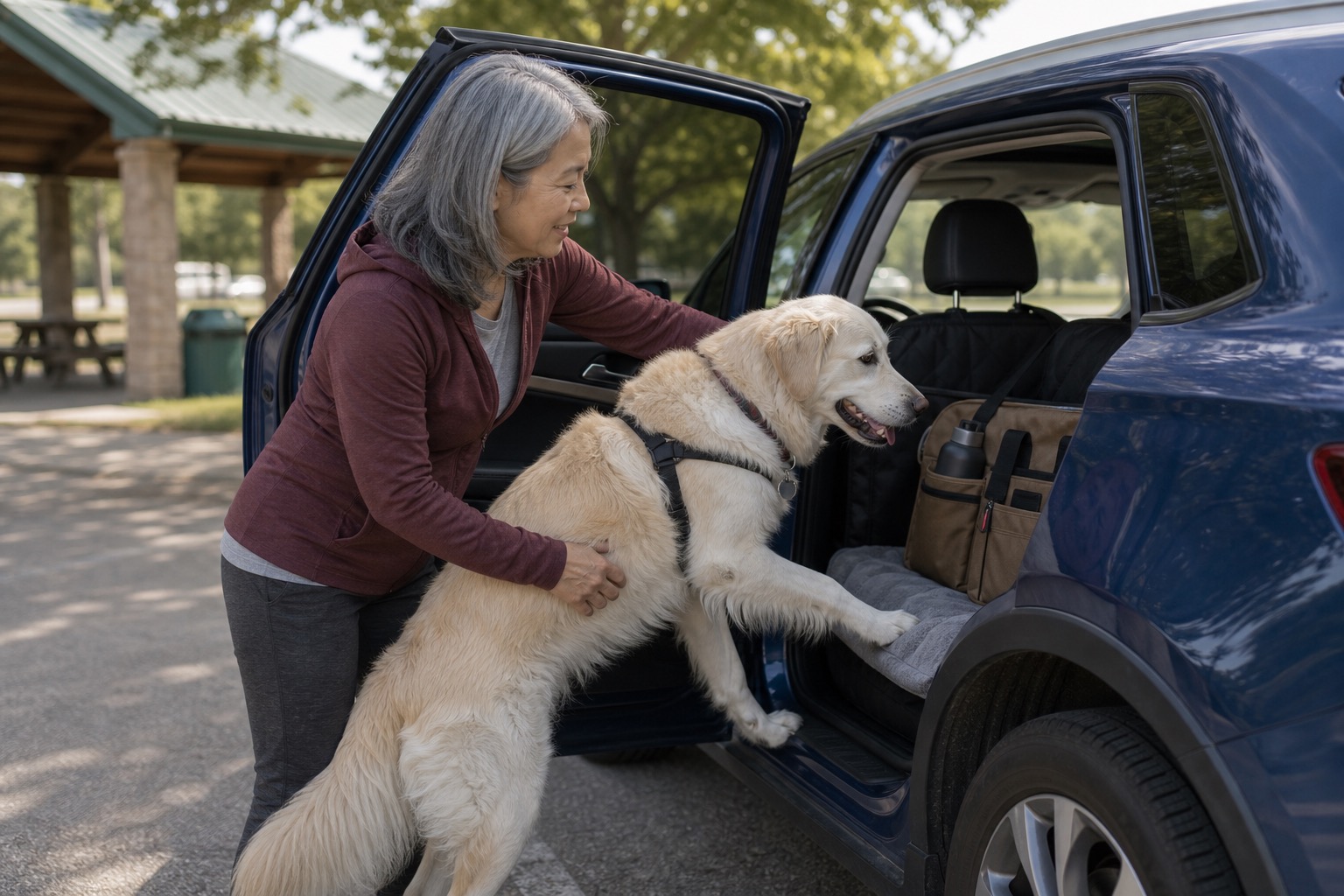
A dog can technically fit on the back seat and still be uncomfortable for a long drive. What matters is whether the dog can settle into a normal travel position. Most dogs do better when they can turn once or twice, lie down, and rest against a stable surface without stepping on bowls, bags, or hard storage bins.
If direct sun hits that riding zone for hours, dog car window shades may help soften glare. They should not block the driver’s view or make the door harder to use.
This is where overpacking the seat becomes a problem. Backpacks, shoe bags, camera gear, or shopping totes tend to creep into the dog’s riding zone. What looks fine before departure can feel cramped after two hours on the road.
For many road trips, the better rule is simple: soft gear can share the back seat only if it does not reduce the dog’s lying space. Hard gear should usually move somewhere else.
If you are still trying to decide whether the dog belongs in the back seat at all, go back to How to Keep Your Dog Safe in the Car. The right answer changes with the dog and the restraint setup.
Keep a Small Back Seat Kit Within Reach
The back seat gets easier when a few small items always live in the same place. You do not need a full organizer system to do this. One seat-back organizer or side tote is enough for most people.
A useful small kit usually includes:
- waste bags
- one towel
- water bottle or easy access to one
- one collapsible bowl if you use one
- a small pouch for dirty or damp items
The point is not to make the car look like a product demo. The point is to avoid digging through luggage every time the dog needs a quick stop or comes back with dusty paws.
This pairs well with our Dog Road Trip Cleanup Kit and Dog Travel Essentials Checklist.
Do One Final Check Before You Pull Out
The best back seat setup still needs one last look before you start driving. This is where you catch the small mistakes: twisted tether, towel under the wrong spot, bowl left on the seat, leash hanging out of the door, or a bag now sitting where the dog needs to lie down.
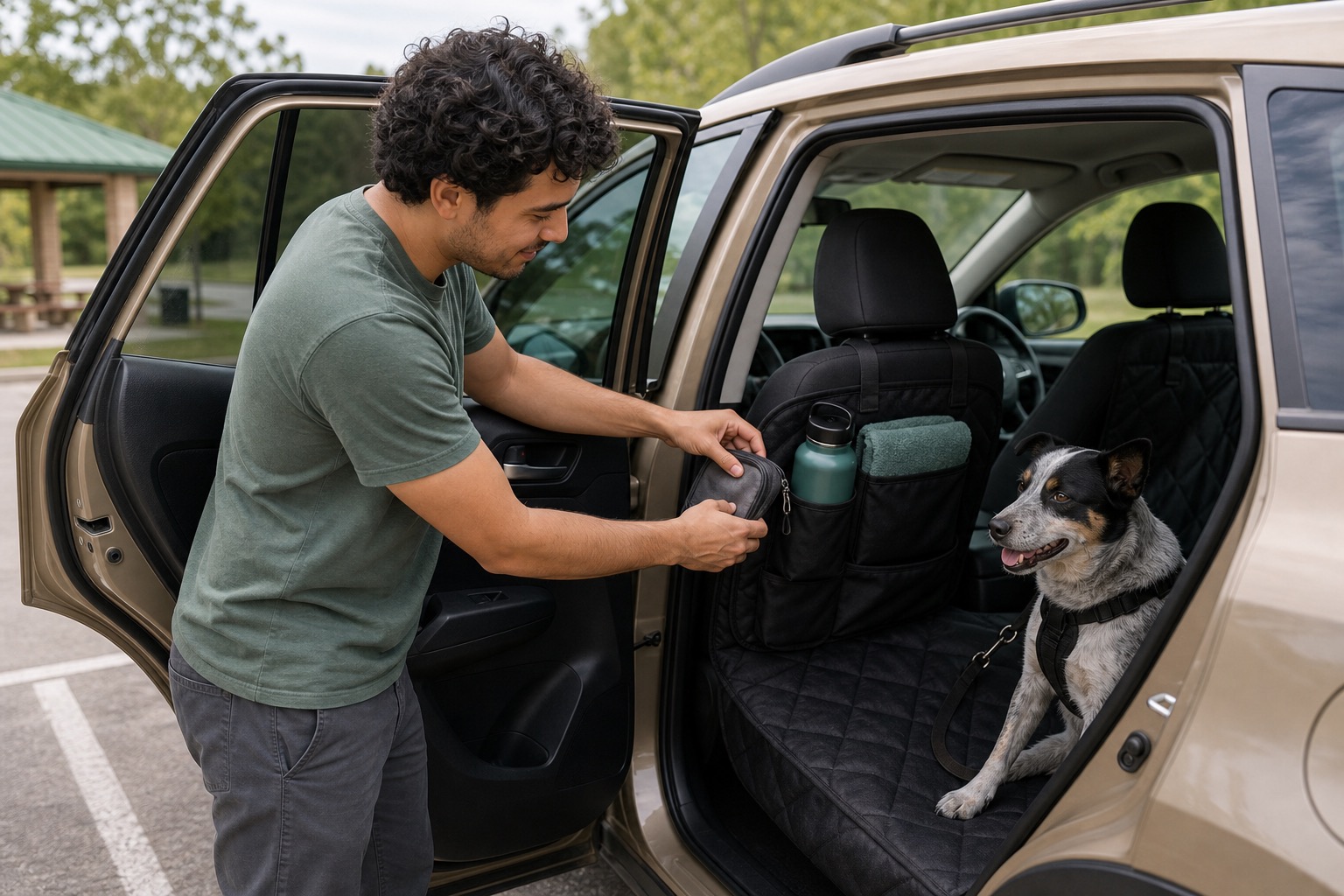
The fastest pre-drive check is:
- Is the dog in the correct riding spot?
- Is the cover flat enough to stay put?
- Are buckles or tether points still usable?
- Is the dog’s space clear?
- Is the quick-access kit where you expect it to be?
That check takes less than a minute and prevents a lot of mid-drive irritation.
Common Mistakes
One common mistake is treating the whole back seat like storage until the dog gets loaded last. That usually leaves the dog with whatever space is left instead of the space they actually need.
Another is assuming any cover that “fits most cars” will fit your seat well enough for road trips. Buckle access, seat width, and dog size matter more than generic packaging language.
A third is forgetting that the dog needs recovery space after stops. If the back seat is too cluttered, the dog comes back in wet, excited, or dusty and has nowhere easy to settle.
Finally, do not assume the back seat setup ends with the cover. Water, cleanup, and re-entry matter too. Our How to Set Up a Dog Rest Stop Routine on Road Trips guide picks up from there.
Final Thoughts
Setting up the back seat for a dog road trip is less about buying more gear and more about making a few things work together cleanly. Protect the seat, keep the useful anchor points accessible, leave the dog enough room to settle, and keep the small essentials within reach.
If the setup feels calm when the car is parked, it usually feels better once the trip starts too. That is the real test. Not how many accessories are in the back seat, but whether the dog can ride there comfortably and you can manage the stop-and-start parts of the trip without a mess.
FAQ
Should my dog ride in the back seat on a road trip?
For many dogs, yes, especially when the back seat works with the restraint or travel setup you are using. The safest and most practical location depends on the dog, vehicle, and gear.
Is a dog hammock better than a regular seat cover?
Sometimes. A hammock can help with containment and footwell coverage, but it is not always the best fit for shared back seats or cars where buckle access matters a lot.
How much space should a dog have on the back seat?
Enough to turn, lie down, and settle without being crowded by luggage or gear. The exact amount depends on the dog’s size and how long the drive is.
What should stay within reach in the back seat area?
A towel, waste bags, water, and the small items you use at every stop. If you have to unpack half the car to reach them, the setup needs work.
Can I keep bags on the back seat beside the dog?
Yes, if they do not crowd the dog’s riding space or create unstable clutter. Soft bags are usually easier to share space with than rigid storage bins.