
Dog First Aid Kit for Road Trips and Camping
A dog first aid kit is not there so you can play veterinarian on the side of the road. It is there so you can handle small problems calmly, protect a minor scrape, remove a tick with the right tool, rinse dirt from a paw, and keep your dog comfortable while you decide whether to call a vet.
For travel, the best kit is small enough to stay in the car, organized enough to use when you are tired, and specific enough for the places you actually go: rest stops, campgrounds, hotel rooms, trailheads, lake days, and long drives.
This guide is a practical packing checklist, not medical advice. If your dog is bleeding heavily, limping badly, vomiting repeatedly, struggling to breathe, acting weak or confused, or showing signs that worry you, contact a veterinarian or emergency clinic.
Compare dog first aid kits on Amazon
Quick Answer
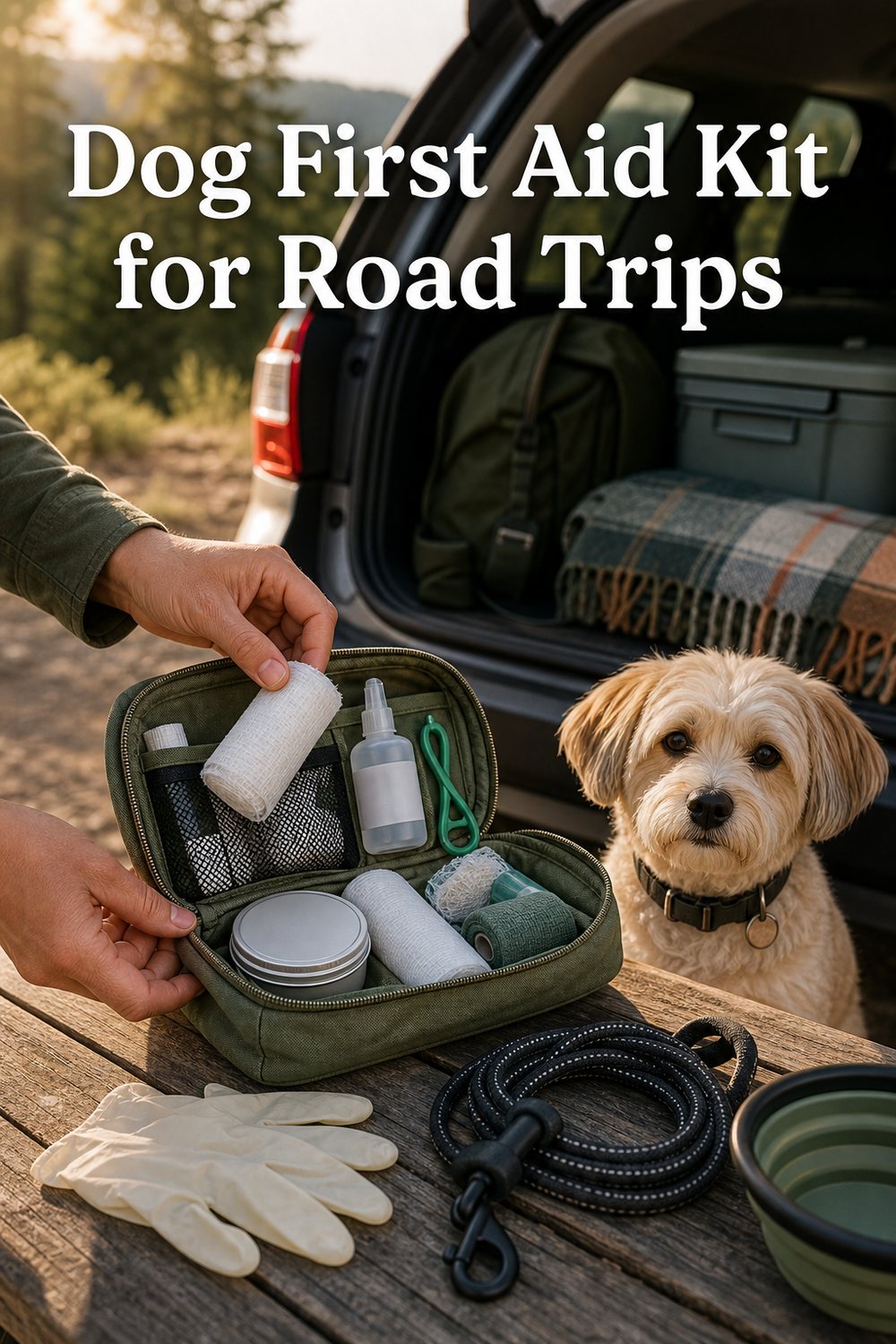
For most road trips and camping weekends, pack a compact dog first aid kit with gauze, self-adhering wrap, antiseptic wipes made for pets, saline rinse, tweezers or a tick remover, disposable gloves, a small towel, digital thermometer, styptic powder, paw protection basics, emergency contact information, and copies of vaccine records or medication notes.
You do not need a huge trauma bag for ordinary travel. You need the supplies that help with the common, annoying problems: a torn paw pad, a burr stuck in fur, a tick after a wooded campsite, a scraped elbow, a broken nail, or a muddy eye that needs rinsing before you call the vet.
If you buy a pre-made kit, open it before the trip. Many kits are built for general emergencies, not your dog’s size, medication needs, or travel routine.
What a Dog First Aid Kit Can and Cannot Do
A kit can help you slow down and respond instead of digging through luggage for a napkin and hoping for the best. It can also keep your dog’s records and emergency contacts in one place.
It cannot diagnose illness, replace veterinary care, or make an unsafe plan safe. Do not give human medication unless your veterinarian has specifically told you what to use, how much to give, and when. Some common human medicines are dangerous for dogs.
Think of the kit as a bridge. It helps you manage the first few minutes, clean or cover something minor, and get better information before you call for help.
Core Supplies to Pack
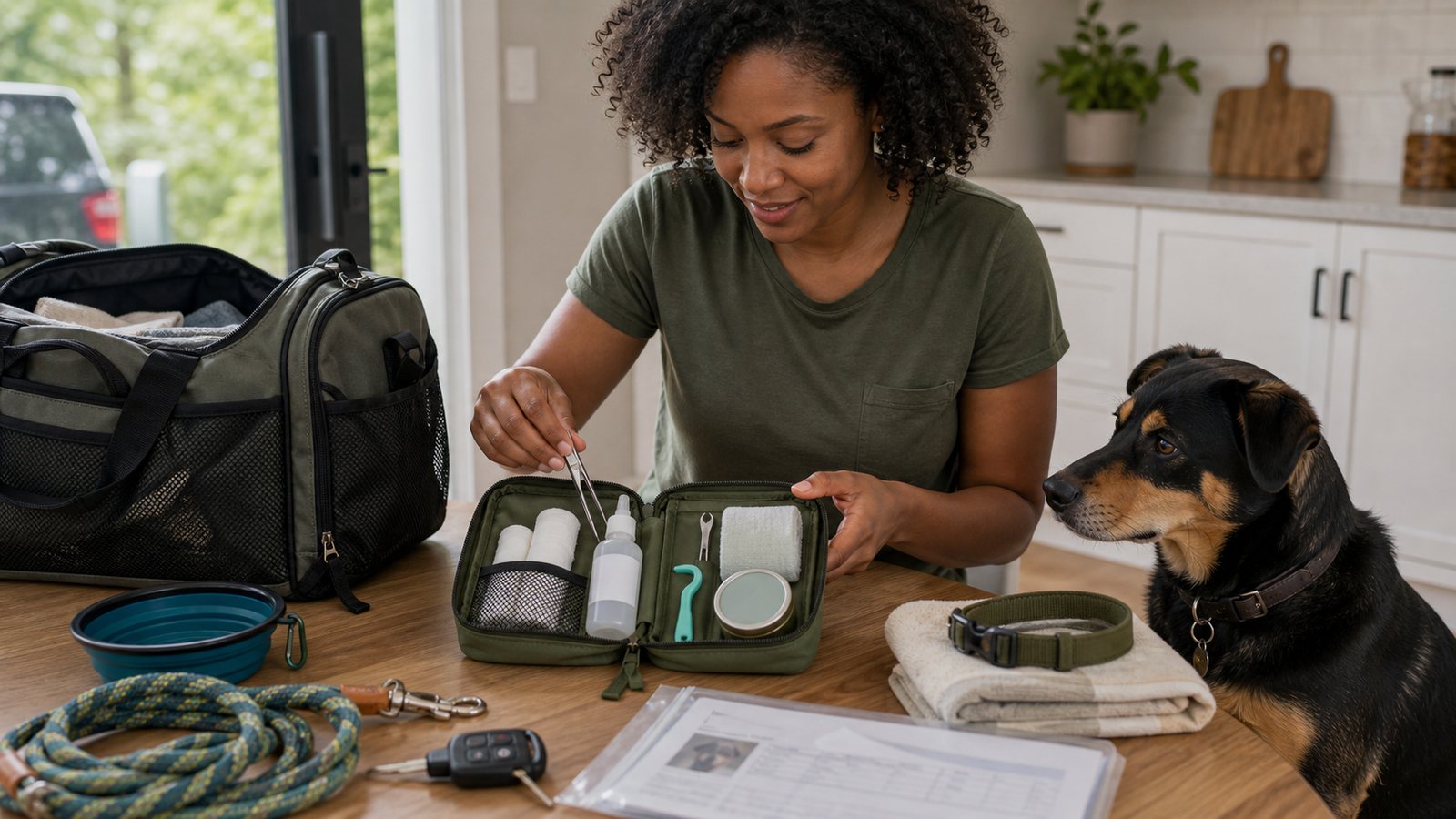
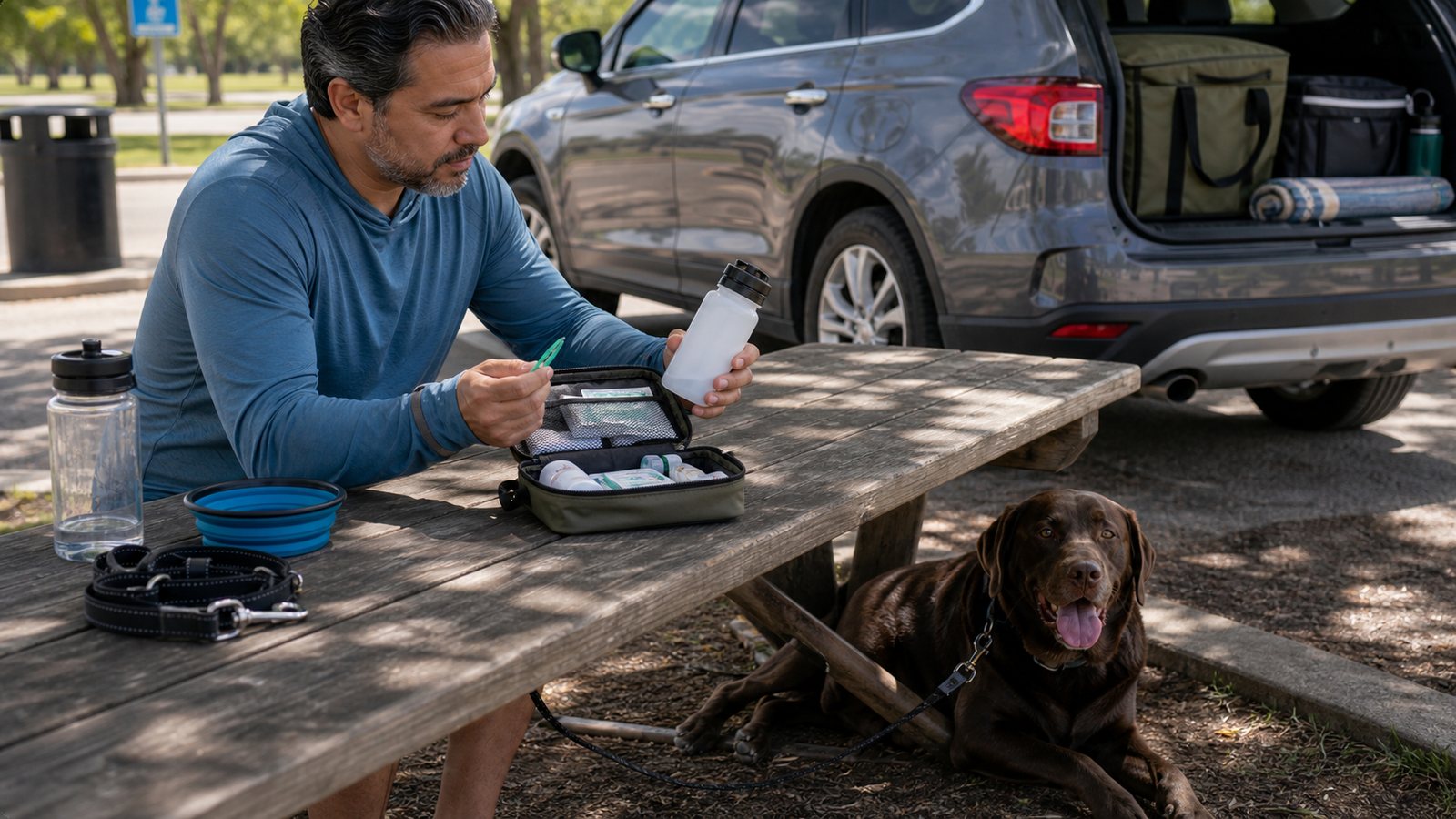
Start with basic wound and paw supplies. Pack sterile gauze pads, gauze roll, and self-adhering wrap. The wrap should stick to itself, not to fur. Add blunt-tip scissors if your kit does not include them, but keep them stored safely.
Add disposable gloves. They keep your hands cleaner and make it easier to help your dog without turning a small mess into a bigger one.
Pack saline rinse or sterile eye wash with a plain label. This is useful when dust, sand, or plant debris gets near your dog’s eyes or paws. Do not use random household cleaners or strong antiseptics on your dog because they are sitting in the car.
Include pet-safe antiseptic wipes if your veterinarian is comfortable with them for minor surface cleaning. If you are not sure, ask your vet what they recommend before your next trip.
Add tweezers and a tick remover. Wooded campgrounds, tall grass, and trail edges are exactly where those tools become useful.
For nails, pack styptic powder or a styptic pencil labeled for pet use. A broken nail can bleed more than expected, and it is hard to manage calmly if you have nothing but paper towels.
Records and Contact Information
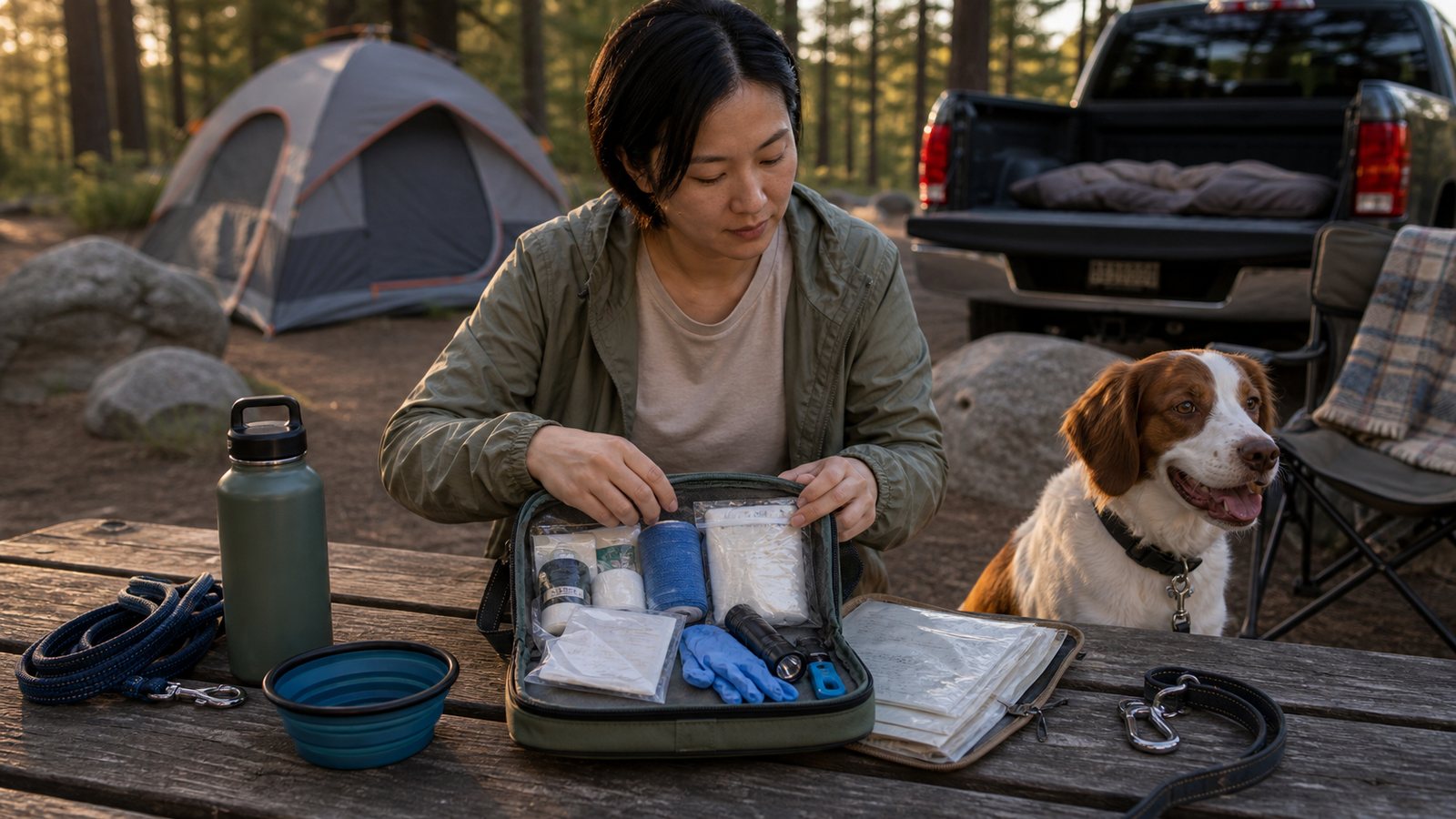
The least exciting part of the kit may be the most useful. Keep a small waterproof envelope with your dog’s vaccine records, medication list, microchip number, regular vet contact, emergency vet search notes, and your own phone number.
For road trips, you can keep digital copies on your phone, but do not rely only on your phone. Batteries die, service drops, and phones get left in hotel rooms. A paper backup weighs almost nothing.
If your dog takes daily medication, write down the name, dose, schedule, and the reason they take it. If someone else has to help your dog while you are stressed, clear notes matter.
For camping, add the campground address or nearest town once you arrive. If you need to call an emergency clinic, it helps to know where you are without searching through reservation emails.
For a fuller camping setup, keep this kit next to the broader dog camping gear checklist. In summer or wooded areas, pair it with a separate dog bug spray and tick-check routine instead of burying those supplies in a random side pocket.
Road Trip Extras
Road trips create a few specific problems. Dogs jump out onto rough pavement, step in sticky spills near gas stations, get burrs in their paws at rest areas, or rub a paw pad after walking on hot or gritty ground.
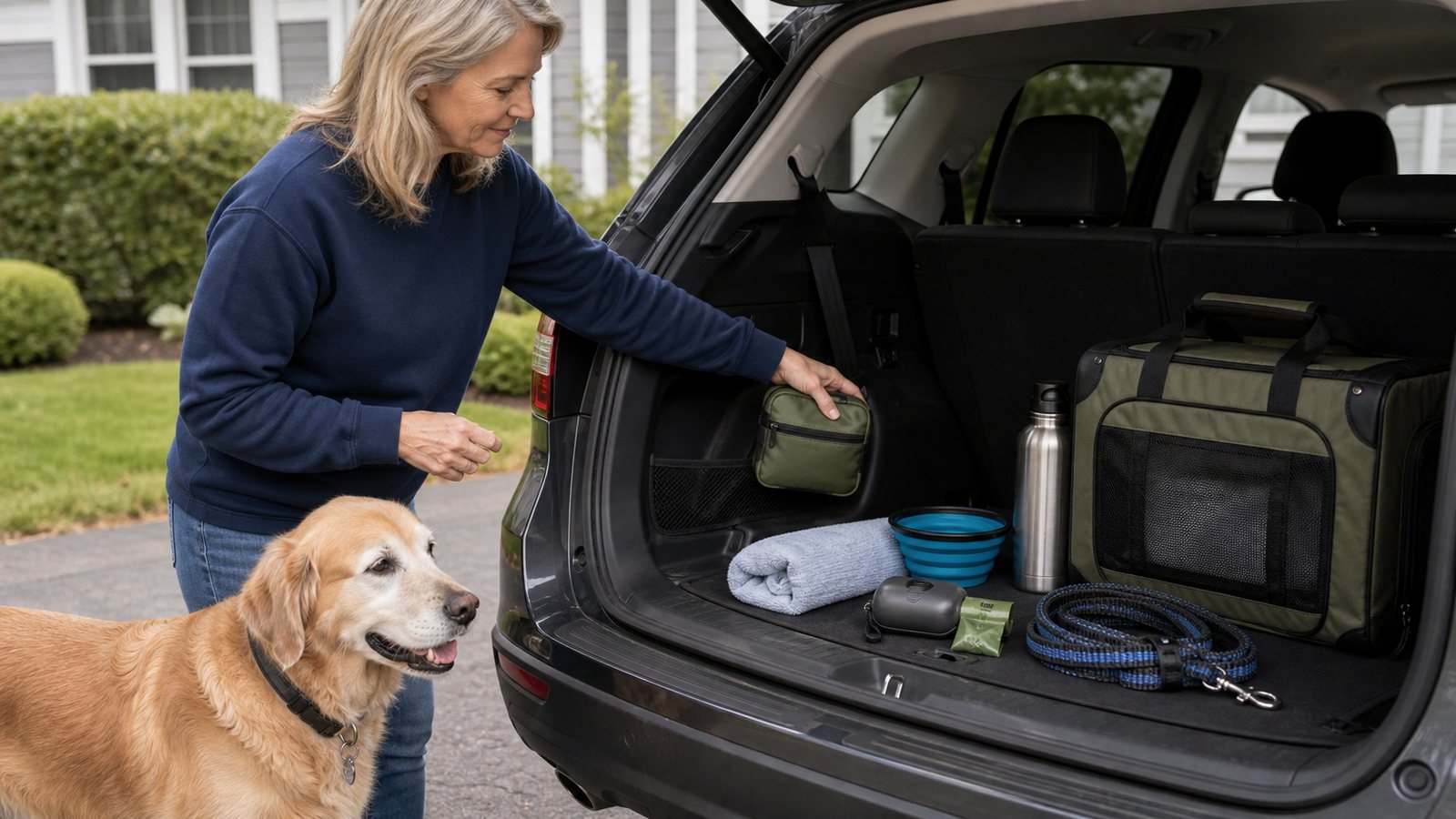
Add a small clean towel, paw balm or paw wax if your dog already tolerates it, and a spare leash. A leash failure at a rest stop is not a medical problem, but it can become one quickly.
Pack waste bags in the same area, even if they are not first aid supplies. They are useful for cleanup, isolating dirty gauze, or keeping a soiled towel away from food and water gear until you reach a trash can.
For dogs who travel in carriers or crates, add one extra absorbent pad or towel. If your dog gets carsick or has an accident, you can reset the space without unpacking the whole car.
Camping Extras
Camping adds ticks, rough ground, plant debris, fire rings, insects, and longer stretches away from your regular vet. Your kit does not need to become huge, but it should match the setting.
For wooded campsites, a tick remover is worth packing even if your dog is on preventives. Check your dog after walks, especially around ears, armpits, neck, tail base, and between toes.
For rocky or dry ground, paw care matters. Pack a small towel for cleaning paws and check pads before bedtime. If your dog is limping, licking one paw, or refusing to walk normally, stop and inspect before assuming they are just tired.
For hot-weather camping, your first aid kit should sit near your shade and water setup, not buried in the deepest bin. If your dog seems overheated or weak, move them to a cooler shaded place and contact a vet or emergency clinic.
What Not to Pack Without Vet Guidance
Do not build your dog’s kit by copying a human medicine cabinet. Pain relievers, cold medicine, anti-diarrhea medicine, sleep aids, and leftover prescriptions can be dangerous for dogs.
If your veterinarian has told you to carry a specific medication for your dog, keep the instructions with it. Write down the dose, timing, and what situation it is meant for. Do not rely on memory during a stressful trip.
Avoid strong disinfectants unless your vet has specifically recommended them for your dog. The goal is often to rinse, protect, and get professional advice, not to aggressively treat something you have not identified.
If you want to carry allergy medication, motion sickness medicine, or anything for stomach upset, ask your vet first. Your dog’s size, health history, and other medications matter.
How to Store the Kit in the Car
The kit should be easy to reach without unloading the entire cargo area. A side bin, seat-back organizer, or top pocket of the dog travel bag works better than the bottom of a camping tote.
Keep liquids upright in a small sealed bag. Saline bottles, wipes, and paw products can leak, especially when the car gets warm or luggage presses against them.
Do not leave heat-sensitive items baking in the car all summer. Check labels and replace anything that has dried out, leaked, or expired.
If you travel with more than one dog, label any dog-specific medication clearly. A shared kit is fine, but medication instructions should not be shared by guesswork.
Pre-Made Kit vs DIY Kit
A pre-made dog first aid kit is convenient if you want a starting point. It may include gauze, wrap, gloves, tweezers, and basic tools in a compact pouch. That is useful, especially for new dog owners.
The downside is that pre-made kits may include items you never use and miss items your dog actually needs. They also may not include travel records, medication notes, a spare leash, or the paw supplies that make sense for your trips.
A DIY kit takes a little more time but can fit your dog better. For a small dog, you may want smaller gauze and a lighter pouch. For a large dog, you may need more wrap and larger pads. For camping, tick tools and paw supplies move higher on the list.
The best approach for many owners is simple: buy a decent base kit, then customize it.
Compare compact pet first aid kits on Amazon
Packing Checklist
For a practical travel kit, consider:
- Sterile gauze pads
- Gauze roll
- Self-adhering wrap
- Disposable gloves
- Pet-safe antiseptic wipes
- Saline rinse or sterile eye wash
- Tweezers
- Tick remover
- Blunt-tip scissors
- Styptic powder for nails
- Small clean towel
- Paw balm or paw wax if your dog uses it well
- Spare leash
- Waste bags
- Digital thermometer
- Emergency vet contact notes
- Vaccination records
- Medication list and dosing instructions
- Microchip number
- Any medication or supplies your vet has specifically recommended for your dog
Simple Pre-Trip Check
Before each longer trip, open the kit. Do not assume it is ready because it was ready last month.
Check for dried-out wipes, expired products, missing gloves, loose caps, and supplies you used but never replaced. Make sure the tick remover is still there. Make sure the record envelope has the current vaccine information and medication notes.
If you are camping or driving through rural areas, look up emergency vet options near your destination before you leave. You do not need to memorize them. Just save a note on your phone and keep your regular vet’s number in the kit.
Common Mistakes
One common mistake is packing too much. A giant kit is easy to leave at home because it takes up space. A smaller kit that always rides with your dog is usually more useful.
Another mistake is packing supplies but not knowing where they are. If the kit is under coolers, chairs, and sleeping bags, it may as well be at home.
A third mistake is forgetting records. Many travel problems are not dramatic injuries. They are questions: What medication does your dog take? When was the last rabies vaccine? Who is your vet? What is the microchip number?
The final mistake is waiting until something happens to learn the basics. Consider taking a pet first aid class or using a reputable pet first aid app so you are not reading instructions for the first time while your dog is upset.
Related PawTripKit Guides
This kit fits naturally into a broader travel setup:
- Dog Road Trip Checklist for Beginners
- Dog Camping Checklist for Beginners
- Dog Travel Essentials Checklist
- How to Pack a Dog Overnight Bag Without Overpacking
- Dog Rest Stop Routine on Road Trips
Final Thoughts
A dog first aid kit does not need to be dramatic. It needs to be reachable, current, and matched to your actual trips. For most dog owners, that means basic wound supplies, tick tools, paw care, records, emergency contacts, and any items your vet has specifically recommended for your own dog.
Build the kit once, then check it before longer drives and camping weekends. The point is not to prepare for every possible emergency. It is to avoid being empty-handed when a small problem happens far from your normal routine.
FAQ
Do I need a dog first aid kit for short road trips?
For short local drives, you may not need a full kit, but keeping basic supplies in the car is still useful. Gauze, gloves, saline rinse, a towel, and your vet’s number can help with small problems away from home.
Can I use a human first aid kit for my dog?
Some basic supplies overlap, such as gauze and gloves. Medications and disinfectants are different. Do not give human medicine or use strong products on your dog unless your veterinarian has told you to.
What should I add for camping with dogs?
For camping, add a tick remover, extra paw-cleaning supplies, a small towel, records, emergency vet notes, and anything your own dog needs for known health issues.
Where should I keep the kit in the car?
Keep it somewhere reachable, such as a side cargo bin, dog travel bag pocket, or seat-back organizer. Avoid burying it under luggage or camping bins.
Should I buy a pre-made dog first aid kit?
A pre-made kit can be a good starting point, but open it before the trip and customize it. Add your dog’s records, medication notes, spare leash, and any items your vet has specifically recommended for your dog.
A tick remover belongs in a travel first-aid kit, but repellent is a separate packing decision. Our dog bug spray guide covers pet-safe labels, campsite habits, and tick checks for camping trips.