
Best GPS Dog Collars for Road Trips and Camping
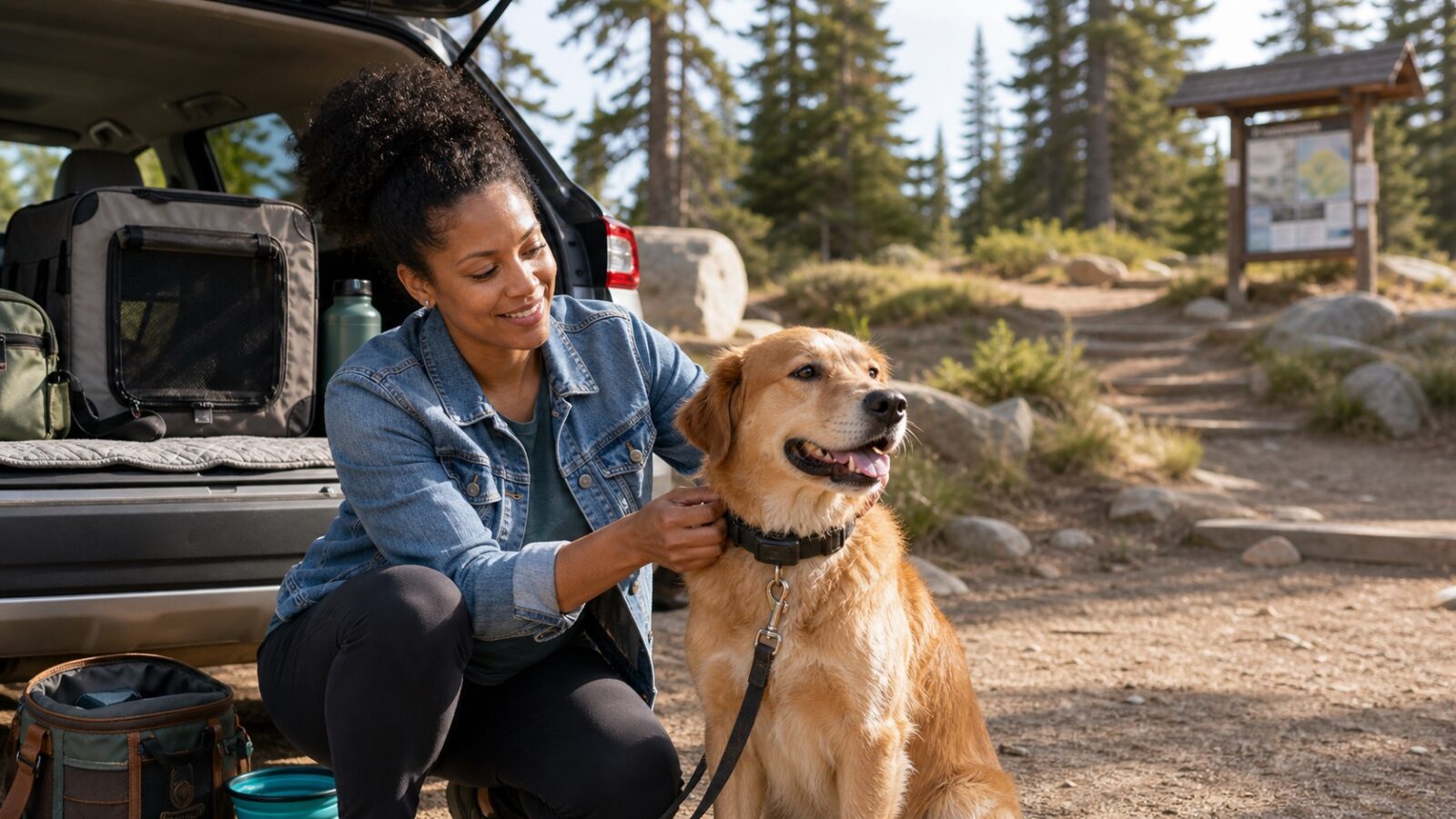
A GPS dog collar is most useful when your dog is away from home in a place you do not know well: a rest stop, a campground, a rental cabin, a trailhead, or a hotel parking lot after a long drive. It is not a replacement for a leash, a secure harness, a recall routine, or an ID tag. It is a backup tool for the moment when something goes wrong.
That distinction matters. Many products get described as “trackers,” but they do not all work the same way. Some use GPS and a cellular subscription to show your dog’s location in an app. Some are Bluetooth tags that depend on nearby phones. Some are better for finding a lost set of keys than tracking a dog who has slipped out of a campsite.
This guide is for dog owners who travel by car, camp on weekends, stop at unfamiliar parks, or let their dog spend time in fenced but unfamiliar outdoor spaces. It is based on product features, manufacturer information, and common travel use cases, not hands-on lab testing.
Quick Answer
For most road trips and camping weekends, look first at a real GPS dog tracker with cellular service, escape alerts, a secure attachment, water resistance, and enough battery life for your trip. Tractive-style GPS trackers and Fi-style smart collars are the kind of products to compare if you want live location features.
An AirTag or similar Bluetooth item tracker can be useful as a low-cost backup ID tag, especially in towns or busy areas with many nearby phones. It should not be treated like a full GPS collar for rural camping, open trails, or places with weak phone traffic.
If you only want a simple backup for a dog who is always leashed, a sturdy ID tag plus a Bluetooth tracker holder may be enough. If your dog camps off leash, escapes fences, bolts from cars, or hikes in remote areas, you should be looking at a true GPS setup.
Compare GPS dog collars and trackers on Amazon
GPS Collar vs Bluetooth Tag vs AirTag Holder
The first decision is not brand. It is tracking type.
A true GPS dog collar or tracker uses satellite positioning and usually sends that location through a cellular network to your phone. That is why many of them require a subscription. The subscription is not just an annoying extra fee; it is often what makes live tracking, location history, and escape alerts possible.
A Bluetooth tracker works differently. It talks to nearby phones or devices. Apple says AirTag sends a secure Bluetooth signal that can be detected by nearby devices in the Find My network, then reported to the Find My app. That can be very helpful in a city, airport, neighborhood, or busy rest area. It is less dependable if your dog runs into an empty field, a quiet campground loop, or a remote trail where no compatible devices pass nearby.
An AirTag holder on a dog collar is therefore better thought of as a “maybe someone nearby can help locate this tag” tool, not a live GPS dog tracker. It can still be worth using as a secondary backup, but it should not carry the whole safety plan.
What Matters Before You Buy
Start with coverage. A GPS tracker that depends on cellular service needs usable coverage where you travel. That includes the highway corridor, the campground, and the rural area around it. If a product lets you check coverage by ZIP code or region, do that before buying. Do not assume a device that works well in your neighborhood will work the same way in a mountain campground.
Next, look at battery life in the mode you will actually use. Product pages often show battery life under normal or power-saving use. Live tracking, poor signal, cold weather, and repeated location checks can drain a battery faster. For a weekend trip, you want a tracker that can comfortably last through your plan or recharge easily in the car.
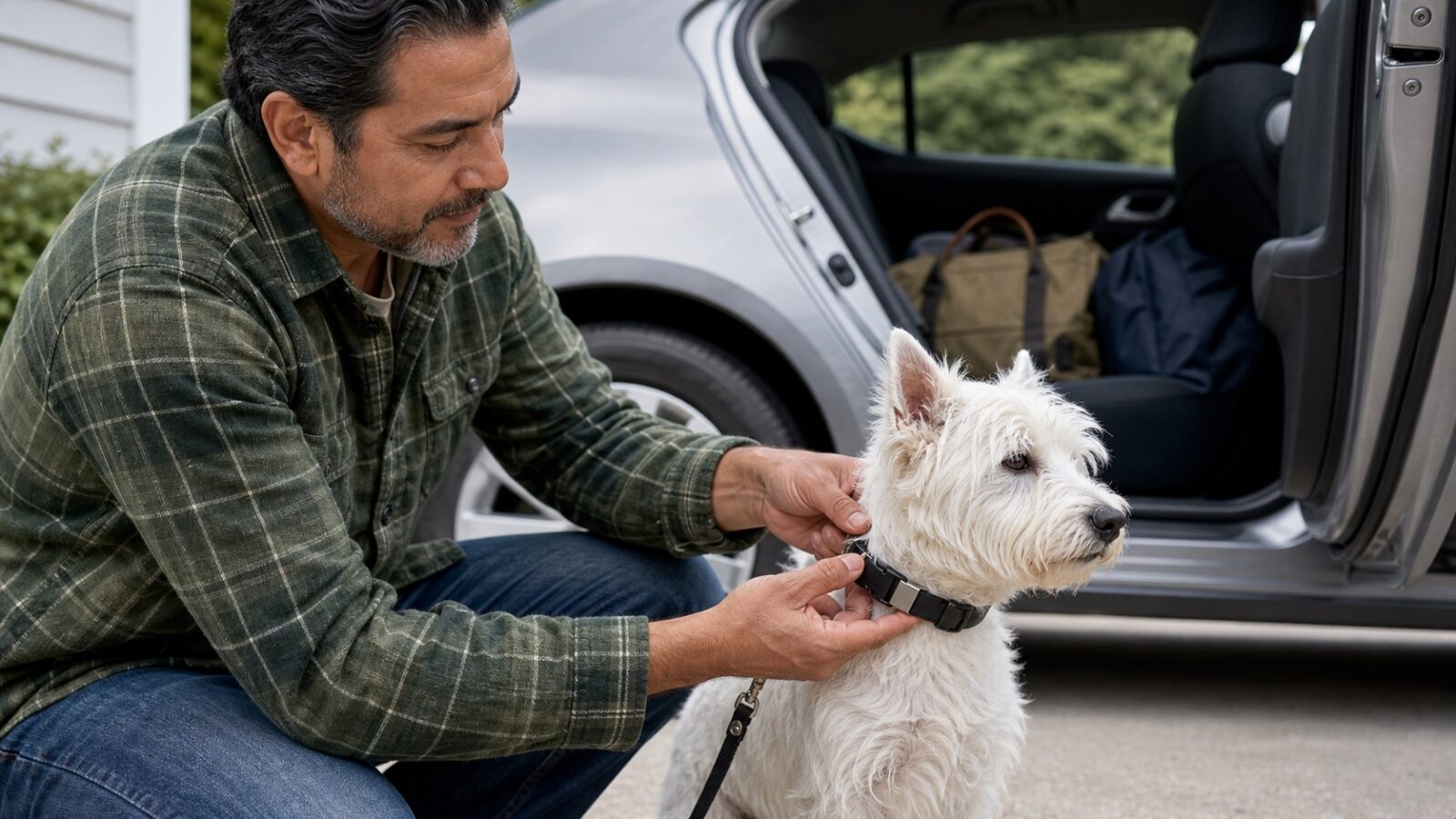
Fit matters more than people expect. A bulky tracker may be fine on a 70-pound dog and annoying on a 12-pound dog. Some devices clip to an existing collar, while others are built into a collar system. Check the dog weight guidance, tracker weight, collar width, and whether the device sits where it might rub under the jaw or against a harness.
Also check how the tracker attaches. For camping, lake trips, and dogs who wrestle or roll in dirt, the attachment needs to be more secure than a loose silicone loop. A tracker that pops off during play is not much help after your dog is already missing.
Best for Road Trips: A Cellular GPS Dog Tracker
For road trips, a cellular GPS tracker is usually the most useful type. The risk is not only that a dog runs deep into the woods. It is also that a tired dog jumps out at a gas station, slips a leash in a motel parking lot, or gets loose near a busy road.
A good road-trip tracker should have location updates, a lost-dog or live-tracking mode, escape alerts, and a loud enough sound or light feature to help when your dog is nearby but hidden behind a car, brush, or picnic table. It should also be comfortable enough to leave on during travel days.
Tractive’s current DOG 6 line is one example in this category. The company lists live GPS tracking, escape alerts, health monitoring features, waterproofing, and different size options, including DOG 6 for dogs above 9 pounds and DOG 6 XL for dogs above 44 pounds. Tractive also lists subscription pricing separately from the tracker, which is a reminder to compare ongoing cost, not just the device price.
This type is a better fit for owners who want active tracking during travel, especially if the dog has a history of slipping out of doors, chasing wildlife, or getting anxious in new places.
Best for: road trips, rest stops, hotels, campground loops, and dogs who need a real location backup.
Not ideal for: owners who do not want a subscription or dogs too small for the tracker’s listed weight and size guidance.
Check current GPS dog tracker options on Amazon
Best for Camping: GPS Plus a Real Camp Routine
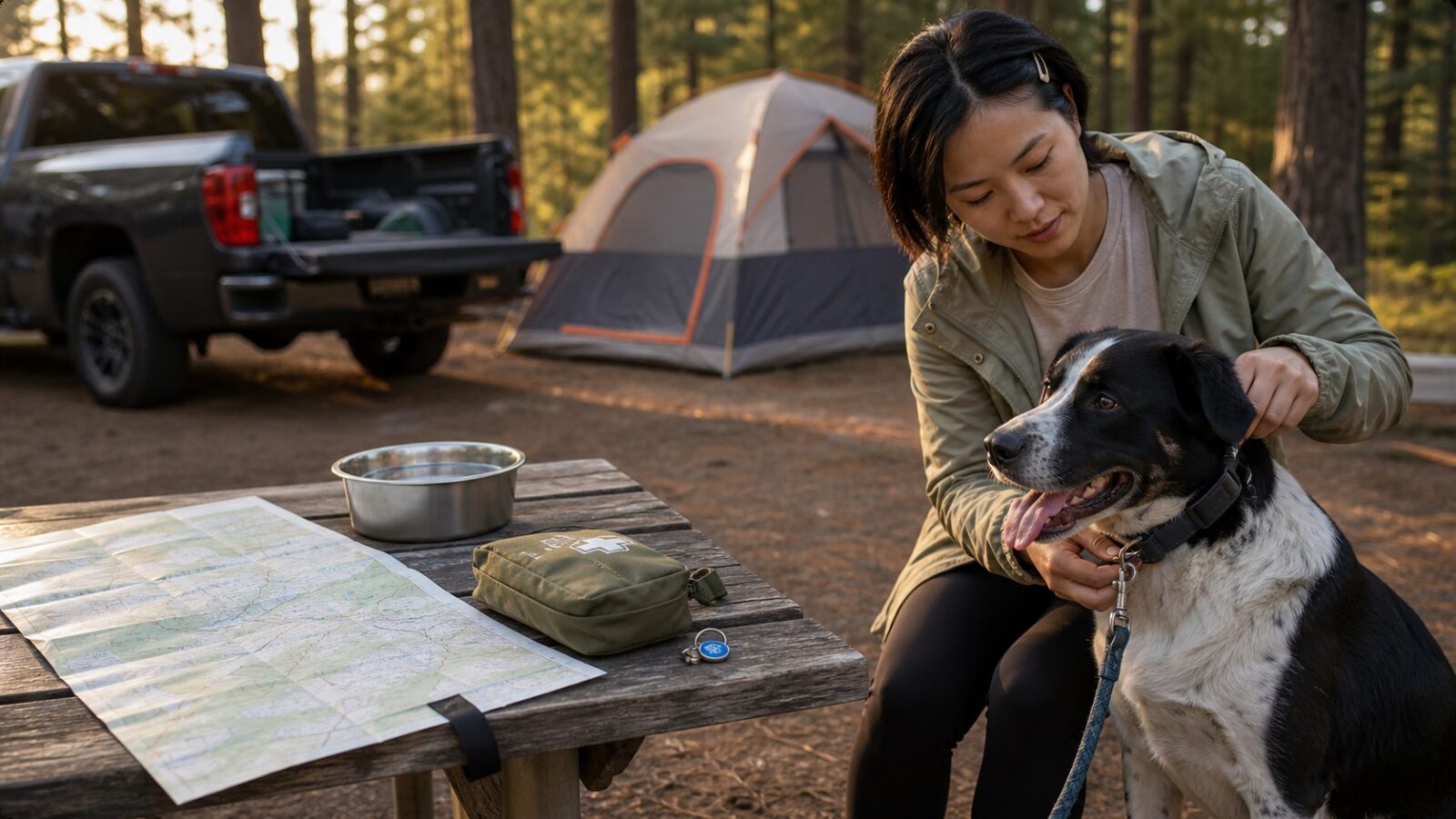
Camping adds a different layer of risk. Your dog may be near tents, food smells, other dogs, kids, wildlife, water, and unfamiliar noises. A GPS collar helps only after you notice the dog is missing. The better setup is GPS plus a physical routine that makes escape less likely in the first place.
At camp, keep the tracker charged before arrival, turn on any safe-zone or virtual-fence feature if the product supports it, and check the app before you need it. Do not wait until dusk, rain, or panic to figure out how live tracking works.
Use a leash, long line, tie-out system, crate, or enclosed sleeping setup that matches the campground rules and your dog’s behavior. If your dog is reactive, noise-sensitive, or likely to chase wildlife, the tracker should be treated as the backup layer, not permission to relax the basics.
For longer camping trips, bring the charging cable and think about power. A collar that works well for a one-night trip may need a mid-trip charge during a long weekend, especially if you use live mode often. Keep the charger in the same place as your dog first-aid kit or food container so it does not get buried in the car.
Before a trip, it helps to turn that advice into a repeatable tracker routine. The dog GPS tracker battery checklist gives you a simple charge-and-check sequence, and the dog camping gear checklist keeps the cable from becoming another loose item in the car.
Best Low-Cost Backup: AirTag or Bluetooth Tag Holder
An AirTag holder or Bluetooth tag holder can make sense if you understand the limits. Apple’s AirTag page describes it as a way to keep track of items through the Find My network. It uses Bluetooth and nearby Apple devices, not built-in GPS and cellular service.
For a dog, that means it may help if your dog is found near houses, a busy park, a campground office, or a rest area with people around. It may do very little if your dog is moving through a quiet rural area with no nearby compatible devices.
The appeal is obvious: no typical GPS subscription, small size, replaceable battery, and many collar holders available. For some owners, it is a reasonable second layer next to a normal ID tag. It is not the right main tracker for dogs who hike off leash, camp in remote areas, or have a serious escape history.
If you use one, choose a holder that fully encloses the tag and attaches securely to the collar. Avoid dangling holders for dogs who chew, wrestle, or crash through brush. Check the holder often, because the tracker is only useful if it is still on the dog.
Best for: urban walks, busy rest areas, backup ID, and owners who want a small secondary tracker.
Not ideal for: remote camping, live tracking, fast-moving lost-dog situations, or Android-only households using Apple-specific products.
Compare AirTag dog collar holders on Amazon
Subscription Cost: Annoying, But Important
Subscription cost is one of the biggest reasons people hesitate. It is also one of the clearest differences between a true GPS dog tracker and a simple Bluetooth tag.
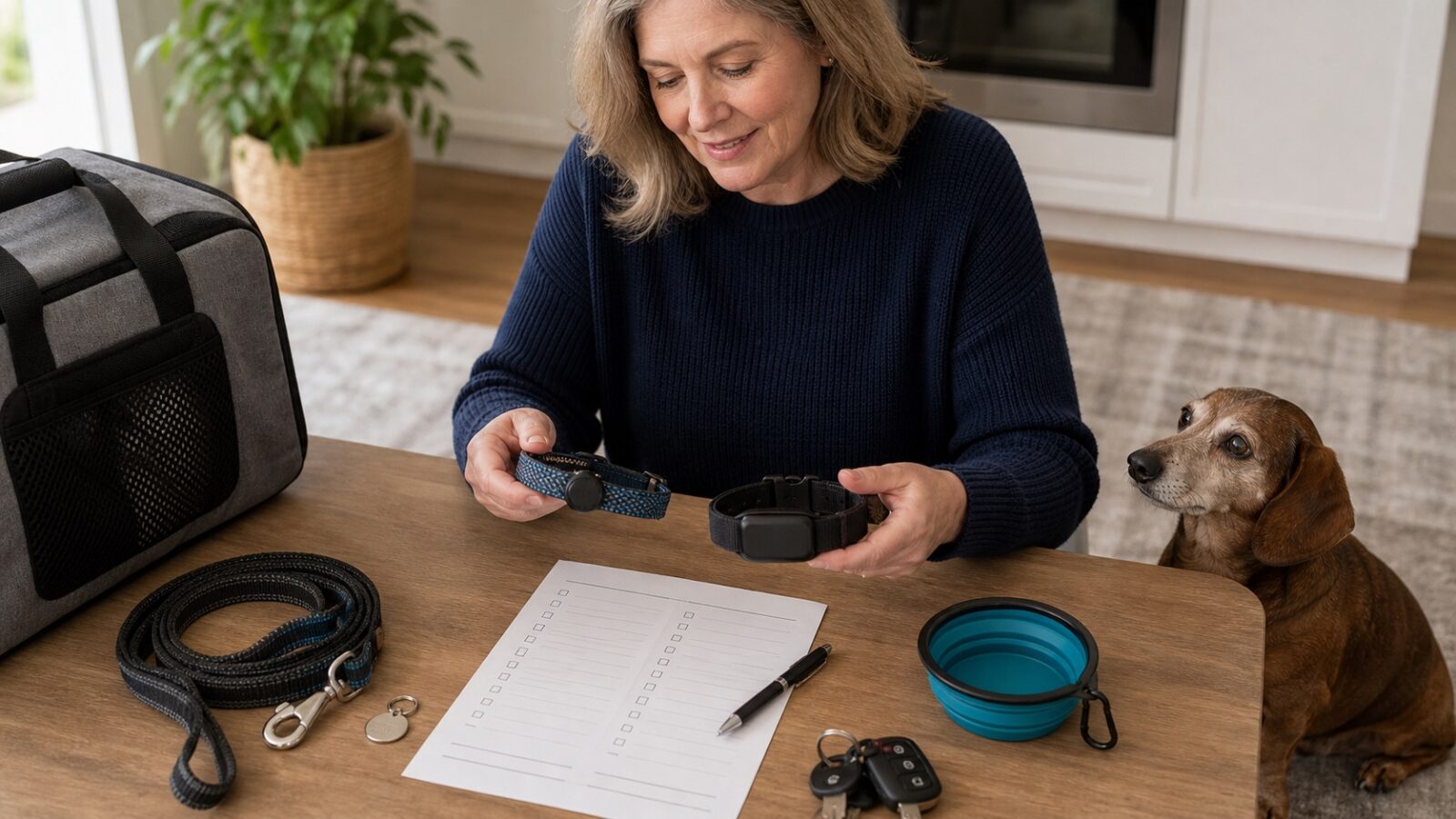
Before you buy, check whether the subscription is monthly, annual, multi-year, or required before the device works. Also check whether features like live tracking, location history, family sharing, escape alerts, or health monitoring depend on a higher plan.
For PawTripKit readers, the practical question is simple: would you keep paying for it after the first trip? If the answer is no, do not buy an expensive tracker that becomes a drawer item. A less powerful backup tag plus better leash and ID habits may be more realistic.
If you do choose a subscription tracker, set a calendar reminder before renewal. That is less exciting than comparing app screenshots, but it keeps the real cost visible.
Collar Fit and Comfort
A tracker should not make the collar stiff, heavy, or awkward. This is especially important for small dogs, short-necked dogs, senior dogs, and dogs who already wear a harness in the car.
Check the product’s dog weight guidance and collar size range. Then look at the shape of your dog’s neck. A narrow toy breed may not tolerate the same tracker that looks fine on a Labrador. A dog with thick fur may need a collar adjustment so the device sits securely without disappearing into the coat.
Use the basic two-finger fit check for the collar itself, then watch how the tracker moves when your dog lowers their head, drinks, shakes, lies down, or jumps into the car. If it slides under the throat, bangs against a harness clip, or seems to bother the dog during rest, rethink the setup.
For car travel, do not attach a seat belt tether to a GPS collar. A car restraint should connect to a properly fitted harness or secured carrier, not to a neck collar. The tracker is for identification and location, not crash restraint.
Battery Life on Real Trips
Battery life claims need context. A device may last much longer at home inside a power-saving zone than it does during an active road trip with poor signal and repeated location checks.
Before leaving, fully charge the device and open the app to confirm it is reporting normally. Pack the charging cable in your dog travel bag, not loose in the car. If you use a USB-C or proprietary charger, label it so it does not get mixed up with phone cables.
For camping, check battery at three moments: before leaving home, after arriving at camp, and before evening. Dogs are harder to find in low light, and that is not when you want to discover the tracker is nearly dead.
If the product offers a light or sound feature, test it at home first. Some dogs may dislike beeps or lights near their neck. You do not want the first test to happen when everyone is already stressed.
Water, Dirt, and Rough Use
Travel dogs get equipment dirty. A tracker may face rain, mud, lake water, dust, snow, and repeated collar adjustments. Look for clear water-resistance language from the manufacturer, but also read the fine print. Water resistant does not mean impossible to damage.
After wet trips, dry the tracker and collar before storing them in a bag. Check the charging contacts, clip, and collar loop. If the tracker uses a rubber holder, inspect it for stretching or cracks.
For dogs who swim hard, chew gear, or roll in brush, prioritize attachment strength over sleek design. A tracker that looks neat in product photos but comes loose at camp is not the one you want.
Backup ID Still Matters
Do not let the tracker replace normal identification. Your dog should still have a readable ID tag with a current phone number. If you travel often, consider a tag that includes your cell number, not only a home address.
Microchipping is also worth discussing with your vet if your dog is not already chipped. A microchip is not a tracker, but it can help a shelter or clinic identify your dog if the collar is lost.
For road trips, keep a recent photo of your dog on your phone, including one that shows the collar or harness. If your dog goes missing, a clear photo is more useful than trying to describe “medium brown dog” to strangers.
Compare waterproof dog ID tags on Amazon
Common Mistakes
One mistake is buying an AirTag holder and assuming it works like GPS. It does not. It can be useful, but it depends on nearby network devices.
Another mistake is ignoring cellular coverage. If you camp in rural areas, coverage is part of the product. A nice app interface does not help if the tracker cannot connect.
A third mistake is leaving the tracker untested until the trip. Install the app, create any safe zones, check notifications, and practice finding the device at home. You should know what normal looks like before something goes wrong.
Finally, do not attach travel restraint gear to a neck collar just because that collar has the tracker on it. In the car, use a harness, secured carrier, crate, or another safer travel setup. The tracker is a location tool.
GPS Collar Checklist
Before buying, check:
- Is it true GPS with cellular service, or a Bluetooth item tracker?
- Does it require a subscription?
- Does coverage match the places you drive and camp?
- Is the tracker size appropriate for your dog’s weight and neck?
- Is the attachment secure enough for camping, brush, rain, and play?
- How long does the battery last during active use?
- Can you recharge it easily during a trip?
- Does it offer escape alerts or virtual fences?
- Does it have a light or sound feature for nearby searching?
- Will it interfere with your dog’s harness or car restraint?
- Does your dog still wear a normal ID tag?
Related PawTripKit Guides
If you are building a safer travel setup, start with the basics before adding tech:
- Dog Road Trip Checklist for Beginners
- Dog Camping Checklist for Beginners
- How to Keep Your Dog Safe in the Car
- Dog Travel Essentials Checklist
- How to Set Up the Back Seat for a Dog Road Trip
Final Thoughts
The best GPS dog collar for travel is the one that matches where your dog actually goes. For busy road trips and campground weekends, a true GPS tracker with cellular service is usually the strongest backup. For city walks or a low-cost second layer, an AirTag-style holder can still be useful, as long as you understand that it is not live GPS.
Before buying, think through the uncomfortable moments: a dog slipping out at a gas station, a campsite gate left open, a leash dropped near a trailhead, or a nervous dog backing out of a collar at a hotel. Then choose the setup that gives you the best chance of responding quickly without replacing the basics: leash, harness, ID tag, training, and attention.
FAQ
Are GPS dog collars worth it for road trips?
They can be worth it if your dog travels often, gets nervous in new places, slips out of doors, or spends time at campgrounds and rest stops. They are less necessary for a dog who is always leashed and only takes short local drives.
Is an AirTag good enough for a dog?
An AirTag can be a useful backup tag, especially in populated areas, but it is not the same as a GPS dog tracker. It depends on nearby Apple devices in the Find My network and does not provide independent live GPS tracking.
Do GPS dog collars need a subscription?
Many true GPS dog collars and trackers need a subscription because they use cellular service to send location information to your phone. Always check the plan cost and required features before buying.
Can I use a GPS collar instead of a leash?
No. A GPS collar helps you locate a dog after there is a problem. It does not keep your dog away from roads, wildlife, other dogs, or campground hazards.
Should my dog wear a GPS collar in the car?
Your dog can wear a tracker collar in the car, but do not attach a seat belt tether to a neck collar. Car restraint should connect to a properly fitted harness, secured carrier, or crate.