
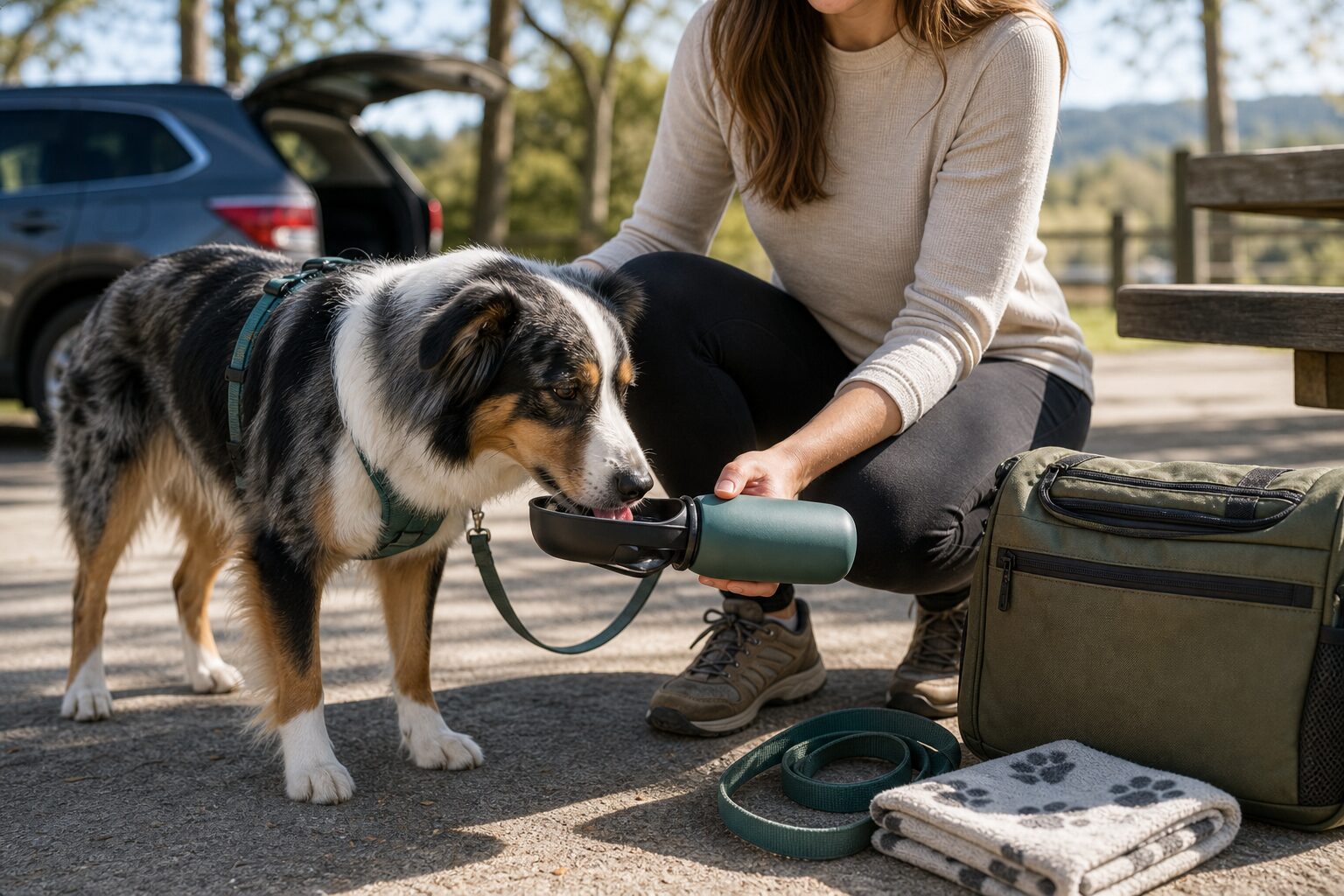
A dog travel water bottle sounds like a small item until you are standing at a rest stop with a thirsty dog, no clean bowl, and water spilling across the car floor.
The right bottle should be easy to carry, easy for your dog to drink from, simple to clean, and secure enough that it does not leak in your bag.
The Short Answer
Choose a dog travel water bottle based on your dog’s size, how long you will be away from home, how easy it is to clean, and whether the drinking cup or bowl shape works for your dog.
For short errands, a small bottle may be enough. For road trips, hiking, warm weather, or multiple dogs, choose a larger bottle or bring extra water separately.
Capacity: How Much Water Do You Need?
Small bottles are convenient, but they run out quickly. Large bottles are more useful for long drives, camping, or warm days, but they take up more space.
Think about the trip:
- Short car rides: a compact bottle is usually fine
- Half-day outings: choose more capacity or bring backup water
- Road trips: keep a larger water supply in the car
- Camping or hiking: plan for your dog and yourself, not just one quick drink
Do not use the bottle as your only water source on long trips. It is better as the easy-to-use drinking tool, with extra water packed nearby.
Bowl Design Matters
Most dog travel bottles have a built-in cup or bowl. Some fold out, some are attached to the top, and some release water with a button.
A narrow cup may work for a small dog but frustrate a larger dog. A shallow tray can be easier for flat-faced dogs or dogs who do not like pushing their nose into a small opening.
If your dog is picky, test the bottle at home before depending on it during travel.
Leak Resistance
A travel bottle should not leak in a backpack, car pocket, or dog travel bag. Look for a locking mechanism, tight seal, and cap design that does not pop open easily.
After buying any bottle, fill it with water and leave it upside down over the sink for a few minutes. Then put it in a bag with a towel before trusting it near electronics, documents, or dog food.
Cleaning
Travel bottles can get slimy if they are not cleaned well. Look for a wide opening, removable parts, and simple shapes without too many hidden corners.
If a bottle is difficult to clean, you will avoid using it. That defeats the point.
Car Travel vs Hiking Use
For Car Travel
A bottle that fits in a cup holder or door pocket is convenient. One-handed operation can help at rest stops, but do not try to water your dog while driving.
For Hiking
Weight and carry style matter more. Look for a bottle that clips to a bag or fits easily in a side pocket. If the trail is long or hot, bring extra water beyond the bottle.
Common Mistakes
- Buying only by color or style
- Choosing a cup that is too small for the dog’s muzzle
- Forgetting to test for leaks
- Not cleaning the bottle after travel
- Assuming one small bottle is enough for a full day
Final Thoughts
A good dog travel water bottle should make water breaks easier, not more complicated. Choose a size that matches your trips, a bowl shape your dog will actually use, and a design you can clean without fuss.
For PawTripKit-style travel planning, treat the bottle as one part of a small hydration setup: easy drinking bottle, backup water, and a collapsible bowl for longer stops.
FAQ
Are dog travel water bottles worth it?
They are useful if you take road trips, walks away from home, hikes, or long errands with your dog. They make quick water breaks cleaner and easier.
What size dog travel water bottle should I get?
Choose based on your dog’s size and trip length. Small bottles are fine for quick outings, but longer trips need more capacity or backup water.
Can I use a regular water bottle and bowl?
Yes. A regular bottle plus collapsible bowl works well. A dog travel bottle is mainly about convenience.
How often should I offer water while traveling?
Offer water during regular stops and more often in warm weather, after exercise, or if your dog is panting. Dogs vary, so watch your dog rather than relying only on a strict schedule.
Related guide: If you are ready to compare options, see our guide to the best dog travel water bottles for road trips and hiking.