
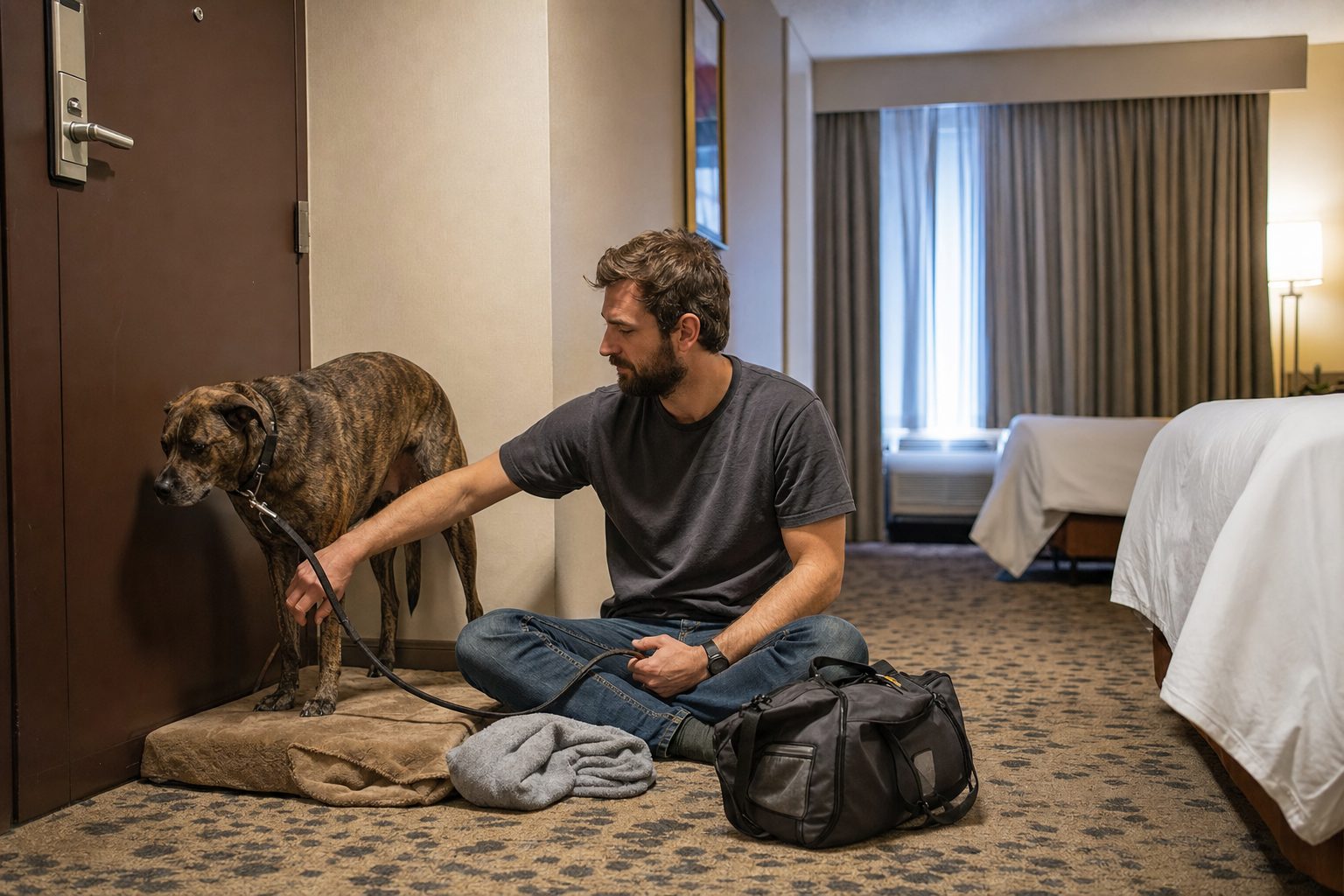
Hotel hallway noise is hard on some dogs because it sounds close, sudden, and important. Footsteps pass the door. Elevator doors open. Someone rolls a suitcase by. Another guest lets a room door close too hard. To a dog in a new room, all of that can feel like something worth checking.
The fix is not to hope your dog ignores it. Set up the room so the door is less interesting, then give your dog a repeatable routine when noise happens.
This is not a training plan for severe reactivity or separation distress. It is a practical hotel routine for road-trip dogs who get alert, stare at the door, whine, pace, or bark at hallway movement. If your dog has a serious anxiety history, talk with your vet or a qualified trainer before relying on travel routines alone.
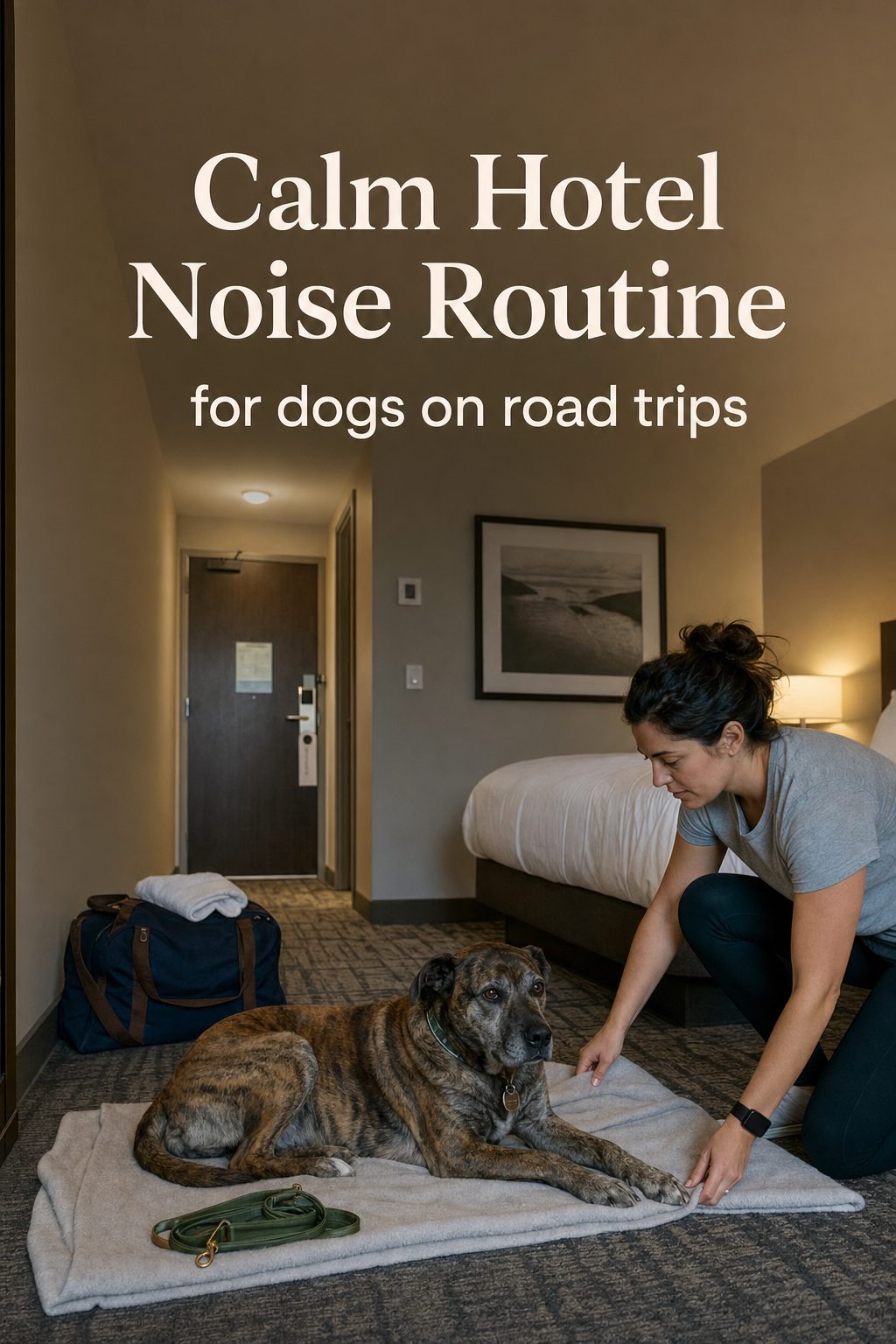
Quick Routine
If your dog reacts to hallway noise in a hotel, start here:
- keep the leash easy to reach, especially during the first hour
- move the bed, blanket, or crate mat away from the hotel room door
- keep food, trash, and exciting gear away from the entry
- use one calm phrase or cue when noise happens
- guide your dog back to the rest spot before they rehearse door-watching
- reward quiet check-ins if that is already part of your dog’s routine
- take a short potty break before nighttime gets busy
The point is to make the room easier to understand. The door is not your dog’s job. The rest spot is.
For the broader room setup, start with Dog-Friendly Hotel Room Setup: A 10-Minute Arrival Routine. For packing before you reach the hotel, use the Dog Hotel Checklist for a Cleaner Stay.
Why Hotel Hallways Feel Different to Dogs
At home, your dog may know which sounds matter. They know the neighbor’s car, the delivery truck, the normal hallway traffic, or the rhythm of your own household. In a hotel, the sounds are closer and less predictable.
Common triggers include:
- rolling suitcases
- room doors closing
- elevator chimes
- people talking outside the room
- dogs passing in the hallway
- housekeeping carts
- footsteps that stop near your door
Your dog does not need to be a “bad hotel dog” to react. They may simply be trying to figure out what is on the other side of the door.
That is why the room layout matters. If the dog’s bed is beside the entry, every sound asks for a decision. If the rest spot is farther inside the room, your dog has a better chance to notice the sound and stay settled.
Start With the Door Area
The door area should be useful for you, not exciting for your dog. Keep it simple and boring.
Put these near the door:
- leash
- waste bags
- paw towel or wipes
- room key
- shoes
Keep these away from the door:
- food
- chew toys
- bed or crate mat
- open luggage
- trash
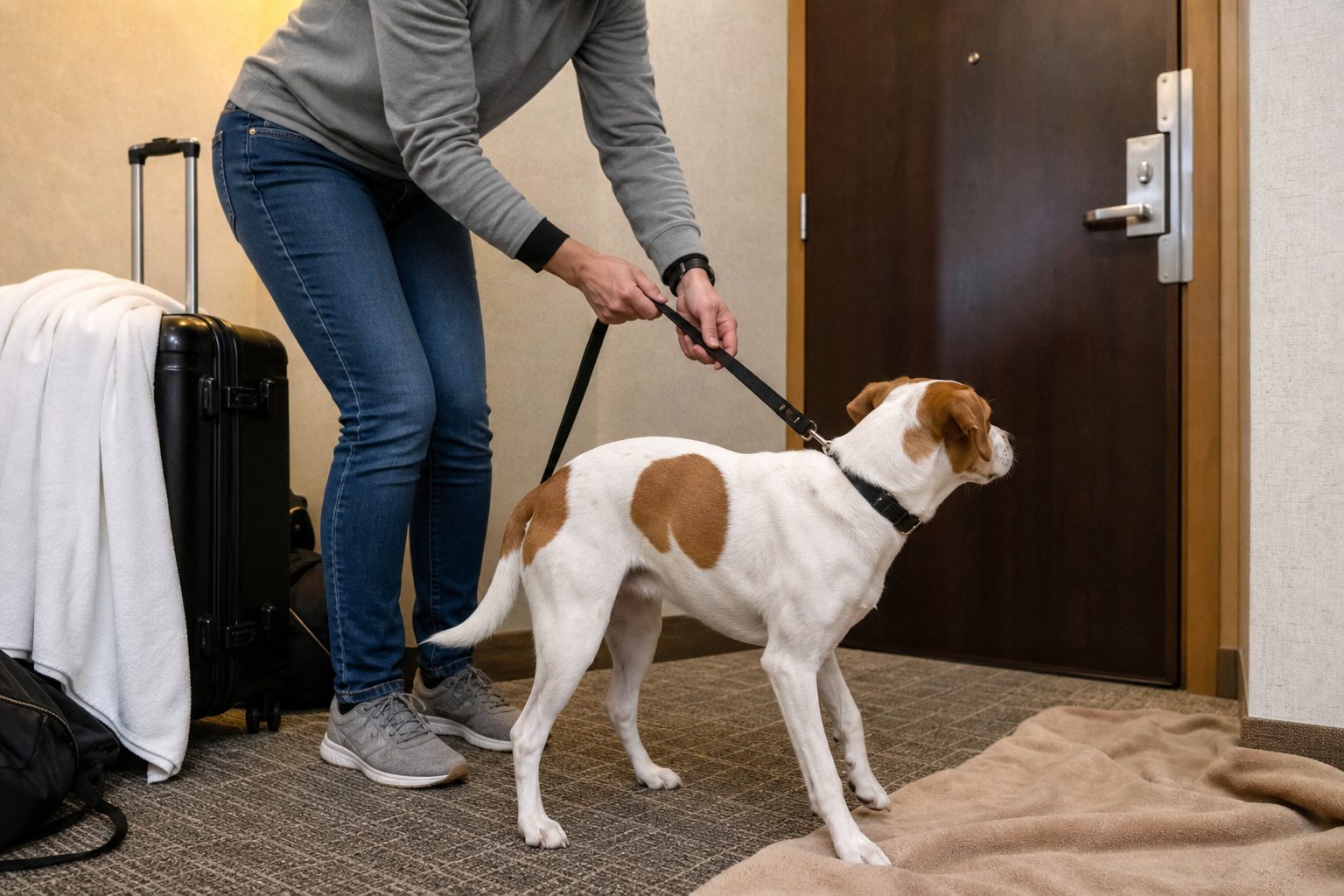
If your dog plants themselves at the door, do not turn it into a wrestling match. Pick up the leash, calmly guide them back into the room, and give them something specific to do: lie on the mat, sit beside you, drink water, or follow you to the rest spot.
The door should be the place you leave from, not the place your dog monitors all night.
Move the Rest Spot Away From the Door
For many dogs, the best hotel bed location is not the most open spot. It is the spot where the dog can rest without facing every hallway sound.
Good rest spots are usually:
- beside your bed but not in the entry path
- near a chair or suitcase that creates a small visual boundary
- away from the door gap
- away from the trash can
- close enough that you can quietly redirect your dog
Avoid placing the bed directly between the hotel door and your own bed. That layout often turns the dog into the room’s front desk.
If your dog uses a crate, place it where the door is not the main view. If your dog uses a blanket, put the blanket down before unpacking everything else. Familiar smell and texture can help, but only if the spot is calm enough for your dog to choose it.
For overnight packing, see How to Pack a Dog Overnight Bag Without Overpacking.
Use a Repeatable Noise Response
The mistake is waiting until your dog is already barking at the door, then trying five different things. Pick one routine and repeat it.
A simple response can look like this:
1. Noise happens in the hallway. 2. You stay still for a second instead of jumping up. 3. You say the same calm phrase each time. 4. You guide your dog away from the door if needed. 5. You send them back to the blanket, mat, or crate. 6. You reward quiet attention if that is something your dog already understands.
Do not add a new command your dog has never practiced. Hotel rooms are not great places to teach from scratch. Use what your dog already knows: mat, bed, settle, here, leave it, or simply a calm leash guide.
If your dog keeps returning to the door, reduce the room’s invitation. Move the rest spot farther in. Close curtains if outside movement is part of the problem. Put luggage where it blocks a direct stare path without trapping your dog in a corner.
Do Not Accidentally Reward Door-Watching
Dogs learn hotel patterns quickly. If every hallway sound leads to you rushing to the door, opening it, talking loudly, or handing over a high-value chew right at the threshold, the door becomes even more interesting.
Try not to:
- walk to the door every time your dog notices a sound
- let your dog stare under the door gap for long stretches
- feed treats directly at the door if the goal is to move away from it
- leave the leash buried so you have to scramble
- unpack noisy bags during peak hallway traffic
Instead, make the better behavior easy. Keep the leash reachable. Keep the mat visible. Sit near the rest area for the first few minutes if your dog needs help understanding the room.
Night Setup
Night is when hallway noise feels louder because the room is otherwise quiet. Before you turn off the lights, reset the space.
Do this before bed:
- take one last potty break
- refill water if needed
- put the leash back in the same spot
- move trash and food out of reach
- settle your dog on the chosen blanket, mat, bed, or crate pad
- keep the path to the door clear for morning
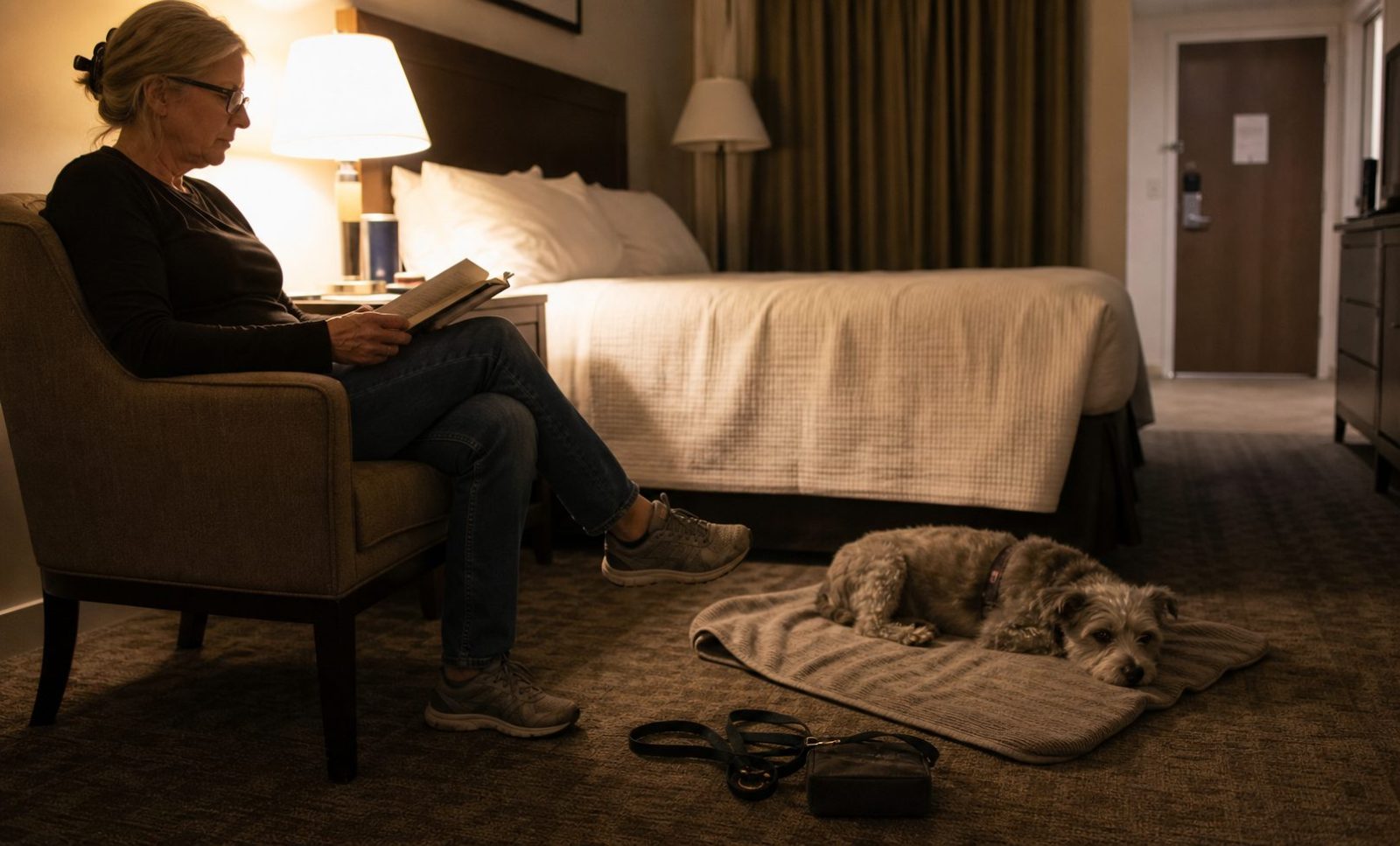
Some dogs settle better if the room does not go from busy to silent all at once. If your dog is used to a fan, white noise, or a low TV at home, you can use a similar background sound at a normal volume. Do not blast sound to cover every hallway noise. That can make the room feel stranger, not calmer.
If your dog sleeps in a crate, check that the crate is not pressed against the door-side wall. If your dog sleeps on a blanket, keep it close enough that you can redirect without getting out of bed every time.
What If Your Dog Barks Anyway?
One bark does not mean the stay is ruined. The bigger issue is whether your dog can recover.
After a bark:
- stay calm and quiet
- avoid scolding from across the room
- guide your dog away from the door
- ask for a familiar behavior if they can respond
- wait for a quieter moment before giving attention
If your dog cannot recover, the room may be too hard for them that night. A short walk outside, a calmer rest spot, or sitting with them away from the door may help. If the barking continues or your dog seems panicked, treat it as a real stress signal, not a discipline problem.
For dogs with repeated travel anxiety, plan ahead before the next trip. Ask your vet or trainer what is appropriate for your dog, especially before long drives, multi-night stays, or trips where your dog may need to be alone in the room.
Leaving the Room Without Creating a Door Problem
Many hotels have their own rules about leaving dogs unattended, so check the policy first. Even when it is allowed, some dogs do not handle it well.
Before leaving:
- take your dog out first
- remove food and trash from reach
- keep the rest spot set up away from the door
- avoid a dramatic goodbye
- do not leave if your dog is already pacing or barking
If you step out briefly and your dog reacts hard, do not use the hotel stay as the place to push it. Adjust the plan. That may mean taking your dog with you, shortening the outing, or choosing travel days around your dog’s limits.
Morning Reset and Checkout
Checkout can restart the door problem because bags move, shoes go on, and your dog can tell something is happening.
Use the same order:
- leash on before the room gets busy
- potty break if your dog is restless
- pack food and clean gear first
- bag dirty towels or wipes separately
- check under the bed and near curtains
- keep the door closed until you are ready to leave
If you need the larger packing system, use the Dog Road Trip Packing Guide. For dirty towels and damp gear, the Dog Road Trip Cleanup Kit is the better support page.
Simple Version
For a tired late-night check-in, do not overthink it.
Use this minimum setup:
- leash stays reachable
- bed or blanket goes away from the door
- water goes on a towel
- food and trash stay closed
- you use the same calm response each time noise happens
That small setup solves more than people expect. It gives the dog fewer jobs, gives you a clearer response, and keeps the doorway from becoming the center of the room.
FAQ
Why does my dog bark at hotel hallway noise?
Hotel sounds are close, unfamiliar, and often happen right outside the room door. Your dog may be reacting to footsteps, suitcases, voices, elevator sounds, or other dogs passing by.
Where should I put my dog’s bed in a hotel room?
Place the bed, blanket, crate mat, or travel mat away from the hallway door and out of the entry path. A spot beside your bed or near a chair often works better than the open space by the door.
Should I use white noise for my dog in a hotel?
If your dog is already used to a fan, white noise, or low background sound, it can help make the room feel more familiar. Keep it at a normal volume. Do not rely on loud sound to cover every hallway trigger.
What should I do if my dog barks once in a hotel?
Stay calm, guide your dog away from the door, and return to a familiar routine. One bark is less important than whether your dog can recover and settle again.
Can I leave my dog alone in a hotel room?
Check the hotel’s pet policy first. Even when it is allowed, some dogs do not tolerate being left in a new room. Do not leave if your dog is already pacing, barking, or showing strong stress.