
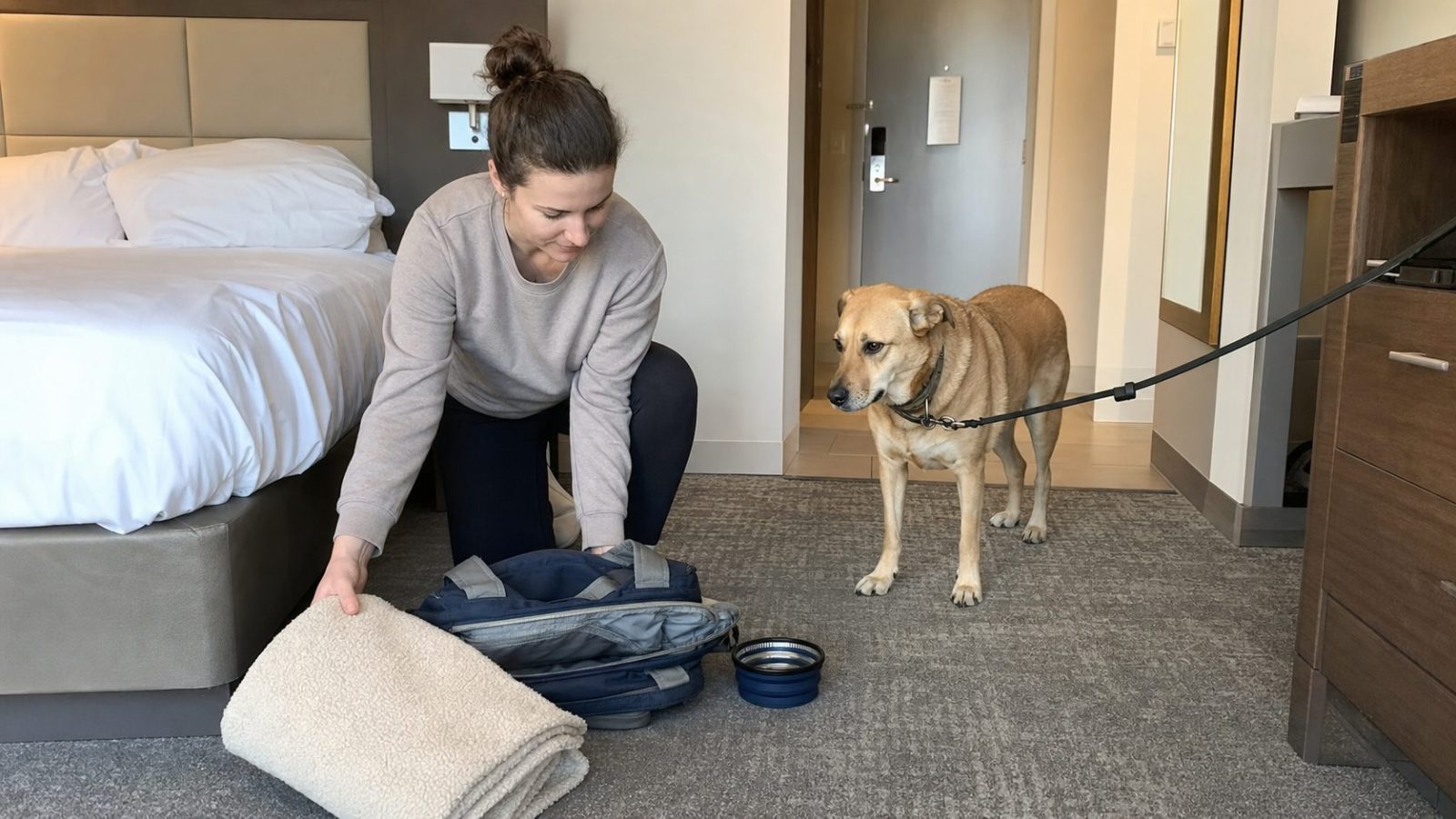
The hardest part of a hotel stay with a dog is often the first ten minutes. The door opens, the room smells unfamiliar, luggage lands wherever there is floor space, and your dog starts checking the corners before you know where the leash, bowl, or towel went.
You do not need a complicated hotel setup. You need a small routine that gives your dog one place to settle, keeps the door area under control, and prevents the room from turning into a pile of loose dog gear.
This guide is for ordinary road-trip hotel stays: one night on the way somewhere, a weekend trip, or a dog-friendly stop after a long day in the car. Always follow the specific hotel rules for pets, and call the front desk if anything is unclear.
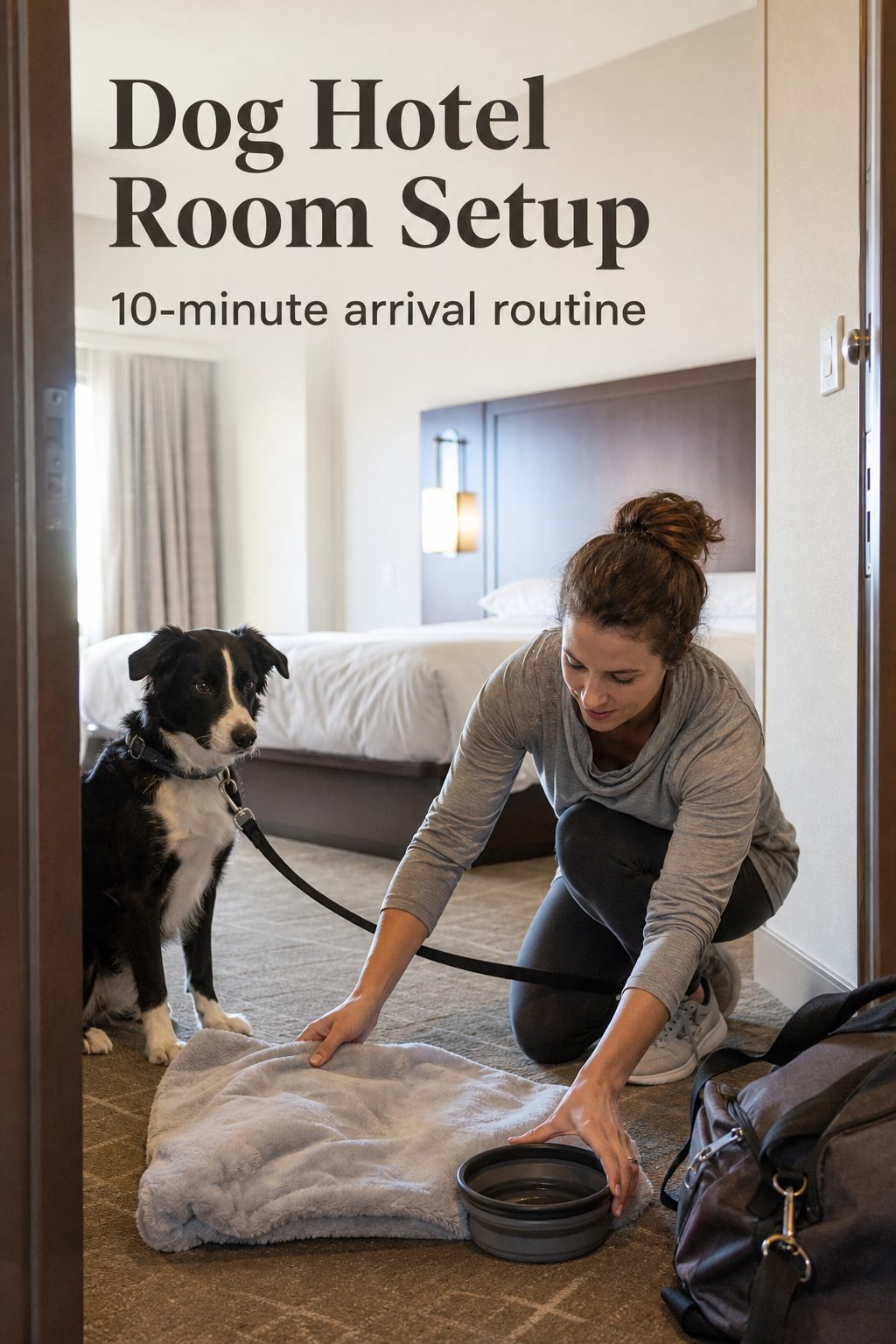
The 10-Minute Setup
Use this order when you first enter the room:
- keep your dog leashed while you scan the room
- pick one door zone for leash, waste bags, towel, shoes, and room key
- place water on a towel or mat, away from the main walking path
- set up one familiar rest spot away from the hallway door
- put food and medication somewhere clean and closed
- keep dirty gear near the entry or bathroom
- do a short potty break before trying to settle in
That is the whole system. The goal is not to decorate the room for your dog. It is to make the next few hours easier.
For a broader packing list before you arrive, use the dog hotel checklist for a cleaner stay. If this stop is part of a longer drive, pair it with the dog road trip packing guide.
Minute 0-2: Keep the Leash On and Scan the Room
Do not unclip your dog the second you step inside. Even calm dogs can rush toward the bed, sniff around the trash can, or investigate a gap behind furniture before you have looked around.
Walk in with the leash still attached and do a quick scan:
- is there anything on the floor your dog could grab?
- is the trash can open or reachable?
- is there a gap behind a chair, bed frame, or curtains?
- where is the nearest door or hallway noise coming from?
- where can the water bowl go without being kicked?
This is also the moment to check for anything left behind by a previous guest. You are not doing a full inspection. You are just making sure the room is safe enough before your dog explores.
For nervous or reactive dogs, keep this part boring. Walk in, pause, breathe, and move slowly. If you rush around unpacking, your dog may treat the room like something urgent is happening.
Minute 2-4: Build the Door Zone
The door zone is the small area that keeps hotel life from becoming messy. It should hold the things you need every time you leave the room.
Put these near the door:
- leash or harness
- waste bags
- paw towel or wipes
- shoes
- room key
- small trash or wet-gear bag
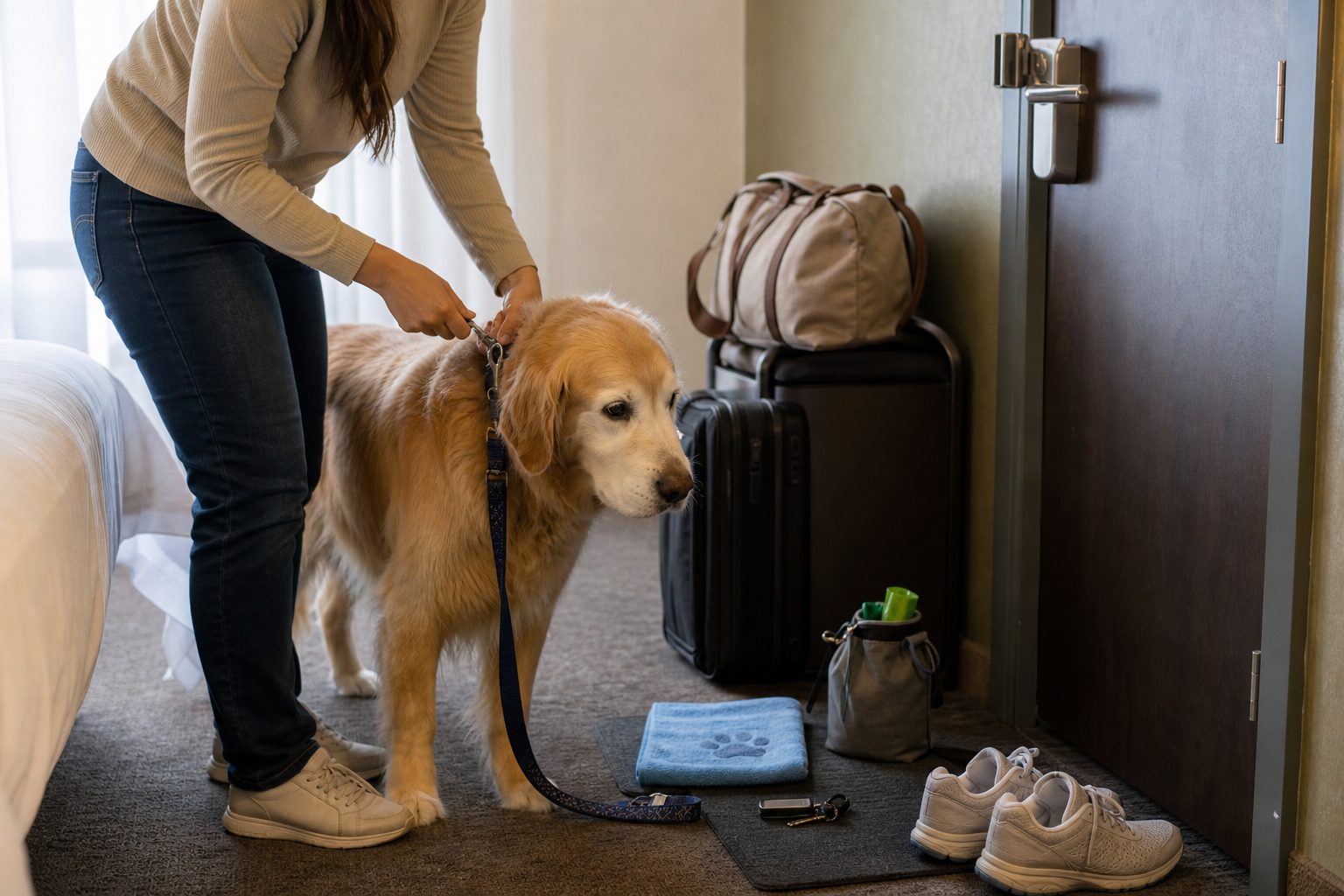
This setup matters because hotel exits tend to happen fast. Your dog hears someone in the hallway. You realize it is time for a potty break. You need to leave for breakfast. The leash should not be under a suitcase, and the towel should not be across the room.
If your dog gets excited at doors, do not set the bed or food bowl right beside the entrance. That area already has enough movement and sound.
Minute 4-6: Set Water Where It Will Not Create a Mess
Hotel rooms are bad places for loose water bowls. They sit in narrow walking paths, get bumped by luggage, and drip onto carpet where you may not notice right away.
Put water on a small towel, mat, or washable layer. A bathroom tile area can work if your dog is comfortable going there, but some dogs drink less if the bowl feels tucked away or unfamiliar. A quiet corner near the main room is often better.
For one-night stays, you usually do not need a big feeding setup. Keep it simple:
- one water bowl
- one food bowl if your dog eats in the room
- a towel under both
- food closed between meals
- a quick rinse before packing up
If you are choosing between bowl styles, the dog travel water bottle vs collapsible bowl guide explains when each one makes sense. For cleanup, see the dog travel bowl cleaning routine.
Minute 6-8: Give Your Dog One Rest Spot
A dog-friendly hotel room feels calmer when your dog has one obvious place to land. That can be a crate mat, a travel bed, a familiar blanket, or even a towel your dog already knows.
Pick a spot that is:
- away from the hallway door
- away from food wrappers or luggage clutter
- easy for you to see
- not blocking the bathroom or entry path
- comfortable enough for your dog to choose it more than once
For anxious dogs, familiar texture can help more than new gear. If your dog already sleeps on a certain mat at home or in the car, that may be better than bringing something bulky just because it is labeled for travel.
If your dog sleeps in a crate, set the crate or crate mat before the room gets busy. Avoid putting it where elevator noise, hallway footsteps, or door gaps will keep pulling your dog’s attention.
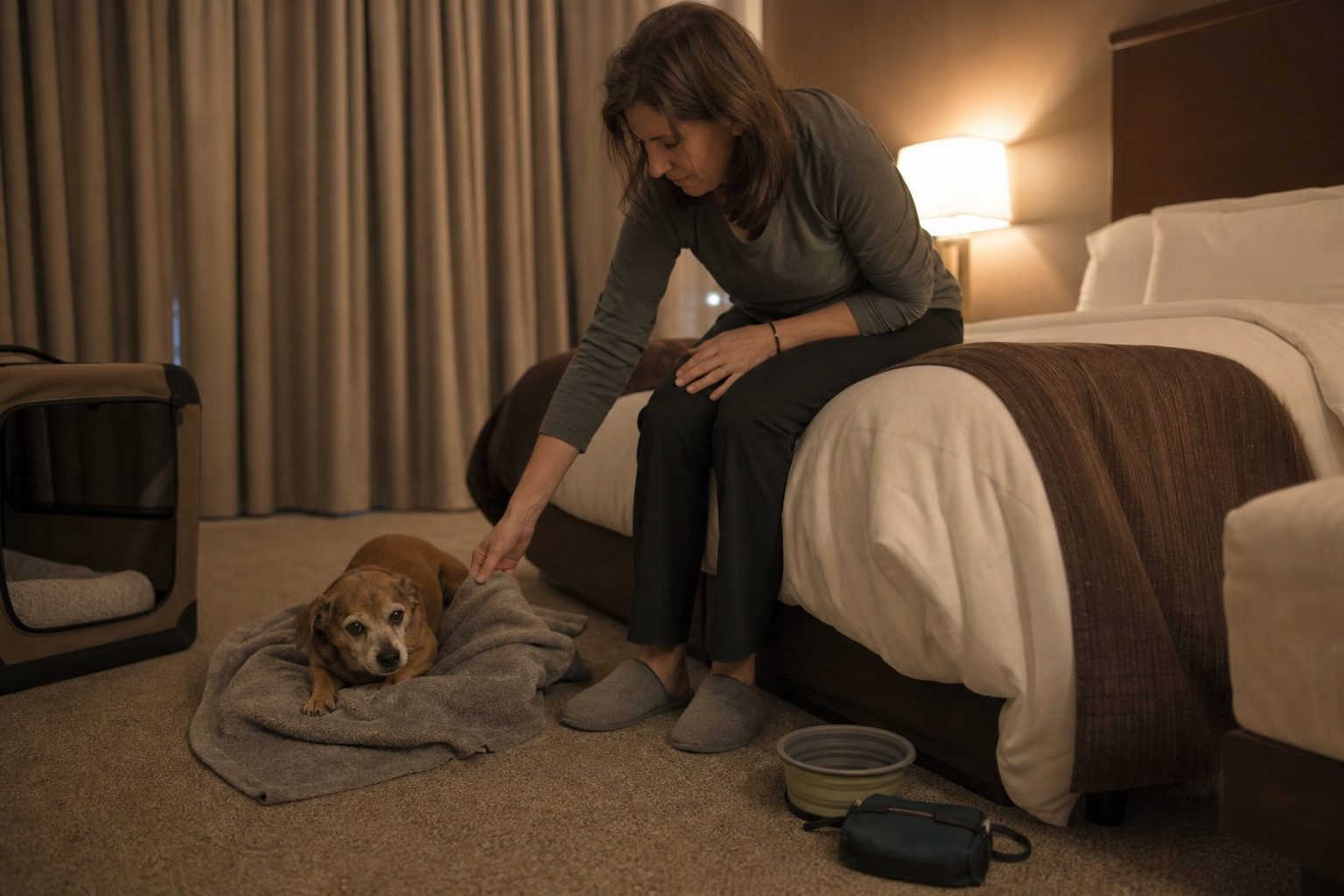
For more overnight packing help, read how to pack a dog overnight bag without overpacking.
Minute 8-10: Separate Clean Gear From Dirty Gear
By the time you reach a hotel, your dog gear may already be split into two categories: clean things you still need, and damp or dirty things you should not mix with food, bowls, or medication.
Clean gear includes:
- food
- medication
- clean bowls
- paperwork
- spare waste bags
- a dry blanket or mat
Dirty gear includes:
- wet towels
- used wipes
- muddy leash sections
- damp bowls
- sandy or wet blankets
Keep dirty gear near the entry, bathroom, or a washable bag. Do not drop it beside the food. If a towel is damp, open it up when you can instead of sealing it overnight.
This is the same logic as a road-trip cleanup system. The dog road trip cleanup kit covers what to keep in the car, and the dog dirty gear bag guide explains where the wet stuff should go after it has done its job.
A Calm First 30 Minutes
After the quick setup, take your dog out before expecting them to settle. A short potty break gives them a job and helps separate “new room excitement” from “rest time.”
When you come back in, keep the routine quiet:
- offer water
- put the leash back in the same door zone
- let your dog find the rest spot
- avoid unpacking every bag at once
- keep hallway watching to a minimum
Some dogs need a few minutes to sniff. Some need you to sit down first. Some do better with the same chew they use at home. The point is to keep the room predictable instead of adding more stimulation.
If your dog is alert to hallway noise, use the room layout. Put their bed away from the door. Close curtains if outside movement is distracting. Keep the TV or fan at a normal low volume if that is already part of your dog’s routine, but do not rely on noise to cover every trigger.
What Not to Bring Into the Room
One reason hotel rooms feel chaotic is that people carry in too much. If you are only staying one night, a lot of dog gear can stay in the car or main luggage area.
You can often leave these packed:
- backup bedding
- extra towels
- full-size food bags
- bulky toys your dog rarely uses
- spare cleanup supplies
- camping gear
- extra car accessories
Do bring medication, regular food, water supplies, leash, ID, waste bags, and anything your dog truly needs overnight. But skip the full gear unload unless the stay is longer or your dog has specific needs.
The Morning Reset
The morning routine should be as simple as the arrival routine. Before checkout, reset the room in this order:
- take your dog out first if they are restless
- empty and dry the bowl if possible
- fold the blanket or mat
- bag used wipes or trash
- check under the bed edge and near curtains
- move dirty towels to the dirty gear bag
- reload the clean dog bag separately
Do a slow floor check before leaving. Kibble, chew pieces, waste bags, and small medication containers are easy to miss when you are packing fast.
If your dog paces while you pack, clip the leash on earlier than you think you need to. That keeps the last few minutes calmer and prevents a rushed door moment.
Simple Version for Late Check-In
If you arrive tired, skip the full setup and do the smallest useful version:
- leash stays on
- towel and waste bags by the door
- water on a towel
- blanket or mat away from the door
- food and medication kept closed
That is enough for one night. You can clean up and organize more in the morning.
Final Thoughts
A good dog-friendly hotel room setup is not about bringing more gear. It is about giving each part of the room a job.
The door handles exits. The bowl area handles water and food. The rest spot tells your dog where to settle. The dirty gear area keeps wet towels and used wipes away from clean supplies. Once those four zones are in place, the room feels less like a temporary mess and more like a short, manageable stop.
FAQ
How do I set up a hotel room for my dog?
Keep your dog leashed at first, check the room, create a door zone for leash and cleanup items, place water on a towel, set up one familiar rest spot, and keep dirty gear separate from food and medication.
Where should my dog sleep in a hotel room?
Most dogs do better on a familiar mat, blanket, bed, or crate pad away from the hallway door. Avoid placing the sleep area where door sounds or foot traffic will keep pulling your dog’s attention.
Should I let my dog explore the hotel room right away?
Let your dog sniff after you have checked the room for trash, small objects, open bags, and awkward gaps. Keep the leash attached at first, especially with anxious, curious, or newly adopted dogs.
What should stay near the hotel room door?
Keep the leash, waste bags, paw towel or wipes, shoes, room key, and a small trash or wet-gear bag near the door. This makes potty breaks and checkout easier.
How do I keep a dog-friendly hotel room cleaner?
Use a towel under bowls, wipe paws near the entry, keep food sealed, separate dirty towels from clean gear, and do one floor check before checkout.