
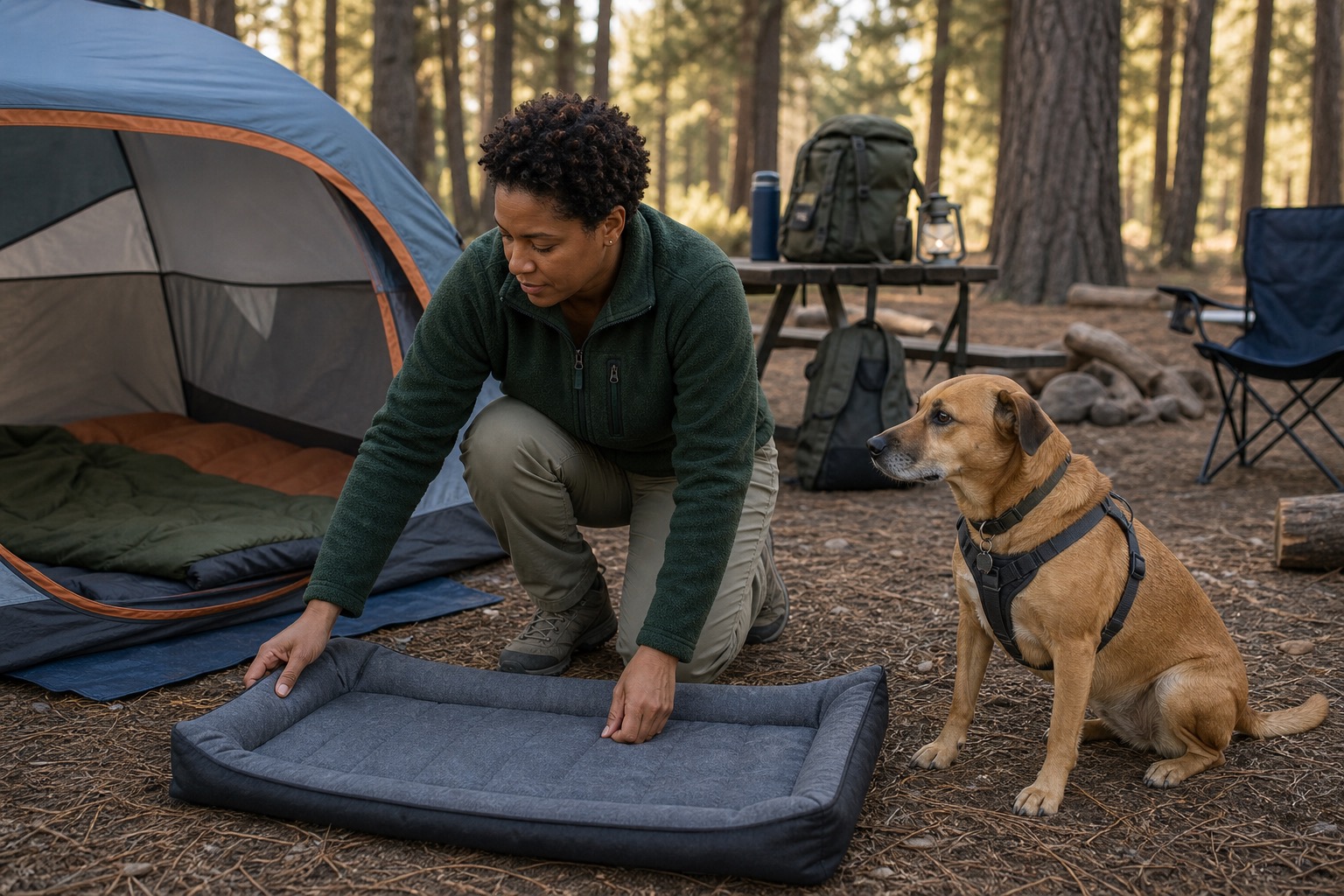
Dog Camping Sleep Setup: Bed, Blanket, or Sleeping Bag?
For most weekend camping trips, a dog does not need a complicated sleep system. They need a dry place off cold or rough ground, a washable layer you can shake out, and enough familiarity to settle after a long day outside. A simple dog bed or travel mat plus one blanket is often easier to manage than a bulky pile of gear.
The right setup depends on your dog, the weather, and whether they sleep in the tent, the car, a crate, or near your campsite under supervision. This guide is meant as a practical packing framework, not a temperature-rating chart or a claim that one product works for every dog.
Short Answer
For a normal weekend camping trip, start with:
- one stable sleep surface, such as a travel bed, mat, cot, or crate pad
- one washable blanket or towel layer
- one dry backup layer kept in the car or a sealed bag
- a place to air out wet bedding
- enough space for the dog to lie down without blocking the tent door
Skip the extra bedding if it crowds the tent, stays damp, or turns into loose clutter. If you are building your first camping list, start with our Dog Camping Checklist for Beginners and then adjust the sleep setup from there.
If you are comparing basic options, you can compare dog camping beds and travel mats on Amazon.
Start With Where Your Dog Will Actually Sleep
Before choosing a bed or blanket, decide where your dog is going to sleep. A dog sleeping inside a tent needs a setup that fits your tent floor and does not block the door. A dog using a crate or soft-sided travel setup needs a pad that fits inside without bunching. A dog resting near the car during the evening may need something easier to move in and out.
This sounds basic, but it prevents overpacking. A thick bed may feel comfortable at home and still be awkward in a small tent. A loose blanket may be useful for a short nap and annoying if it drags through dirt all evening.
For most dogs, one clear sleep zone is better than three half-used layers scattered around camp.
That sleep zone works best when it fits the rest of the camp layout. Use the dog camping gear checklist to plan the full setup, and skim the dog camping gear mistakes if your dog keeps moving between the tent, car, and picnic table.
Bed, Mat, or Blanket?
A dog camping bed gives more structure and can help keep your dog off hard ground. It is a better fit for dogs who are older, bony, used to a bed at home, or slow to settle on thin fabric. The downside is bulk. Some beds are easy to pack; others take up too much space for a short trip.
A travel mat is simpler. It folds or rolls more easily, dries faster, and works well for dogs who mostly need a defined place to lie down. It may not offer enough cushion for senior dogs or dogs who sleep heavily on one side.
A blanket is the most flexible layer. It can cover a bed, line a crate, protect the tent floor, or become a backup towel. But a blanket alone can slide around, collect dirt, and stay damp if the ground or tent floor is wet.
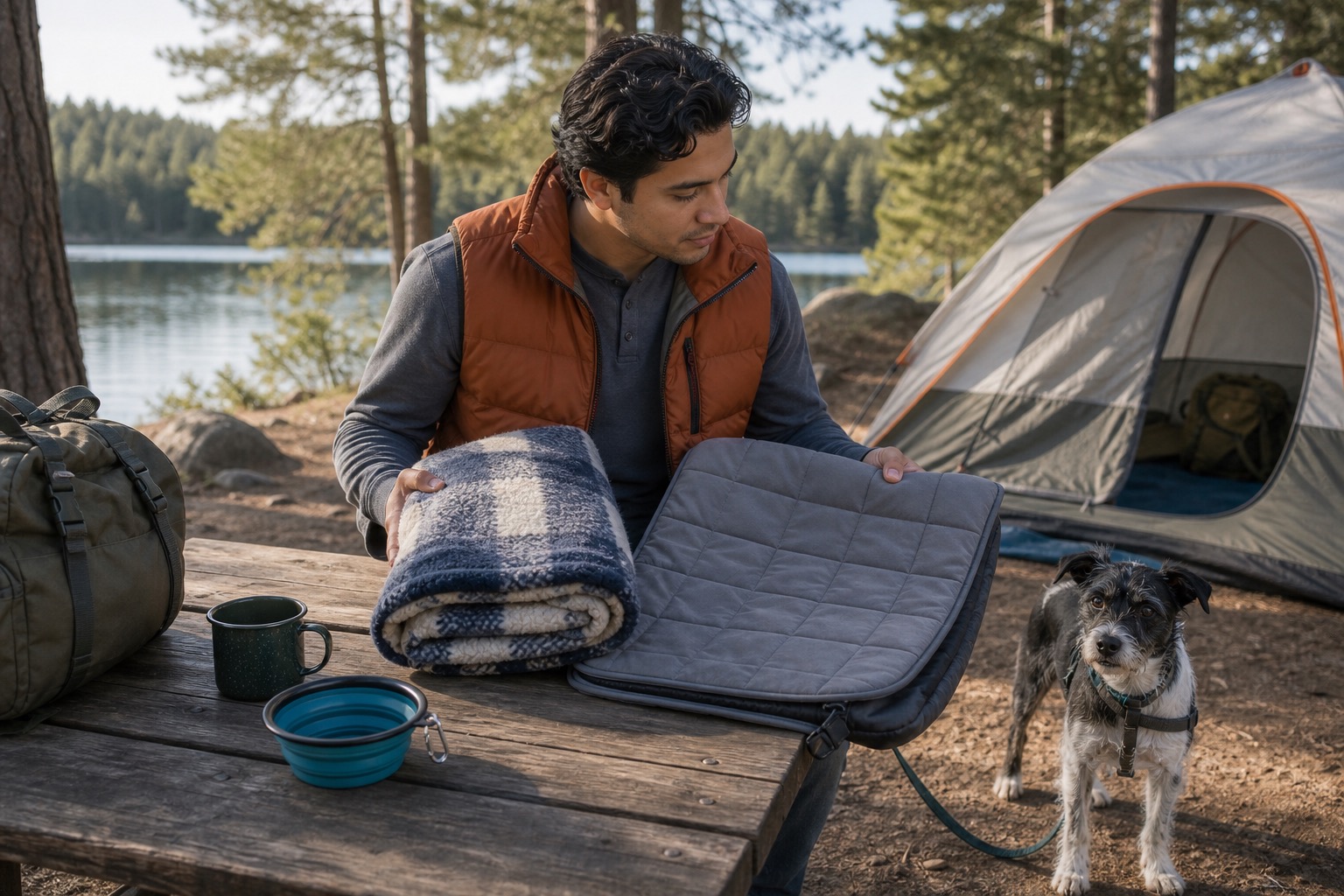
The easiest setup for many weekend trips is a travel bed or mat plus one washable blanket. That gives the dog a stable base and gives you a removable layer when things get dirty.
Think About Moisture Before Comfort
Camping sleep setups fail fastest when they get wet. Morning dew, damp grass, muddy paws, and a dog stepping into the tent after a late walk can make a nice bed unpleasant quickly. A setup that dries easily is often more useful than one that looks plush.
Keep one layer dry if you can. That might mean storing a backup blanket in the car, using a small dry bag, or putting the dog’s extra towel somewhere separate from the main bedding.
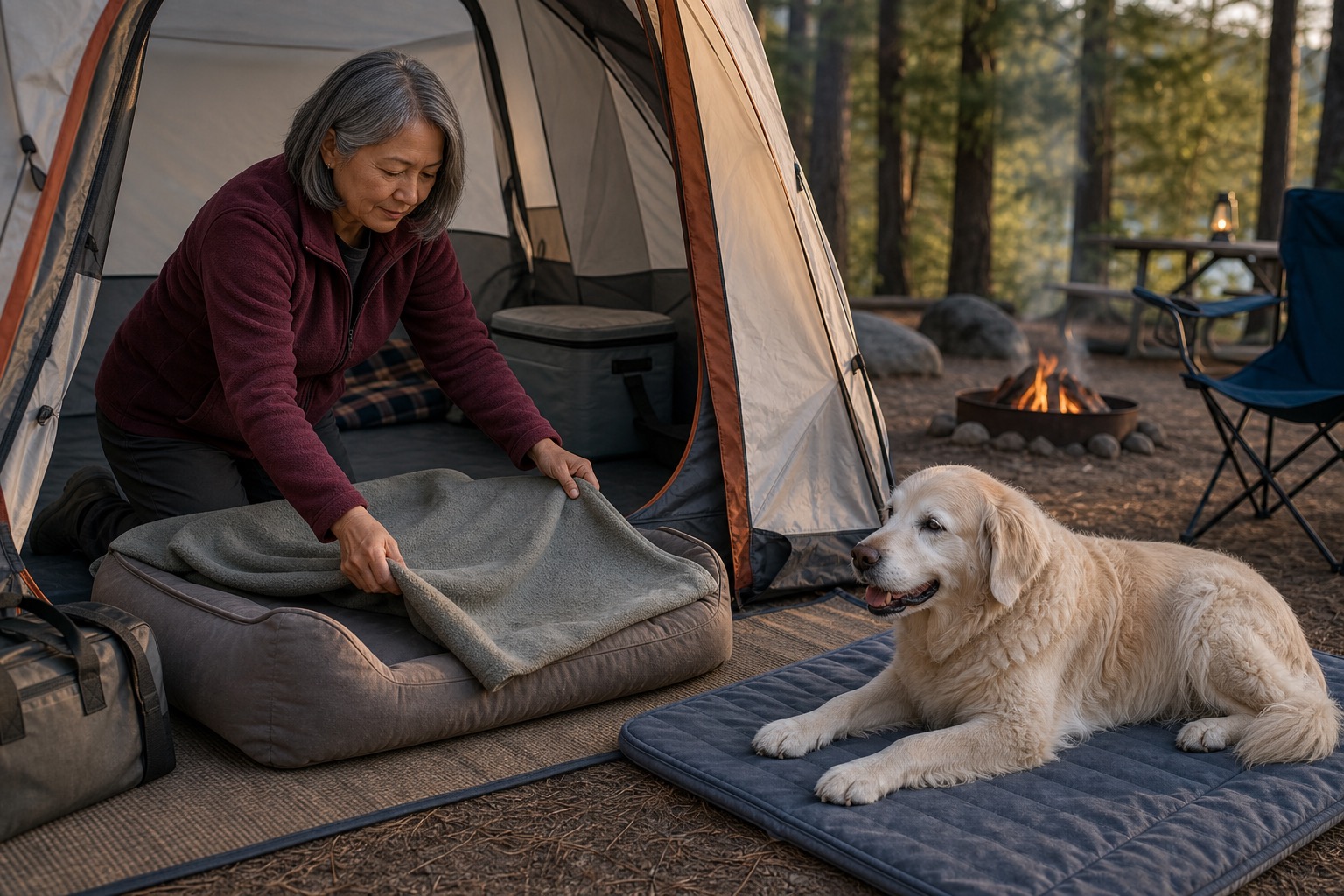
If your dog gets wet often, do not pack only one soft bed with no backup plan. A damp bed inside a tent can make the whole sleeping area smell stale by morning.
Match the Setup to Your Dog
A small dog may need more warmth and a more protected sleep spot. A large dog may need a wider mat, not a thicker one. A senior dog may do better with cushioning that does not collapse into the ground. A dog who overheats easily may prefer a lighter mat and a blanket you can remove.
For dogs who already sleep in a crate at home, a camping crate or familiar pad may help them settle. For dogs who sprawl, a flat mat may be less frustrating than a bed with raised sides.
The goal is not to recreate your dog’s home bed exactly. It is to give them a place that feels clear, dry, and comfortable enough that they stop wandering around the tent.
Keep a Drying and Backup Plan
Even a simple sleep setup needs a reset plan. After a rainy night or muddy morning, shake out the blanket, hang it over a line, car door, chair, or picnic table edge, and let the main bed air out before packing.
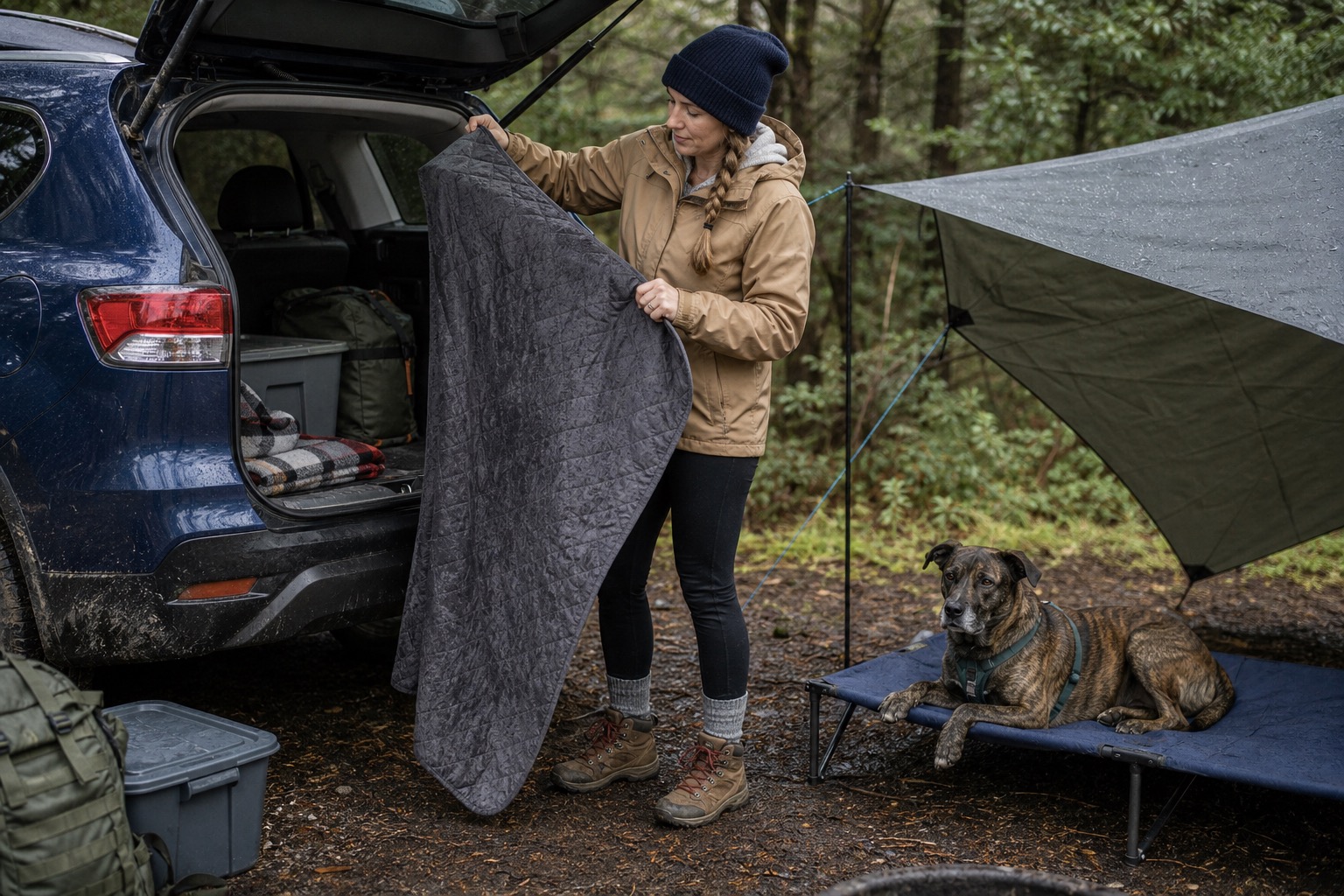
This is also where your car organization matters. Keep damp bedding away from clean food, clothes, and your dog’s main travel bag. Our Dog Road Trip Cleanup Kit is useful here because the same towel-and-dirty-bag logic works at camp.
If the trip includes a hotel night before or after camping, our Dog Hotel Checklist can help keep dirty outdoor gear from taking over the room.
Common Mistakes
One mistake is packing too many soft layers. More fabric sounds comfortable, but it also means more moisture, more dirt, and more things to dry.
Another mistake is choosing a bed that fits the dog but not the tent. Measure the usable floor space, especially if people, bags, and sleeping pads share the tent.
A third mistake is forgetting where the dog will go after a wet walk. If the first step into the tent lands on the only clean blanket, the setup needs a better entry routine.
Finally, do not assume camping bedding replaces supervision, containment, or leash control. A sleep setup is comfort gear. It does not keep the dog safely at camp by itself.
Final Thoughts
A good dog camping sleep setup is usually simple: one stable base, one washable layer, and one dry backup. Choose the version that matches your dog’s size, your tent space, and the way your campsite actually works.
If the gear is easy to shake out, dry, and pack again, you are more likely to use it well. That matters more than bringing the softest bed you own.
FAQ
Does my dog need a camping bed?
Not always. Some dogs do well with a mat or blanket, especially on mild weekend trips. Older dogs, thin-coated dogs, or dogs who are used to a bed may benefit from more cushioning.
Can my dog sleep on a blanket in the tent?
Yes, if the blanket stays dry and gives your dog a clear place to settle. A blanket alone may slide around or collect dirt, so many owners pair it with a mat or simple bed.
Is a raised cot good for camping?
It can be useful at camp during the day or under a tarp, especially if the ground is dusty or damp. It may be less practical inside a small tent, depending on the cot size and tent floor.
What should I do if the dog bed gets wet?
Shake off dirt, air it out, and switch to a dry backup layer if you have one. Do not pack a damp bed tightly into the car unless you want the smell to follow you home.
Should I bring my dog’s home bed camping?
Sometimes, but only if it fits your vehicle and campsite. A familiar bed can help some dogs settle, but bulky home beds may be harder to clean and dry outdoors.