
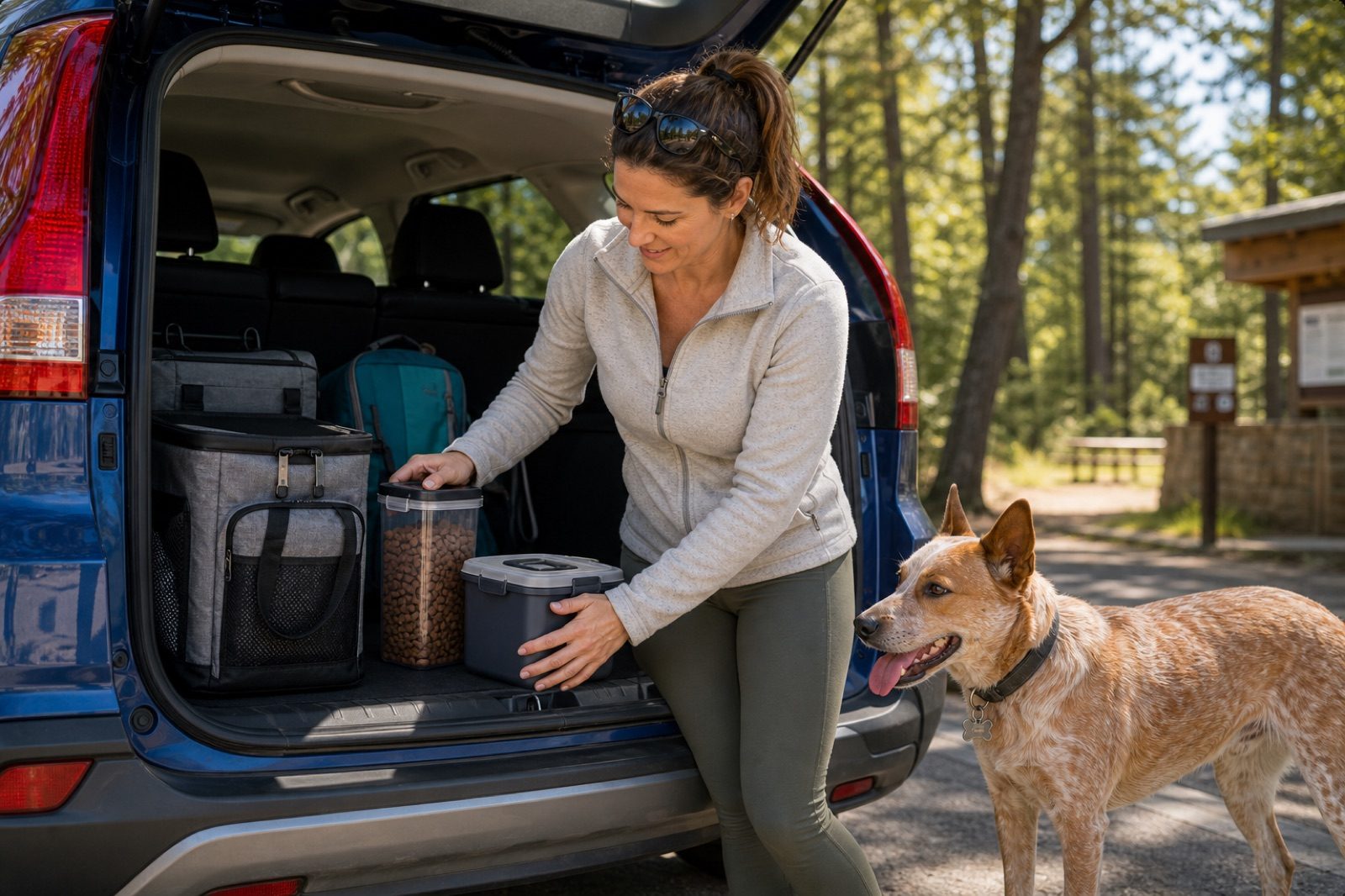
Best Dog Food Storage Containers for Road Trips
Dog food storage gets annoying fast when the bag tips over in the cargo area, kibble spills under the seat, or a hotel room starts to smell like an open food bag. For road trips, the best container is not always the biggest one. It is the one that keeps food dry, closes securely, fits your packing space, and makes each meal easy to serve.
Most dog owners do better with a simple system: a main container for the trip, a small meal pouch or scoop for the day, and a bowl setup that is easy to rinse. That works for hotel stays, camping weekends, and long driving days without turning dog food into the messiest item in the car.
This guide is based on common product types and travel use cases, not hands-on testing of every container on the market. Use it as a buying framework before choosing the size and style that fits your dog’s meals.
Compare dog food storage containers for travel on Amazon
Quick Answer
For most road trips, choose an airtight dog food container that holds the amount of food your dog needs for the trip plus a little extra, fits upright in your car or travel bag, and is easy to open with one hand at a hotel room, campsite, or rest stop.
Hard plastic containers are better for crush protection and longer trips. Soft roll-top food bags pack better in crowded cars. Pre-portioned meal pouches are useful for short trips, nervous hotel check-ins, or dogs with strict meal amounts. For camping, a container with a stronger seal and a stable shape is usually worth the extra space.
The key is not just capacity. A container that technically holds seven days of food may still be a bad travel choice if it leaks kibble, traps odors, tips over, or forces you to unpack the whole cargo area at dinner.
What Matters Before Buying
Start with how your dog eats. A small dog on measured meals needs a different setup than a large dog eating several cups a day. A dog on kibble needs a different container than a dog traveling with toppers, canned food, or medication mixed into meals.
Then look at the trip. A one-night hotel stay may only need pre-measured meal bags and one backup serving. A camping weekend needs something that handles dust, damp ground, wildlife-aware storage habits, and repeated outdoor use. A long road trip may need a main container plus a smaller day pouch so you are not opening the whole food supply at every stop.
Finally, think about where the container will sit. Some containers look great in a kitchen pantry but waste space in a trunk. For travel, shape matters as much as capacity. A slim rectangular container is often easier to pack than a round one.
Main Types of Dog Food Storage Containers
Hard airtight bins are the most protective option. They help keep kibble contained, stack better with other gear, and are easier to wipe down if the outside gets dirty. They are a good fit for long drives, SUVs, camping bins, and dogs with larger meals.
Soft travel food bags are easier to squeeze into a loaded car. Many use a roll-top or zip closure. They are useful for weekend trips, but they can be less protective if heavy bags, chairs, or coolers press against them.
Meal pouches or portion bags are best for short trips and simple routines. Pre-measuring food at home makes hotel feeding easier and keeps you from guessing after a long drive. The trade-off is that many small bags can become clutter if you do not have one place to store them.
Small day containers work well as a second layer. Keep the main supply in the cargo area and use the small container for the next one or two meals. This is especially useful if you stop late, arrive at a hotel in the rain, or need to feed your dog without unloading everything.
Best for Most Road Trips: A Slim Airtight Container
A slim airtight container is the most practical starting point for many dog owners. It keeps kibble in one place, protects it from damp towels and loose gear, and usually slides into the cargo area better than the original food bag.
Look for a lid that closes firmly and does not pop open when the container tips. A latch is useful, but it should not be so stiff that you fight it every meal. A wide opening helps if you use a scoop. A narrow opening may pour more neatly but can be awkward with larger kibble.
This type works well in SUVs, crossovers, and wagons where the dog food can stay near the travel bowls, cleanup towel, and dog bag.
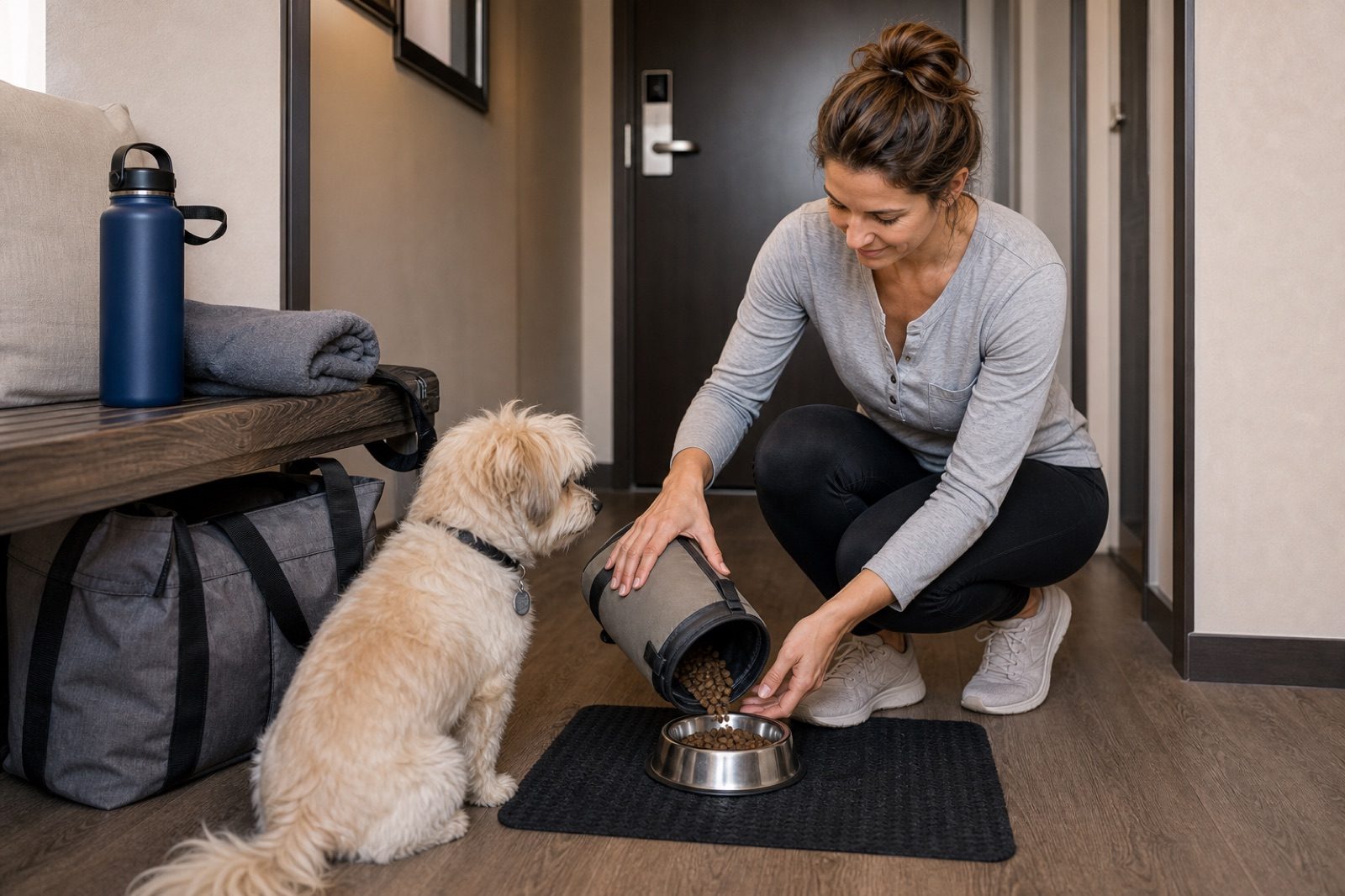
Best for: multi-day road trips, larger dogs, families packing the cargo area, and owners who want one clear food container.
Not ideal for: very small cars where every inch matters, or trips where you only need one or two meals.
Compare airtight dog food travel containers on Amazon
Best for Hotel Stays: Pre-Portioned Meals
Hotels are where pre-portioned meals become useful. You arrive tired, your dog is excited, and the room is not set up yet. If the food is already measured, dinner is one less thing to think about.
Use small reusable pouches, zip bags, or a compact meal organizer. Labeling is helpful if your dog gets different breakfast and dinner amounts, takes supplements, or eats a different food than another dog in the household.
Pre-portioned meals also keep the room cleaner. You do not need to open a big food container beside the bed or dig through the car after dark. Put the next meal near the bowl, keep the main food supply closed, and move on.
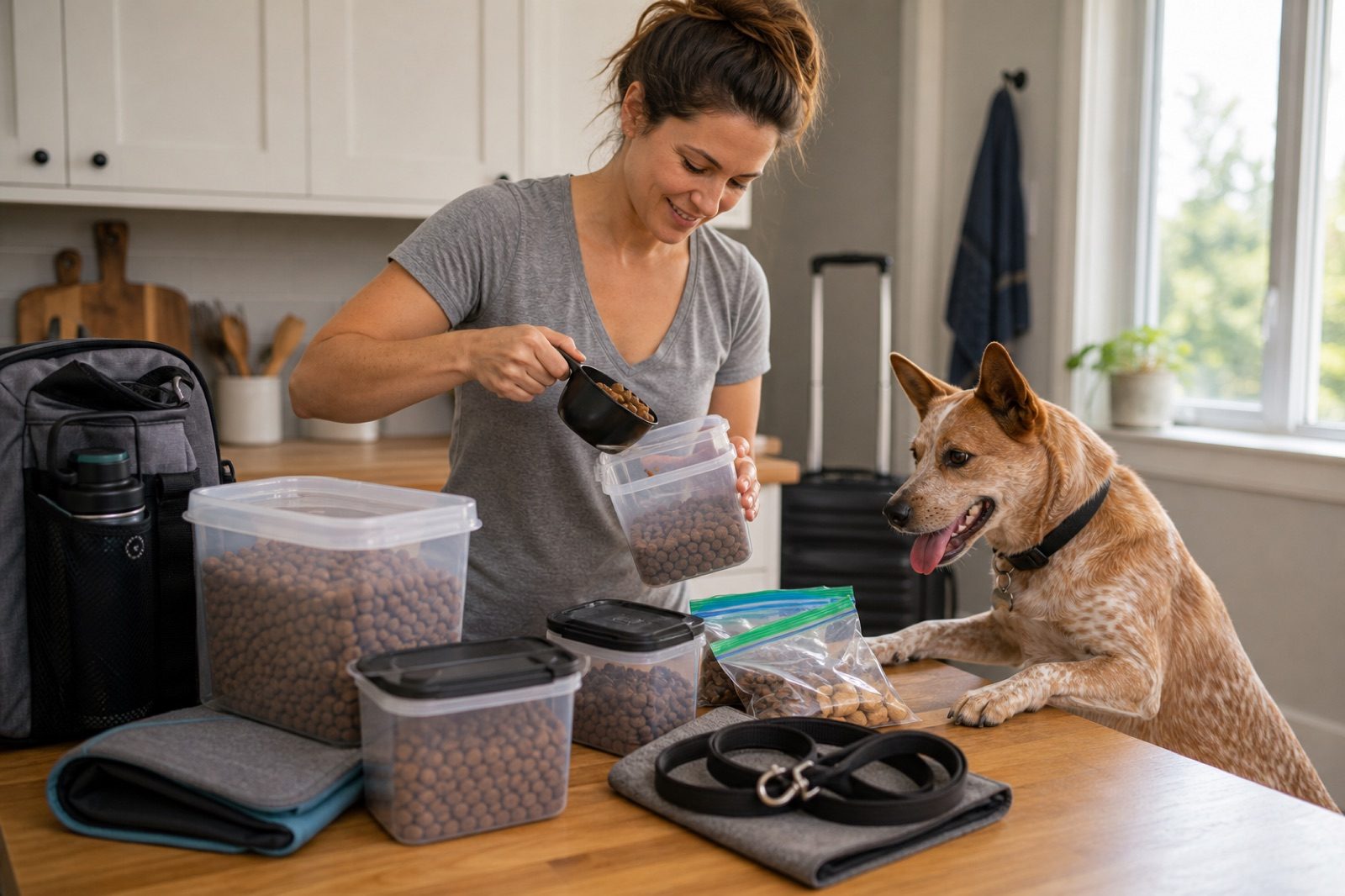
Best for: one-night stays, late arrivals, dogs with measured meals, and owners who want a simple hotel routine.
Not ideal for: long trips where many loose bags become clutter, or dogs that eat very large portions.
Related: Dog Hotel Checklist for a Cleaner Stay and How to Pack a Dog Overnight Bag Without Overpacking.
Best for Camping: A Tough Container With a Reliable Seal
Camping adds dirt, damp gear, picnic tables, curious dogs, and sometimes wildlife rules. Your dog food container should be tougher than your hotel setup.
Choose a container that closes securely, wipes clean, and can sit on a camp table or inside a larger gear bin without spilling. A stable rectangular shape is easier to manage than a floppy bag when you are feeding your dog outside. If the campground has rules about food storage, follow those rules. Dog food is still food.
Keep the container away from the cooking area and do not leave kibble sitting out in the bowl. Measure the meal, close the container, and put it back where it belongs. This keeps the campsite cleaner and makes packing up easier.
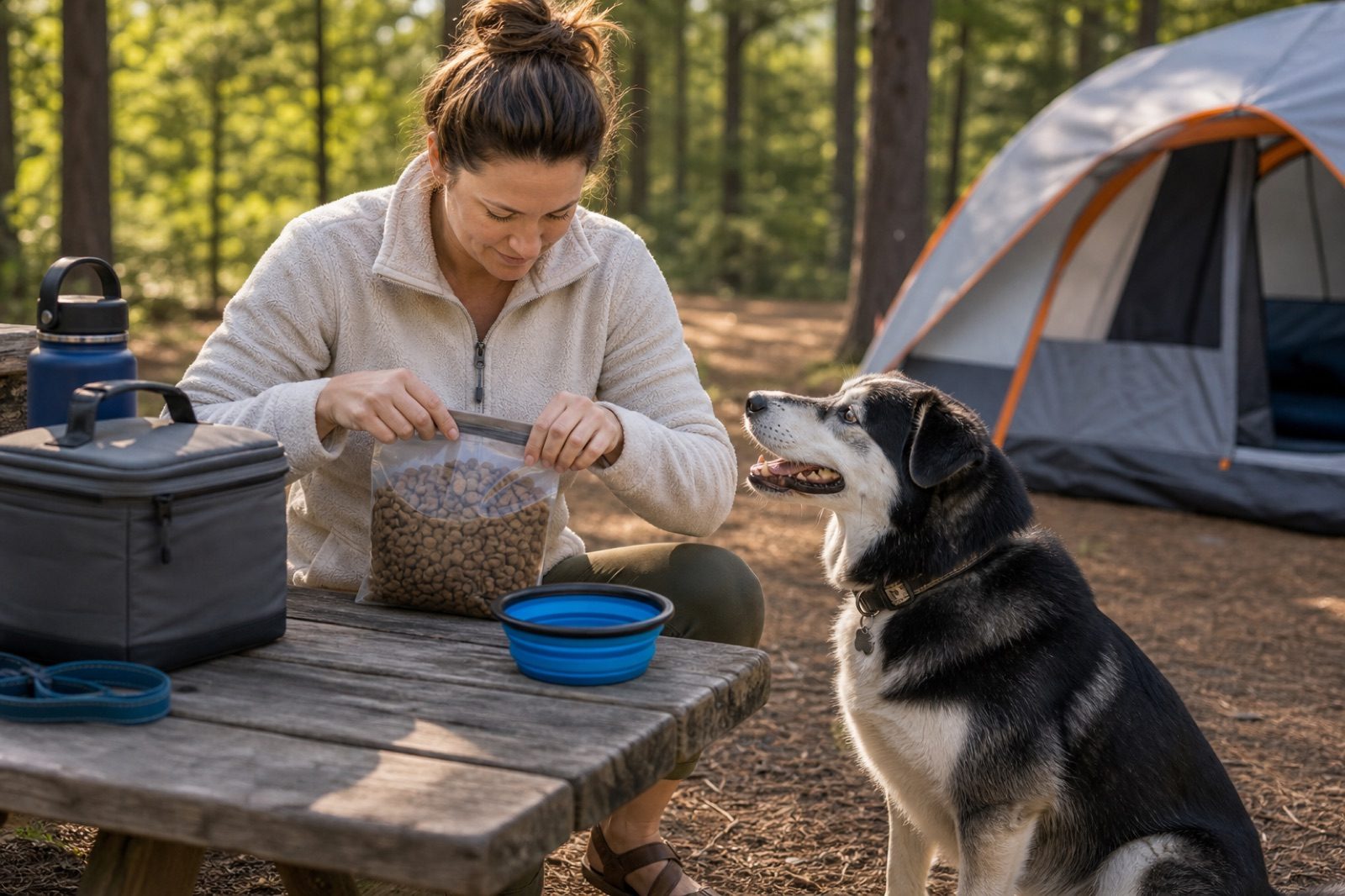
Best for: camping weekends, dusty campsites, damp mornings, and dogs eating outside.
Not ideal for: ultralight packing or trips where you only need a tiny food pouch.
Compare dog camping food containers on Amazon
Best for Small Cars: Soft Food Bags
Soft food bags make sense when a hard container wastes too much space. They can fit between luggage, sit inside a dog travel tote, or compress slightly as the food level drops.
The trade-off is protection. A soft bag should not sit under heavy gear, wet towels, or sharp camping items. It also needs a closure you trust. If the roll-top or zipper is weak, kibble will find its way into the car.
For small cars, a soft bag plus one small day container is often easier than one bulky bin. The soft bag holds the main supply. The small container handles the next meal or two.
Best for: compact cars, weekend packing, smaller dogs, and owners who need flexible storage.
Not ideal for: heavy cargo loads, rough camping bins, or dogs who chew through bags.
Best for Two Dogs: Separate Meal Containers
Two dogs can make food storage messy if you rely on memory. If the dogs eat different amounts, different formulas, or different supplements, separate containers are worth it.
Use different colors, labels, or shapes. Do not depend on “the bigger scoop is for the bigger dog” after a long travel day. Clear labeling also helps if someone else feeds the dogs at a hotel or campsite.
For two similar dogs eating the same food, one main container can work. Still, consider pre-measuring at least the first day of meals so the travel routine starts cleanly.
Cleaning and Odor Control
Dog food containers need cleaning even when they only hold dry kibble. Oils from food can build up inside and make the container smell stale. Crumbs also collect around lids, corners, scoops, and soft bag seams.
Before a trip, start with a clean, dry container. After the trip, empty the remaining food, wash or wipe the container as the material allows, and let it dry fully before closing it. Do not seal a damp container and store it with your other travel gear.
If a container keeps smelling old even after cleaning, replace it. A cheap container that makes every trip smell stale is not saving much.
Related: Dog Travel Bowl Cleaning Routine and Dog Road Trip Cleanup Kit.
What Size Should You Bring?
Do not buy by “days of travel” alone. Dogs eat different amounts, and kibble shapes take up different space. Measure your dog’s normal food for the trip, add one extra meal or one extra day depending on the trip length, then choose a container that holds that amount without being packed to the rim.
For one-night hotel stays, pre-measured meal pouches may be enough. For a weekend trip, a small airtight container usually works better. For a week-long road trip, a larger main container plus a small day container keeps the routine easier.
Leave some empty space in the container. A packed-to-the-top bin spills more easily and is harder to scoop from.
Where to Pack It in the Car
Keep dog food away from wet towels, cleaning supplies, bug spray, and anything that can leak. The food container should sit upright and be easy to reach when you arrive.
If your dog rides in the cargo area, do not put loose food containers beside the dog. Keep food in a separate bin or bag so it does not slide into the dog’s space. If your dog rides in the back seat, keep food on the floor or cargo area, not on the seat where it can tip.
For long drives, pack the next meal where you can reach it without unloading the whole car. That small choice matters when you arrive at a hotel late or pull into camp after dark.
Common Mistakes
The first mistake is bringing the original food bag and hoping it stays closed. Sometimes it does. Often it tears, folds open, or spills just enough to make the car smell like kibble.
The second mistake is choosing a container that is too large. Big containers feel practical until they crowd out bowls, towels, leashes, and the dog’s bed.
The third mistake is packing food beside wet gear. Even if the container is closed, the outside gets damp and dirty, and the whole dog bag becomes unpleasant.
The fourth mistake is forgetting a scoop or measuring routine. If your dog’s meals are measured at home, keep that consistency on the road.
Related PawTripKit Guides
Food storage works best as part of a simple travel feeding system:
- Dog Camping Food and Water Station: How to Set It Up
- Best Dog Travel Bowls That Are Easy to Pack and Clean
- Dog Travel Bowl Cleaning Routine
- Dog Hotel Checklist for a Cleaner Stay
- Dog Road Trip Cleanup Kit
- Dog Travel Essentials Checklist
Final Thoughts
The best dog food storage container for road trips is not the fanciest one. It is the one that fits your car, keeps food dry, closes reliably, and makes meals easy when you are tired.
For most dog owners, that means a slim airtight container for the main supply and a smaller pouch or container for the next meal. Add a bowl, a towel, and a cleanup pouch, and the whole feeding routine becomes much easier to live with.
FAQ
Can I just bring the original dog food bag?
You can for very short trips, but it is not the cleanest option. The bag can tip, tear, or leave kibble smell in the car. A travel container is easier to pack and close.
How much extra dog food should I bring on a road trip?
Bring your dog’s normal meals for the trip plus a little extra in case the drive takes longer than planned. For longer trips, one extra day of food is a practical buffer.
Are soft dog food bags better than hard containers?
Soft bags pack better in tight cars, but hard containers protect food better and usually stand up better to camping gear. Choose based on your car space and trip type.
Should I pre-measure dog food before travel?
Yes, especially for hotel stays, two-dog households, and dogs with strict meal amounts. Pre-measured meals reduce mess and guesswork after a long drive.
Where should I store dog food at a campsite?
Follow campground food-storage rules. In general, keep dog food sealed, away from the cooking area, off damp ground, and closed whenever you are not actively feeding your dog.